.webp)
%20.jpeg)
Face to Face: September 2026
Interview
It’s easy to presume that war irrevocably halts life when you haven’t experienced it yourself. Yet ask anyone who has, and you will find the reality far more nuanced. Faced with no option but to place one foot in front of the other in the spirit of “carrying on,” people often find comfort in the banal, especially when the structures of the everyday have been reduced to gunfire and ash.
Love, too, can persist in such extreme conditions. Few know this better than Kurdish-British artist Jala Wahid, who grew up listening to her parents recount their love story that blossomed while fleeing Kurdistan in the 1980s. At Sophie Tappeiner in Vienna, Wahid’s solo exhibition, Ungovernable, recounts this story, only this time, an oral retelling is exchanged for painting, sculpture, and film. All three mediums come together to solidify the artist’s mother’s testimonial of love amid war.
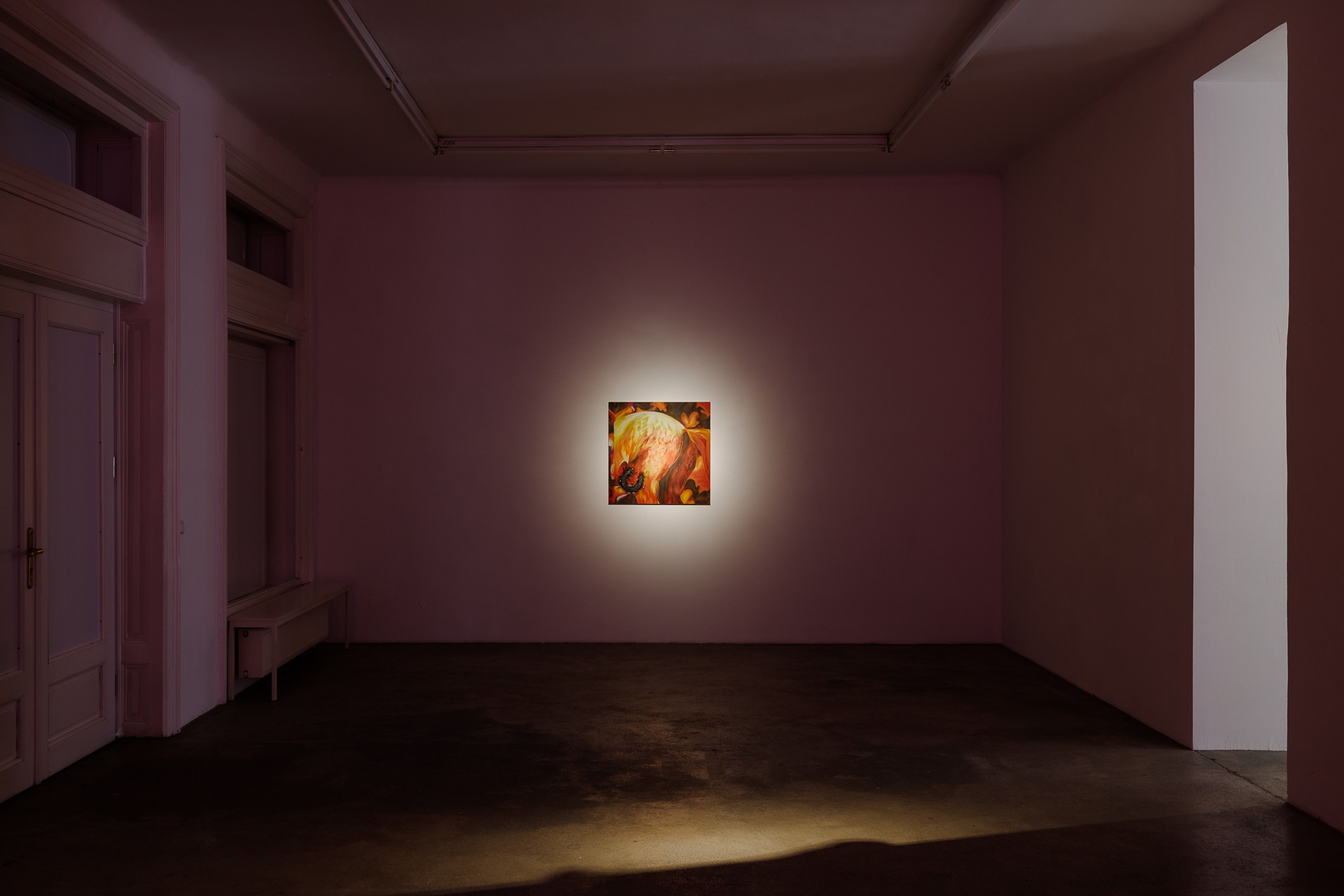
The exhibition is small, with just five artworks spread across two rooms, but that doesn’t mean the message lacks nerve; if anything, it packs even more of a punch. Each piece translates a memory told by Wahid’s mother, brought to life by the artist’s cunning use of color by appropriating past Iraqi and Iranian camouflage patterns. These fragmented memories land hardest when the works are read collectively, for it’s Wahid’s instinct for narrative that proves most disarming.
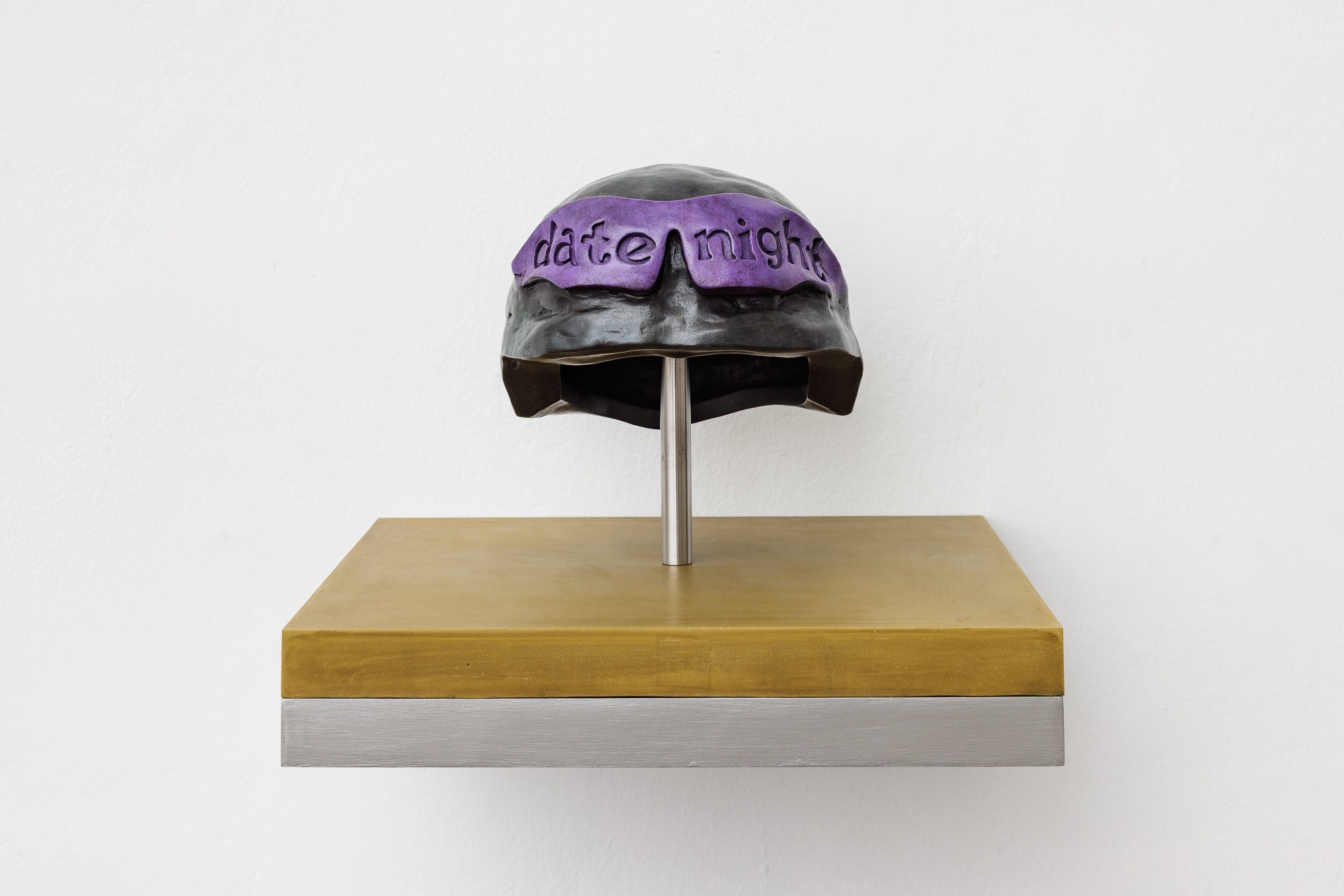
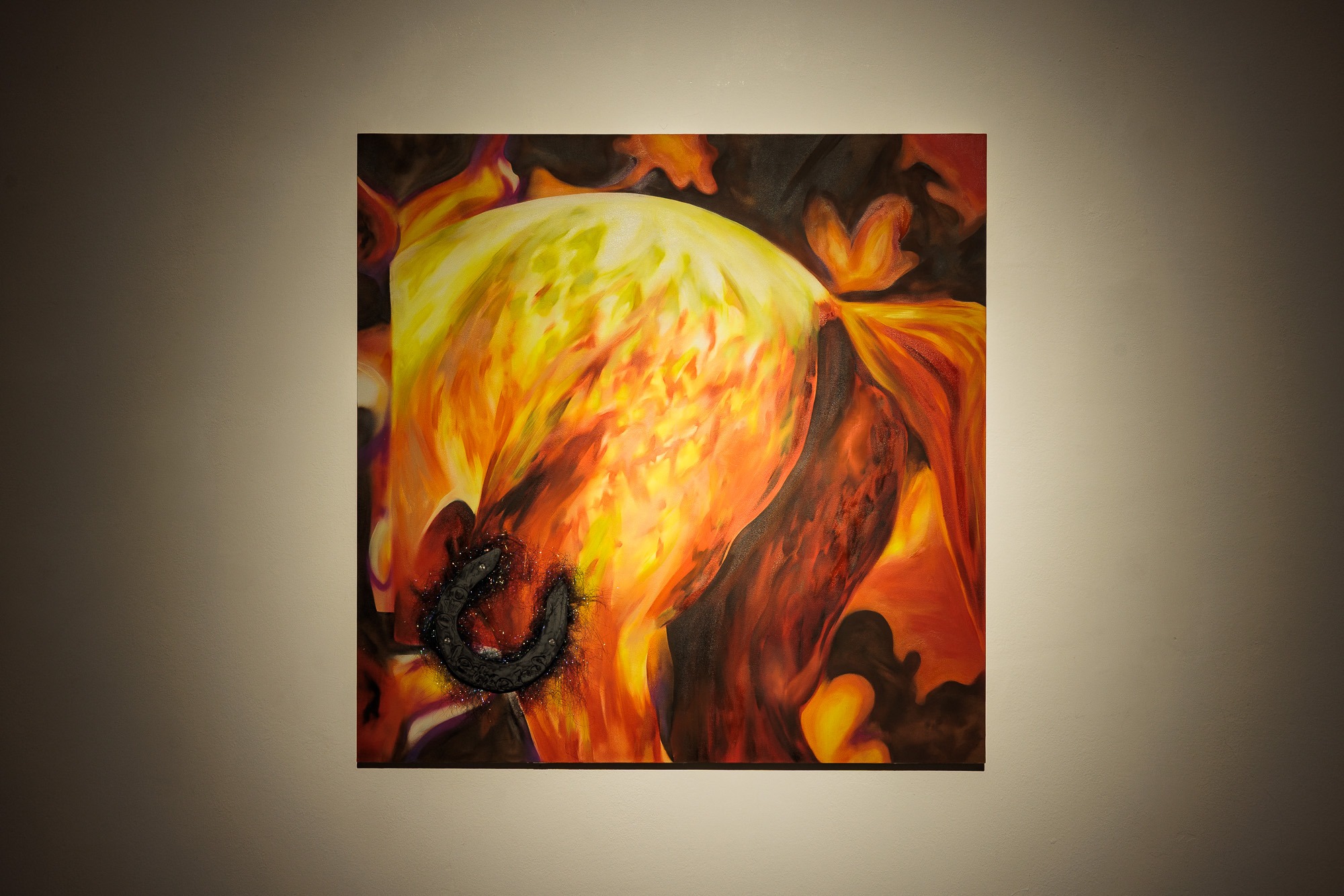
Pure Pony Intensity (2026), an oil painting of a horse’s hindside on fire, greets visitors near the entrance. Its flames appear illuminated by the opposite film installation, which takes the exhibition’s title, Ungovernable, and bears the artist’s signature lurid tones. Wahid’s fascination with symbolism continues in the second room with two sculptures that reflect the artist’s adoration for garish colors. Blobs of fuchsia intersect with chocolate browns, lime greens, and neon oranges, all of which adorn a sculpture of a skeletal hand. Appearing opposite is a stainless steel sculpture, Maniacal Sex (2026), modeled after a salvaged twentieth-century military helmet. Its brim is carved to reveal a violet-colored pair of ballistic goggles replete with the titular slogan, “DATE NIGHT”.
This is where the show’s message of love in exile is most prominent. Maniacal Sex is at once serious yet cheeky, modest yet bizarrely brazen: “Just as is the very concept of having a ‘date night’ with your partner while war destroys everything around you,” gallery director Sophie Tappeiner points out, referring to the somewhat "maniacal" choice of routine intimacy practiced by Wahid’s parents under the extraordinary duress of an Iranian refugee camp. This might be sentimental, yes, but Wahid points out a sober contradiction in comparing the rigidity of the military apparatus of the state with the irreducible stubbornness of private life. In this vein, Maniacal Sex represents more than mere frenzied infatuation. Wahid’s message? Love, like life, can be awfully defiant, sometimes even steadfast, in times of crisis.
So steadfast is it that on rare occasion (or at least in Wahid’s parents’ case), such tumult can even deepen love’s ties. In this regard, the first work, Pure Pony Intensity, is arguably the most profound in the show. The oil painting, a sumptuous blend of burnt orange, mustard, and blood red hues that depicts a horse’s backend in flames, is accompanied by a mixed media horseshoe branded with the words “Love Letters” and accessorized with tinsel hair. It’s hot and heavy, not unlike Wahid’s parents’ escape from their native Kurdish town on horseback through gunfire, horses blindfolded so they wouldn’t bolt with fear. Such an emotion appears nonexistent in the artist’s mother’s recollection, her demeanor even resembling something closer to exhilaration in conjuring the moment their love became certain.
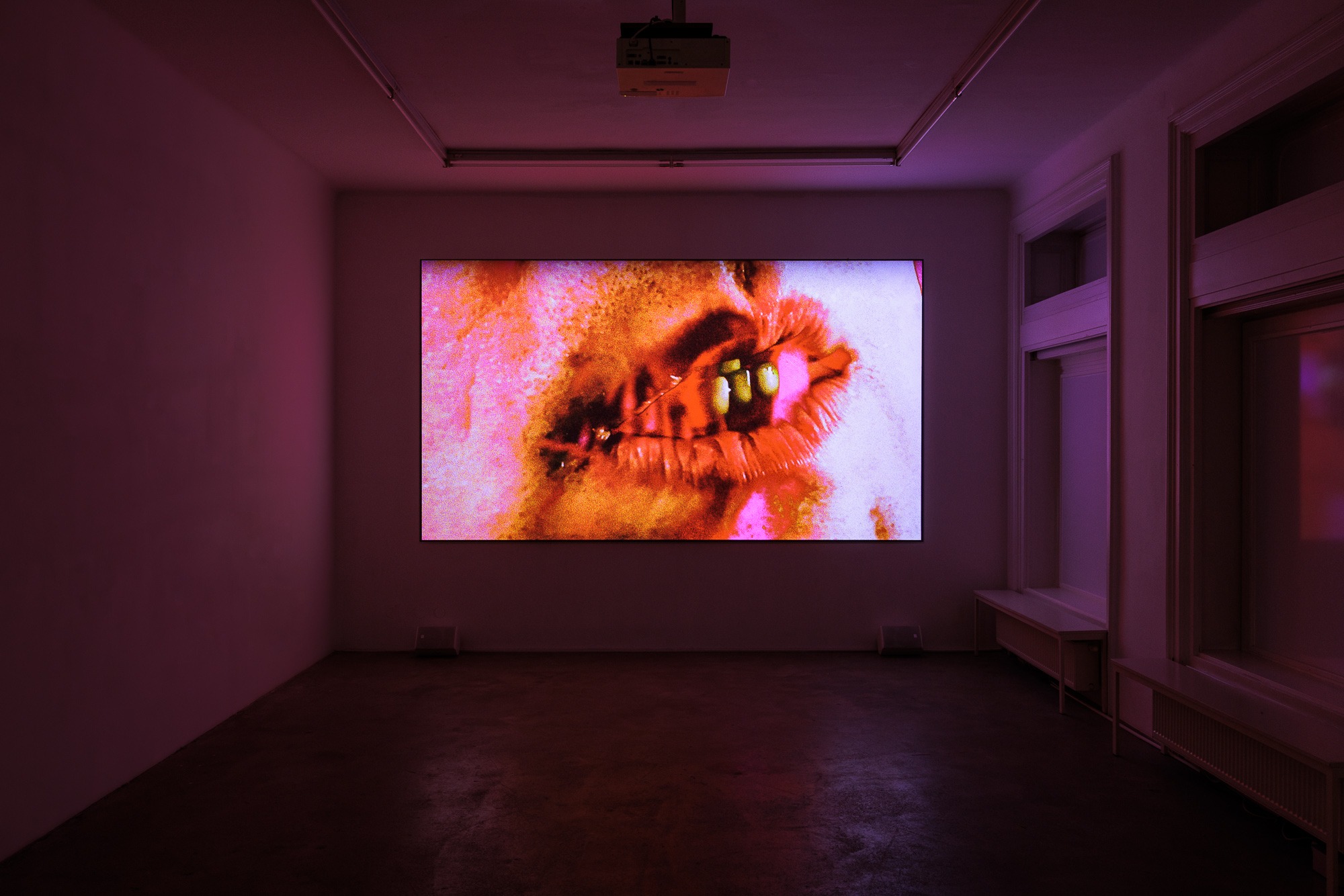
Echoing this intensity is Ungovernable (2026), the film installation that draws on Wahid’s experience working with sound and the written word to evoke emotion. Here, the artist’s love for distorted digital renderings of altered camouflage patterns reappears, somehow seeming even more gaudy than before. A whirlpool of neon attacks the senses, as the camera lens assumes the position of a roving eye. Oppressive sounds fill the space shortly before a flurry of fragmented text materializes on the screen, proving Wahid’s cinematic lexicon is anything but subtle: penetration, dust, temperature, tone, mood, meaning, feeling, desire. Seconds later, more words appear: disorder, will, duress, climax, and stealth. In other parts of the film, images of mouths surface, reflecting the artist’s questioning of how history is told and, more importantly, who gets to tell it. Words become sentences that become statements: “I couldn’t wait to feel that love that comes from facing danger together.” The sound of galloping horses becomes louder, the scene even hotter and heavier: “Sultry looks and insanity gripping bareback.”
In Ungovernable, most works are deceptively simple in their appearance, like Wedding Dress (2026), a small cat sculpture planted on the wall connecting the rooms. With the engraved hallmark, “Love U,” the cat references an animal that roamed the Iranian refugee camp with the kind of oblivious contentment that war denies everyone else. That nonchalant feline in turn became a symbol of hope for all those so very near losing it. Ignorance may not be bliss, but it does have its own grace, and so yes, Ungovernable is a testament to love’s persistence in the face of death. It is also a reflection of the artist’s own devotion to the very people who refused to be governed and fell for each other while doing so.
Jala Wahid: Ungovernable is on view at Sophie Tappeiner, Vienna, through July 4, 2026.