.webp)
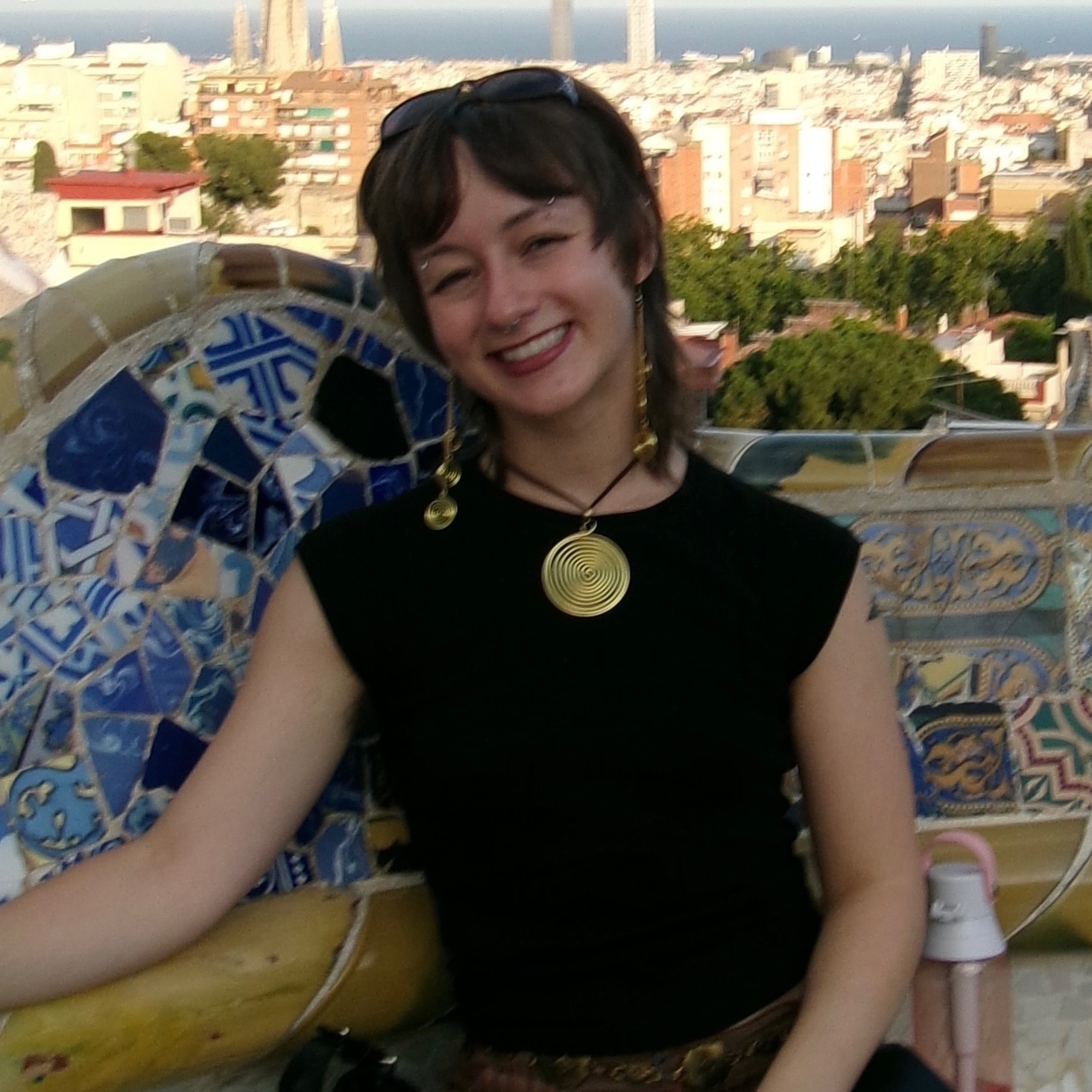
In Conversation with Mae Howard
Interview
Today’s digital environment has become increasingly apt at concealing its constructedness; artist Gao Hang, however, returns to a moment when digital illusion was visibly imperfect. Highlighting cyberspace’s potential for playfulness and rawness, Gao’s manual rendering of ’90s and early 2000s low-poly video game figures channels the magical realms created by early digitization. Gao’s airbrushed figures hold paradoxes of blurriness and sharpness, parody and humor, and vibrant chromatic tensions. As trends fracture into micro-niches and digital utopianism fades in the rear-view, Gao’s work serves as a reminder to zoom in, smell the pixelated roses, and maybe even LOL.
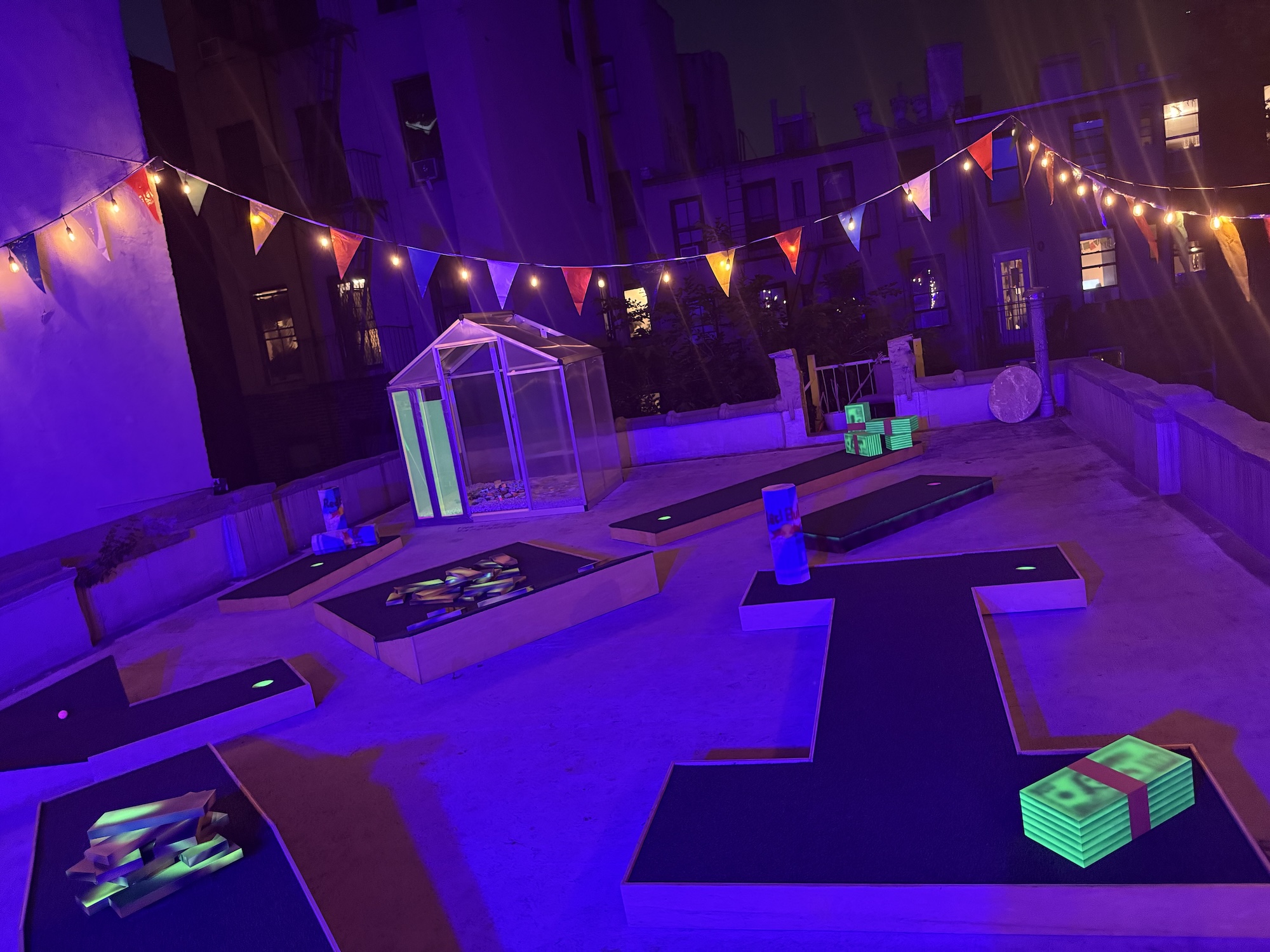
In SMALL WORLD!—an immersive, interactive exhibition at S M I L E R S co-presented with Laura (the gallery), this interest in digital space is translated into a physical, playable environment. The two-person show features artist Igor Simic’s undulating nine-hole mini-golf course alongside Gao’s pixelated, glow-in-the-dark dollar-sign sculptures, forming a landscape of play that asks the body to move through the visual language of the screen. IMPULSE had the opportunity to discuss with Gao his artistic practice, early encounters with digital worlds, relationship with social media, and predictions about the future of digital imagery.
Hailey Harcar: Why do you recreate the awkwardness and imperfection of early 3D digital renderings manually rather than using digital tools? What are the questions that you ask yourself when manually recreating game aesthetics and objects of social status?
Gao Hang: Because I'm essentially making paintings, using painting techniques and aesthetics that digital tools can’t deliver. Throughout the history of painting, artists have always depicted the different subjects and objects present in our lives. For me, I use airbrush and high-flow acrylic to paint early 3D digital renderings seen on screen onto canvas.
I don’t ask myself questions when I paint them. I just play with the digital images I found or created, adjusting their forms, lines, backgrounds, color and brightness, rhythm, composition, etc. Basically, how any painter would consider making a painting. In that case, I would say I am negotiating with the canvas, the paint, and my body while I am making them, so there won’t be any literal conversations.
HH: How do your first encounters with the early digital world still inform your practice today? Has it changed in the current state of AI, internet anxiety, and the digital surveillance state?
GH: My first encounters with it had an initial physical and mental impact on me, which generated such a vivid, strong eagerness to express and document what I felt and witnessed as a 10-year-old. And I can always adjust and experiment with the way I paint that “impact” to make it more and more abstract and genuine through a work of art. My work hasn’t been affected by AI. Internet anxiety and digital surveillance, on the other hand, are both affecting people’s behavior online, which has been very interesting to me. So I would say observing people on social media has been added to my art-making.
HH: What is your own relationship with social media and identity in the contemporary digital landscape? How does it inform or contrast your artistic practice?
GH: Interesting question. I started using social media when I was 13, I think. From my observation, I, like most people in my generation, have been through different phases along with the evolution of social media and the internet environment. Roughly speaking, the phases go from “being excited and exploring every possibility” to “broadcasting ourselves carelessly and relentlessly” to “realizing the unbelievable size of our potential audience so we started decorating our online appearances and expressions” to “experiencing the danger and the immortal quality of the internet so we reduced sharing, even started deleting or hiding our internet identities and our past opinions.”
This has given my paintings a “horror” and “uncanny” visual quality recently, either through extreme color contrasts or by reshaping a visually stable form into an odd one.
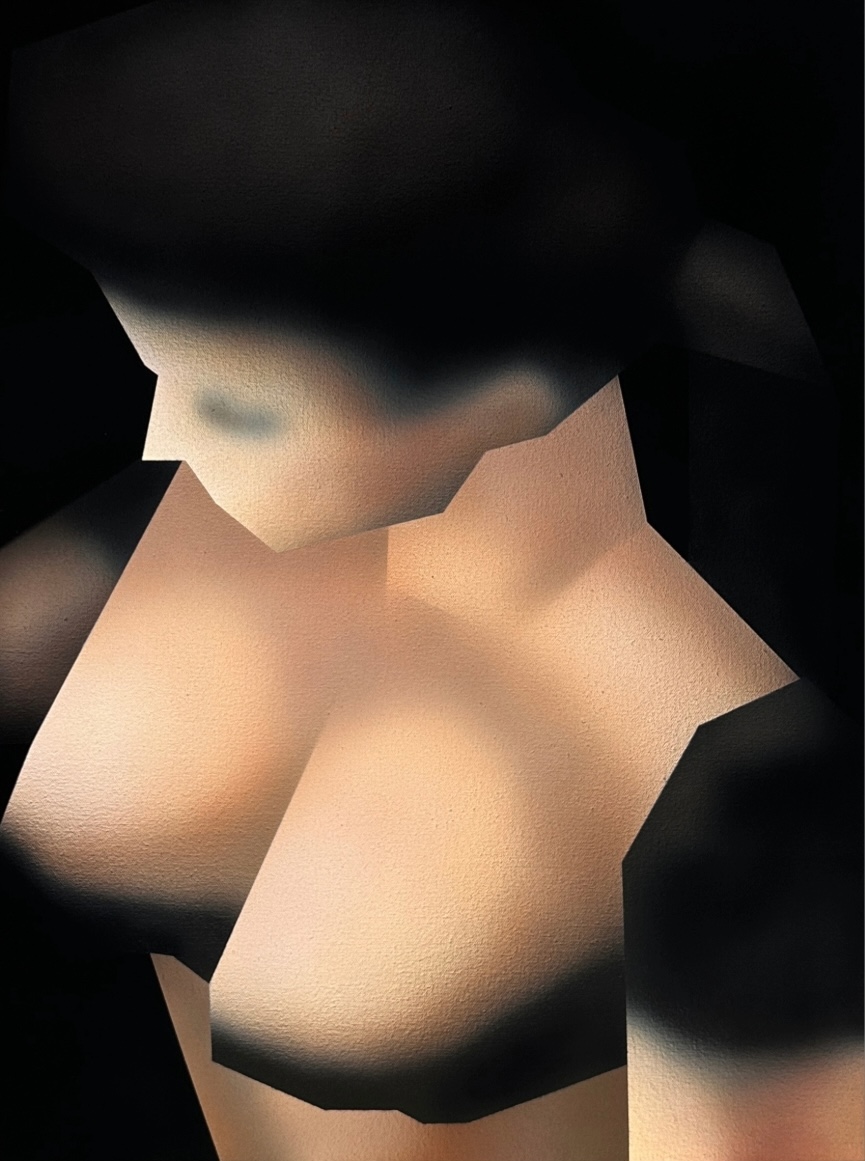
HH: Would you say that absurdity and parody are more effective tools in confronting modern digital anxiety? Why or why not? Where’s the line between seduction and satire in your avatars?
GH: I think absurdity and humor are always the stronger way to catch people’s attention and express what’s brutally true, so I agree that most of my art is confronting, even protesting against, modern digital anxiety.
I don’t think the figures or avatars are what’s important in my paintings. I am not introducing any characters or narratives, but more of a general expression of how I understand and deconstruct certain opinions or phenomena throughout the whole image on the canvas.
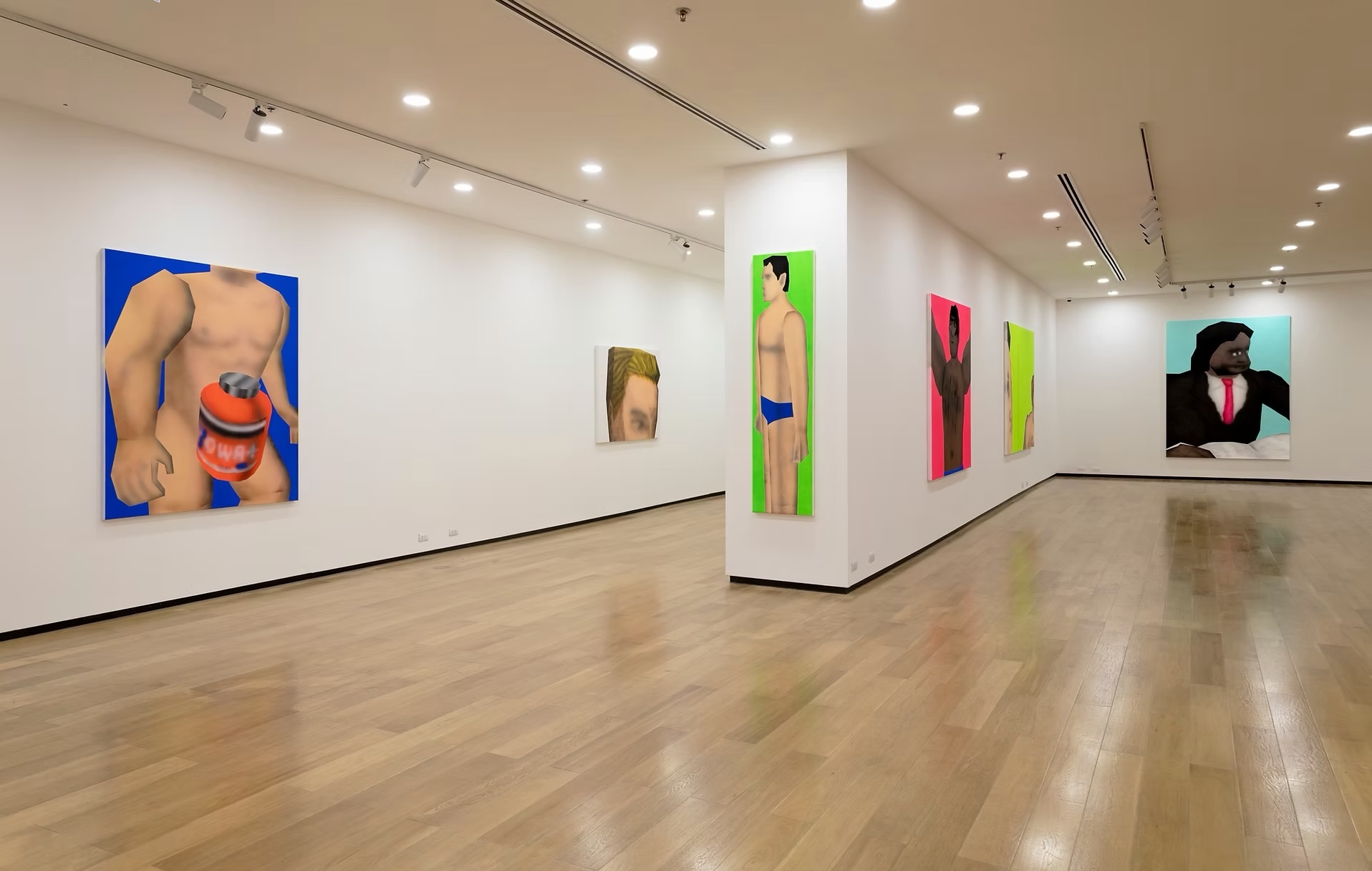
HH: One of my favorite exhibitions of yours would be the solo exhibition you did at Tang Contemporary Art in 2023 where you explored your own concept of “Digital Primitivism.” Would you say, with the resurgence of 2000s aesthetics and other forms of nostalgic imagery, that the current generation is also indulging in a form of digital primitivism, or is it a different sensibility? Why do you think that society is so heavily engaged in this form of nostalgia today?
GH: I feel that “ancient” digital art gives people the rawness, the braveness, the “directness,” and the eagerness to create before being equipped with highly refined tools. Those qualities retain their appeal even as technology becomes increasingly sophisticated, which is why later generations continue returning to them.
HH: What do you think of the current algorithmic curation and the millions of micro-niches it’s cultivating? In what ways is it helpful or harmful in constructing personal identity?
GH: I think it happens for a reason, and it reflects the evolution of culture. No matter what the technique becomes, it is just another tool or another given environment. And people will always find themselves and identities by using new tools and coping with new environments. Either way, as long as the ultimate goal is knowing yourselves, they are helpful.
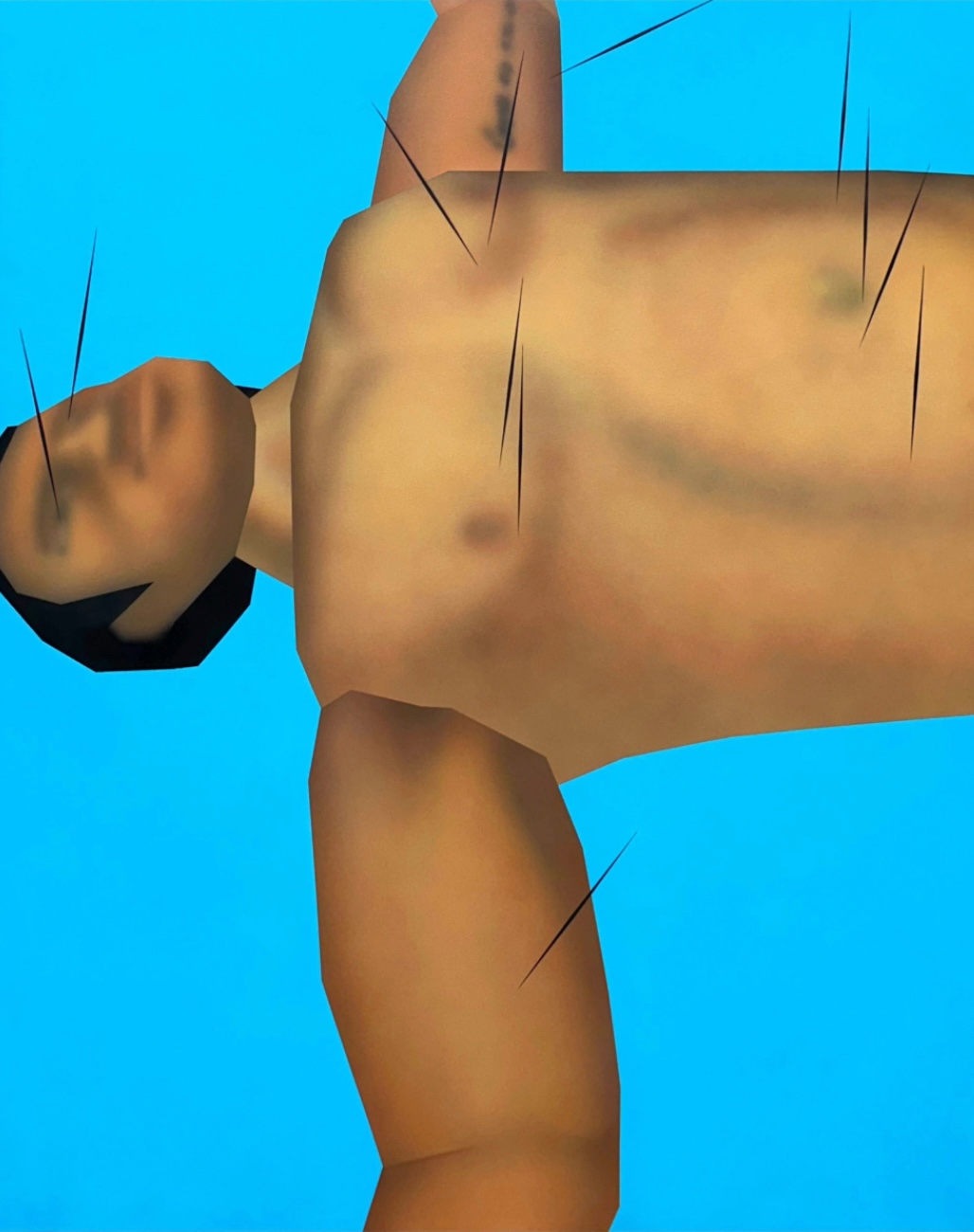
HH: What are your predictions about the future of digital imagery and the way we consume it?
GH: I think there will be so much digital imagery that it will be treated as daily objects and landscapes in the digital universe. We pass by them every day, just like we pass by bushes, buildings, trash on the street, billboards, cars, or clouds in real life. In that case, if you are so busy and occupied, you will ignore most of them, whereas artists will find certain things really beautiful and interesting that they have to stop and savor that moment. I don’t know. At the end of the day, people will be people.
HH: What’s one question you wish people asked you more often? And when confronted with your work, what’s one question you hope people ask themselves?
GH: I never thought about that. I like all kinds of questions, really. If I wished for one question, that means I must have one perfect answer to it, which is sort of cringe. One question I hope people ask themselves? I never thought about that even more.
This interview has been edited for clarity and length.