
.webp)
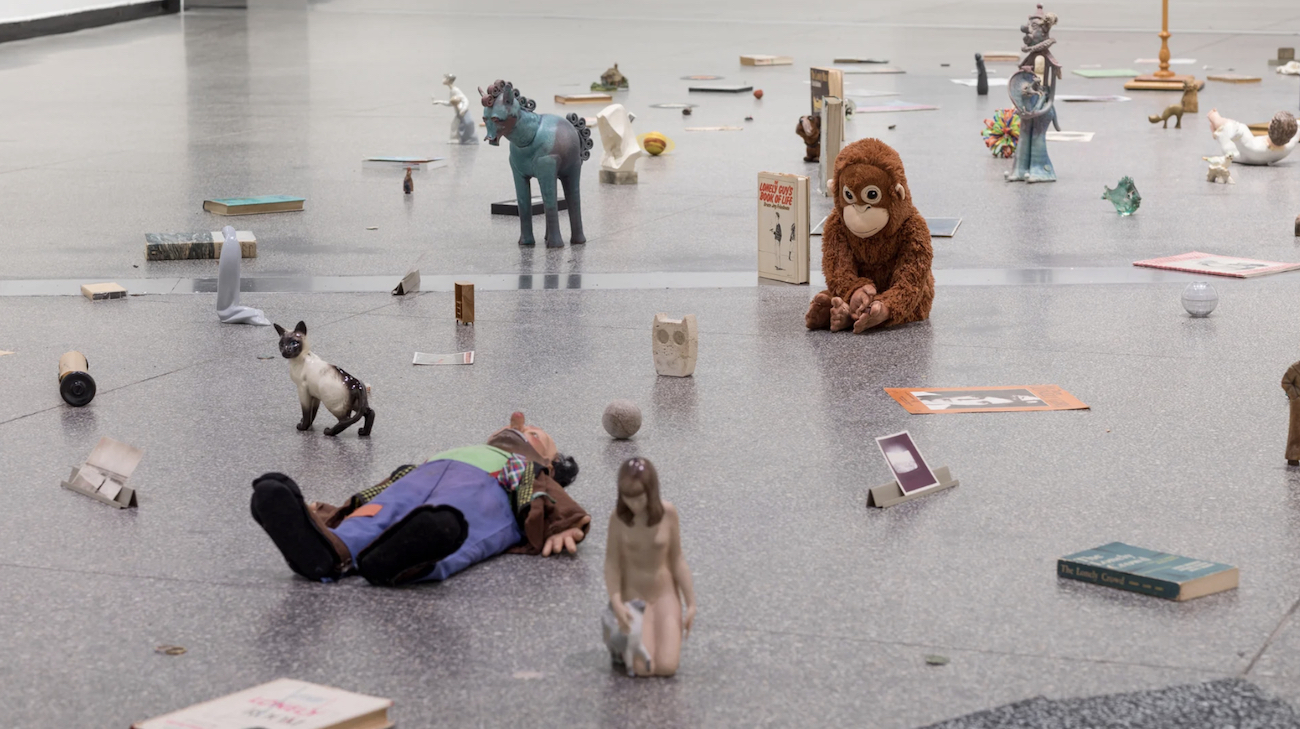
“Are you lonely tonight?” at the Australian Centre for Contemporary Art
Review
Light dictates how each of us experiences the visible world, coloring our surroundings with its reflection, presence, and absence. As both artist and curator, Charlotte Hailstone Wu engages in an ongoing dance with this slippery and foundational source. In both her personal practice and curatorial work, she creates experiences that are grounded in the fickle and transient nature of light and color. Her work—with its deliciously delicate treatment of how material, light, and color interact—gently nudges the viewer to pause in moments of uncertainty when our experience of the visual is unsettled.

Ruby Alexander: When did this intense love of color first show itself in your life? What meaning do you see behind and within the visual pleasure of color?
Charlotte Hailstone Wu: Perception is the subject of my work. Light and color are simply the tools I use to investigate it.
What fascinates me is that two people can stand in front of the exact same painting and walk away with completely different experiences. Color is incredibly personal. It's shaped by memory, culture, where you grew up, and the associations you've built throughout your life.
Looking back, I can also see exactly where that fascination came from. My mom has always been a vibrant person. She wore oversized jewelry, bright colors, and filled our garden with incredible flowers. I was the kid asking if I could dye my hair rainbow, and I've always joked that I'm basically like a bug—I can't resist anything shiny or colorful.
But I think my deepest relationship with color actually came from the sky.
I grew up outside Baltimore in an old farmhouse on top of a hill with this beautiful view of the sky. I must have watched thousands of sunsets growing up. That was probably my first realization that one thing could hold so many colors at once, and that color alone could completely change the feeling of a place. Even now, some of my favorite color combinations are ones I've stolen directly from the sky.
My dad influenced me just as much, but in a completely different way. He's a conservator specializing in historic decorative arts, and after school I'd spend hours in his workshop helping him mix pigments and color-match historic finishes. This incredible education taught me that color isn't arbitrary—tiny shifts can completely change how something feels.
Looking back now, I can see that my parents really shaped two sides of the way I think about color. My mom gave me an emotional relationship with it; my dad gave me a technical understanding of it. My work today lives somewhere between those two influences.
RA: How does your background in design influence your approach to your work? Do you have any interest in combining your fine art practice with a return to design projects in the future?
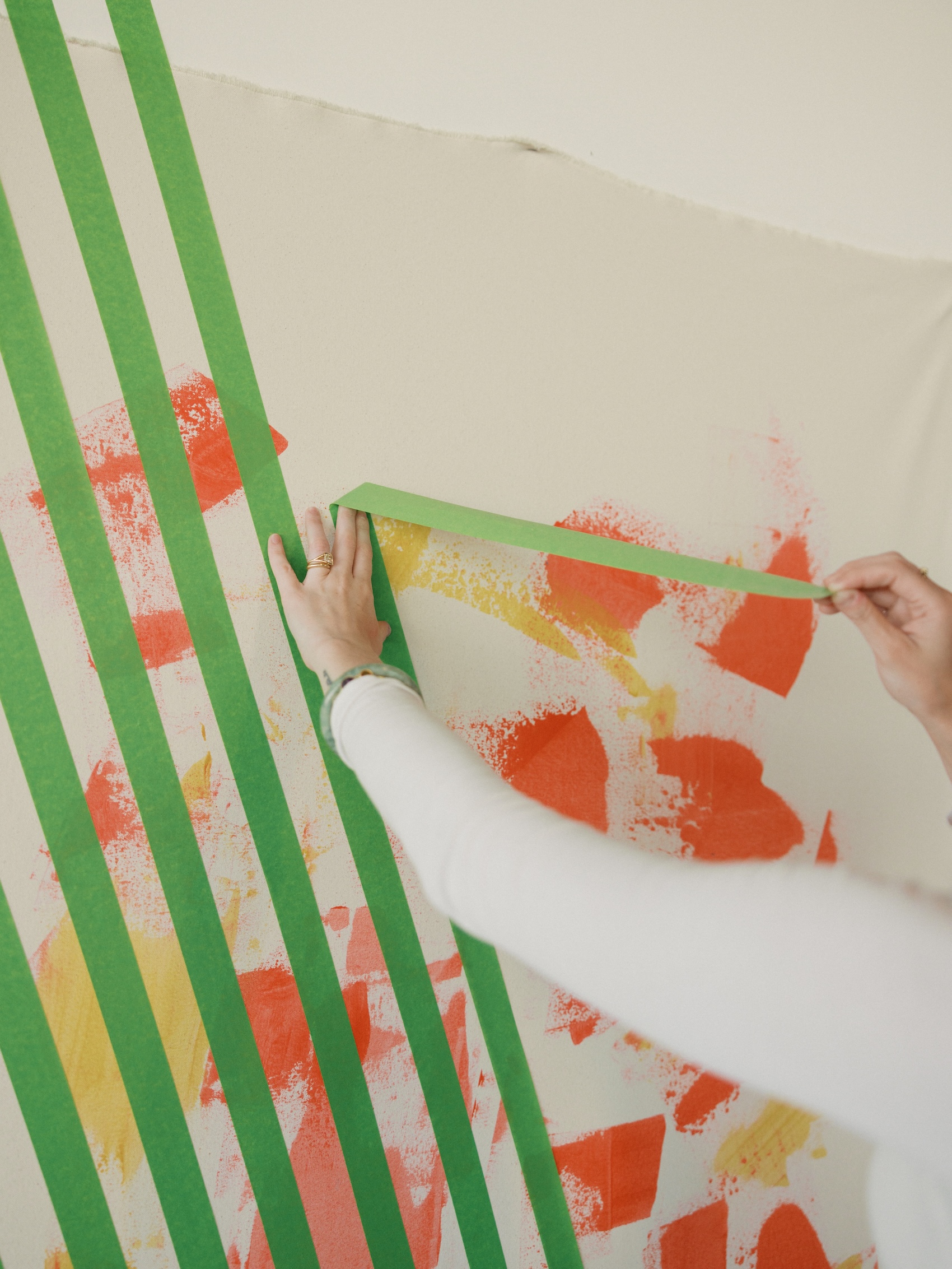
CHW: My background in design influences almost everything I make, even if it isn't immediately obvious. I don't really separate the two disciplines in my head anymore. I've realized I think in systems. Whether I'm making a painting, a sculpture, or eventually a piece of furniture, I'm really designing relationships—between light, material, color, space, and ultimately the viewer.
Design taught me that nothing exists in isolation. Every decision changes the system. Change one material, one color, one proportion, or one source of light, and the entire experience shifts. That way of thinking has stayed with me in my fine art practice, and it's how I approach every piece I make.
That way of thinking has naturally led me toward site-specific work and pursuing public art. I love being given a context—a building, an environment, a particular quality of light—and figuring out how to create something that genuinely belongs there. To me, that's still a design problem. It's about understanding how people move through a space, how natural light changes throughout the day, and how an artwork can transform someone's experience of an environment.
I'd absolutely love to move back into design someday, although probably through collectible design rather than commercial work. Furniture and lighting feel like very natural extensions of my practice because they already investigate the same ideas my paintings do. I'd also love to draw inspiration from historic decorative arts through a contemporary lens.
At the end of the day, I don't really see a hard line between art and design. They're both about shaping experience. The scale, purpose, and constraints might be different, but they're driven by the same curiosity.
RA: What draws you to different materials, and how do you decide which medium is right for an idea?
CHW: I don't really think of myself as being tied to a particular medium. I'm loyal to the question, not the material. One of the questions I've been chasing for years is: what happens when color no longer stays on the surface?
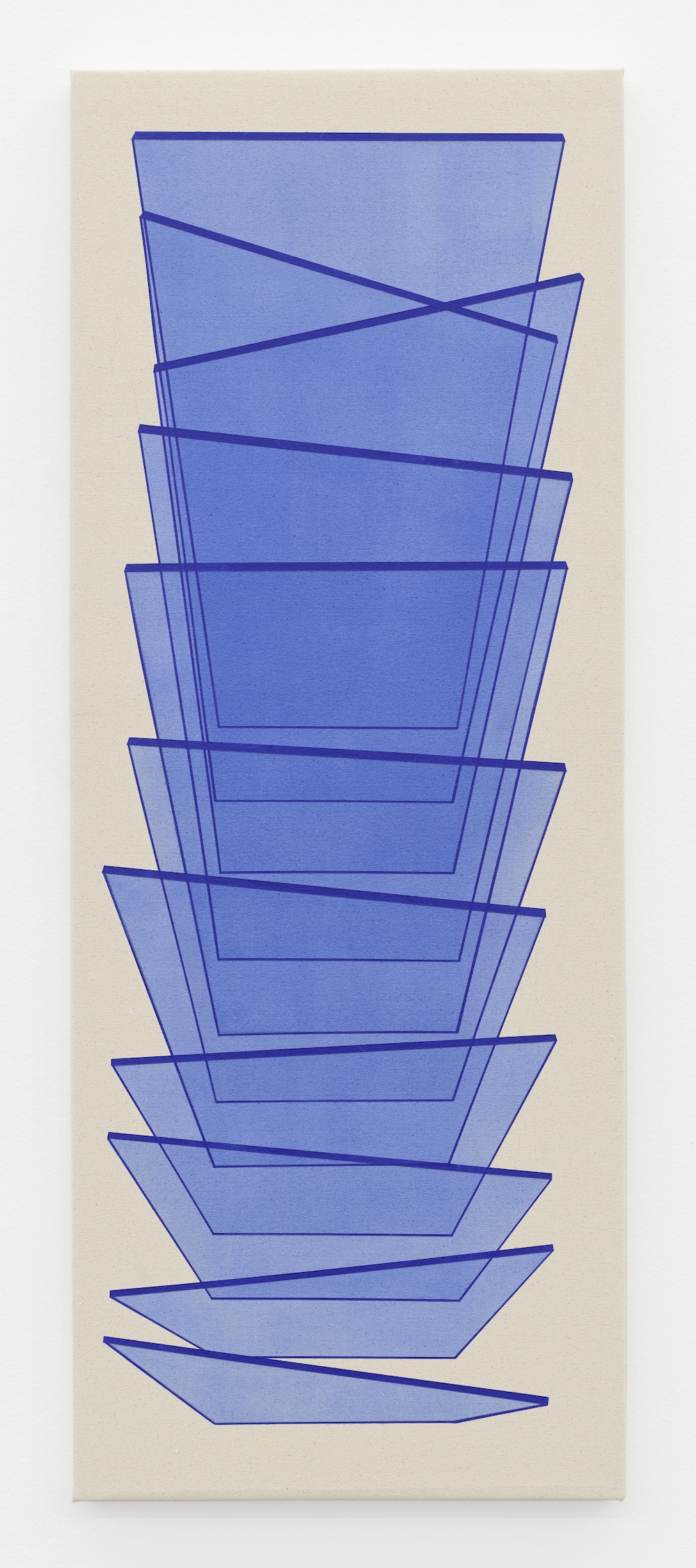
Painting has always been a foundation because it's such a direct relationship between color, light, and the eye. But over time I realized there were questions that paint alone couldn't answer. What happens when color has depth? When it becomes translucent? When it reflects onto architecture? When it casts shadows? I became less interested in depicting those experiences and more interested in creating them.
Resin was one of the first materials that really shifted my thinking. I was fascinated by the way it could hold light. It almost behaves like frozen water. Light enters it, bounces around inside it, and slowly comes back out. Suddenly, light wasn’t just illuminating the work—it became part of the material itself.
Plexiglass took that idea even further because it introduced an entirely new system by allowing color to project outward. Suddenly the work wasn't ending at the edge of the object anymore. The architecture, the light, and the movement of the viewer all became active participants in the piece. That's the kind of complexity I love. The more variables that enter the system, the more opportunities there are for perception to shift.
Looking back, I've realized every material I've chosen has expanded the same investigation. Painting taught me about color on a surface. Resin taught me about color within a material. Plexiglass taught me about color moving through a material. Public art asks what happens when those same ideas begin operating at the scale of architecture and the city. I can already see that curiosity leading me toward furniture and lighting, where color, light, and perception become part of everyday life.

RA: Much of your work involves distinctly bright, highly saturated, often near-neon colors. What draws you to this intensity?
CHW: Bright color has always felt like the most natural language for the questions I'm asking. It's immediate and impossible to ignore. It draws people in instinctively, and once they're there, I hope they stay for everything that's happening beneath the surface.
I've never believed that joy of looking and intellectual rigor are mutually exclusive. Sometimes contemporary art can treat beauty or visual pleasure as if they're somehow less serious, but I don't see it that way at all. I actually think beauty is one of the most generous ways to invite someone into a deeper conversation.
More than anything, though, color has made me pay closer attention to the world, and in this it's also made me much more optimistic. Choosing to spend your life studying color means you're constantly looking for moments of beauty and curiosity in everyday life. I don't think that's a naive way of moving through the world—it's a practice. The more attention you pay, the more you realize those moments are everywhere.
RA: Do you feel your relationship with color has shaped how you operate as a curator and how you see the world in general?
CHW: Absolutely. I actually don't think my approach to curation is very different from the way I approach making artwork. In both cases, I'm thinking about relationships and systems rather than individual objects.
At the end of the day, whether I'm making my own work or curating an exhibition, my goal is really the same. I want to create experiences that encourage people to slow down and pay closer attention. Attention is one of the most valuable things we can offer—whether it's a painting, another person, or the world around us. If someone leaves having noticed something they wouldn't have otherwise, then I feel like the work has done its job.
This interview has been edited for clarity and length.