Samuel Alexander Forest: “A Bag of Tricks” at Ortega y Gasset Projects
Review
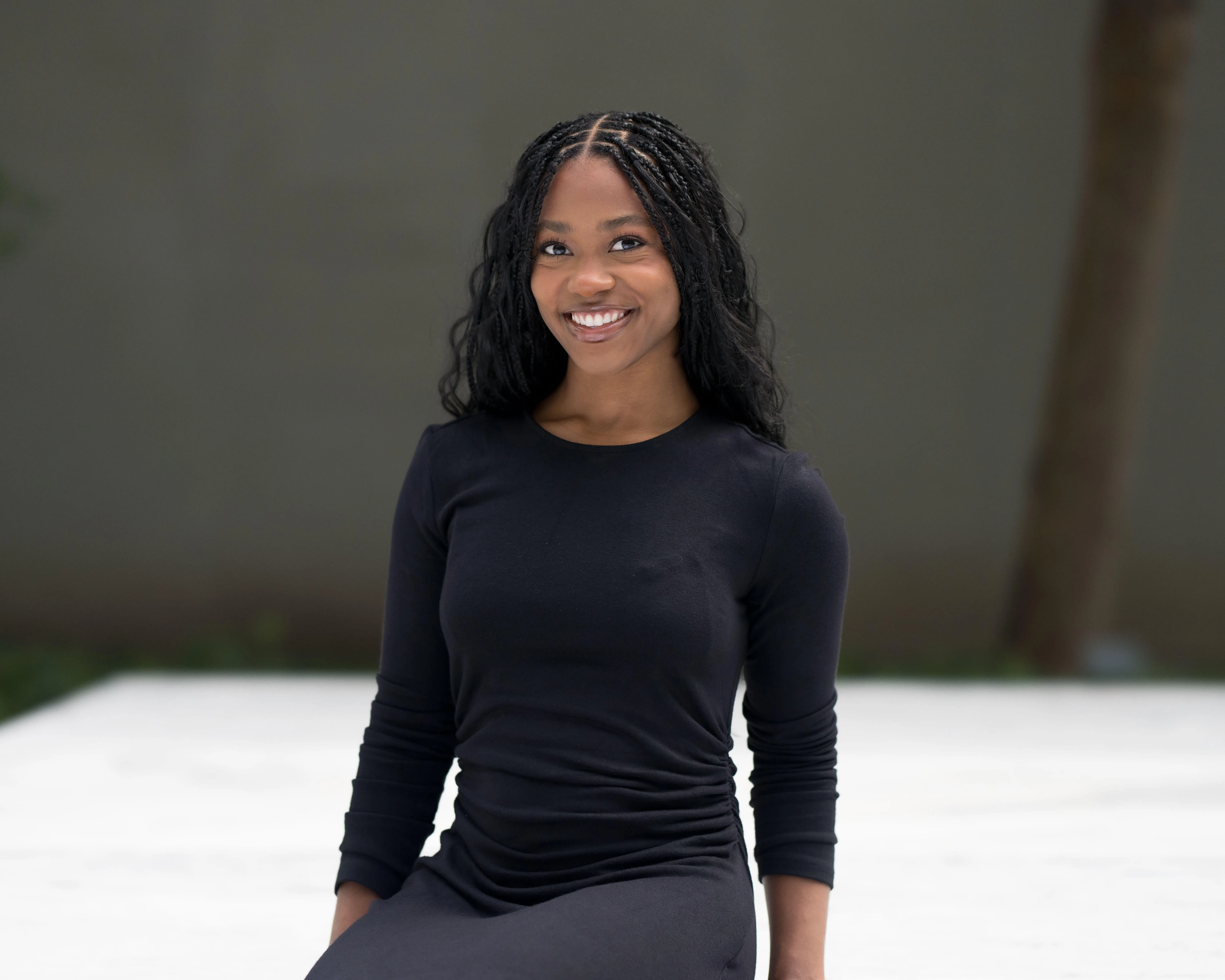
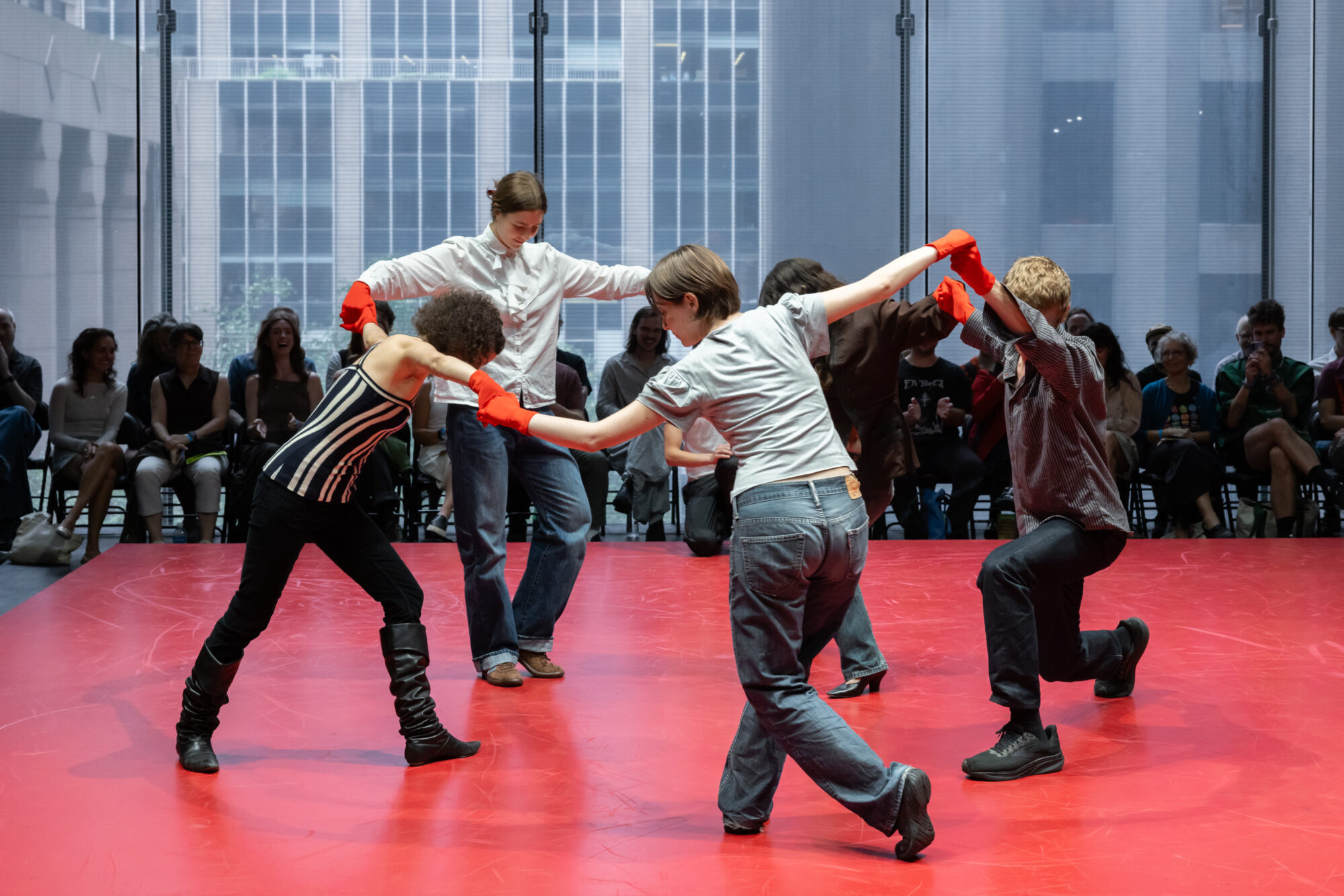
Alexa West is looking to smudge. Her choreography engages with dance traditions by incorporating awkward, exhaustive movement, balancing choreographic reference with obscurity. West holds an MFA from Bard College, and her work has been presented by SculptureCenter and the 2023 Performa Biennial, among others. Her practice also informs her contribution to East Williamsburg performance space Pageant. Founded in 2022, Pageant was created to highlight the work of emerging artists, providing a community-based environment to showcase experimental projects. Since its conception, the collective has upheld its original DIY ethos, carrying the same spirit into a daylong performance marathon at MoMA with an accompanying artist panel as a culmination of their 2026 studio residency at the museum.
Independent of Pageant, West is working towards a commissioned piece, Amusement (2026), with Beach Sessions in Rockaway Beach, Queens, on September 12th. Layered with material, sound, and reference, Amusement challenges the natural serenity of the landscape by raising awareness of effort. West’s work welcomes tension, pitting recognizability against unfamiliarity, exposure against facade, and intimacy against distance. IMPULSE sat down with West to discuss her upcoming performance, practice, and work at Pageant.
MD: Can you tell me about your process creating your upcoming Beach Session performance?
AW: I’m really excited and nervous. I’ve never done outdoor work like this—it’s my first time approaching it. I feel like the series is a real challenge given to the choreographer. How do you deal with these conditions? The beach is so different every day we’re there. Some days, there are literally different kinds of sand, denser or looser. Some days there are tons of people right where we want to rehearse. It’s definitely been an exercise in learning about what the beach is to me and then what the beach is to a dance process.
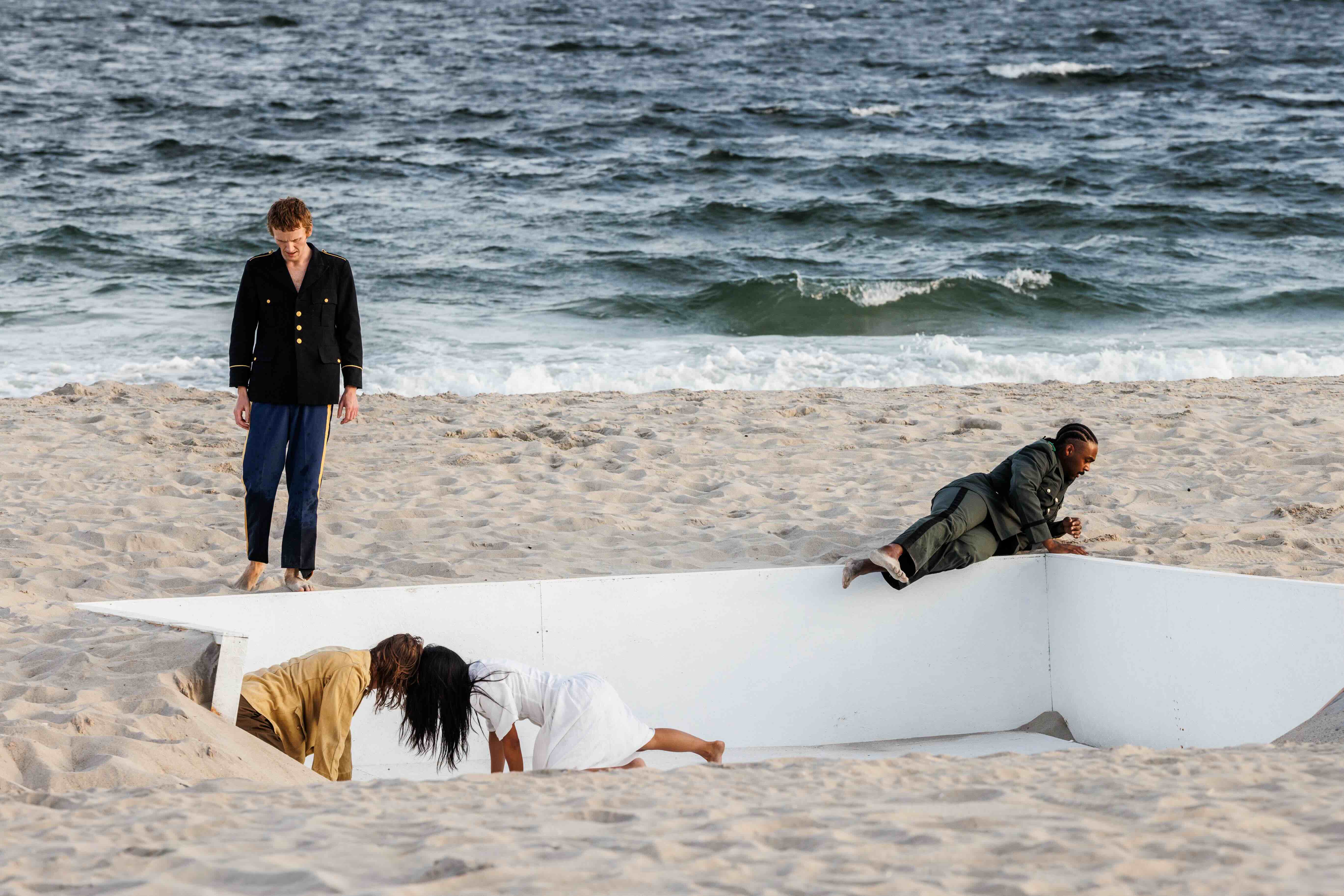
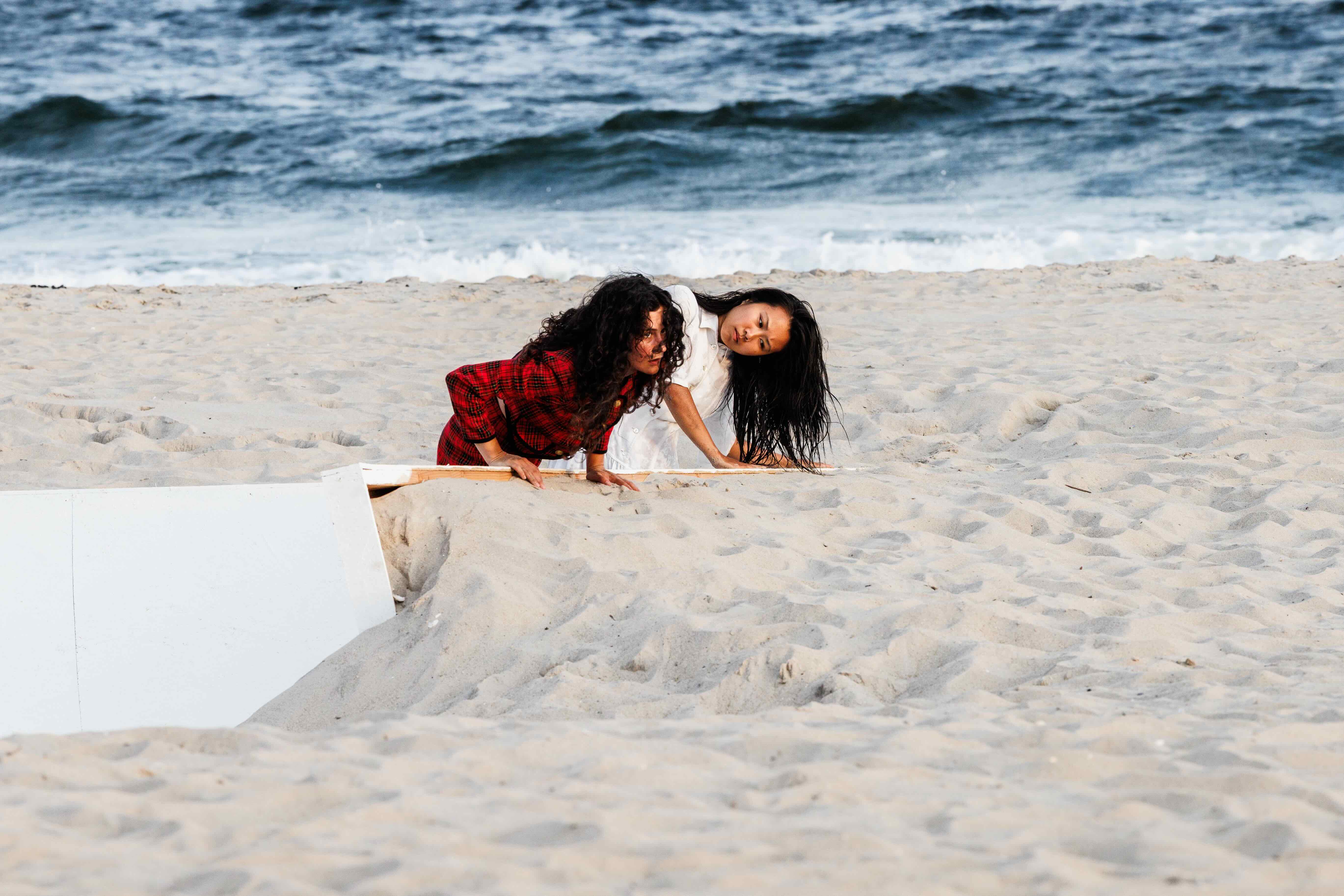
Within the history of the series, every year you see how the work of art contends with the beach itself: the water, the sand, the sun, and the people amongst that. I wanted to add to that and contribute to that lineage, but within that, I’m resisting it by physically building a three-room architecture for the performance.
In regard to dancing, I’ve noticed so many things, one of which is that any sort of dance looks really beautiful and elegant in a way that I find uninteresting. I wanted to find some friction out there—how do we complicate this lovely surrealist landscape? Just thinking about making these subterranean mild architectures as a way to force a tighter perspective, and then you look up, and it’s really endless and wide.
I’m interested in resistance and fatigue and a sense of failure or effort. We don’t have to make that up out there. It comes with any movement out there. Anything that is not slow is hard to do. We cut jumping pretty early—it’s almost impossible with this terrain. That built-in effort is something that I find resists the glamour of the beach.
MD: How does this interest in endurance contribute to your idea of friction?
AW: So much of my relationship to dance was shaped by training when I was younger, and the endurance quality was built into the process, but there’s supposed to be this veneer of spectacle, almost like pretending that effort isn’t present. I was really interested in how those efforts and performances are synonymous with a lot of other parts of my life. Some moments are stressful and difficult, and in those moments, you learn to fake it.
I feel like a lot of my life is turning stress, pain, et cetera, into pleasure or entertainment—maybe it’s my way of laughing. So I also like playing with that in the work: How do we make something fun look tiring? How do we make something tiring look gorgeous, flipping things on their heads to show that all these elements can coexist? And how can the dancers embody it, to allow them to feel like it’s theirs and put their emotions into it?
MD: How do you think about sound when you’re choreographing?
AW: I love sound, and I’m coming into making all my own sound at this point in time. I usually start each process with a concept or references that I believe go together. Even if they don’t, I’m creating connections. Over the course of working with the material and the dancers, I’ll use sound to complicate their relationship. For instance, we have very sexy dancing, and with the beach background, it’s so beautiful—I’m like, stop that. So now the sound is a booming boat horn. It sounds like a warning alarm, and against the sexiness, it provides a beautiful tension that I really enjoy. It’s about balance and properly mixing elements so that no one thing is dominating.
MD: Shifting from one of your projects to the other, will you speak to the thesis of Pageant and your role as a co-founder?
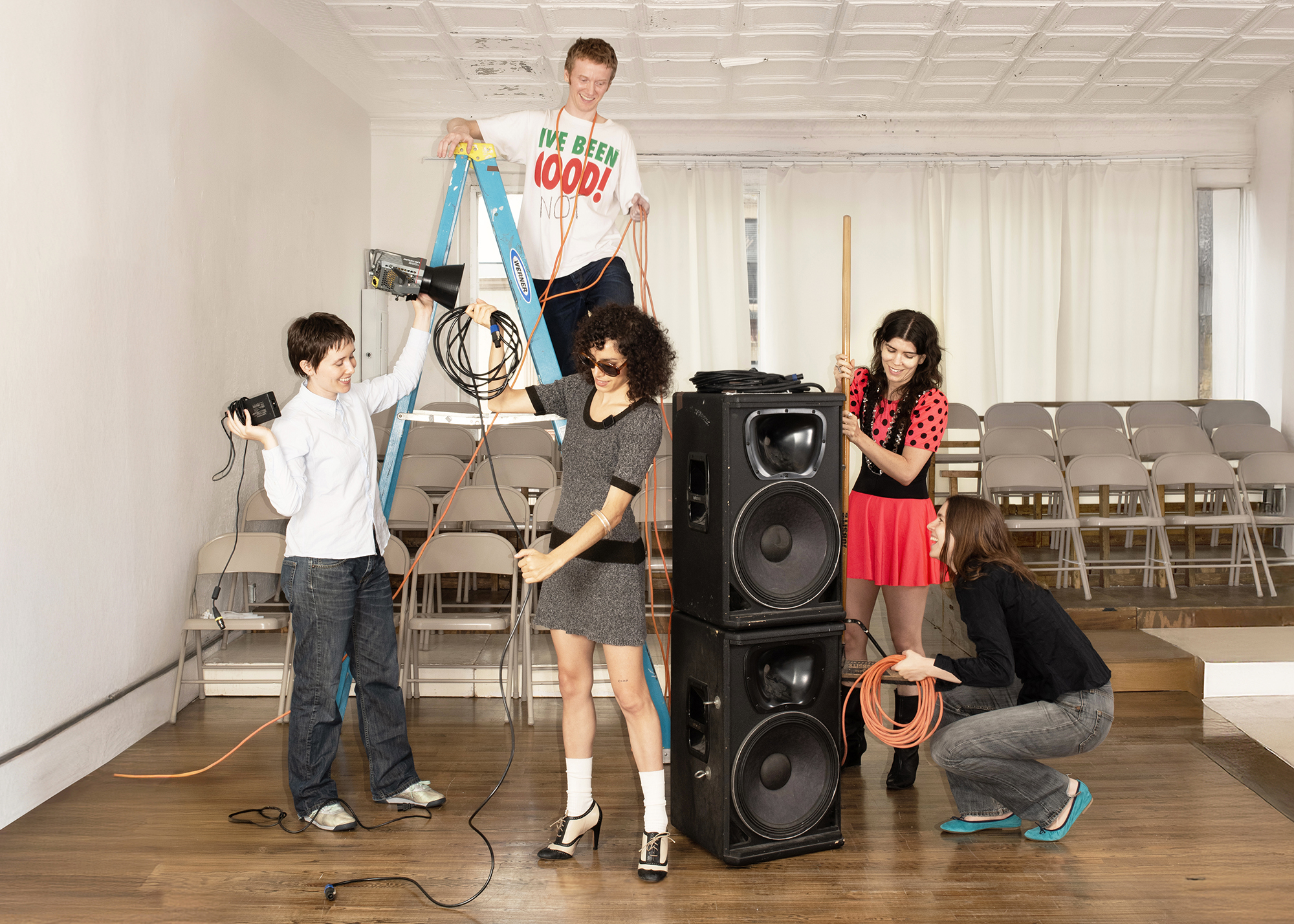
AW: Pageant is a synthesized culmination of the taste of the five founders: Sharleen Chidiac, Lili Dekker, Jade Manns, Owen Prum, and myself, similar to an artist-run gallery. We structured it on these historical models where artists obtain a practice space and alternate who gets a show. We opened up this space so that we can all show our work and continue growing as performance artists. It started by taking on this very “dumb” endeavor of a commercial lease in a post-COVID landscape where arts funding was really down, thinking of it as a way to support outside artists also a part of the Pageant community. Most of the people who get shows have come to the space before: they bought a ticket, they volunteered to work the door, maybe they did lights one night. It’s a very circular economy of friends, but it’s also a pretty unsustainable model. Our only goal would be to be able to provide artists more money than we receive.
We like a type of punchiness, a little bit of camp, a little bit of jazz. A lot of us like to harken back to an old Hollywood jazz era simply because I think it was really out of style when we were coming up as dance artists. I definitely have an obsession with Jack Cole and Bob Crossey because it was an era in the United States where people really cared about dance as a main form of entertainment. I’m really nostalgic for a time I never had where dance was like a cultural form of mass media, and that’s often what I reference in work, but with a contemporary sensibility. It’s really exciting to see the natural, social evolutions of a community space, and it’s so nice to be in community with people.
MD: What has it been like transferring your collective into this major art museum?
AW: It was a really interesting conversation to start, because we’ve never been asked to do this in a way that we wanted to. A lot of what Pageant and MoMA are doing together is very open-ended. I made a joke the other day that we created a dance pyramid scheme: we invited 25 artists, and those 25 artists each have a cast of around 5 people, so there are 85 people performing this show at MoMA. I think I’ve learned about scale and scope, but this is the Pageant way to bring everyone into the fold. At MoMA, and before this, we’ve developed a language of trust with each other. If we know how to do anything, it’s how to run a show. With this performance marathon, it’s been incredible to have additional resources and a curatorial vision to be the bridge between audience and artist.
The goal is always clarity, and then we all work towards that clarity. In putting together the marathon, we had to consider what our criteria were and how to formulate what was important. From my perspective, the people in the marathon have been largely affected by Pageant, or they have affected Pageant, or probably some combination of the two. In the group and in my independent practice, I often ask: how do I produce something legible without having to be told?
Alexa West: Amusement ran at Beach Sessions on September 12, 2026. Pageant Presents Pageant ran at MoMA on August 21, 2026.