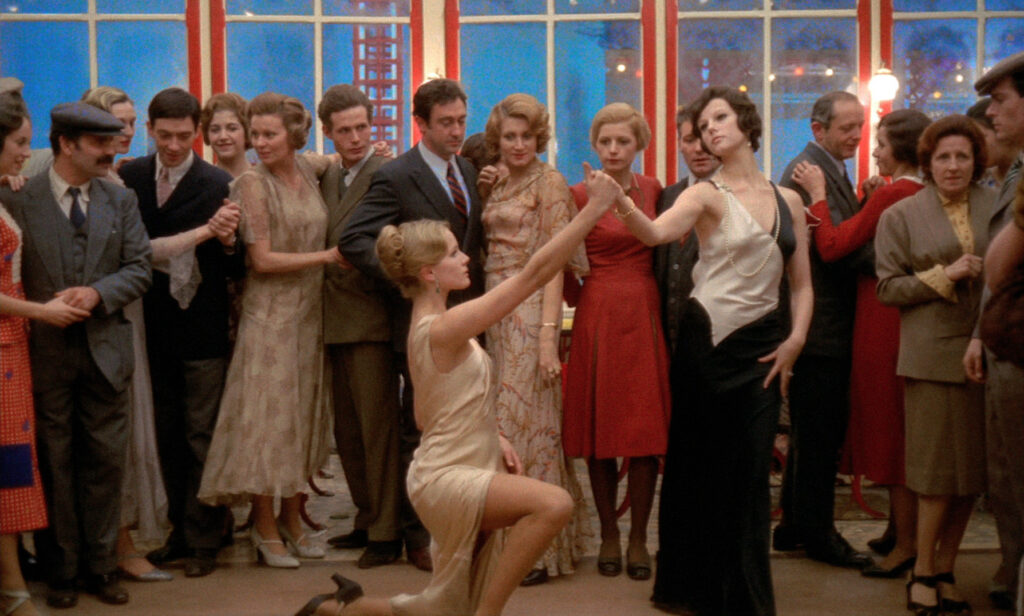
"The Conformist" by Bernardo Bertolucci
Review
On the eve of the new 4K restoration of the grubby, sharp-toothed, stare-you-down-until-you- piss-yourself biopic I Shot Andy Warhol (1996), it’s less clear than ever where his shooter originated. Was she born from the river? Did she materialize on a sidewalk? The film’s director and co-writer Mary Harron has Valerie Solanas, Warhol’s shooter, offer up those two options as her origin, detaching her from history and place and people. This is by design and is one of the aspects of the film most relevant today, 30 years after its release. In I Shot Andy Warhol, it is a sin for a person of note to come from somewhere. Solanas knows this, and Warhol does too. The film, chasing down the future along with Solanas, ultimately depicts her as an origin point, the start of the disembodied star in a disembodied world, hoping to float to the top of the culture instead of just floating away.
In the film, Solanas, played by Lili Taylor with dazzling manicness and focus, is as good a marketer as Andy Warhol. She darts down sidewalks, trying to charge passersby for dirty words and taboo conversations and sex, branding herself as a no-nonsense, no-limits artist even before she wrote anything. If there’s one thing Valerie knows, it’s that repetition is the key to good marketing. She tirelessly espouses the tenets from her SCUM Manifesto, "SCUM" standing for the Society for Cutting Up Men. Men are inferior to women, she says. Men have irreparably harmed the species, and their role should be as diminished as possible. But she doesn’t seem aware that other women feel the same way as her—when confronted with radical feminists with similar goals, she’s disturbed they’ve taken her ideas. Yet when people like Warhol find her insightful or unusual, she’s invigorated.
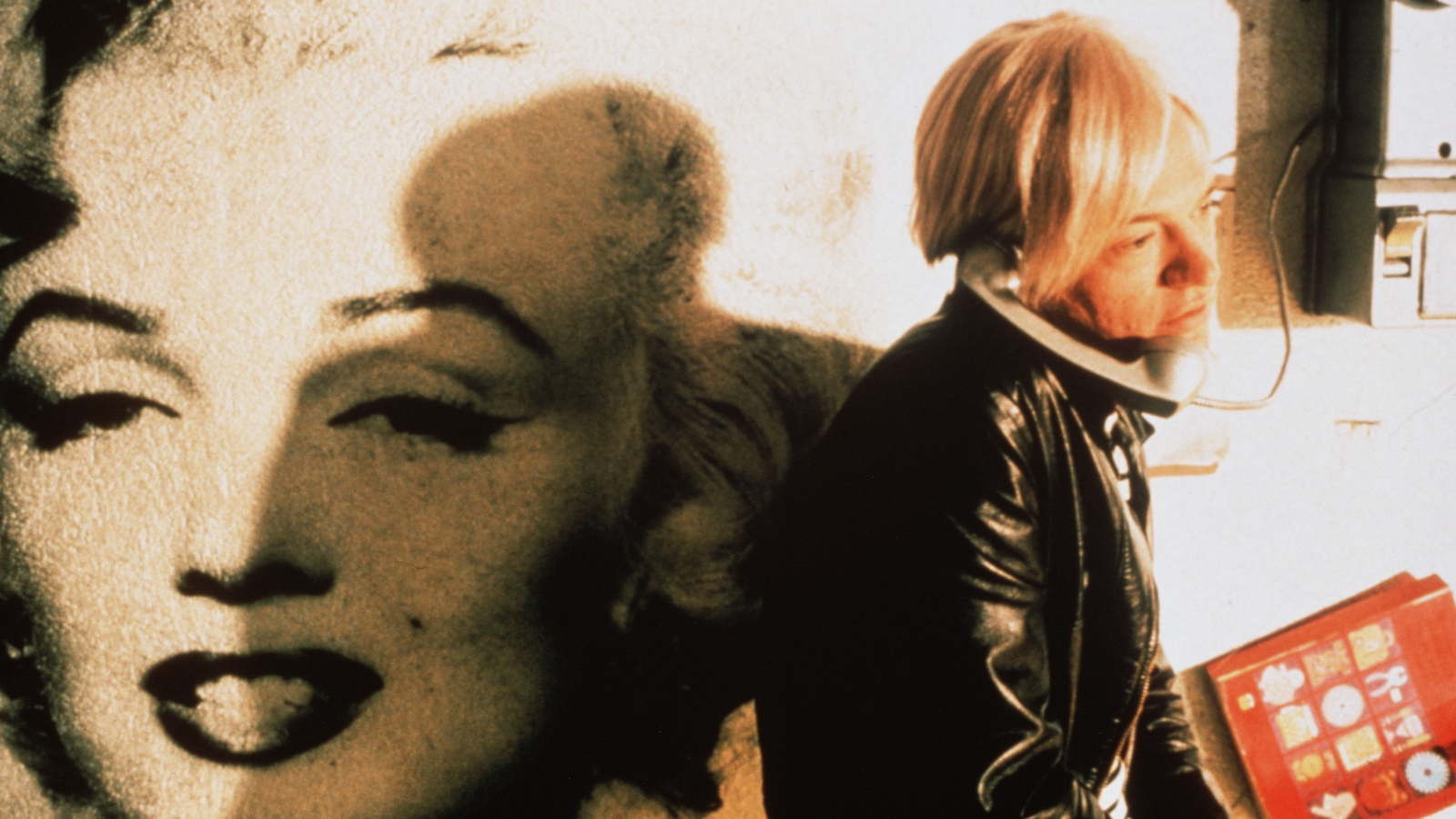
This raises the question: How can you be a creator in a world full of creators? The artist striving for originality, the Valerie Solanas type of artist, must position herself on a higher plane than her peers and the public—on the plane of a creator. Yet that same distance isolates her. Still, the film sympathizes with Solanas over Warhol. When Solanas enters his Factory for the first time, an excessively prim and pompous aria from Rigoletto plays, preventing Warhol’s world from existing on its own terms, constraining it beneath a stale lineage of art. Jared Harris’s passive, unimpressive, yet sweet Warhol shrugs his way through the film, making the Factory feel refreshingly banal despite its reputation. Warhol and Solanas both hope to find fame in part through escaping their origins. But only Solanas, the film seems to reason, has the moxy required to do so.
The least interesting parts of I Shot Andy Warhol come from the film’s critiques of Solanas, often too straightforward for such a delicately philosophical and feeling presentation. As if compelled to avoid condoning the actions of a near killer, Harron films Solanas reading sections of the SCUM Manifesto in black-and-white lit by a cheap spotlight, evoking the screen test she does for Warhol, at which his “Superstars” recoil and laugh. Harron’s haphazard presentation of this also positions Solanas as someone who hasn’t thought through their doctrine. When Solanas begins to fully unravel following her discovery of the sleazy deceptions in the book contract she signed, the film portrays her ideas as leading to derangement. This is necessary for transitioning Solanas from a slightly off-putting but unique artist into the form for which she’s most known. However, Harron never finds a way to connect a critique of Solanas as a troubled individual to the film’s more nuanced ideas about hierarchy, origin, and fame.
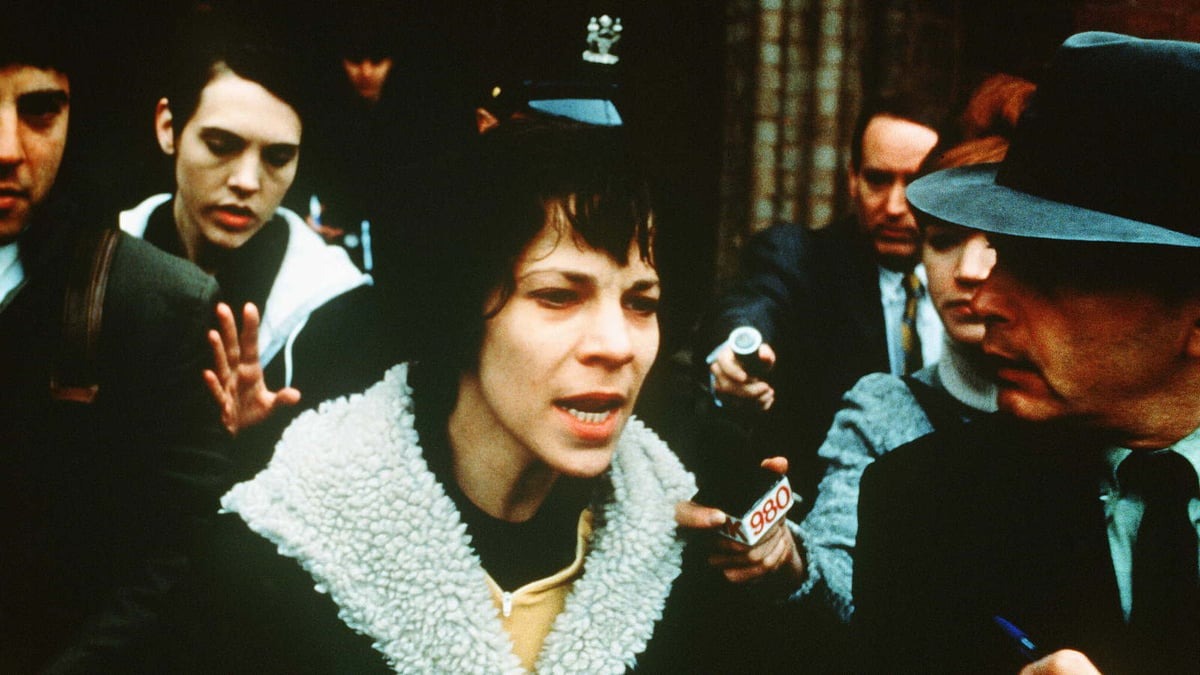
Yet this doesn’t seem to be where Harron feels the film falls short. In a 2024 interview, she was asked about the epilogue, which states that the SCUM Manifesto is “now a feminist classic.” Harron regrets including that line for tainting the film as “conventionally political.” Critics who state the epilogue is erroneous are correct. Almost no one is calling the SCUM Manifesto a classic, nor I Shot Andy Warhol for that matter. Yet the film’s final declaration, whether Harron would concede this or not, actualizes Solanas’ dreams. And with that, Harron’s portrait of an artist in search of a (non-)place for herself ascends toward its radical end.
The epilogue does not dull Solanas’s politics but retroactively turns I Shot Andy Warhol into sly revisionist history. While Solanas couldn’t rise to the top of the world, Harron has her climb into the canon. I Shot Andy Warhol functions less as a biopic and more as an argument for Solanas as icon, aligning her for delivery into the future. The epilogue completes the film’s subtle exploration of good marketing. Can saying something make it so? Did Warhol’s shooting even matter until Solanas found a cop to tell?
In that sense, Solanas is an ideal avatar for our dizzying social media age, intuitively narrating her ideas to anyone who will listen so as to stabilize herself within the culture instead of the boring and hurtful physical world. Thirty years on, I Shot Andy Warhol remains most thrilling for its commitment to listening to Solanas. In Harron’s and Taylor’s hands, she is given an attentive and stable home for her views and the perpetual audience she always needed to survive.
On June 12, 2026, the IFC Center will begin screening the new 4K restoration of I Shot Andy Warhol.