%2C%20dir%20(2).%20Brydie%20O%E2%80%99Connor%20-%201.jpeg)
.webp)
“Wetware” at RAINRAIN Gallery, Curated by Spine
Review
Remote Viewing begins with an impossible image. At the center of the exhibition is psychologist Tomokichi Fukurai’s 1931 experiment attempting to photograph the far side of the moon through psychic transmission, an effort that immediately destabilizes conventional assumptions about vision, evidence, and mediation. From this point of departure, the exhibition reflects on contemporary visual culture, where various forms of “remote viewing” have become commonplace, and proposes perception as a fluctuating field shaped by technology, imagination, memory, desire, mysticism, and systems of power. The exhibition explores this idea through a remarkably diverse selection of artistic and historical materials. Documents, spirit photographs, diagrams, psychic research archives, experimental films, video installations, sculptural environments, sound works, paintings, drawings, collages, and networked media unfold across three floors of the Museum of National Taipei University of Education (MoNTUE). Works by Harun Farocki, Nam June Paik, Susan Hiller, Trevor Paglen, Hsu Che-Yu and Chen Wan-Yin, Apichatpong Weerasethakul, Shigeko Kubota, Tony Oursler, Sky Hopinka, Ho Tzu Nyen, and others are presented alongside occult archives, Cold War psychic research, animistic cosmologies, and early photographic experiments. Together, these materials form a kind of media archaeology that dispenses with linear narratives of technological progress. We are given the sense that psychic experiments, spirit communication, surveillance systems, machine vision, and algorithmic imaging emerge as interconnected attempts to extend perception beyond the limits of ordinary sight.

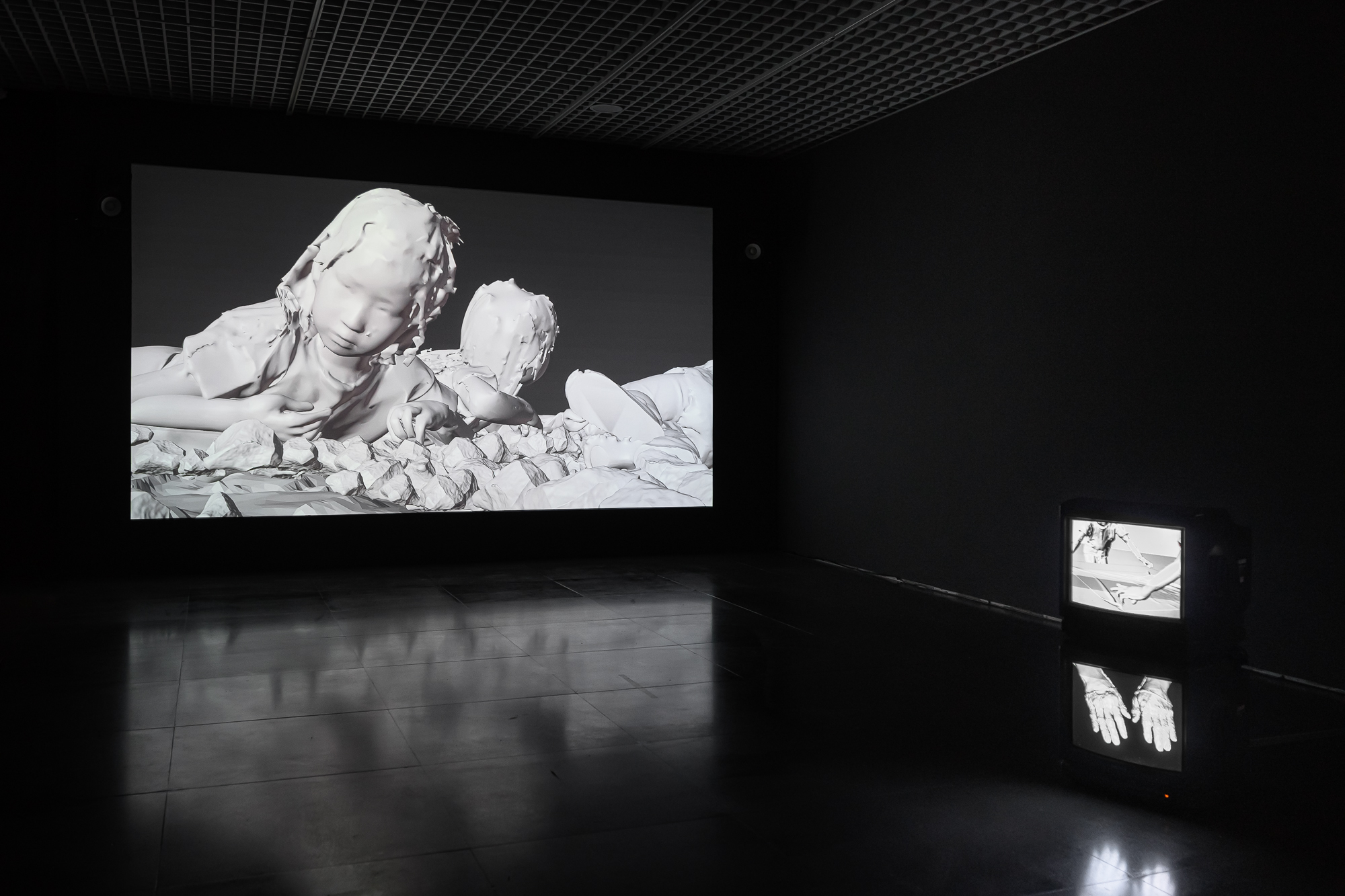
Underlying the exhibition’s conceptual rigor is the remarkable depth of curator Alice Nien-pu Ko’s research and intellectual guidance, which create an active field of associations through carefully constructed dialogues between works. One particularly compelling example is the placement of Taiwanese artist Hsu Che-Yu and longtime collaborator and scriptwriter Chen Wan-Yin’s Catastrophism (2025–26) in proximity to selections from Max Ernst’s A Week of Kindness (Une semaine de bonté) (1934). The juxtaposition extends Surrealism’s language of fragmentation into the digital present. Ernst’s celebrated collage novel, assembled from appropriated nineteenth-century illustrations, scientific imagery, and popular printed matter, transforms familiar visual languages into seamless yet impossible scenes. Hsu and Chen’s multichannel installation similarly destabilizes conventional notions of reality through uncanny constructed scenes made from 3D scans and motion capture technologies that conceptualize the body as a “simulator” through feedback loops linking nervous systems and environmental conditions. The work considers how technological rationality is forged through catastrophic conditions, where data centers, imaging systems, and semiconductor networks become mechanisms for producing and stabilizing knowledge amid uncertainty. Seen alongside Ernst’s work, Catastrophism appears both as a reflection on emerging technologies and as part of a longer history of attempts to visualize a world that defies any sense of reality as a form of critique.
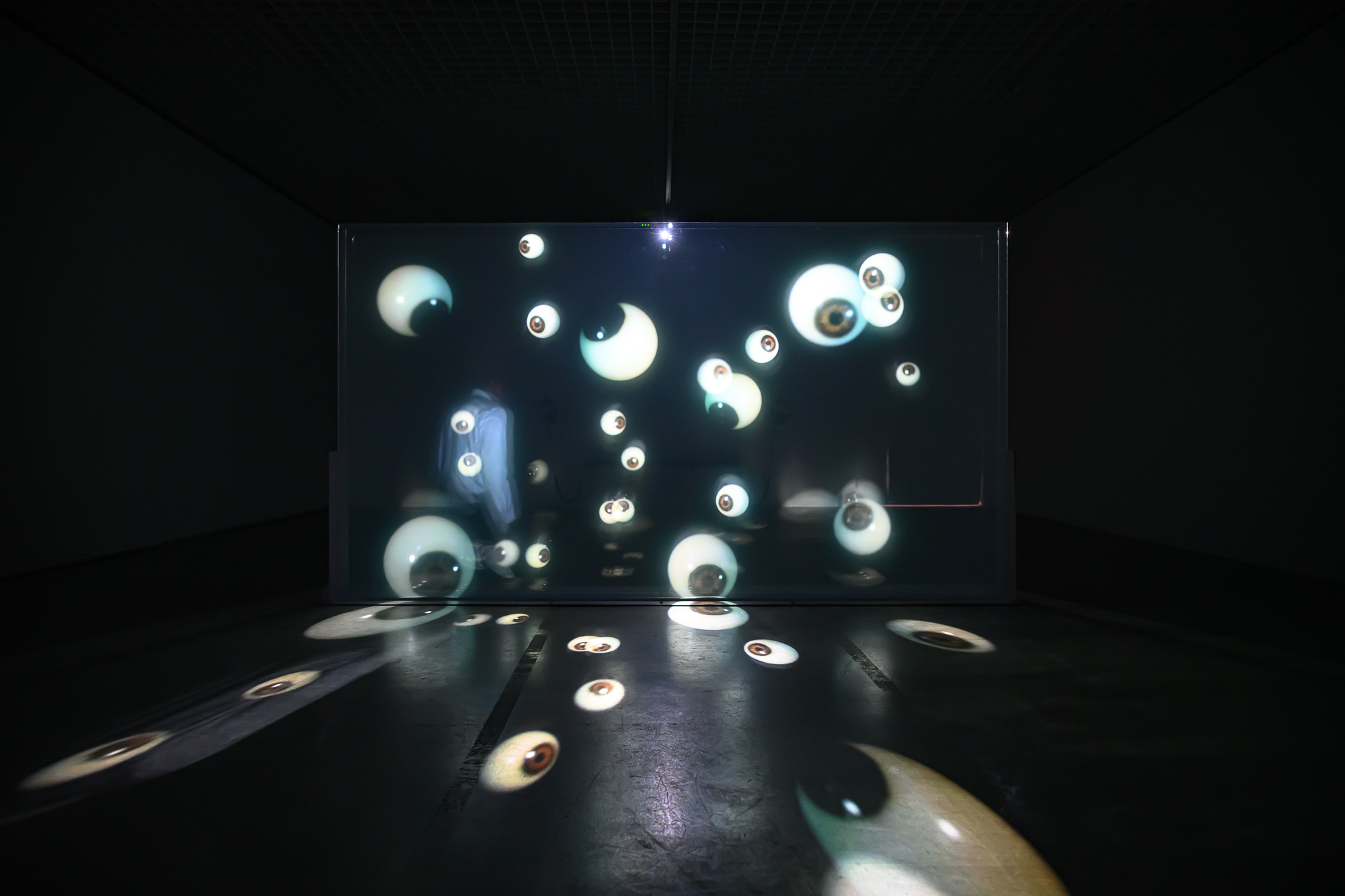
Importantly, Remote Viewing also avoids treating its archival materials as irrational detours from science or as mere historical curiosities. Like works of art, spirit photographs, trance documentation, and pseudoscientific experiments are presented as expressions of humanity’s enduring desire to exceed the visible world and function atmospherically rather than didactically. In an area just beyond an encased copy of The Book of Light (1957)—the recorded visions of writer, artist, and UFO witness Gerald Light—is Apichatpong Weerasethakul’s extraordinary multi-channel video installation Solarium (2023), a recreation of the artist’s childhood horror film The Hollow-Eyed Ghost (1981). Solarium places viewers in the perspective of a wandering ghost searching for his stolen eyes, transforming the space into a dark, immersive chamber of strange sounds and fragmented images, eventually giving way to a crescendo of multiplying eyes escaping the frame.
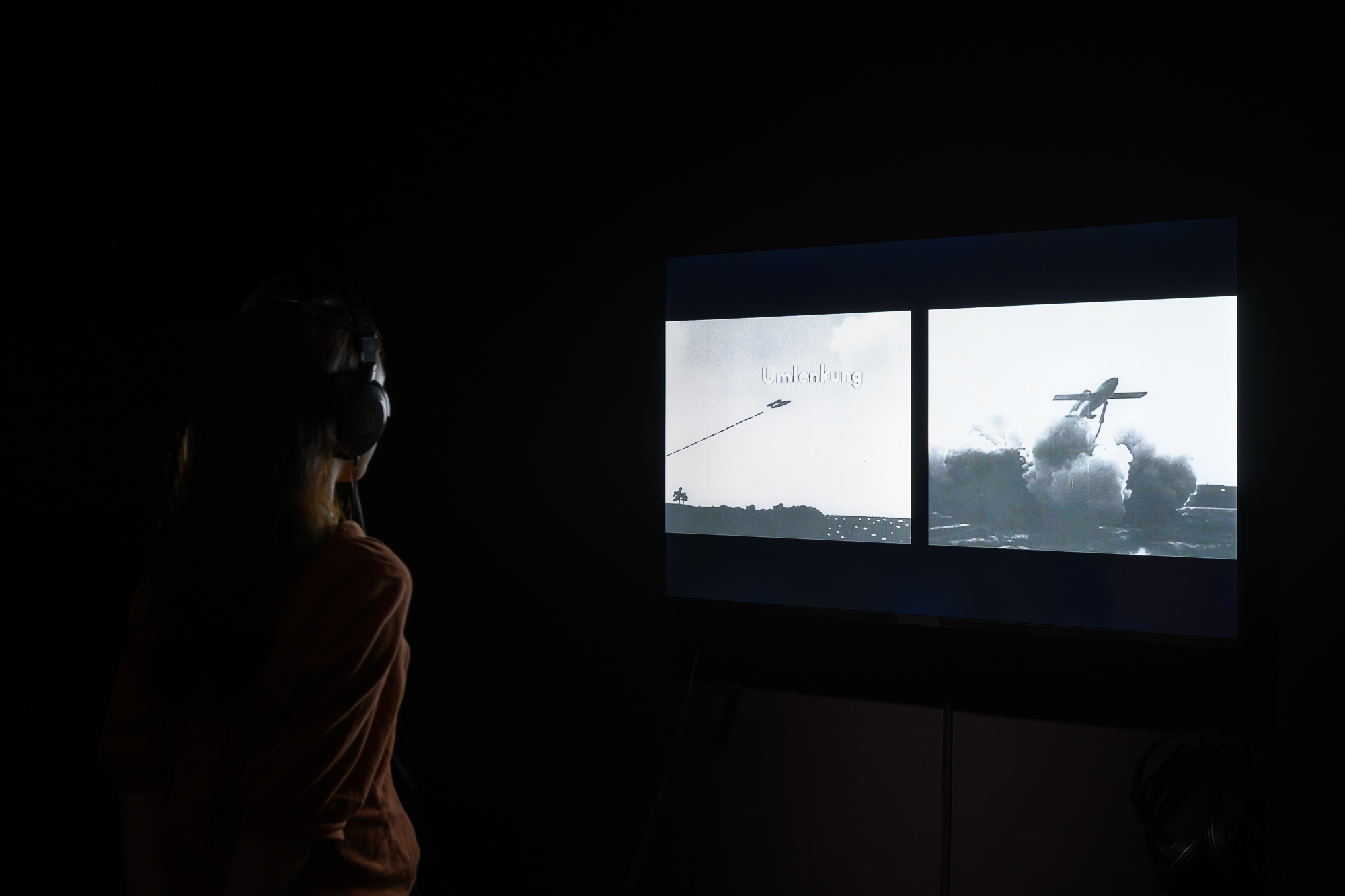
The inclusion of such works unsettles persistent distinctions (particularly within Western epistemologies) between science and mysticism, technology and ritual. Yet the exhibition remains attentive to the politics of vision and the ways perception itself becomes contested terrain. In this way, the inclusion of Harun Farocki’s Eye Machine III (2003) and Trevor Paglen’s Doty (2023) is particularly significant. Their works ground the exhibition’s more speculative dimensions within current regimes of operational images and state-sponsored disinformation tactics, demonstrating how the same systems that expand perception also enable surveillance, extraction, prediction, and control, as well as showing how vision remains inseparable from power.
Remote Viewing begins with a thematic framework but develops it into something more ambitious, inviting visitors to inhabit ambiguity, psychological expression, historical inquiry, and socio-political critique simultaneously. This gives the exhibition an unusual philosophical density where selections reify the idea that perception is never fixed, stable, or purely optical, and that the history of imaging has never been limited to the passive recording of appearances. Alongside photography’s evidentiary function persists other impulses, including the desire to visualize what exceeds perception itself, whether psychic, emotional, spiritual, or otherwise inaccessible to direct observation. The exhibition asks us to consider how images might also operate as speculative instruments for giving form to realities that remain unseen, unmeasurable, or unresolved. In this sense, Remote Viewing moves beyond paranormal vision to become an inquiry into the unstable conditions through which images and forms of seeing themselves take shape.
Remote Viewing is on view at the Museum of National Taipei University of Education (MoNTUE) from April 18 to June 28, 2026.