Tim Breuer at Champ Lacombe and TRAMPS
Review
Color is light. It’s our interpretation of wave frequencies, energetic oscillations amounting to a mere fraction of the electromagnetic spectrum. From radio to infrared, optical to ultraviolet radiation, X-rays to gamma rays, visible light occupies only about 0.0035 percent of the total.1 Outside of that infinitesimal portion, color does not exist. It’s a vivid yet elusive presence that resists quantification. “Color shines and wants only to shine. When we analyze it in rational terms by measuring its wavelengths, it is gone. It shows itself only when it remains undisclosed and unexplained.”2 Here, within this narrow range, we share the privilege of color. “Light becomes music.”3
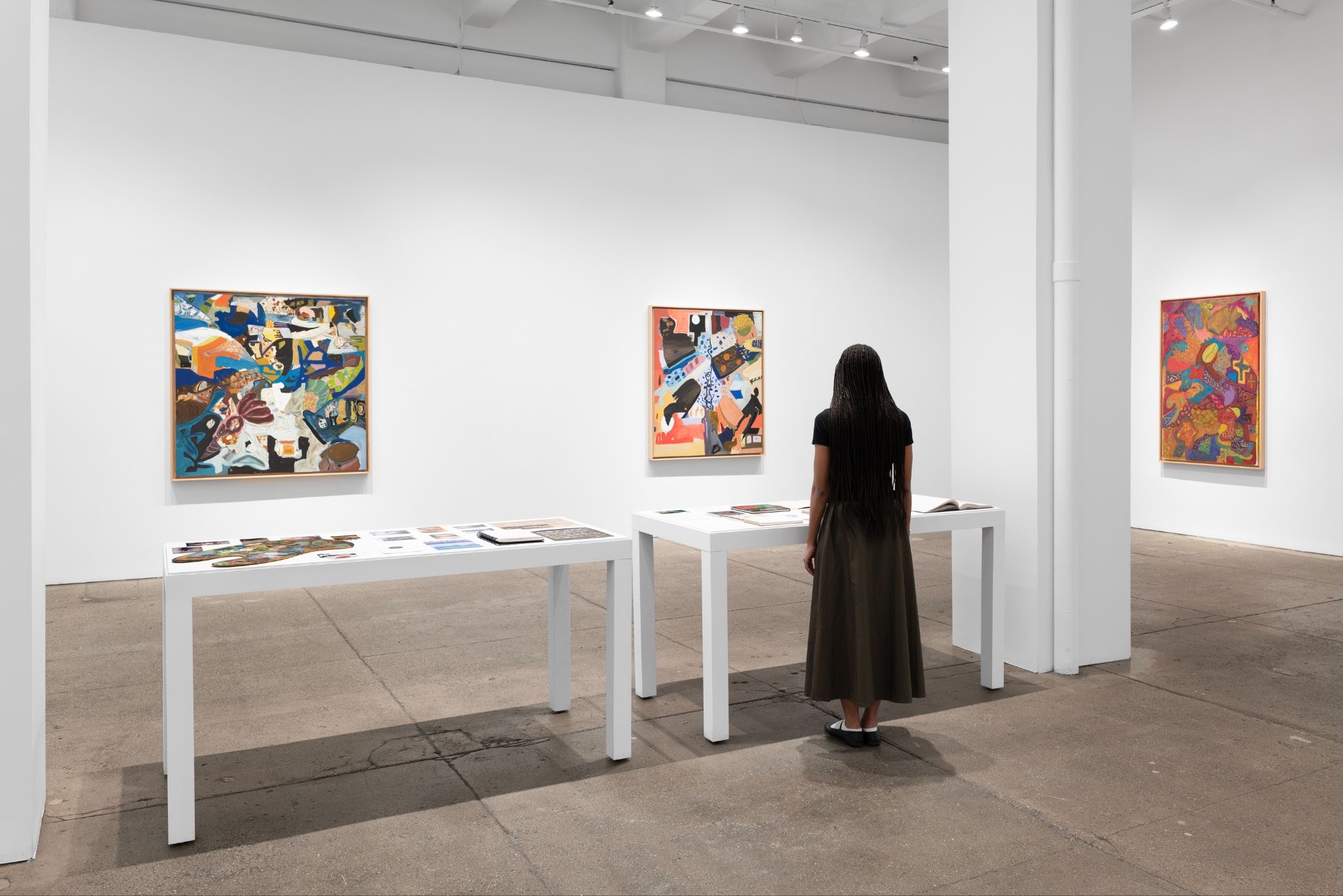
Ficre Ghebreyesus understood this. He meditated upon it, experimented with it, activated the phenomenon of color across matter and media. An artist, chef, activist, teacher, musician, polymath, and refugee, Ghebreyesus synthesized connections in his work that open the senses to a more complex and colorful world. In the lower margin on a page from one of his many notebooks, next to a yin-yang sketch, Ghebreyesus wrote: “In transporting the energy, you are transported by it. Color is supreme. It may include, but definitely exceeds meaning, which follows later.” This note, as concise as it is insightful, begets the title of his third solo exhibition at Galerie Lelong New York. Color is Supreme—a title simultaneously honoring John Coltrane’s 1965 album A Love Supreme4—is a luminous, multidisciplinary exhibition of the late artist’s visionary practice that features paintings, drawings, photography, and collage, in addition to archival materials shown for the first time.
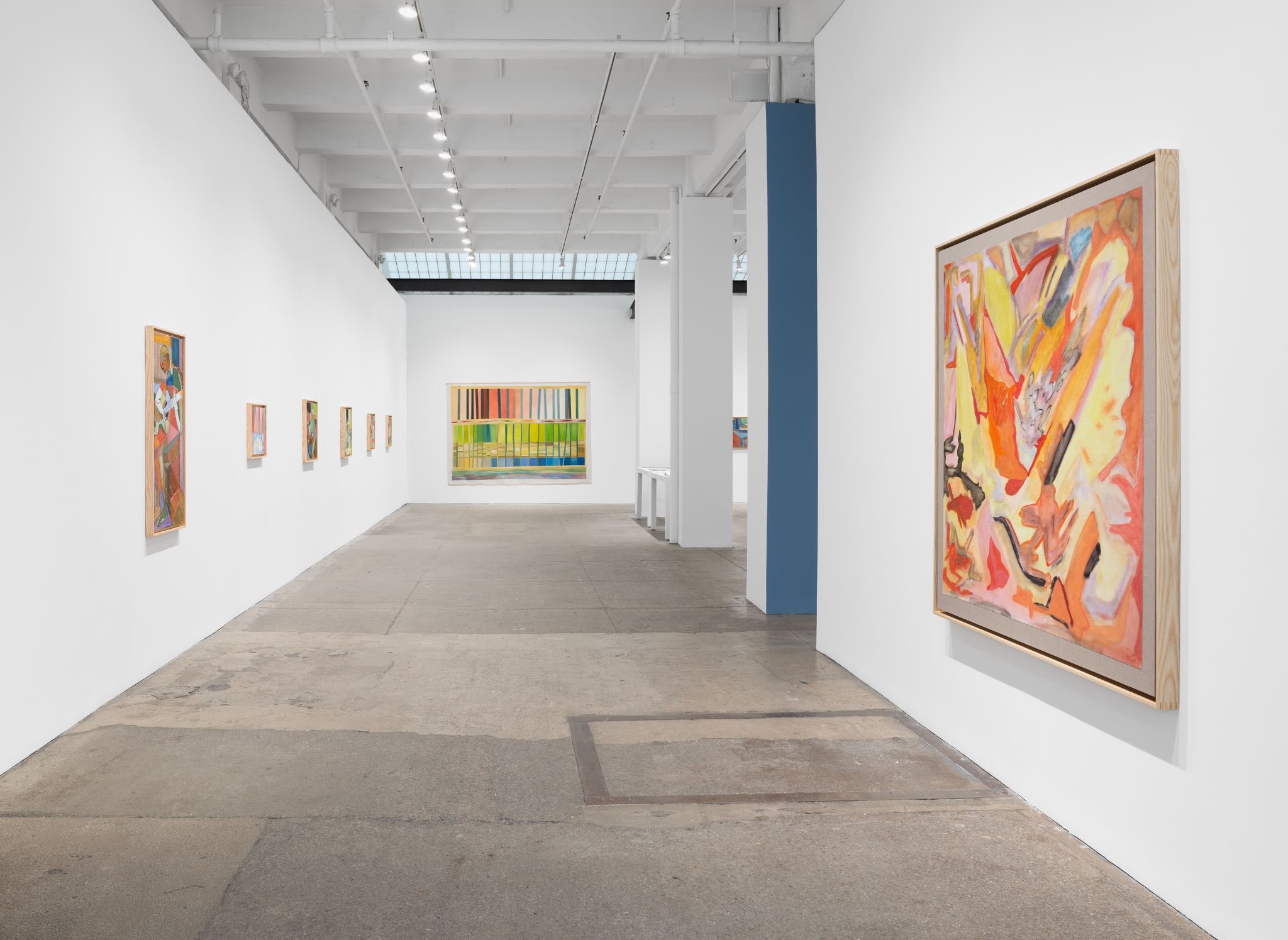
The largest painting in the show, Untitled (c. 2007–2010), embodies Ghebreyesus’s reverence for and exploration of color. Across the top register, the artist transitions through burgundy, vermilion, coral, rose pink, and moonlight white—bands of varying thickness, separated by teal vertical lines. Forgoing the systematic, sequential symmetry of Goethe’s chromatic circle,5 Ghebreyesus’s inclusive tonalities disclose a more idiosyncratic succession of color, revealing radiance of a different order. He seems to evoke an abstracted landscape with a red crepuscular sky, the sort of ancient sailors’ delight. Yellows and greens like citrus and moss, blues like lilac and cornflower. Ghebreyesus invites us into an elementary world where atmosphere, earth, and water are in communion—a living planet capable of bending light like a prism, releasing splendid possibilities.
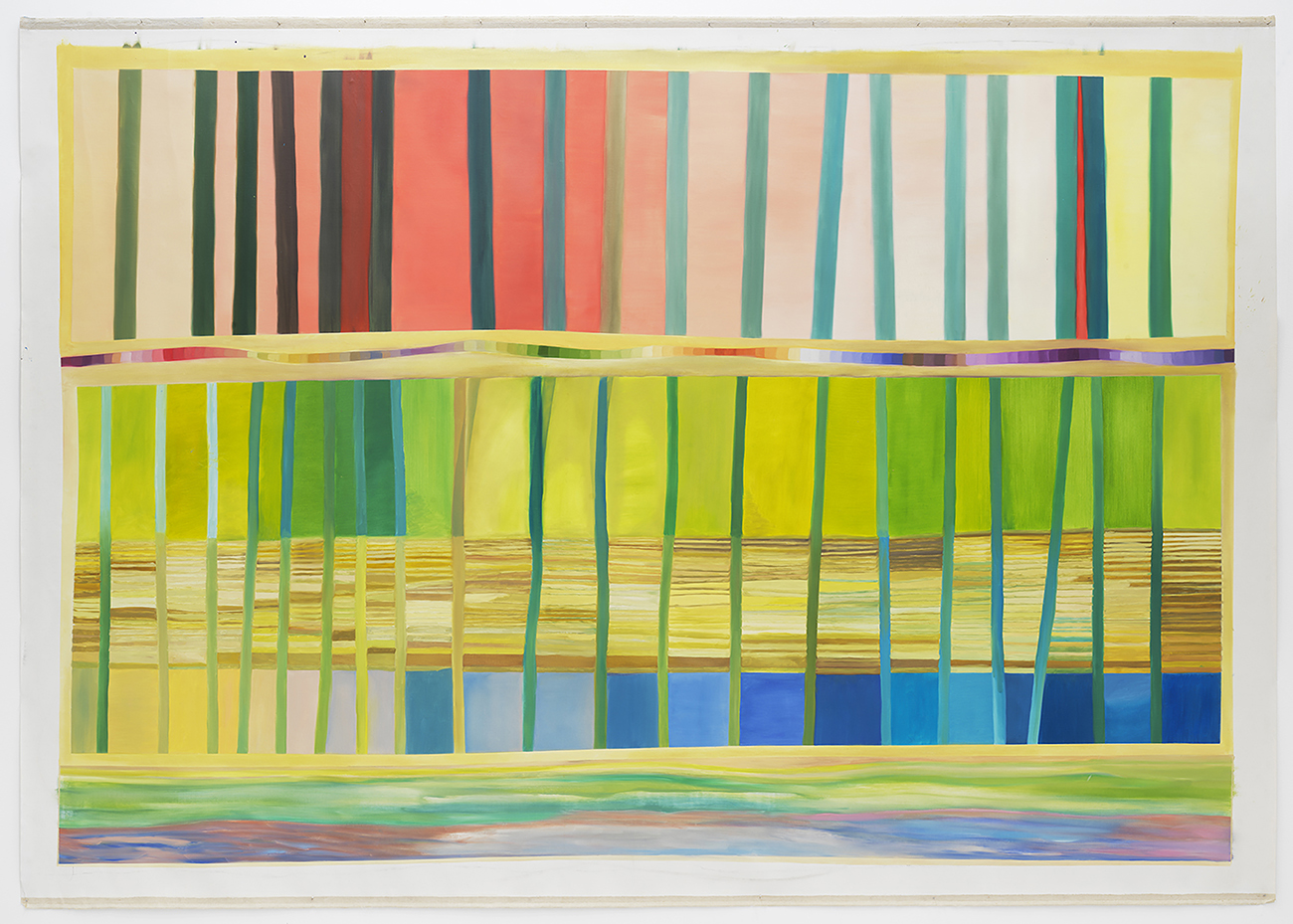
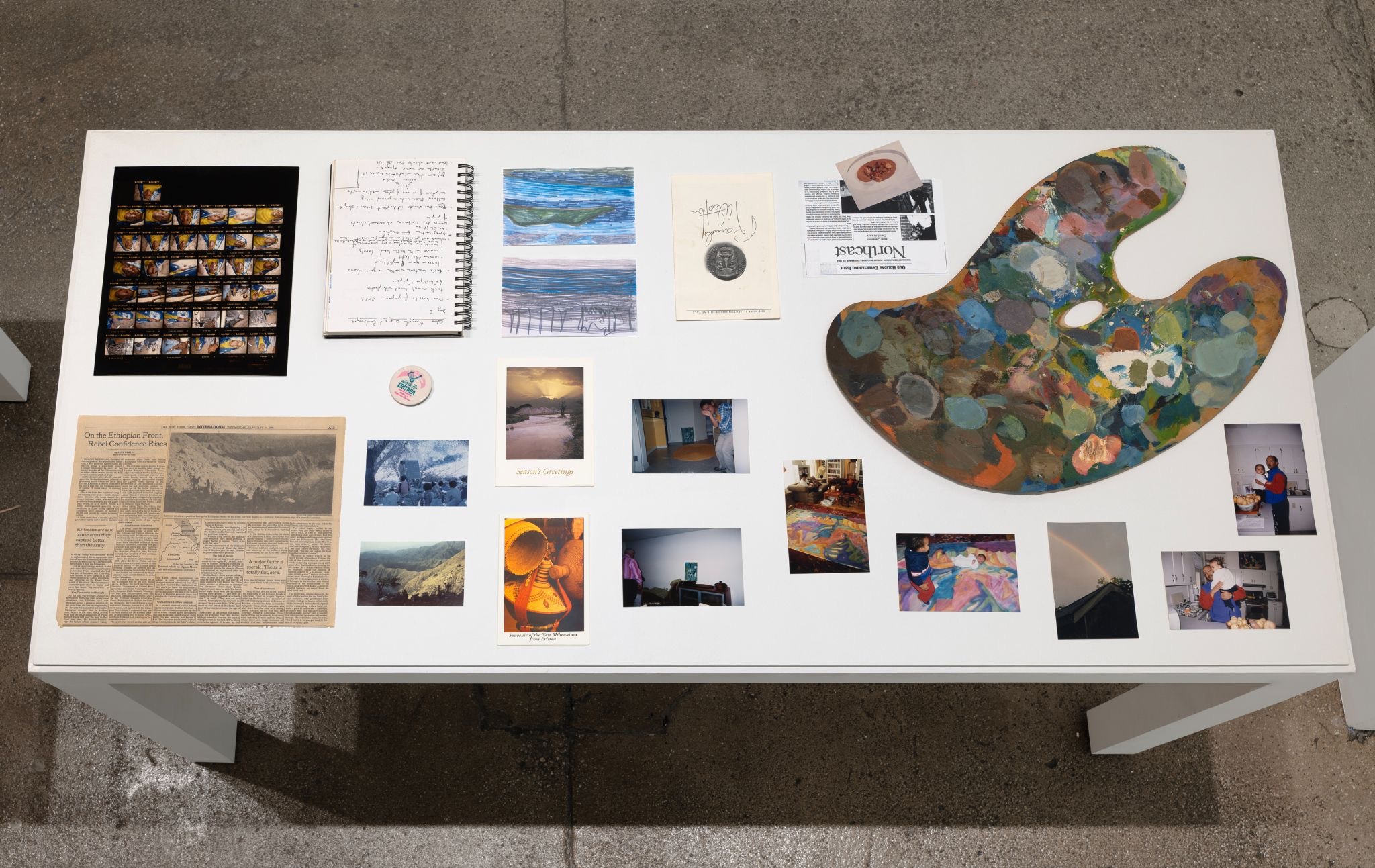
There is an intimacy to this work. Exhibited on unstretched canvas, it recalls the immediacy of the artist’s studio. It feels like a painting he just finished, gloriously suspended in its fresh completion. In the middle of the gallery, two tables displaying personal effects—drawings, notes, photographs, newspaper articles, books, Coltrane’s Stardust album—amplify this sense of interiority. Color is Supreme offers the first look at a curated selection from Ghebreyesus’s vast archive, catalogued over the past year by his first-born son, Solomon.
Family was a foundational part of Ghebreyesus’s expansive practice. Born in 1962 in Asmara, Eritrea, less than six months after the start of the Eritrean War of Independence (1961–1991), Ghebreyesus grew up in a city rich in culture and history but subsumed in wartime violence. He left when he was sixteen, sent away by his loving mother, who feared for his life, emigrating through Sudan, Germany, Italy, and eventually settling in the United States. There he met his wife, Elizabeth Alexander. “My colors changed when I met Lizzy,” he once told her mother.6 That’s what painting was to him: a miracle, a salvation—“the final act of defiance through which I exorcised the pain and reclaimed my sense of place, my moral compass, my love for life.”7
Ghebreyesus’s work serves as a site of gathering, of both celebrating and grieving, with transformative power. We see this in his archive of candid photographs: a monumental painting with exuberant colors rests on the family’s living-room rug; a toddler (Solomon) dances and a baby (Simon) crawls across its fluid, abstract surface. “Delighted by and invited into the world of unprecedented color, our sons would enter their father’s ‘scape,” Alexander described.8 Through paintings infused with joy and distillations of mourning, Ghebreyesus orients viewers towards hope as practice—encouraging leaps of imagination with contagious reverberations and measurable consequences.
In the catalogue essay for Ghebreyesus’s retrospective exhibition at the Museum of the African Diaspora (2018), Julie Mehretu asks: “How does one invent a refugee language, refugee shapes, resplendent refugee colors, refugee light, refugee science?”9 Ghebreyesus seems to offer a response by allowing the complexity and fullness of his lived experience to converge into something whole. His paintings are vibrant oscillations between figuration and abstraction, simultaneously raw and sophisticated like Duke Ellington’s orchestra. Curvilinear patterns incant Tigrinya and Arabic scripts, subtle suggestions of the eight languages through which Ghebreyesus navigated the world. Grids warp and intersect. His kaleidoscopic, non-Euclidean geometries carry internal pulses of memory, migration, and dreams—all unfixed and unlocalized, caught in a perpetual state of becoming. Ghebreyesus reminds viewers that art can heighten the sensitivity needed to negotiate the incongruities that shape everyday life. The artist’s deft fusion of disparate forces encourages us to push beyond boundaries of nation or identity into some uncategorized other that is uniquely ours to color.
Ficre Ghebreyesus: Color is Supreme was on view at Galerie Lelong New York from April 2 through May 9, 2026.
1 “Typically, the human eye can detect [electromagnetic] wavelengths from 380 to 700 nanometers.” National Aeronautics and Space Administration, Science Mission Directorate. (2010). Visible Light. Retrieved from NASA Science website: http://science.nasa.gov/ems/09_visiblelight.
2 Martin Heidegger, “The Origin of the Work of Art,” in Poetry, Language, Thought, trans. Albert Hofstadter (New York: Perennial Classics, Harper Collins, 2001), 45.
3 Johannes Itten, “Introduction,” in The Elements of Color, trans. Ernst Van Hagen (New York: Van Nostrand Reinhold Company, 1970), 8.
4 “Few albums in the canon of popular music have had the influence, resonance, and endurance of John Coltrane's 1965 classic A Love Supreme—a record that proved jazz was a fitting medium for spiritual exploration and for the expression of the sublime.” The description of A Love Supreme: The Story of John Coltrane’s Signature Album by Ashley Kahn (New York: Penguin Books, 2002), one of the books presented from Ghebreyesus’s archive at Galerie Lelong.
5 Johann Wolfgang von Goethe, Zur Farbenlehre [Theory of Colors], 1810.
6 Elizabeth Alexander, “Foreword” in Ficre Ghebreyesus: City with a River Running Through (San Francisco, CA: Museum of the African Diaspora, 2019), 10.
7 Ficre Ghebreyesus, “Artistic Statement” written for his application to the Yale School of Art, where he received his MFA in 2002.
8 Alexander, “Foreword,” Ficre Ghebreyesus: City with a River Running Through, 10.
9 Julie Mehretu, “Painting as Incantation,” in Ficre Ghebreyesus: City with a River Running Through (San Francisco, CA: Museum of the African Diaspora, 2019), 15.