.webp)

Kern Samuel: “IM” at Derosia
Review
Dora Jeridi's Soft Kisses (2026), a part of her solo exhibition A Burnt Child Loves the Fire at Marianne Boesky, depicts a mid-century modern interior as a haunted, liminal space, reminiscent of the Red Room in Twin Peaks. The figures inhabiting the room are distorted: an eyeless face is covered in lipstick kisses, others are replaced by a Basquiat-like skull and the screaming horse from Picasso’s Guernica (1937). With gestural brushstrokes, Jeridi blots out any instance of identity in the room's visual quotations, particularly the paintings framed in the background. The violent tension between the remnant figuration and overwhelming abstraction frustrates the viewer's search for coherence. Though the scene hovers on the edge of a flaming abyss, the alienating atmosphere—loneliness, anger, sadness—remains salient, echoing a line from Jeridi's favorite tragedy, King Lear: "This tempest in my mind / Doth from my senses take all feeling else / Save what beats there" (3.4.15–17).
Before her 2024 ICSP residency brought her to New York from Paris, Jeridi trained as a historian but turned to painting to escape theory's constriction. For her, the act of creation is a non-rational encounter, a "relationship" with visual elements, akin to dream logic. The artist begins before even stepping into the studio, absorbing imagery from art history, interior design magazines, John Galliano's Dior collections, ongoing exhibitions in the city, and the decadent sets in films by Ingmar Bergman and Pedro Almodóvar.
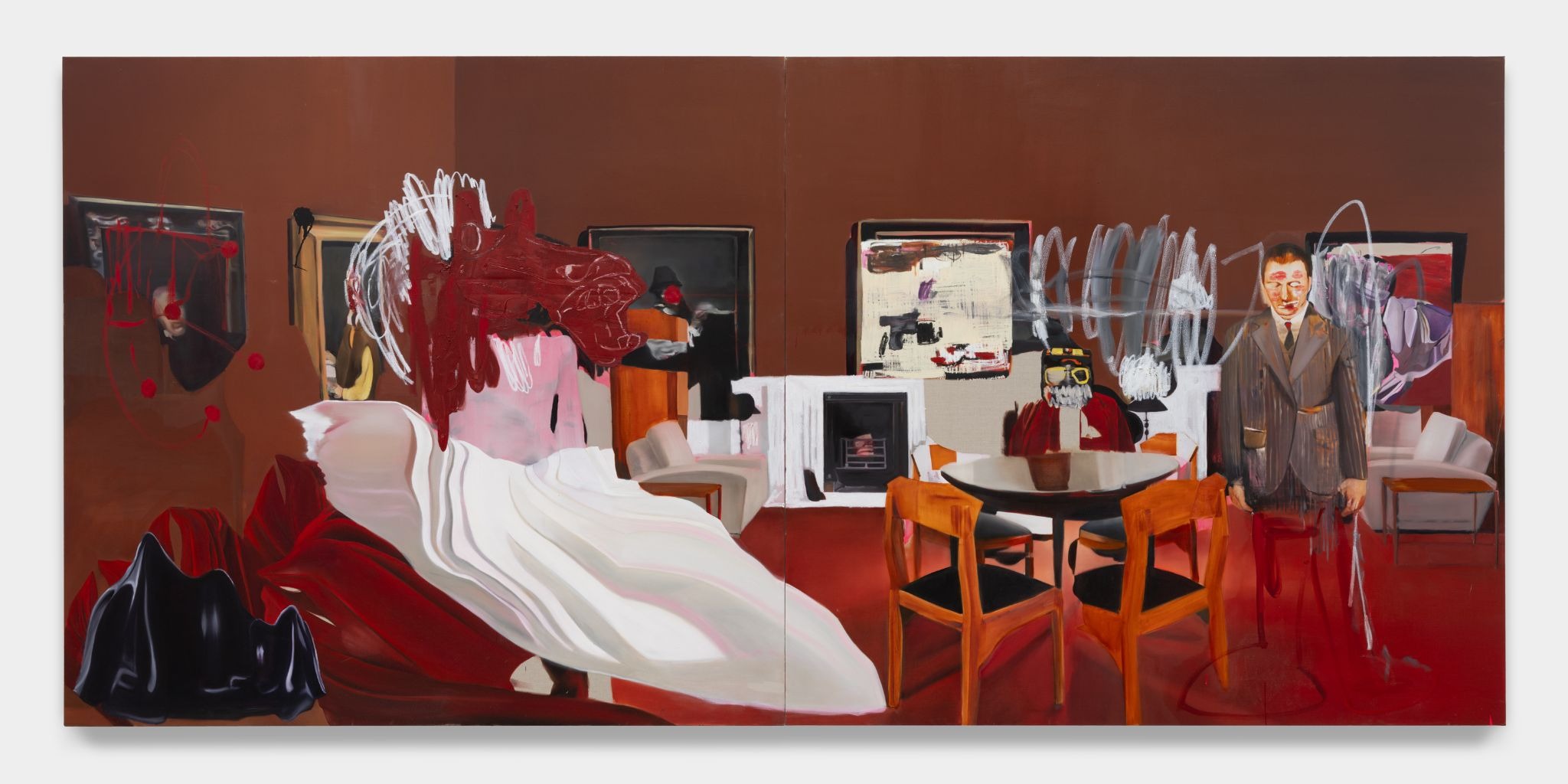
When she starts a new canvas, she channels her memories and emotions, above all anger, to become the engine of her painting. Like a dream, her canvases register and distort these accumulated images under the pressure of Freud's hydraulic model of the mind, where emotion rather than reason determines what surfaces and what stays buried. Images associated with Old Masters, such as Velázquez, and canonical modern artists, such as Francis Bacon, form the first layer of an ongoing dialogue. Treating the canvas like a wall, Jeridi uses charcoal, ballpoint pen, lipstick, and spray paint to annotate, interrupt, and revise that inherited history. Color acquires a bodily presence; bright reds slash violently across the canvas. A piece is complete only when she feels satisfied—when nothing further needs to be removed or added.
For Jeridi, ambiguity is a central condition. Like the unstable language of King Lear or the heightened dramas of Ingmar Bergman, her paintings resist a single, settled reading. In the studio, she builds images through collision—between beauty and violence, intellect and sensation, inherited imagery and physical intervention—until that purposeful incoherence begins to carry its own emotional clarity.
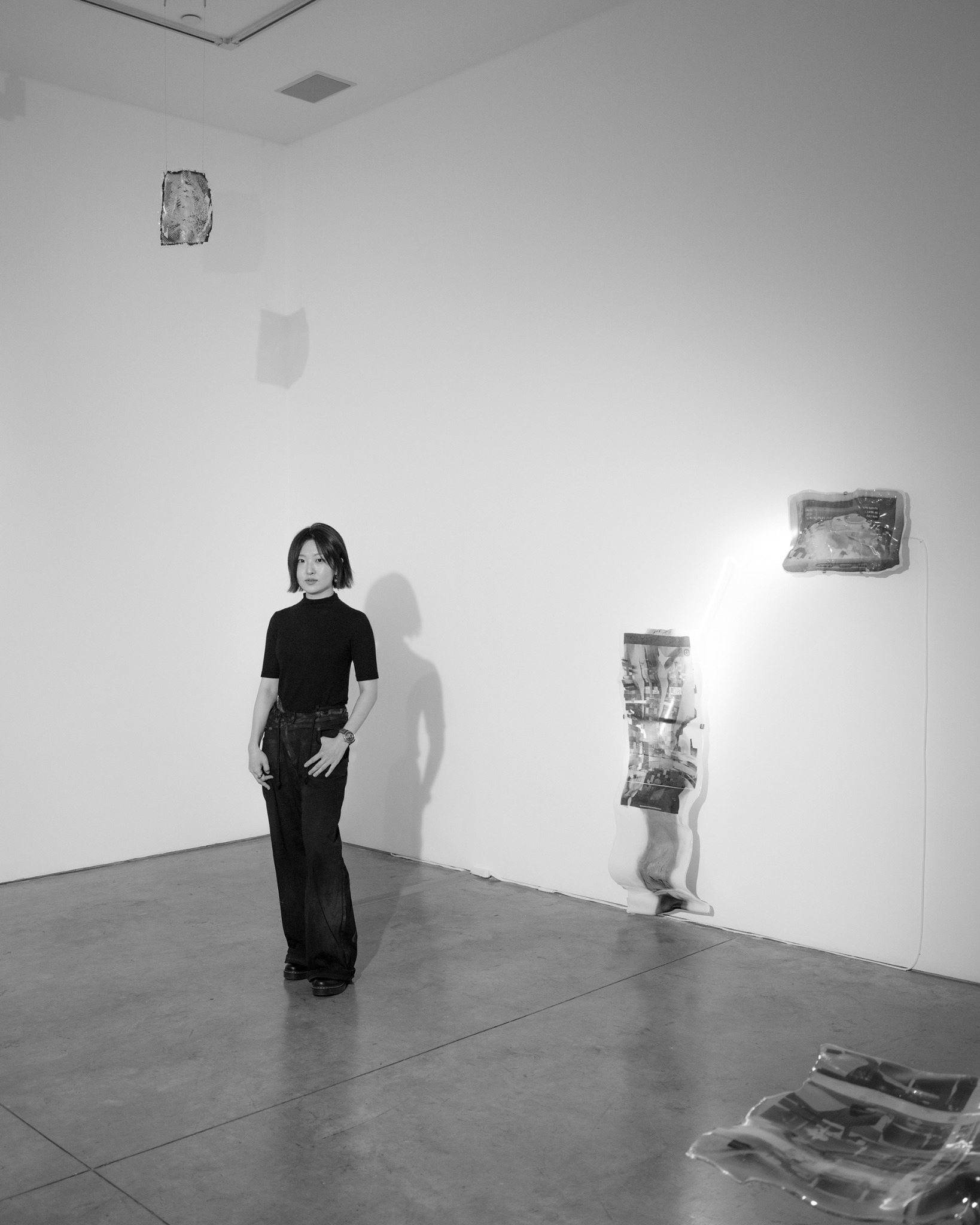
For Juyon Lee, glass is the medium that opened up a new world of artmaking—one in which she shuttles between the manipulation of digital image and physical making.
Lee first stumbled upon glassmaking during the pandemic, when she studied glass-blowing in a glass studio near her graduate school campus. Lee took up glass-blowing with the intention to make lenses, intrigued by their ability to distort images and, in her own words, “to make you more aware of how you perceive things.” This was the first time Lee got to explore both the manipulation of images (via the glass lens refracting and distorting images) and the physical processes of making (via the labor of glass blowing). “It was liberating [ … ] it was very meditative, since your body has to be in the process of making it,” Lee says of her first encounter with glass.
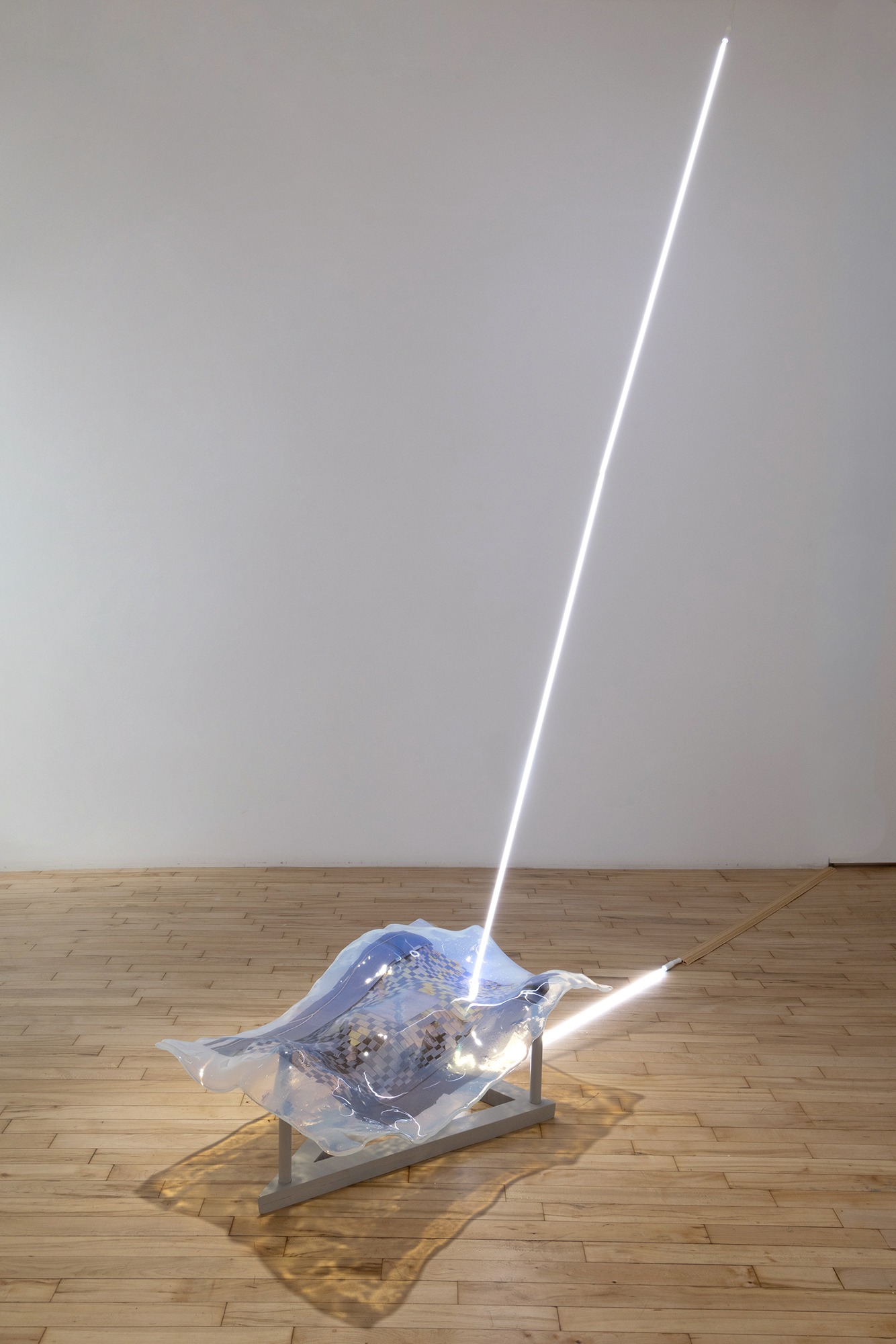
Now about 5 years into working with glass, Lee has fine-tuned the processes working with imagery, form, and material effect. She prints intimate family photographs from Korea, such as her grandfather’s funeral or her grandmother’s hand, on photo paper before slicing them into thin strips and weaving them. The now woven, reorganized photograph gets photographed again, and it is then printed on decal made of glass powder. Lee then fires a sheet of glass in a kiln with the decal, which fuses the imagery into the glass. She sometimes creates molds, on top of which the glass is fired again, to create undulations and curves like that of a human body. The final work is tenderly nuanced, as the pixelated photograph ripples and glows from and through the glass. As the family photographs never arrive to Lee directly—she inherits them from an uncle's phone, a mother's video call, a grandmother's screen across the Pacific Ocean—the repeated pixelating, shuffling, rephotographing, and firing becomes a formal echo of that removal.
Opaline glass, one of Lee’s material of choice, is a delicate, semi-opaque glass that holds many formal contradictions. It is simultaneously colorless and colorful, translucent and opaque, empty and substantial. Lee explains that opaline glass appears more translucent when fired in a lower temperature; when fired in a higher temperature, it transforms into a more milky, opaque color. Curiously, this glass casts a warm, yellowish shadow even as the glass itself holds a cooler, blue tint. The generative qualities of glass propel Lee to keep uncovering the material’s boundless possibilities, cured between the manipulation of digital image and physical making.
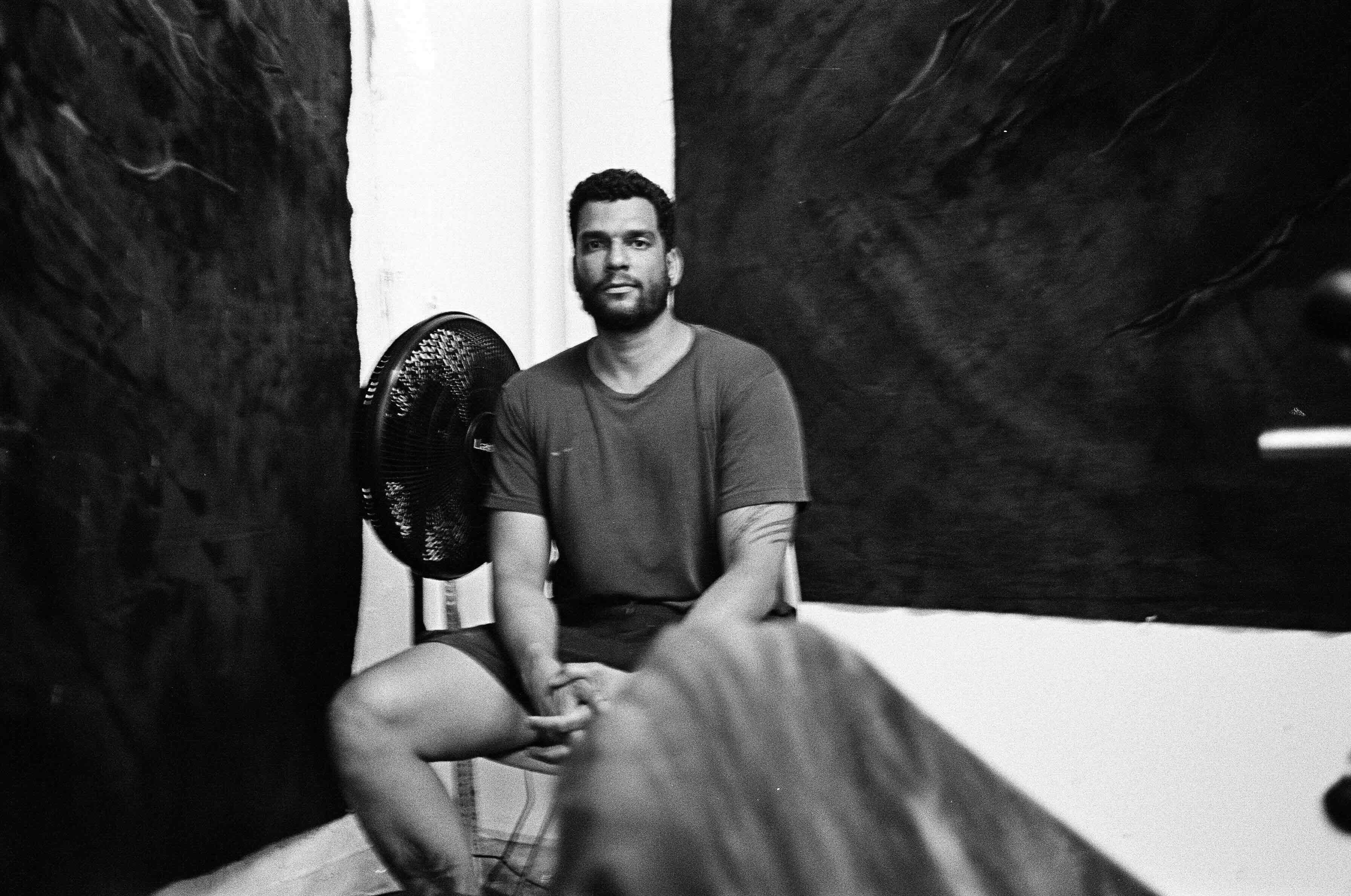
Walking down Grand Street, I see a body waving in the distance. I wave back—it's my friend, the artist Tahir Karmali, who has just moved into a new studio. His arms seem impossibly long, like the branches of the tree next to him. This feels right for Karmali, whose current work draws parallels, visually and metaphorically, between bodies and landscapes.
A few years ago, Karmali made a significant shift in his practice, moving away from heavily research-based, almost didactic artmaking toward a more fluid, painterly approach to creating art. His work is still shaped by close attention to resource extraction, terraforming, climate change, material sourcing, and land, with a particular interest in Africa and Kenya, where he grew up. The research remains, but it no longer announces itself as research, and while these conditions hover around the work, they do not explain it away as Karmali imbues the work with the feelings that come from learning about, living through, and carrying crisis: grief, heat, pressure, atrophy, strength, and dread, all depicted with a strange, uneasy beauty.
In the studio, swaths of earth-toned canvas fabric are dyed with rust and minerals, creating gnarled, almost greasy surfaces that recall tie-dye, acid wash, and the murky chromatics of grunge palettes. All of the works are treated with iron oxide, an almost blood-red compound formed when iron reacts with oxygen. It is not the same chemistry that makes blood red, but the association is hard to avoid: iron, oxygen, redness, exposure. It is also what gives Nairobi’s soil its distinctive red color, a mineral stain that moves from ground to concrete to wall, carrying land into architecture and architecture back toward the body.
These large pieces of fabric hang on the walls, easily and casually replaced for viewing ahead of an upcoming presentation at Frieze Abu Dhabi with Management, followed by a solo presentation at the gallery in early 2027. Painted atop these canvas pieces are ghostly forms, spectral shapes made by brushstroke and the artist’s fingers. They blend into and emerge out of the dyed grounds, slipping between the curve of a pelvis and the dip of a valley. A root system might also be the bronchial map of lungs. The entrance to a cave, the gaping hole of a prostrate body. An extracted body and an extracted land.
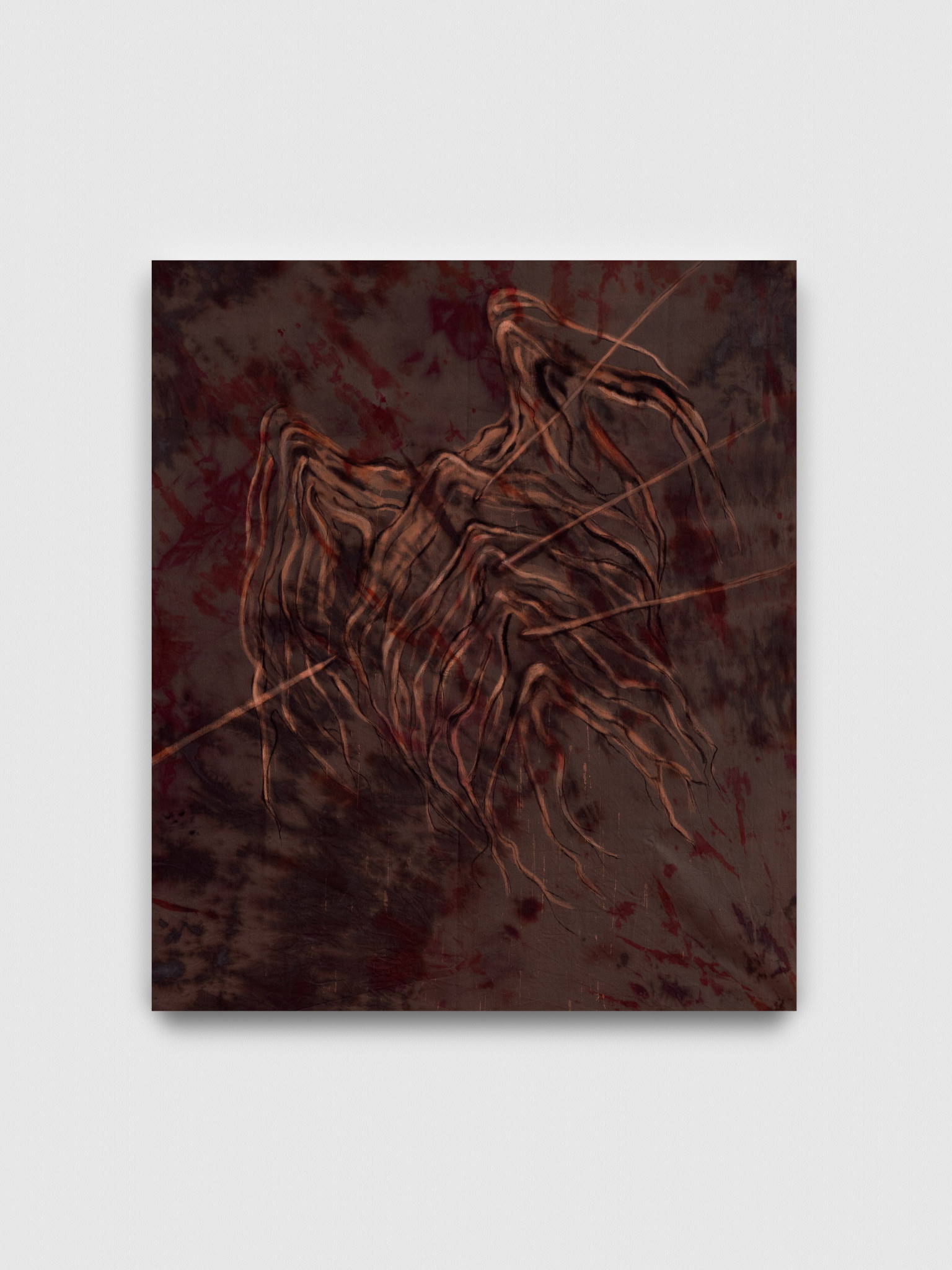
In this way, the work relies on a distinctly photographic sensibility, one that connects to Karmali’s earlier practice. The paintings seem developed as much as painted, coaxed, dodged and burned. Bleach becomes part of the painting process, stripping away the colors of the dye so that ghostly traces remain like a cyanotype, but there is no blue here, only the colors of dirt and mud. I have never really thought about what an X-ray of the earth or a cave system might look like, but Karmali suggests they might appear uncannily close to an X-ray of the body. An interior exposed.
Here is where Karmali draws his damning parallels. Across the planet, land is extracted, rendered raw, destabilized by climate crisis, and reorganized by the forces of migration, capital, and desire. People, too, are made vulnerable by these same forces: displaced, exoticized, coveted, circulated, consumed?
The work does not offer the clean evidentiary satisfaction of a documentary photograph or the neat moral architecture of a research chart. Instead, they linger in the bruised space between wound and ornament, evidence and hallucination. Beauty here is not a corrective to violence; it might be one of violence’s most seductive disguises. The silk shimmers, the rust blooms, the bleach opens like a welt turning yellow at the edges.
I look back toward Karmali, whose long arms have been moving through the studio the whole time, pulling fabric down, pinning another piece up, pointing to a mark, a stain, a ghost. When I leave, I think again of him waving from down the block, arms like branches, and wonder whether a wave is also a scar, a signal, and proof of survival: that something beneath the surface is still reaching out, still offering a hand.
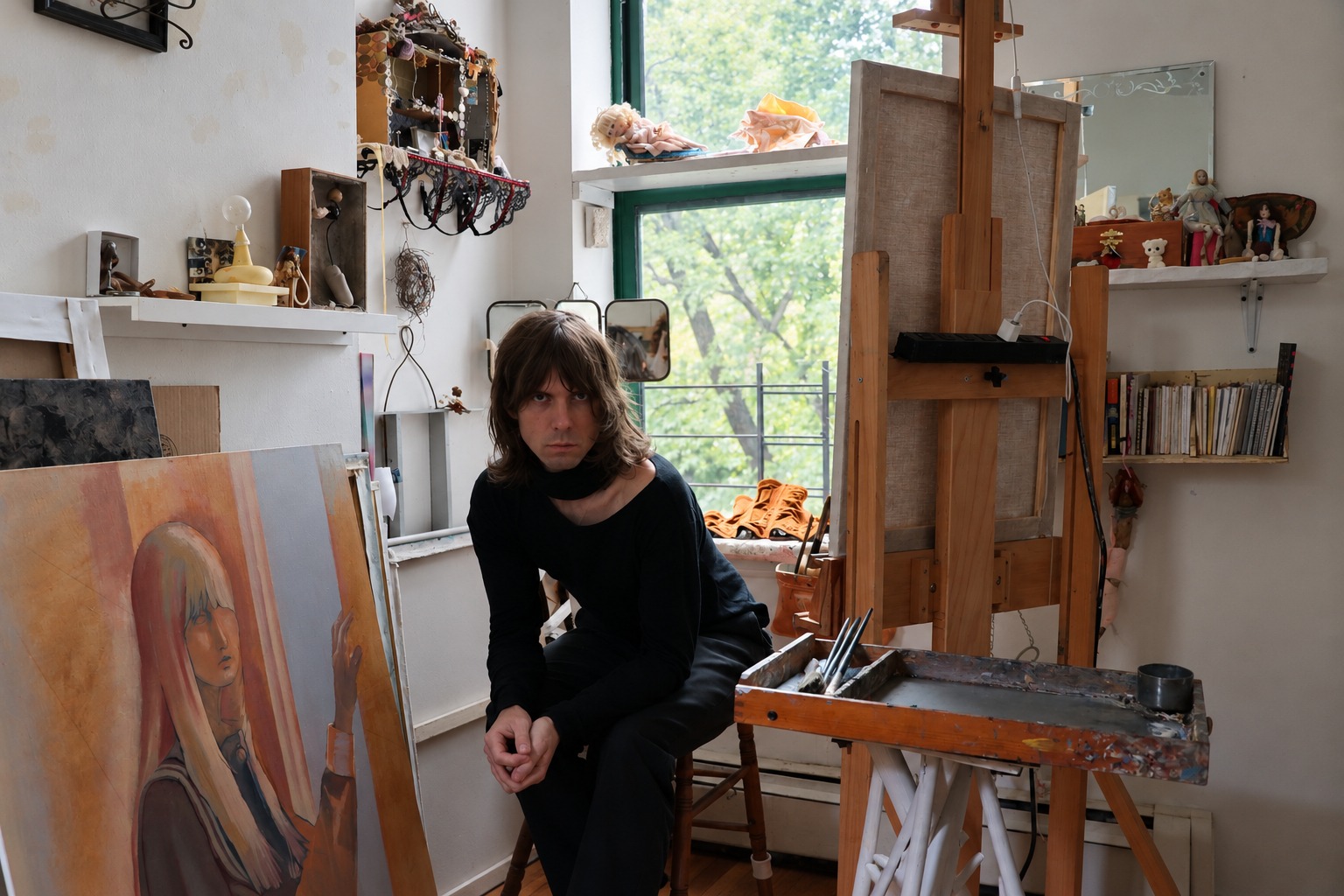
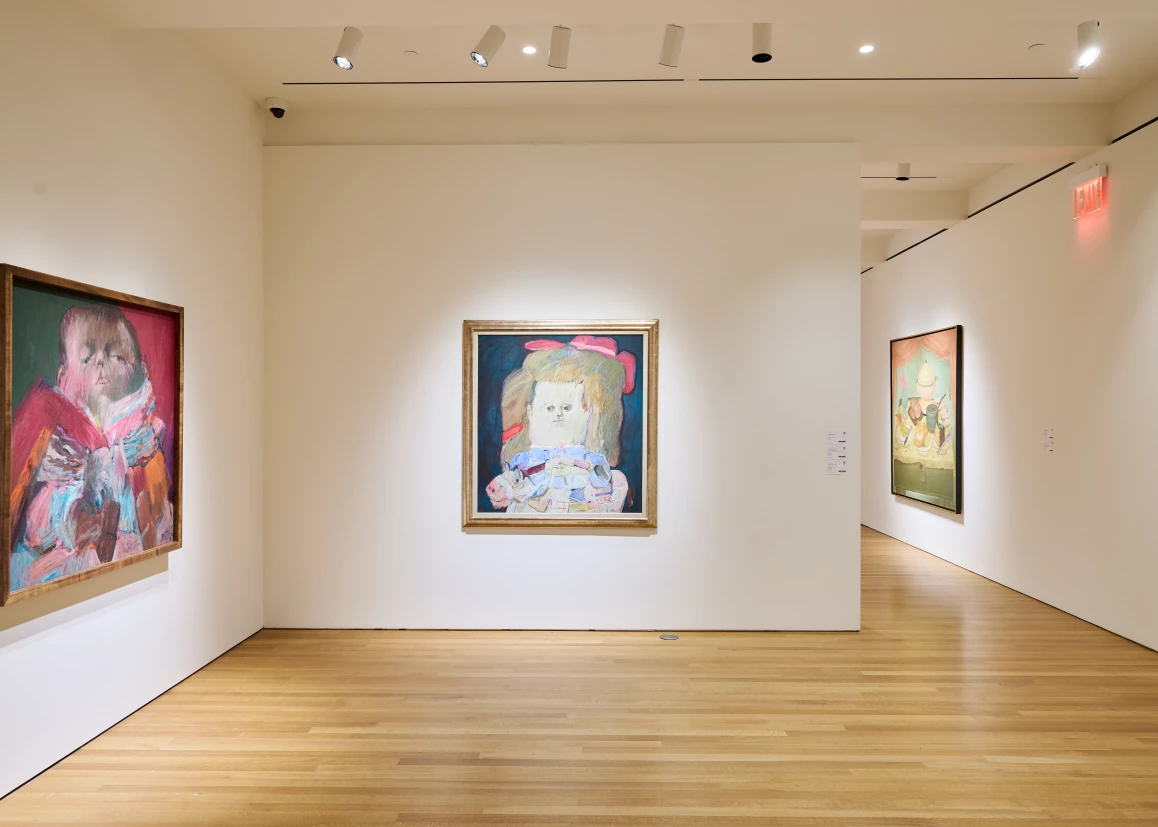
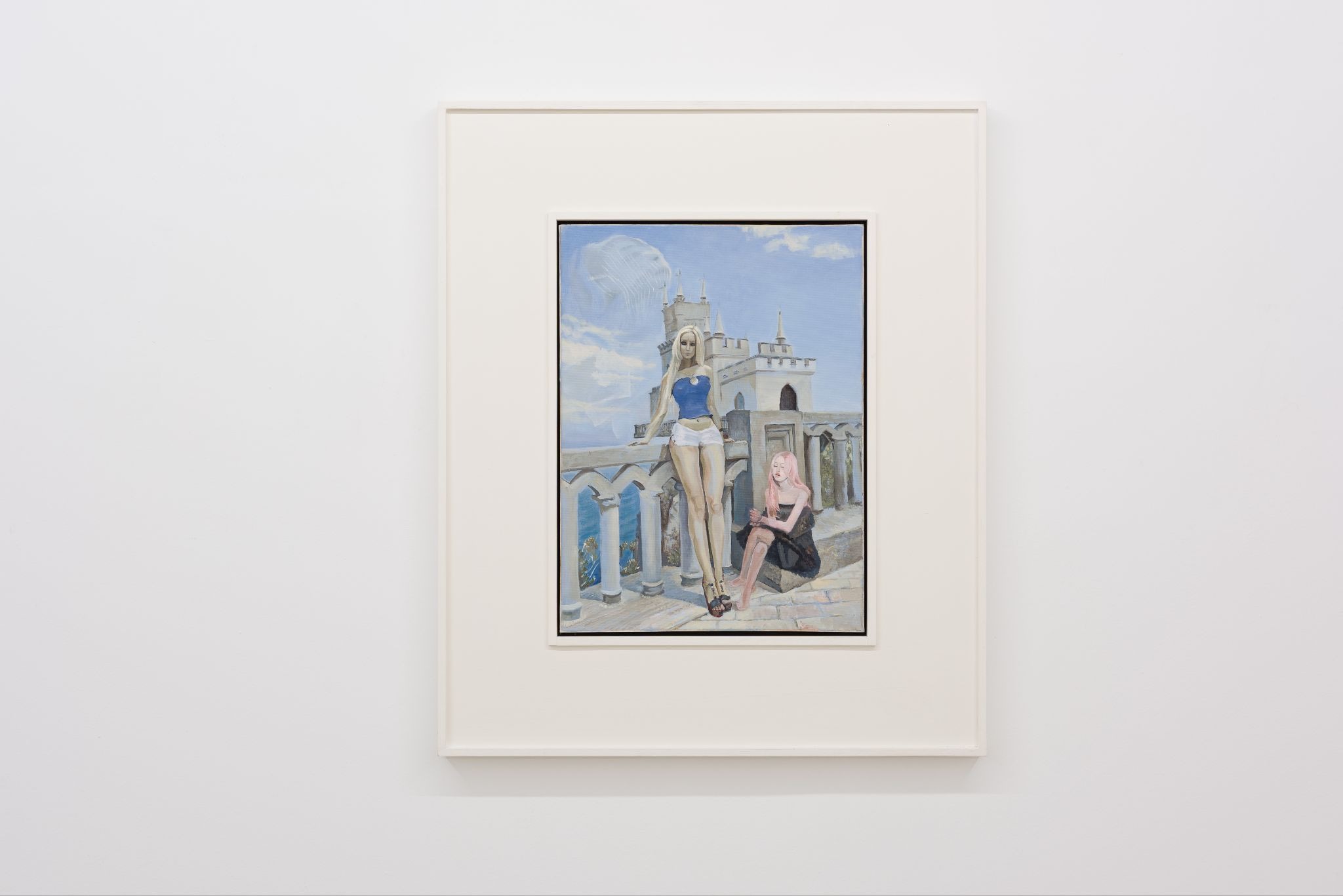
“Valeria [Lukyanova] often fits the Las Vegas scenario,” Jeff Egner says of Lukyanova, whom he first came across on Pinterest during the pandemic. Since then, Enger has painted countless portraits of Valeria, the Ukrainian model best known as “the Human Barbie” due to her doll-like features, in various architectural settings inspired by her images online. Valeria at the Bellagio Hotel in Vegas; Valeria at the neo-Gothic Swallow’s Nest castle at Gaspra; Valeria by the patio with a mythological lion eating the sun in the distance. He points to the very first Valeria painting he made—in this case, Valeria has somehow made her way to Dubai—her uncanny yet alluring elfish features dramatically zoomed in and staged against the world's tallest skyscraper. Egner sees Valeria’s dedication to looking more like a doll (who is rumored to have undergone surgeries to attain her features) as a scientific approach. He explains that Valeria is an “image alchemist” who activates the timeless, mythical qualities in the landscape and imagery in his work.
He spends just as much time obsessively painting actual dolls as he does living dolls and other dollish subcultural icons in hopes of honoring these characters. What draws Egner to dolls, living or non-living, is both the human and not-quite-human qualities they share. He explains that they can represent someone he knows, or those in the spiritual realm that bring him closer to “memory, power, or understanding.” Although primarily a painter, he sometimes self-identifies as a doll maker. Egner’s studio is surrounded by a display of handmade dolls, finished and unfinished, that he creates in his pastime. Delicately crafted from plaster, air-dry clay, tape, hot glue, and lashes, these dolls often help him come up with compositions and become points of reference and loose models for his paintings. But more than that, the dolls become a gateway—an “intermediary to the saint itself.” Growing up in Orange County in a Catholic and Christian household has inevitably shaped his relationship to the divine. Egner sees the dolls as close to deities, and how the material becomes a messenger toward something larger than oneself.
In Egner’s paintings, dolls become a stand-in for the humanoid, whose functions range from play object to fetish object and ritual object. His dolls show that two things can be true at the same time. They are devoid of humanity and are blank vessels of projection, and yet they are without a doubt otherworldly and supernatural. They embody the human qualities of an object and the object qualities of a human. More importantly, painting dolls becomes a way of providing a space for Egner to construct his own identity and express the many different hats he must wear in his life. To Egner, dolls are boundless ways of “[achieving] the impossible.” Dolls are feminine, dolls are playful, dolls are an invitation to step inside Egner’s logic. Like Valeria, Egner’s paintings can be seen as his own pursuit of beauty, where dolls are sometimes less than, but can certainly become more than human life.