
.webp)
Marie Lorenz and Jeff Williams: "Roll, Pitch, and Yaw" at International Waters
Review
Seven stones lie upon a wooden platform, each vibrating at a different frequency. Their rough surfaces are mottled with lumps and hairline fissures. The uneven orbs initially seem inert until something flickers in a thin crack of one stone—a motorized pulse animating the rock. Here, in Se Young Yim’s Pebble (2026), the electric pulse of one stone seems to answer that of another. The stones then seem almost like eggs on the brink of hatching an unidentifiable creature—one of the images a viewer might construct and project.
A sense of longing for connection reverberates from Pebble throughout the group exhibition Do I know you from somewhere? at Transmitter Gallery in New York. Se Young Yim is paired with three other women artists; Alison Kudlow, Susan Meyer, and Hanna Washburn likewise evoke interplay between organic and synthetic materials, while conjuring the impulse of pareidolia—that is, the desire to see meaningful, perhaps human-like forms within ambiguous objects.
This concept of embodied projection has an intellectual precedent in the early scholarship of Vernon Lee (1856–1935), who approached art through the framework of Einfühlung (“feeling into”). Lee proposed that subjects project themselves onto objects through perception, explaining, “the word sympathy, with-feeling... is exercised only when our feelings enter, and are absorbed into, the form we perceive.” Do I know you from somewhere? evokes Einfühlung through abstracted, seemingly unresolved assemblages that invite corporeal associations from viewers.
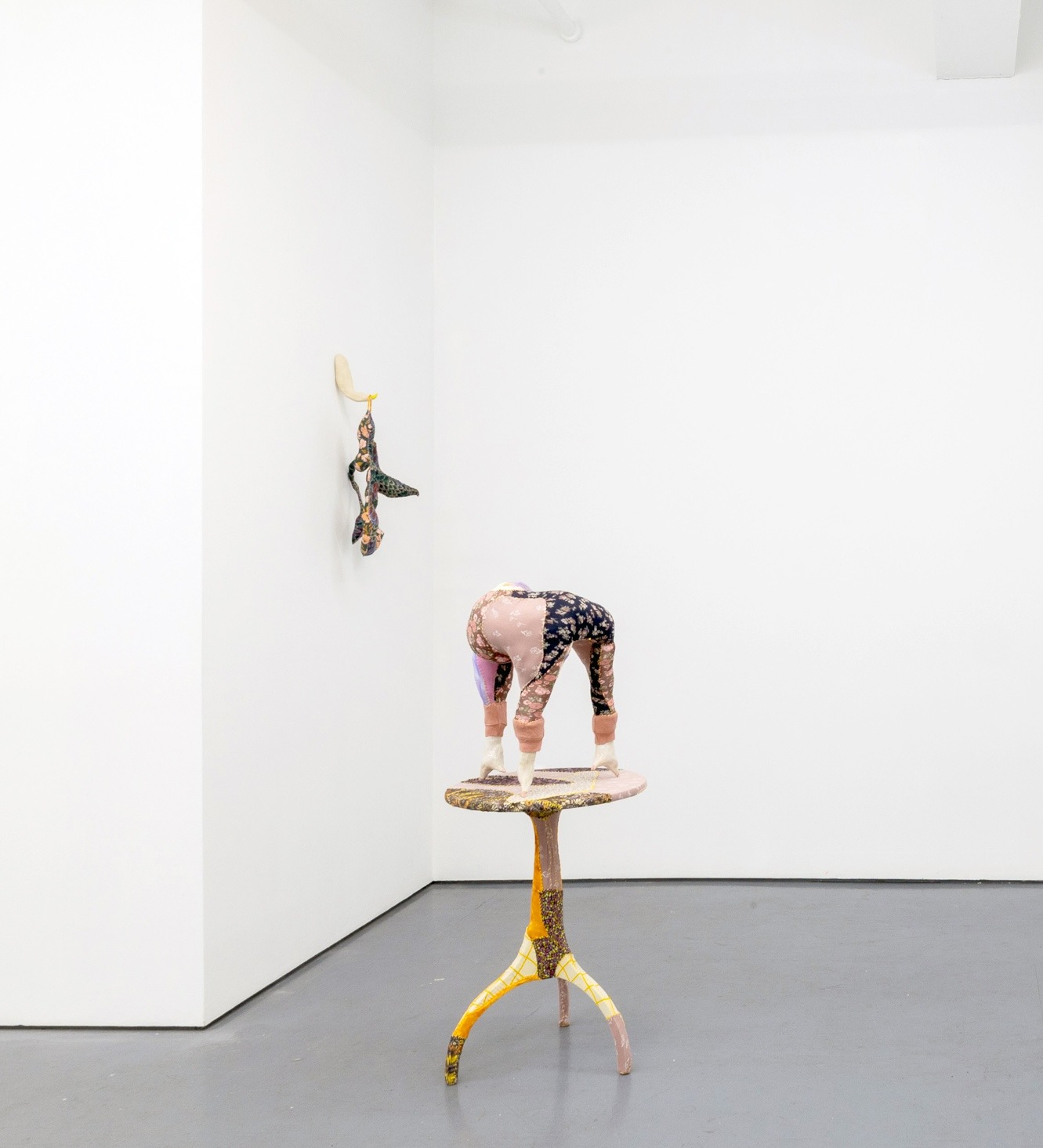
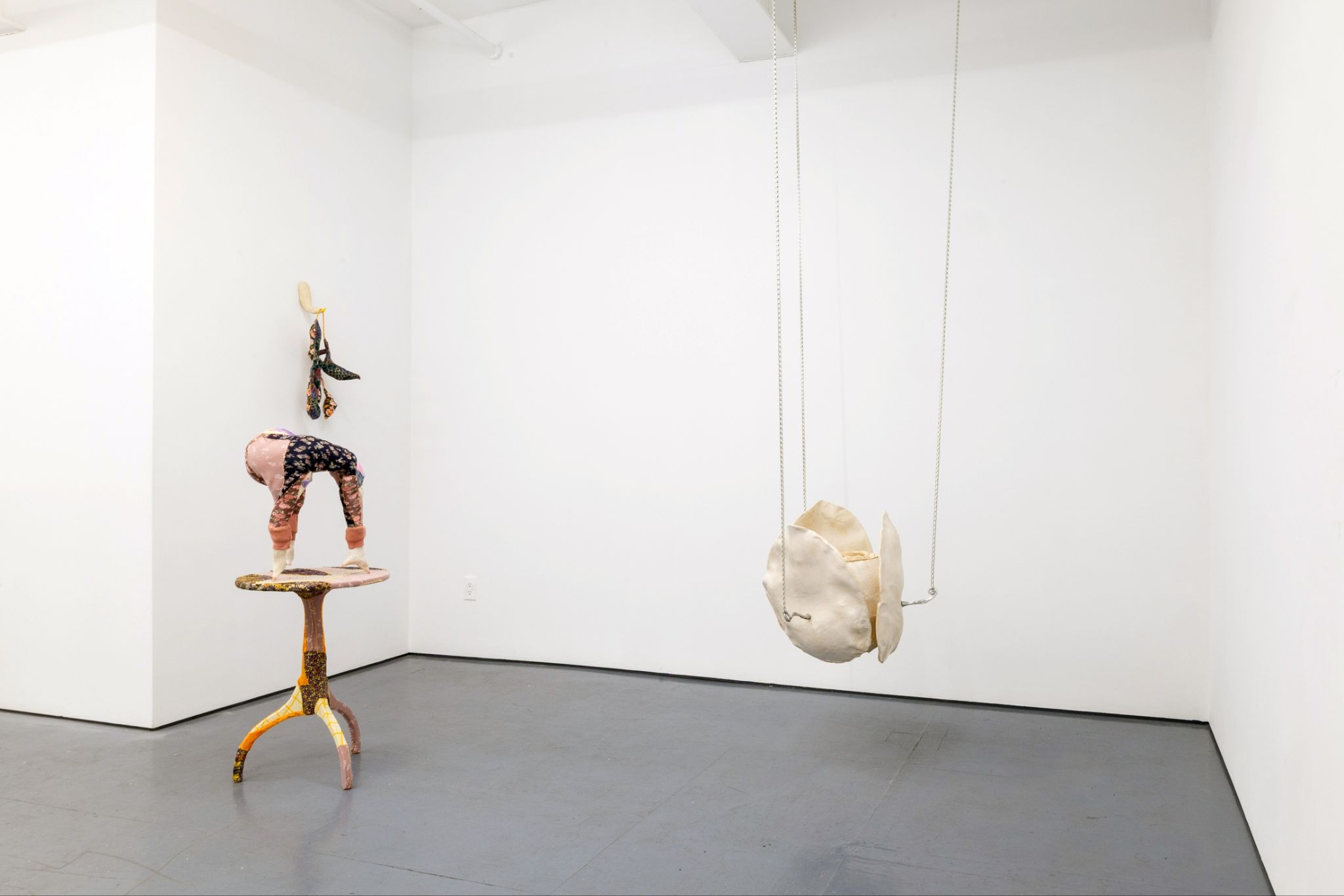
On a nearby three-legged table sits Hanna Washburn’s Pitter-Patter (2026), a three-legged sculpture constructed from found armatures covered in recycled textiles. This plush, patchworked creature perched on pastel pink talons is reminiscent of a stuffed toy, appearing animal-like. Its balance looks precarious, the tripod form seeming at risk of collapse. In this instance, empathetic engagement can extend to nonhuman physiology, perhaps speaking to something more primal than species-specific recognition. The viewer may perform a minor act of Einfühlung, as though bracing for the creature’s fall.
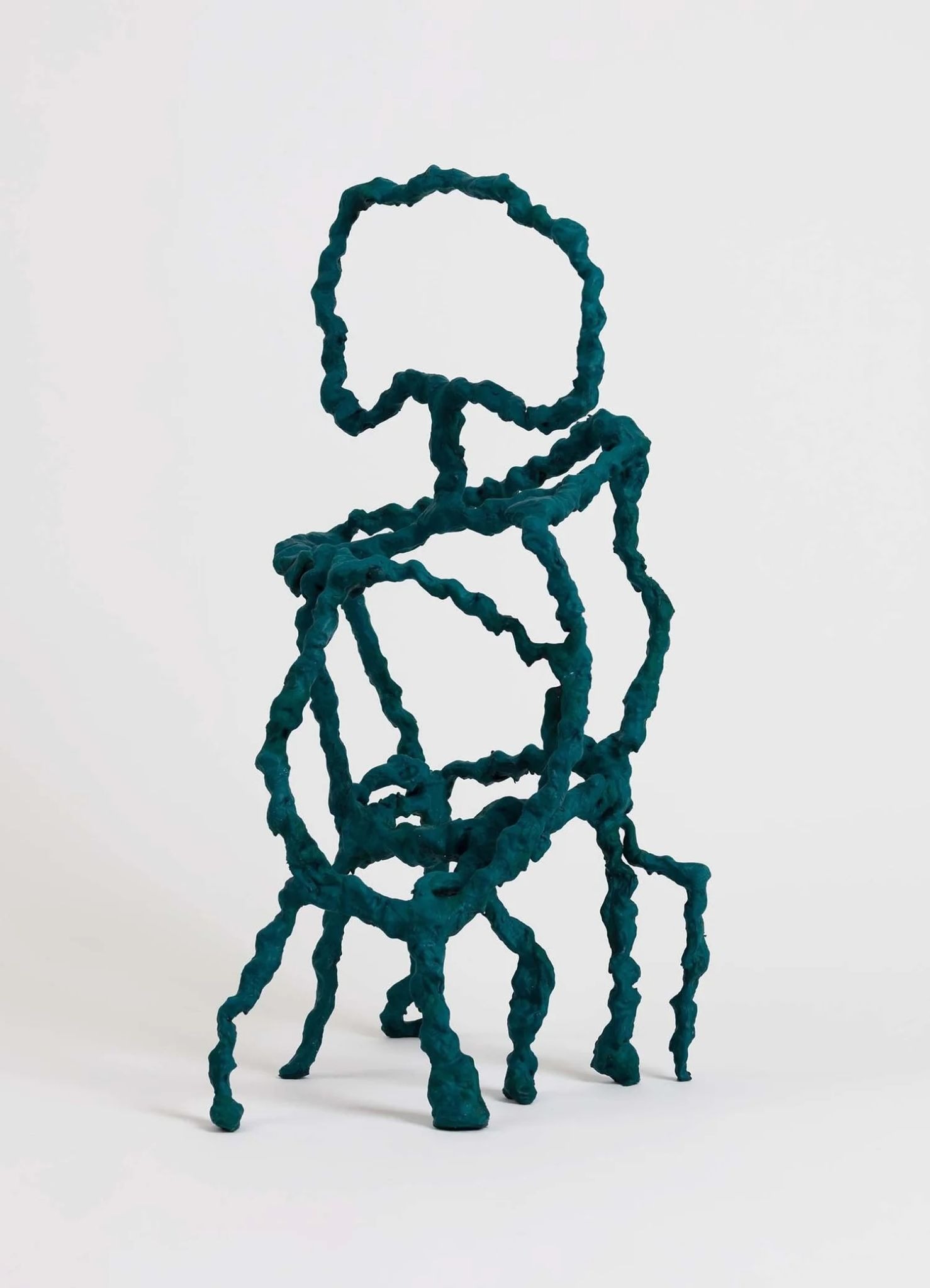
Susan Meyer’s Lagoon (2025) maintains a similar fragility, its seven thin legs appearing brittle, as though they might break or erode. The form reads as a three-dimensional stick figure with a roughly outlined torso and a circular head on top. What seems like an imminent risk of disintegration registers viscerally, the cartoonish form spurring sympathy in its lopsided state.
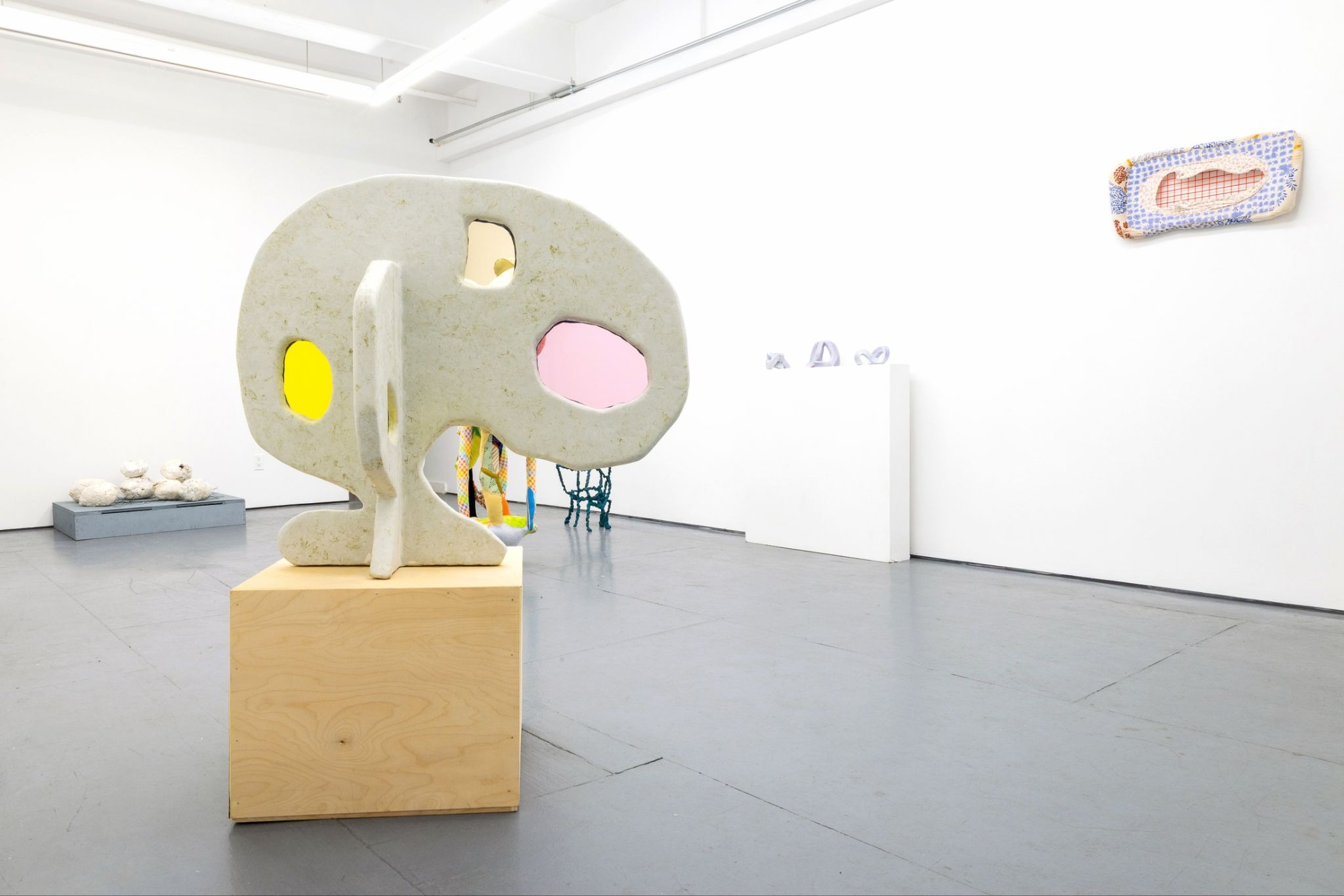
In contrast, Meyer’s Noze (2025) maintains a sense of solidity. The flat form protrudes as an abstract rendition of the facial feature suggested by its title, flanked by two nostrils flared outward. Modeled from Apoxie sculpt with tinted windows in organic shapes, the structure recalls Brutalist architecture, in addition to Le Corbusier’s famous concept of the house as a “machine for living.” Yet where architectural modernism privileges utility, Meyer’s sculpture remains stubbornly nonfunctional, with thick walls and load-bearing curves that carry the visual weight of architecture without serving any clear use. With this tension between form and function, this architectural sculpture invites the identification of human features, again in an instance of Einfühlung.
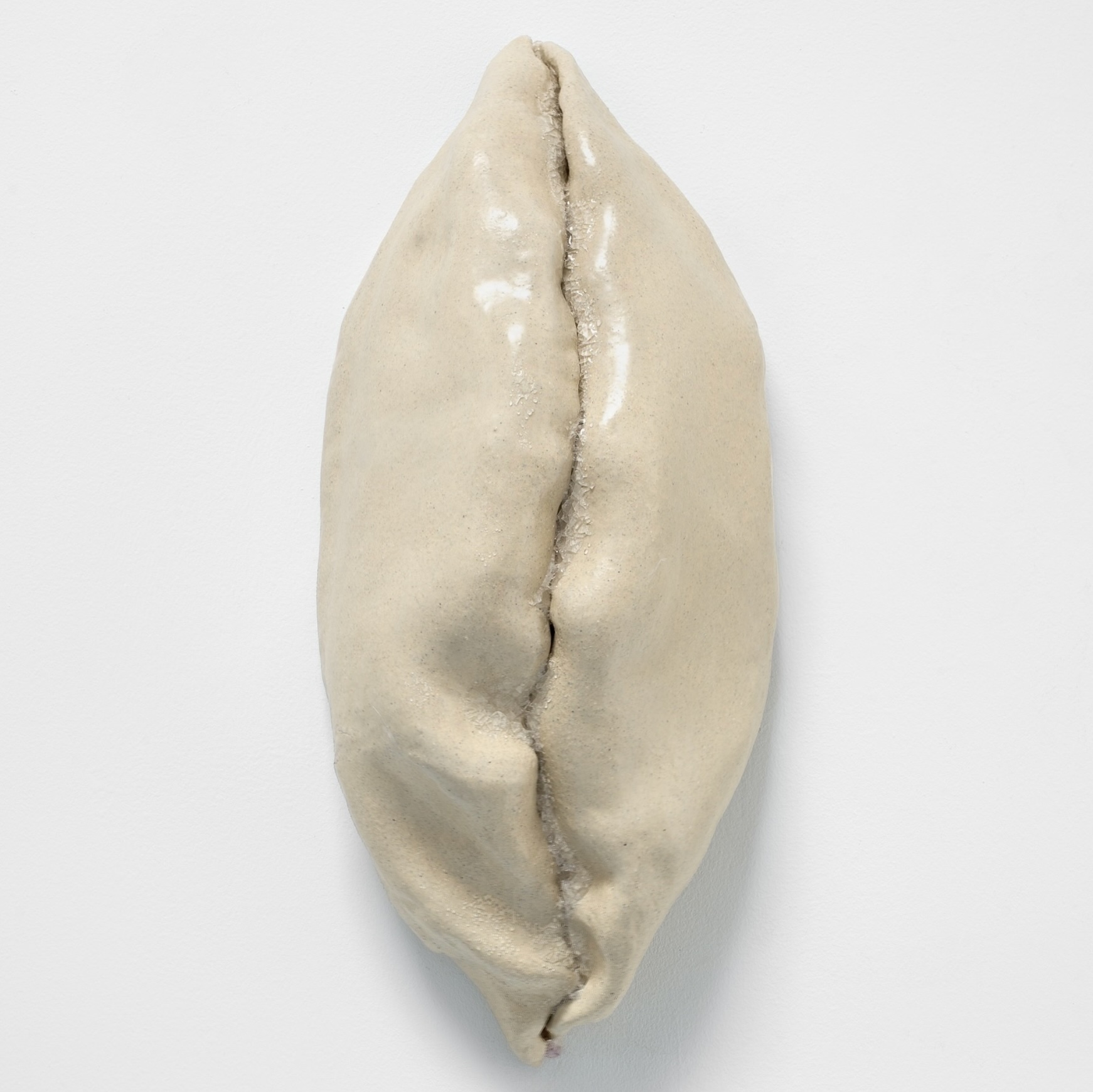
Alison Kudlow’s Rupture (2024) resembles a shell with two swaths sutured together. Yonic in form, it seems that if one were to press against the cream-colored sculpture, its surface might yield like putty. This softness is purely imagined, though, given the solidity—and simultaneous fragility—of the ceramic and glass. In Lee’s terms, the viewer perhaps “feels into” the sculpture, projecting tactility onto an object that remains untouchable.
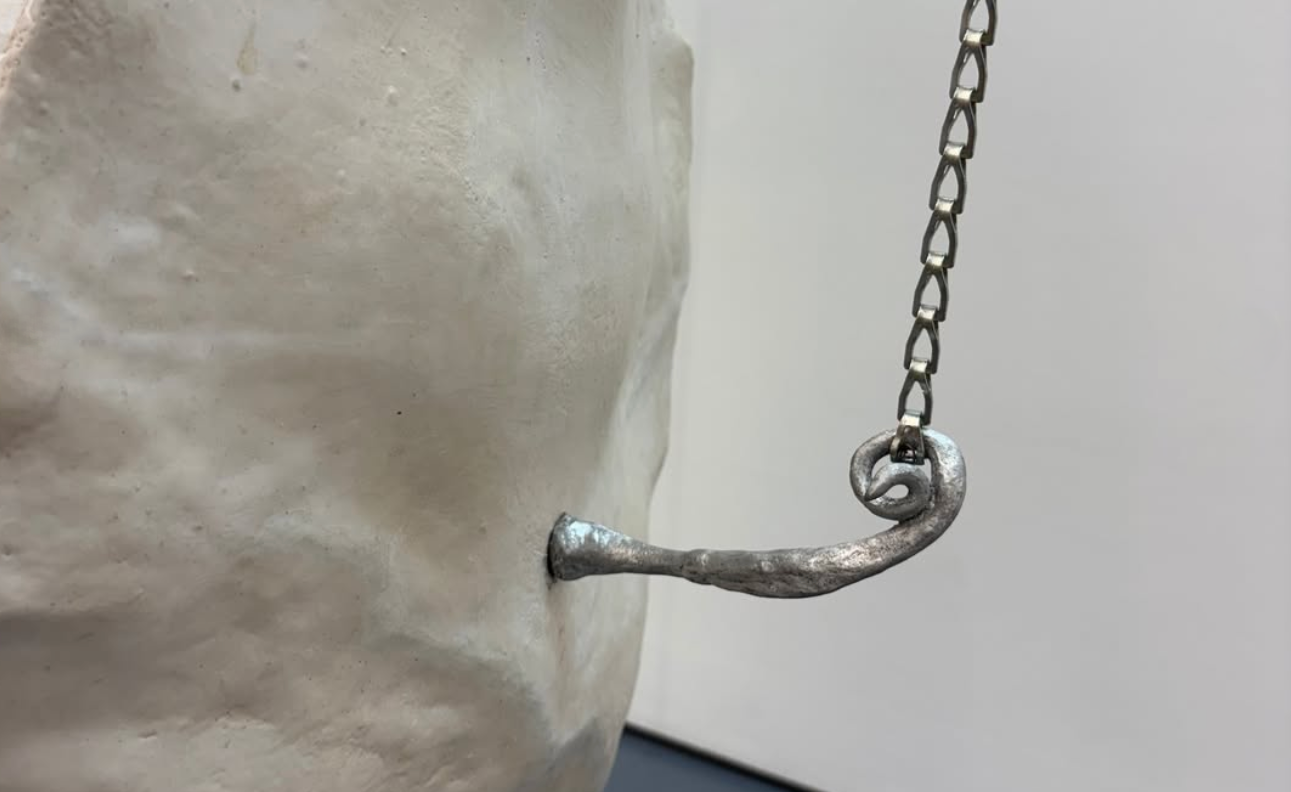
Suspended from chains on the other side of the gallery, Kudlow’s Ēostre (Risen) (2026) unfolds like a rose, its petals gently spreading out from its concentric center. In a second, more figurative version of this same work, the blossoming form is held aloft by three limbs that lend a sense of support more substantial than that provided by the chains, which seem comparatively delicate, bound to the body of the fragile form like tiny outstretched fingers. Where Washburn’s Pitter-Patter rises from the ground, Ēostre (Risen) hangs from the ceiling, with its chains holding it back as much as holding it up.
Genevieve Lowe, the co-director of Transmitter Gallery and the curator of the show, noted the thematic throughline of precariousness, the artists exploring the anxieties of “being in a body.” As corporeal boundaries become increasingly technologically manipulated—whether through cosmetic surgery, genetic selection, or neural implants—contemporary artists who explore embodiment must first negotiate the very definition of a body. In the representation and abstraction of corporeal forms, artists today shape how the bodies of tomorrow will be envisioned. Se Young Yim’s hatching eggs, Washburn’s teetering plush, Meyer’s spindly and stout figures, and Kudlow’s sutured and chained forms each invite certain projection, while perhaps playing upon anxieties surrounding increasingly common modes of sculpting human bodies. Within the walls of Transmitter Gallery, pareidolia becomes less a visual phenomenon than a study of what it means to inhabit a body that is at once fragile, synthetic, teetering, and alive.
Do I know you from somewhere? is on view at Transmitter Gallery from July 18 to August 16, 2026.