.jpg)

.webp)

Matthew Ronay at Casey Kaplan Gallery
Review
I recently found out about the “smartphone pinky” phenomenon after I noticed an odd dent in one of my pinky fingers. It turns out that it's fairly common among smartphone users; the term refers to the dent or slight curve that can develop from repeatedly holding your phone in the same position. This is just one of the many informal diagnoses of our moment, a physical trace of how technology has become undeniably entangled with our bodies and everyday habits. Our phone has become a sort of talisman—an object that we carry for the promise of the connection they represent, even if it keeps increasingly alienating us from the immediate world around us. In their two-person exhibition B³ at Essex Flowers, artists Ilana Yacine Harris-Babou and Patrick Carlin Mohundro consider how we can regain a sense of connection in a moment where touch is becoming progressively frictionless.
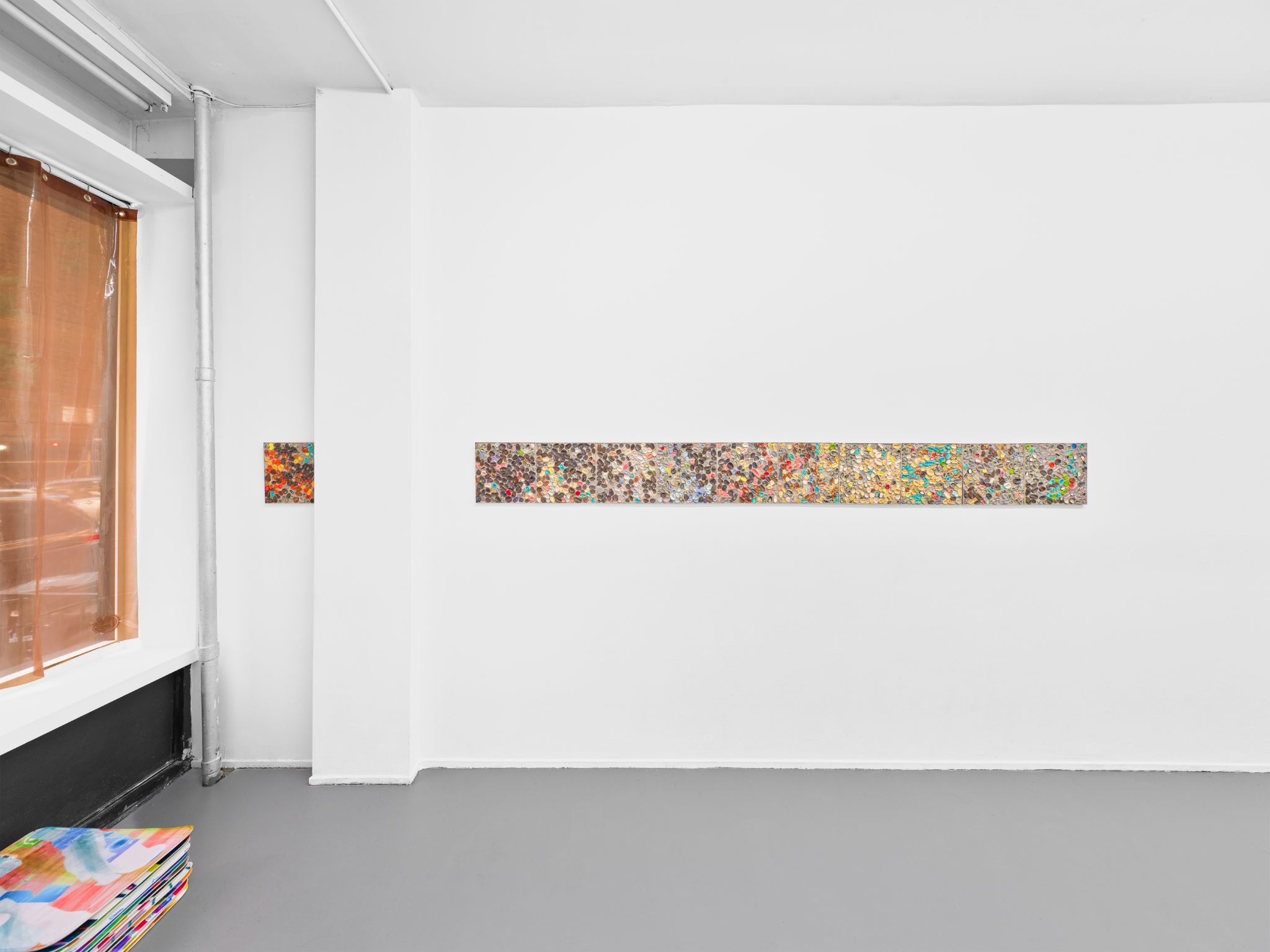
The show is the culmination of nine months of conversations and collaborations between the artists and their communities, which is visible in the works themselves. No labels appear on any of the works. As singular authorship blurs, the works melt into one shared narrative. The LES-based gallery Essex Flowers is long and vertical, divided into two different rooms by a shower curtain. In the first, Ilana Yacine Harris-Babou’s long horizontal glazed ceramic piece Swipes with Friends (2026) is installed on the left wall. Its surface is covered with hundreds of casts of the fingerprints one would make while swiping on a screen. The casts are packed together, leaving almost no space to see the greyish cement background they are attached to. The gesture they represent is so embedded in our everyday life that it is almost second nature. Here, an otherwise passing movement is materialized, and by doing so, Swipes with Friends confronts us with the harsh reality of our altered sensory life and the singular interface that mediates it.
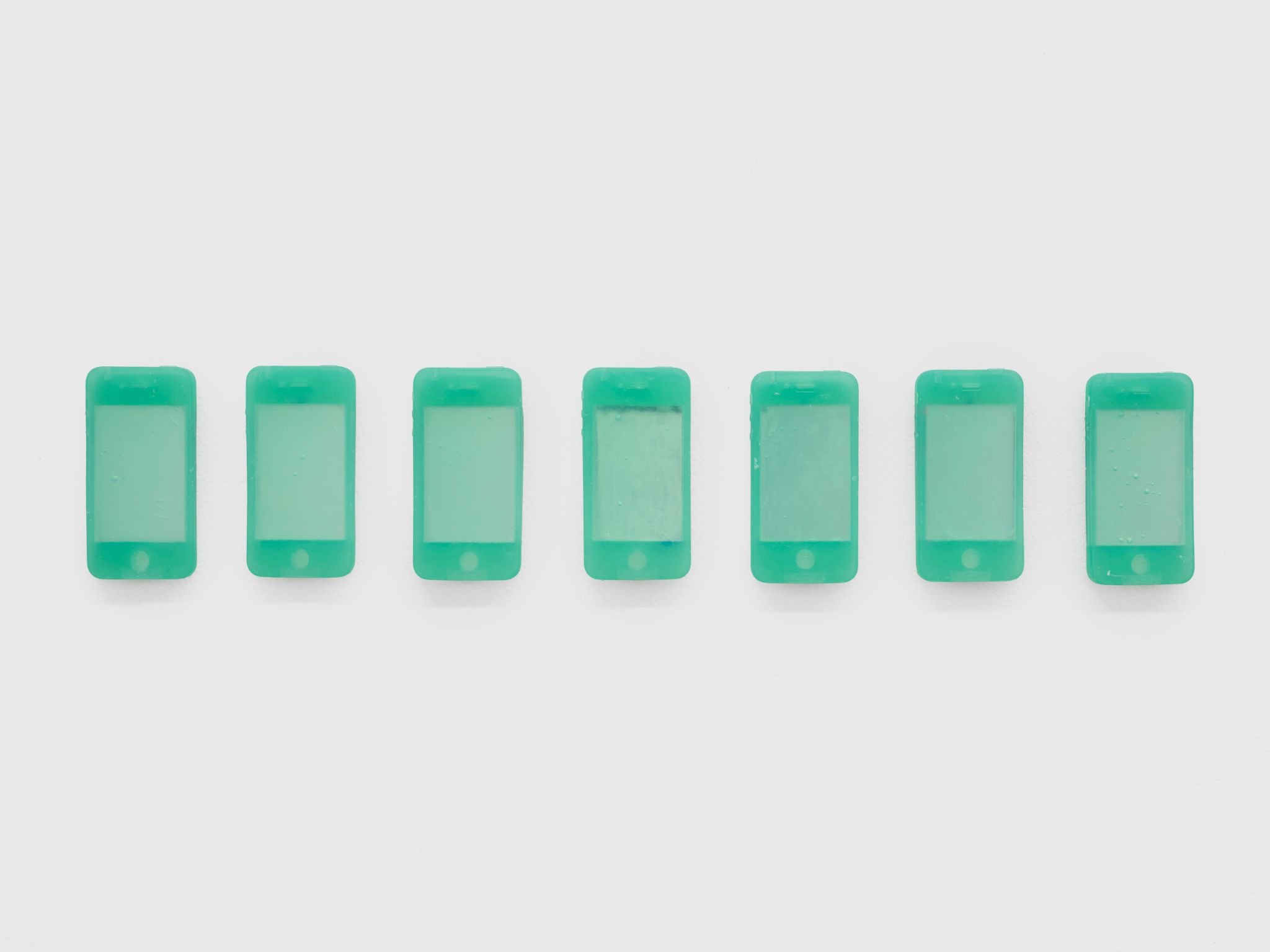
In his essay for The New Yorker, Has Tech Robbed Us of Our Sensory Lives?, Kyle Chayka argues that the iPhone has robbed us of activities that once involved a deeper level of involvement with our surroundings. He describes phones as “frictionless services”; the flattening and alienation of every experience have become the price for convenience. In Perspiration Conspiracy (2026) on the right wall, Patrick Carlin Mohundro makes the frictionless surface physical while depriving the technology of its intended function. He creates mint-green iPhone SE casts from Speed Stick deodorant. During the run of the show, the pieces start “sweating” due to their exposure to heat and humidity in the surrounding environment. With the scent of the deodorant adding another olfactory layer to the work, Perspiration Conspiracy turns the isolating nature of a smartphone back to the body.
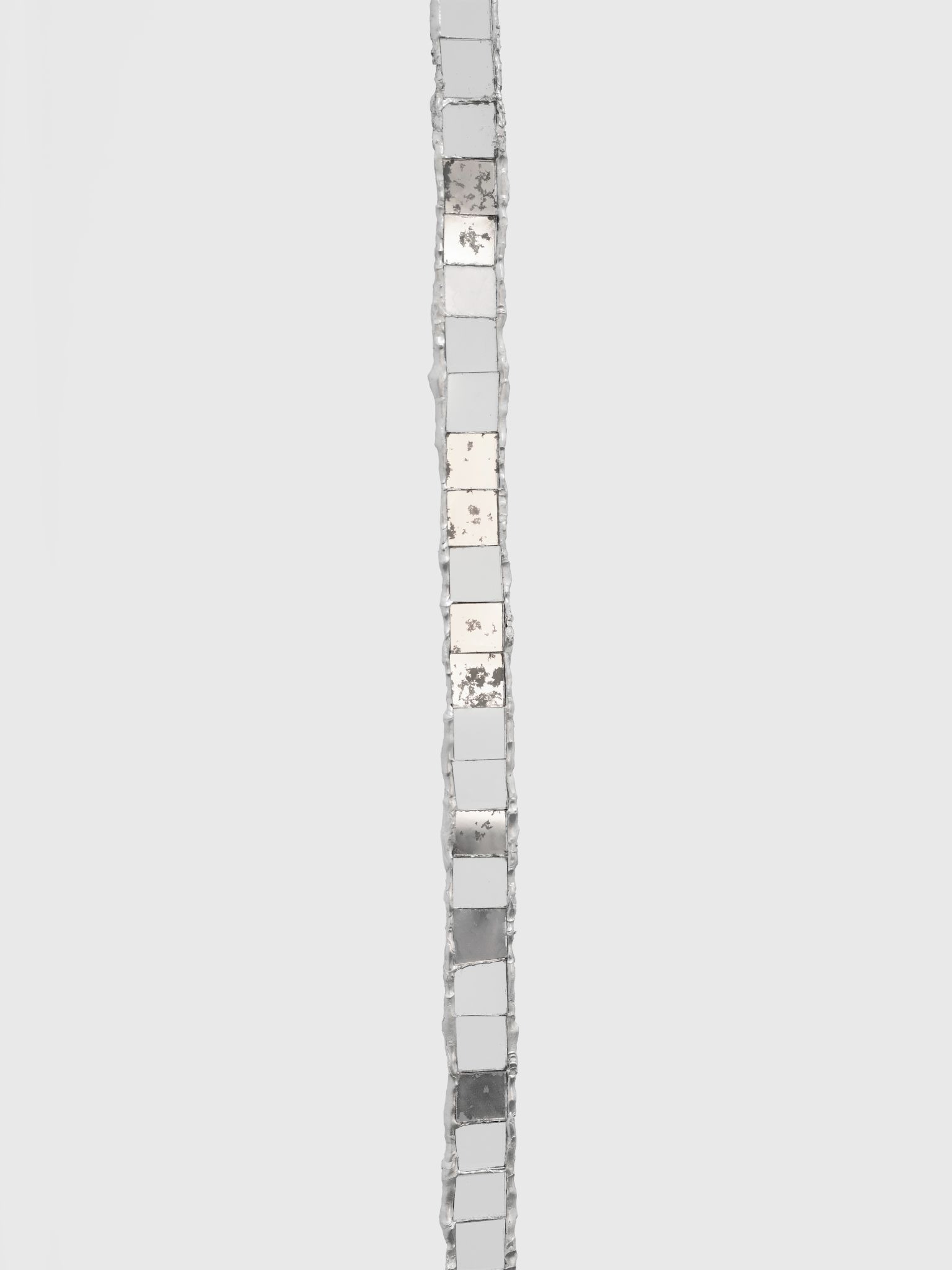
Right before entering the second space in the gallery, two works hang from the ceiling. Vertical Construction with Mirror and Glass (2026) is a string of small square mirror and glass pieces, while Stacked Color (2026) is composed of stained glass. If you look closely, you can see small reflections of yourself in the small fragments of the mirror. Reflections recur throughout the exhibition: in these shards of mirror, in the glazed surfaces of Harris-Babou’s fingerprints, and even in Mohundro’s iPhone casts, which reproduce an object that has itself become an increasingly intimate extension of the body. In an iPhone SE-sized printed manifesto titled Perspiration Conspiracy, Mohundro describes the device as a seductive “black mirror” that never stops feeding us our own image, promising connection while also creating narcissistic isolation. But the “mirrors” in B³ refuse that seamless feedback loop. They instead fracture the viewer across different works, making the self visible only in relation to the objects and people surrounding it.
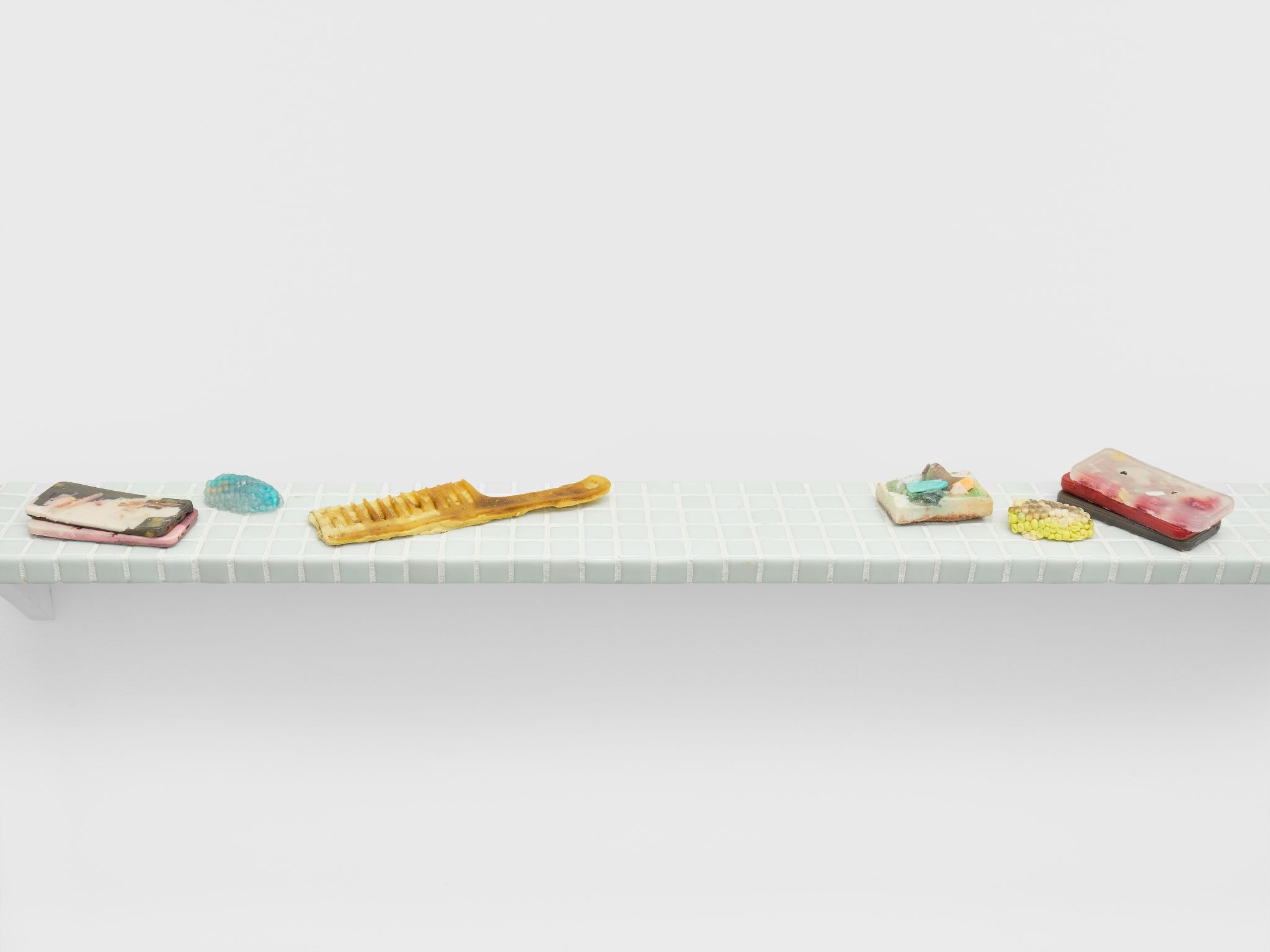
A bath mat, printed with digital drawings over screenshots from Mohundro’s phone, welcomes the visitor into the second room. Here, looking gives way to touching. Visitors are encouraged to touch every piece: familiar, domestic objects such as a hairbrush or bath towel cast from soap. Unlike the touchscreen, designed to register contact without retaining much evidence of it, these surfaces are somewhat fragile and hold memory on a molecular level. Every visitor leaves behind pressure, warmth, sweat, and gradual deformation. The works are never really finished; they are forever changing through the contact of anyone who interacts with them.
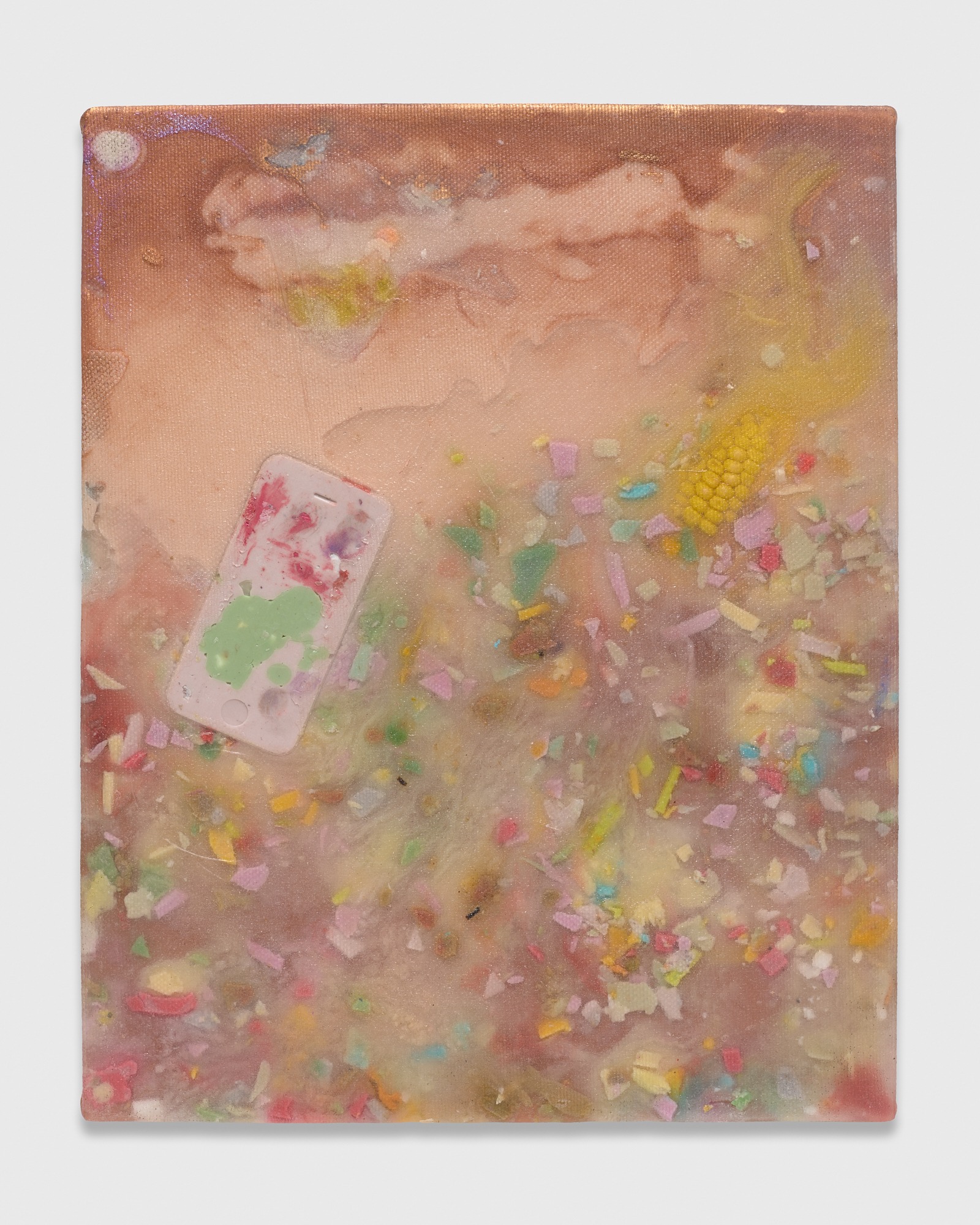
On the walls, three canvases made entirely out of cast soap and pigments extend this logic of accumulation. Layers of soap create depth within their surfaces, revealing fragments suspended inside as though embedded in sediment. In Effluvium Kernel (2026), for instance, a section of corn, colorful specks, and another iPhone SE cast float in warm orange layers of soap. The work has the hazy quality of a dream or a distant memory that becomes clearer the longer you look at it. The objects’ familiarity creates a kind of intimacy that comes from recognizing the gestures and rituals they belong to. Here, familiarity becomes a way of imagining connection through the small physical rituals we all share beyond the digital world. If the smartphone compresses perception into a smooth plane of infinitely replaceable images, the two artists give the material experience thickness and fixedness again.
In B³ (Bed, Bath and Beyond Abstraction), Ilana Yacine Harris-Babou and Patrick Carlin Mohundro wonder how we can collectively become closer, and they do so by accepting the ways in which technology has changed our domesticity. They know that there is no escape from digital alienation and that the distinction between the technological and the bodily is no longer clean. Instead, through material experimentation and working with soap casts, ceramic, deodorant, glass, and even bath mats, they make a case for the value of friction and for redirecting our attention back to our bodies.
B³ is on view at Essex Flowers through October 11, 2026.