
Chia-Yun Wu: “Elsewhere” at Nunu Fine Art
Review
From November 7th to 9th, 2026, the sixth edition of Art Collaboration Kyoto (ACK) took place at the Kyoto International Conference Center. The defining characteristic of this fair is literally “collaboration,” as Japan-based galleries host international galleries and share booths with them. This system brings two advantages to this fair. First, Japan-based galleries can act as bridges between foreign galleries and local audiences. They can connect local collectors to their collaborating galleries and also act as interpreters. Second, the fair encourages communication among galleries, making it a place to network with others and build solidarity within the art world.
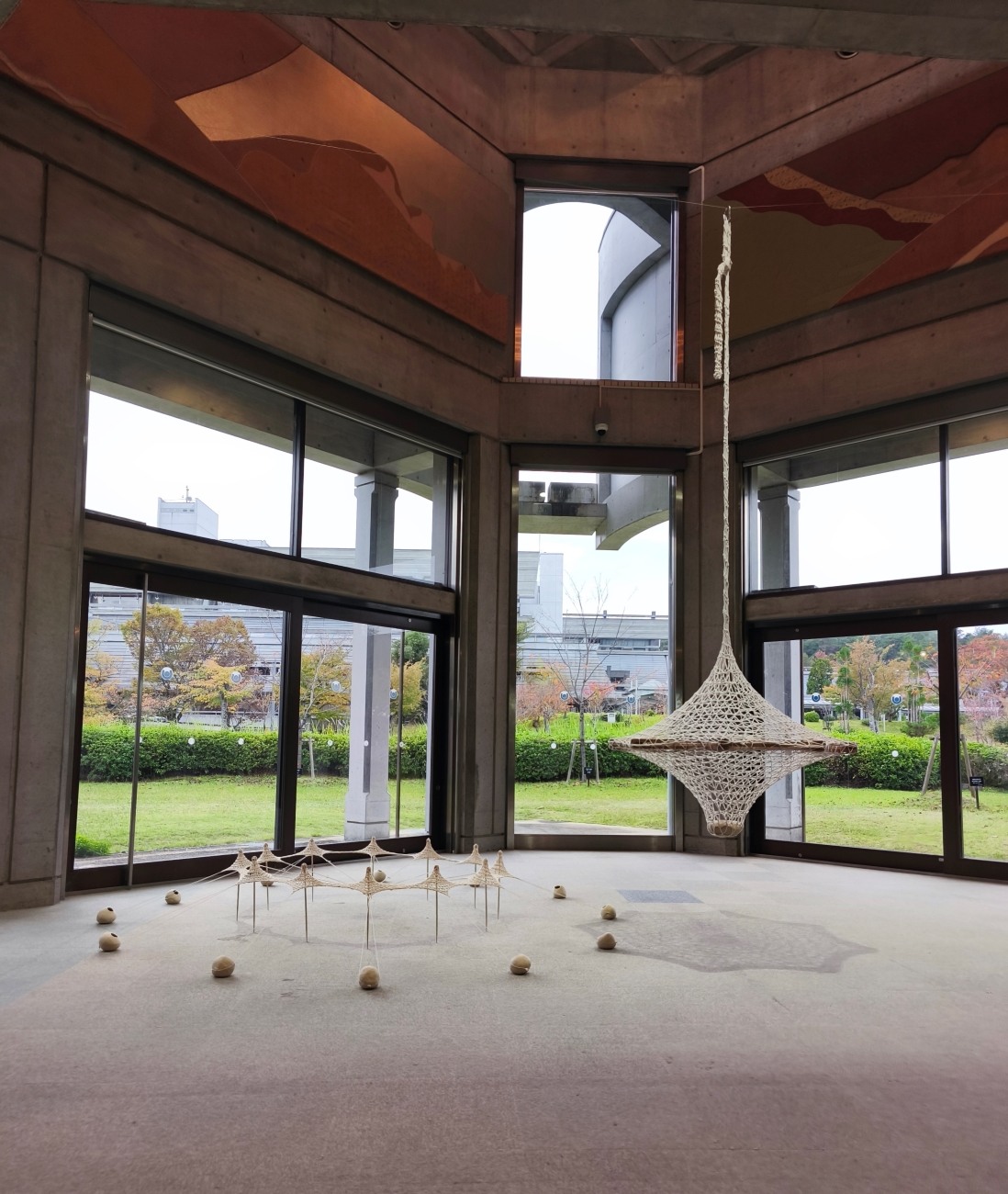
The fair’s curatorial section, ACK Intersections, is curated by Leonhard Bartolomeus this year; Bartolomeus is a curator at Yamaguchi Center for Arts and Media and part of the Indonesian collective ruangrupa. In the final section of the fair, there is also a large workshop program for kids. This year, while no booth stands out as particularly experimental, the fair features many strong, harmonious collaborations, which IMPULSE writer Souya Handa will highlight.
Shibunkaku and neugerriemschneider
Artists: Andreas Eriksson, Tomioka Sōichirō, Olafur Eliasson, Yamada Hikaru, Elizabeth Peyton, Léonard-Tsuguharu Foujita, Ai Weiwei, Toda Kōji, Pae White, Uemura Shōkō, Udomsak Krisanamis, Ishikawa Kyuyoh, Tomás Saraceno, Morita Shiryū, Rirkrit Tiravanija, Haegue Yang, Yosa Buson, Ogawa Machiko, Thilo Heinzmann, Asano Yae, Sharon Lockhart, Kamoda Shōji, Dōmoto Inshō, and Yokoyama Taikan
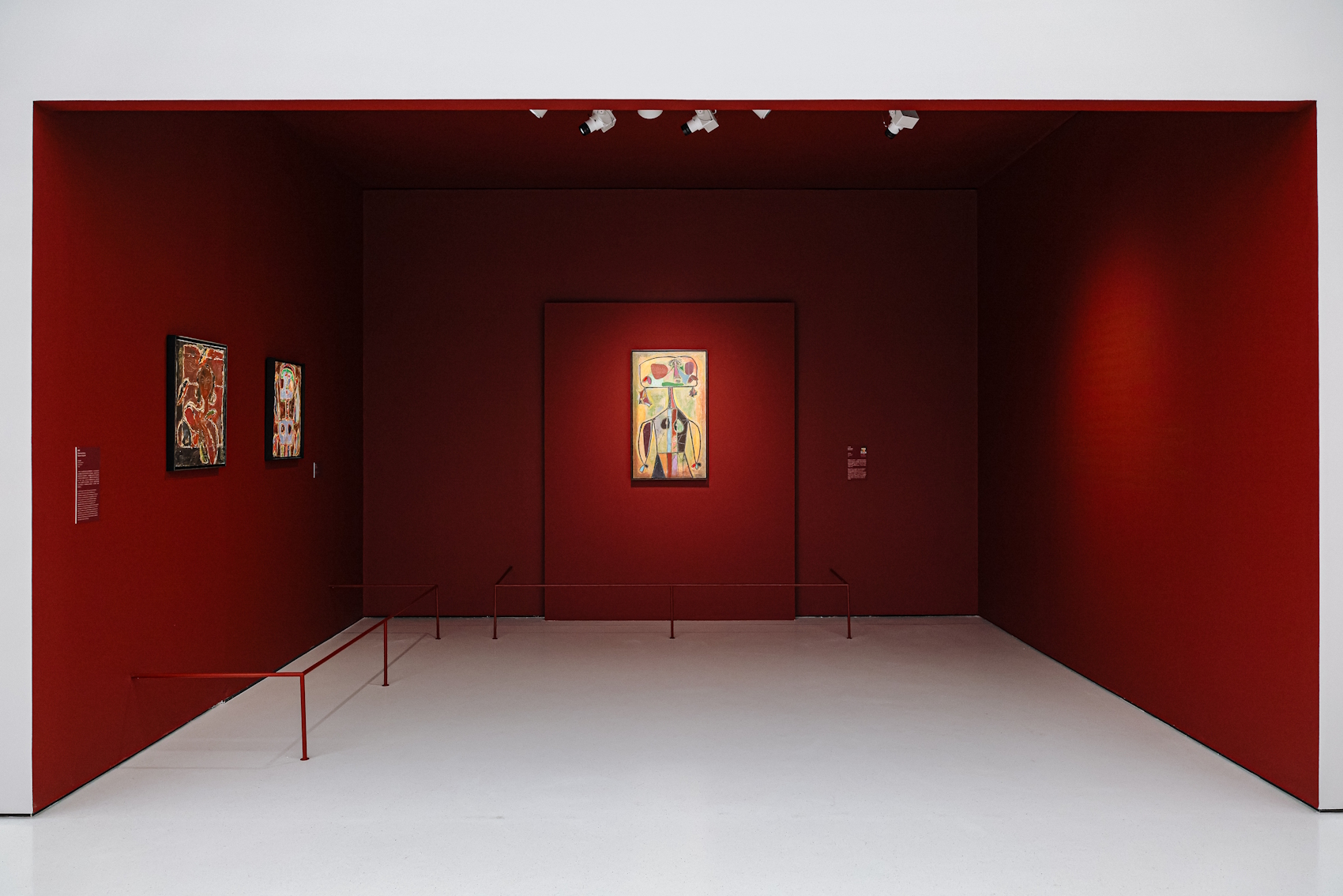
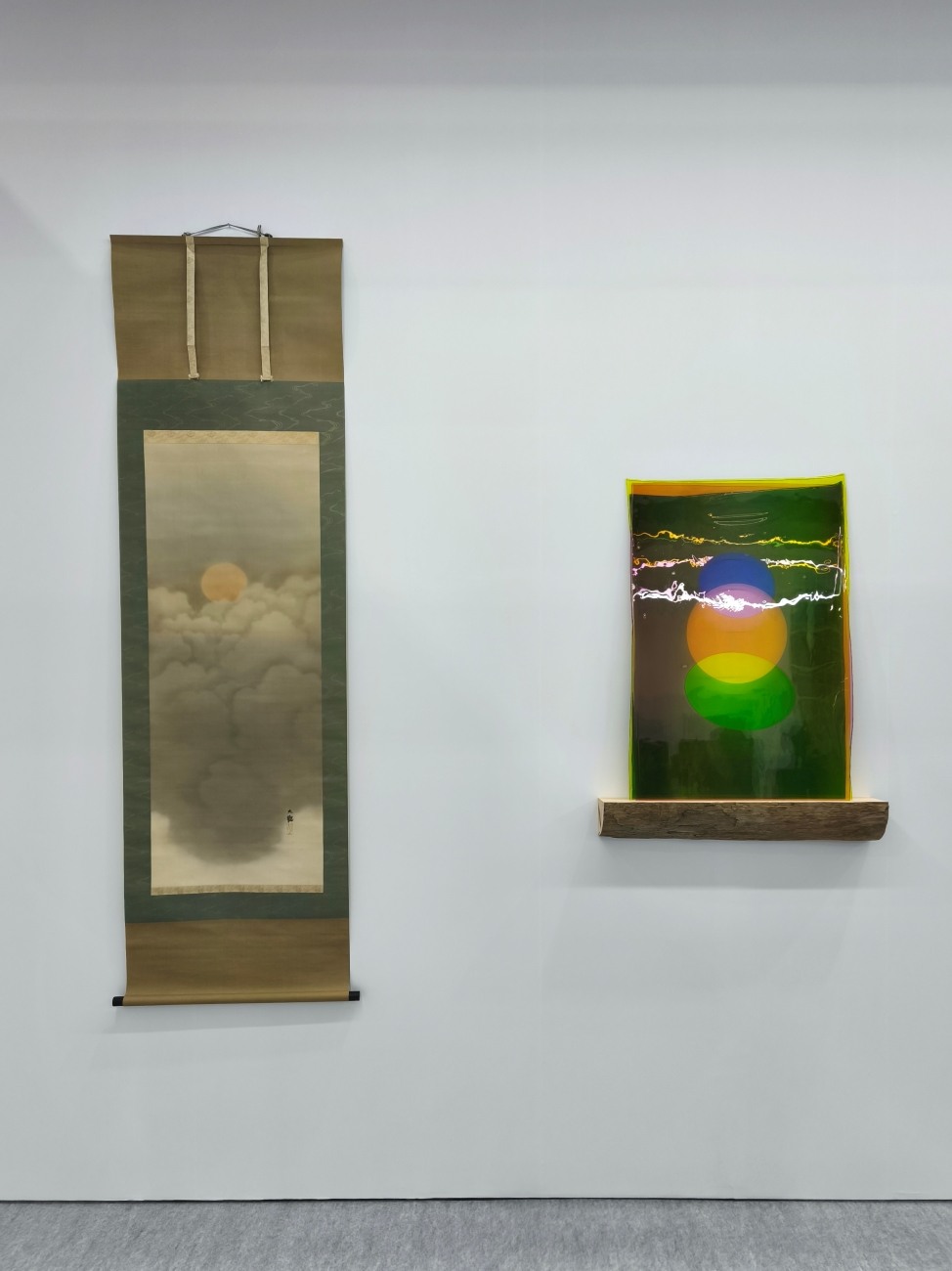
One of Kyoto’s big-name galleries dealing in works by Japanese masters has hosted neugerriemschneider from Berlin this year. They present works by artists from the two galleries side by side in pairs, an arrangement that, according to the galleries, took a month of discussion. Many pairings relied on formal resonance. For example, in Léonard-Tsuguharu Foujita’s painting and Elizabeth Peyton’s drawing, the figures’ arms form similar shapes, while on another wall, Summer Moon (ca. 1914) by Yokoyama Taikan, a master of nihonga (Japanese-style painting, established during Japan’s modernization), hangs alongside Olafur Eliasson’s Three central self-like parts (2026). Taikan’s moon, partially hidden by clouds, is echoed by Eliasson’s overlapping circles and ovals. Moreover, since nihonga has circulated mainly within Japan's domestic market, seeing this style of painting at an international contemporary art fair is refreshing.
Satoko Oe Contemporary and Margot Samel
Artists: Shigeru Hasegawa and Kris Lemsalu
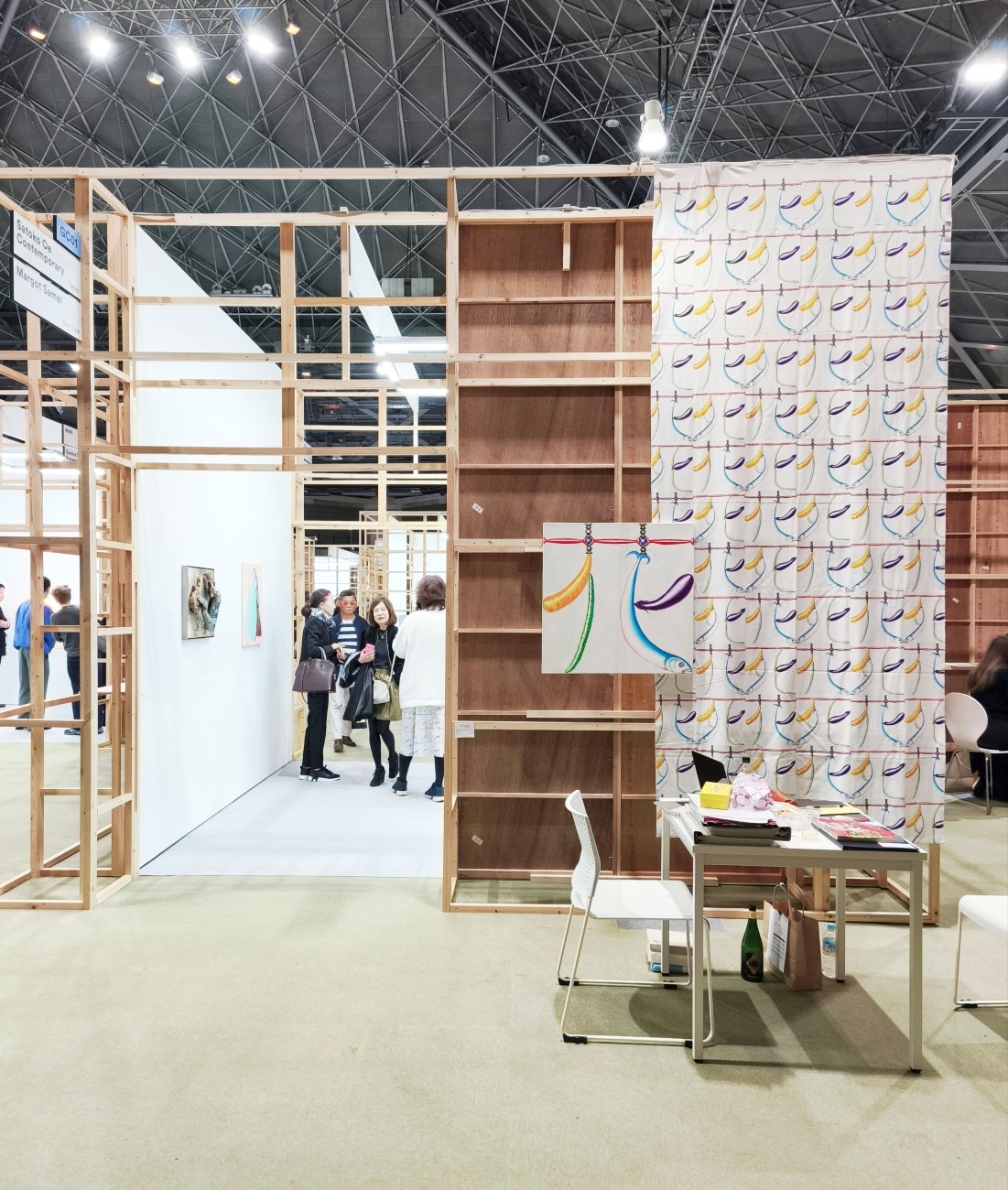
The Tokyo-based gallery Satoko Oe Contemporary presents paintings by Shigeru Hasegawa, whose retrospective is currently on view at Toyota Municipal Museum of Art. Hasegawa is an artist’s artist, admired by peers including Izumi Kato. He paints humorous images, often of kanji, composed of ingredients such as fruits, vegetables, and fish, recalling the works of Giuseppe Arcimboldo or Utagawa Kuniyoshi.
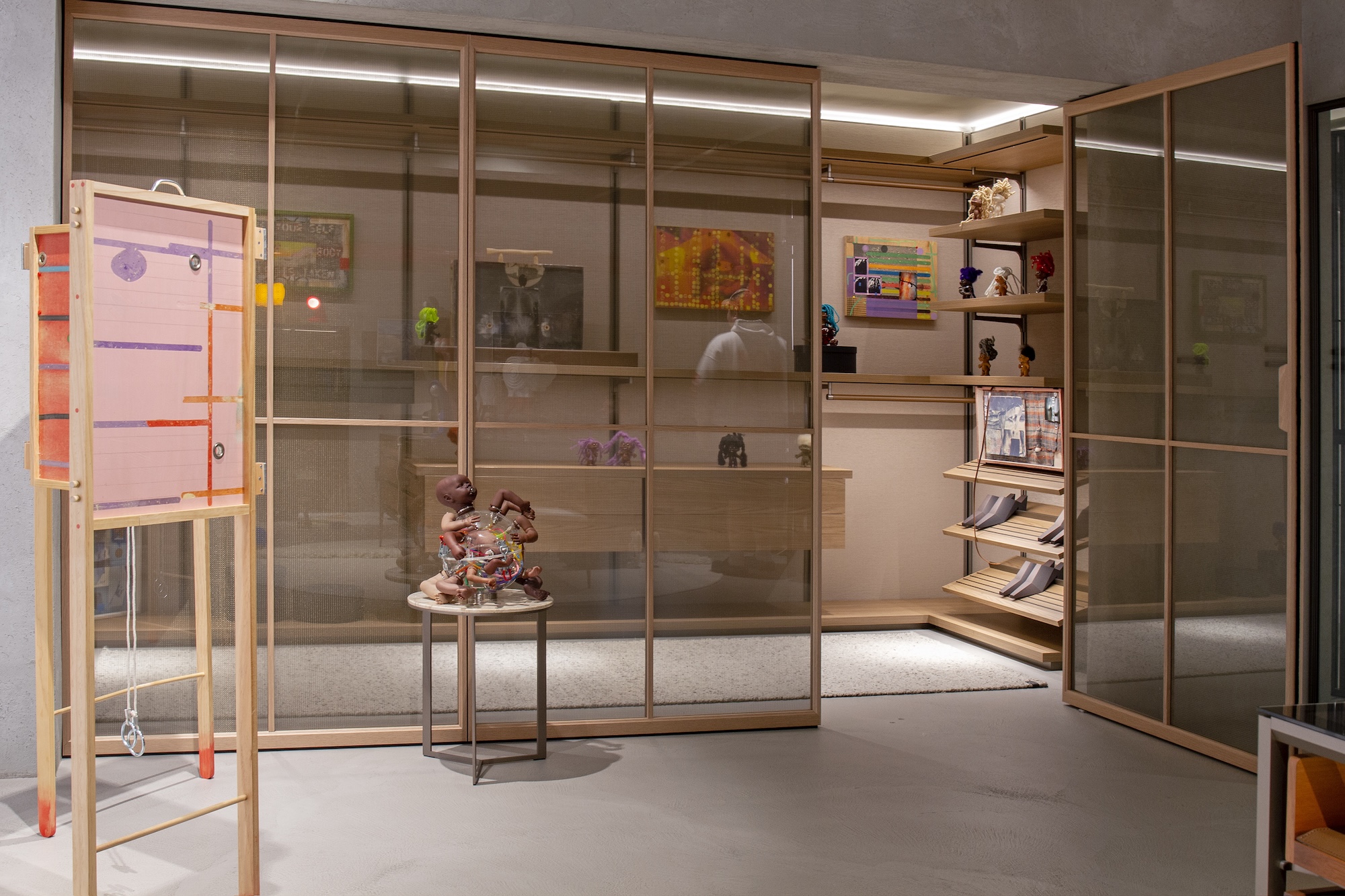
Alongside Hasegawa’s paintings, gallerist Margot Samel presents ceramics by Kris Lemsalu, an Estonian artist based in Tallinn and New York. Lemsalu casts everyday objects such as toys and boots, combines them into sculptures, and fires them in a traditional Japanese kiln. Both artists bring familiar objects together in strange ways, offering new views of objects viewers already take for granted. The pairing becomes especially playful when colorful paintings clash with weighty ceramics.
18, Murata, Turnus, and Good Weather
Artists: Margherita Raso, Yuu Takamizawa, Jaehun Kim, Andreea Anghel, Karolina Szwed, Inga Danysz, and Raque Ford
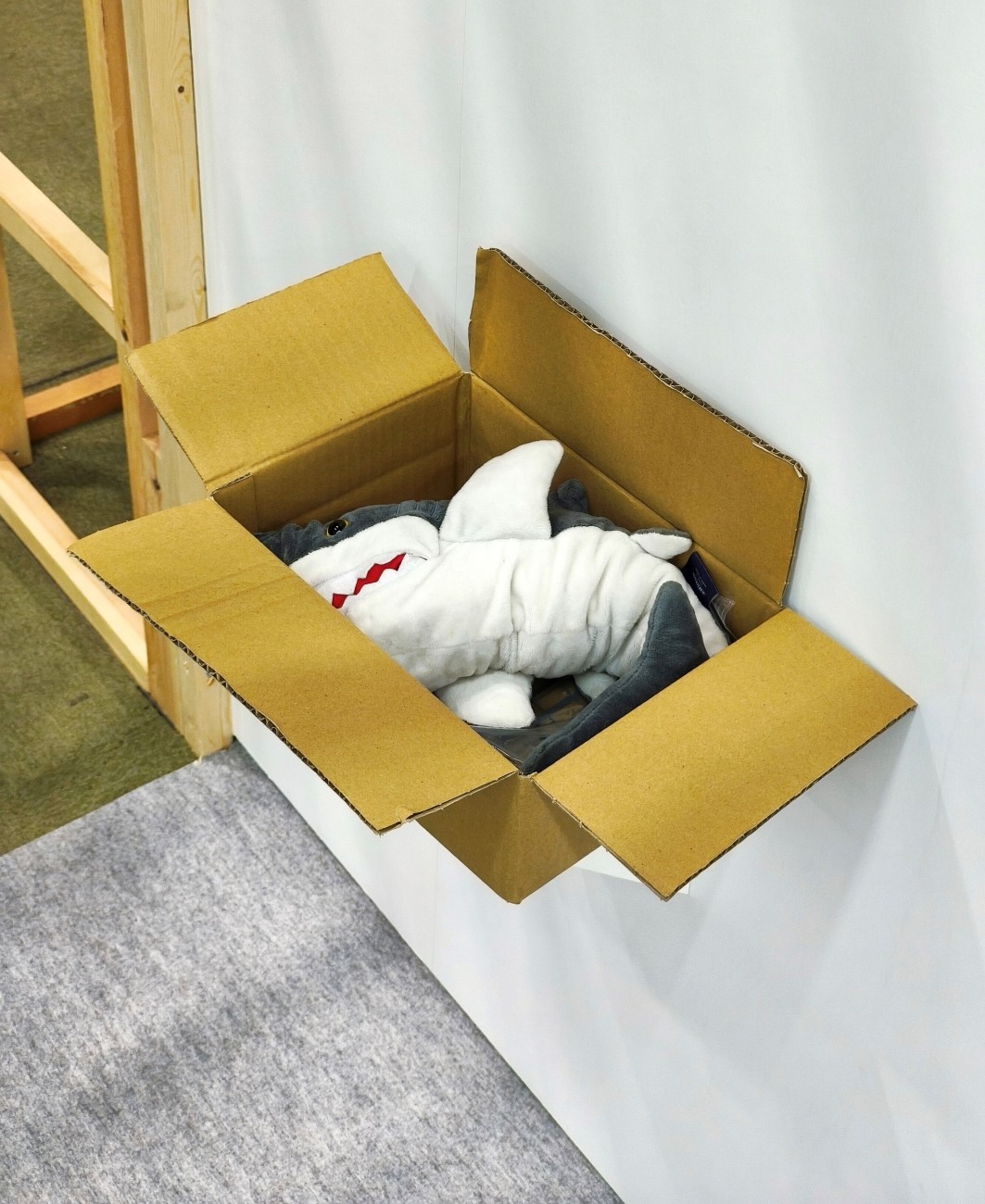
18, Murata, a Tokyo-based gallery run by artist Fuyumi Murata, has hosted Turnus from Warsaw and Good Weather from Chicago. A stuffed shark peeking out of a cardboard box is the first thing that catches my eye. It’s Yuu Takamizawa’s Shark in a Box (2026), and it’s in good company with Raque Ford’s acrylic letters and Inga Danysz’s aluminum furniture-like sculptures next to it.
Murata explained that the three galleries have known each other for a long time, which brought a convivial atmosphere to the booth even without much discussion. These three galleries share an artist-run ethos, which comes through in the way they give simple ideas room to play out. For instance, Karolina Szwed’s Sardines (2026) are two nearly identical sardine paintings. Szwed made the second by copying the first by hand, demonstrating a process-oriented philosophy that underpins many works in the booth.
Artists: Toshiki Oda, Arisa Kawai, Mari Kobayashi, Syotatsu, Yurina Hirao, David Bielander, Kansai Noguchi, Apinya Boonprakob, Morakot Ketklao, Aya Ito, Rudee Tancharoen, and Sam Tho Duong
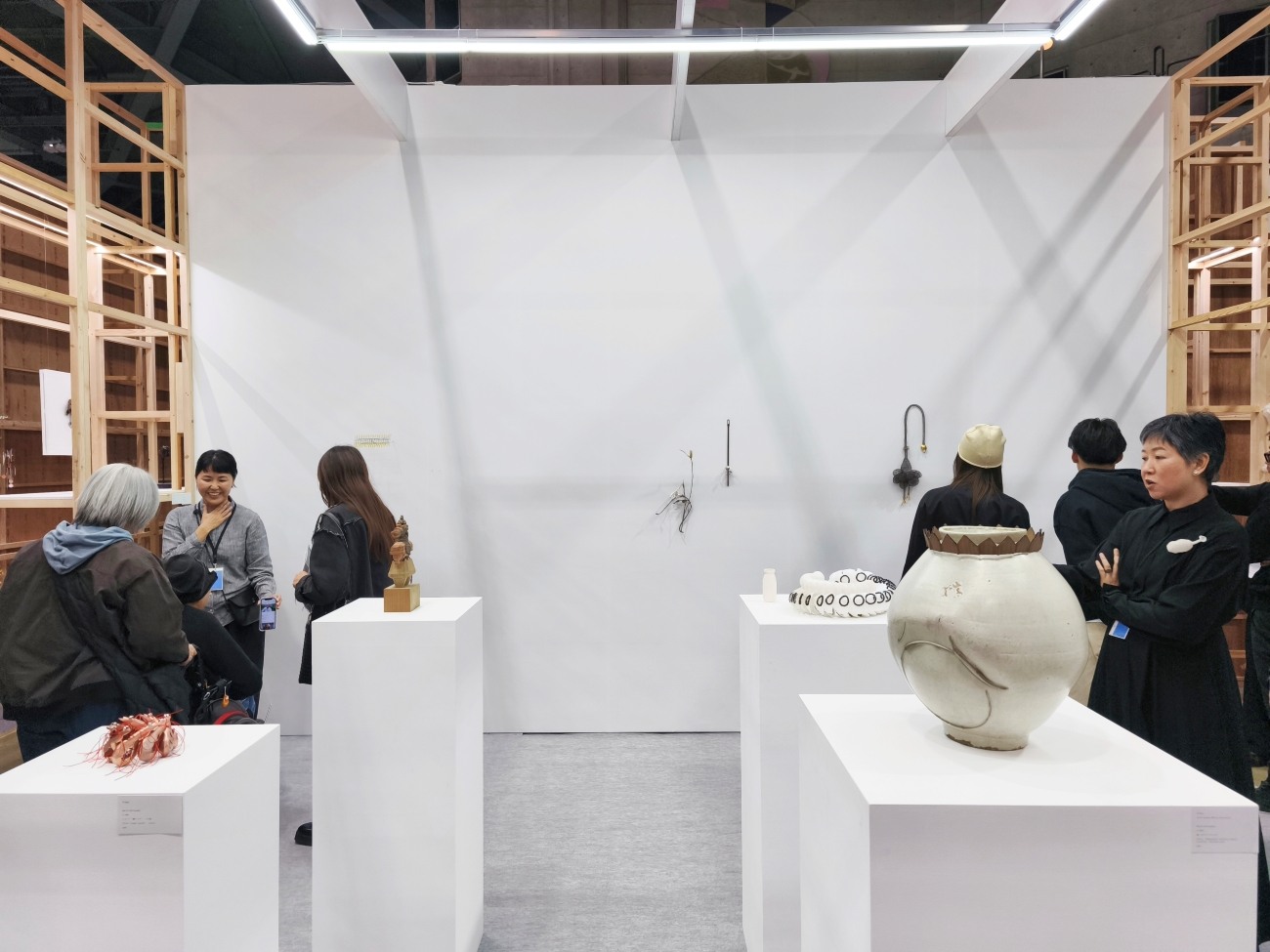
KANEGAE and ATTA, based in Kyoto and Bangkok respectively, built their booth around the concept of “Wearable Arts,” bringing jewelry into conversation with sculpture and installation. Visitors could try on Aya Ito’s san san necklace (2022) and feel its movable parts sway as they walked. Ito also showed kinetic installations in the booth, and the necklace brought that same interest in movement to the scale of the body.
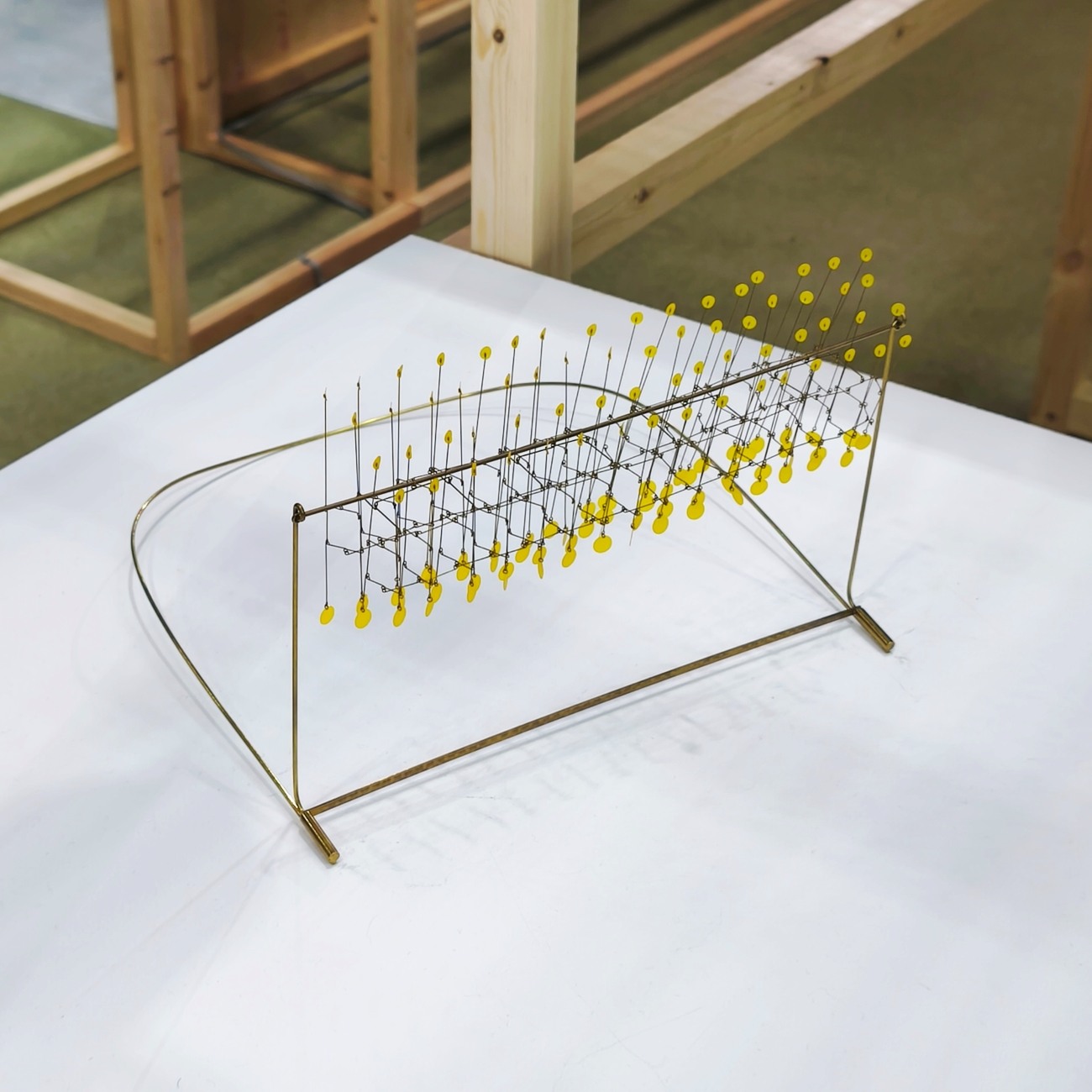
Alongside Ito’s kinetic works, there are also “wearable arts,” ranging from David Bielander’s silver bracelet Scampi (2007) to Arisa Kawai’s pottery work Rebirth (2026), whose missing part the artist filled with quartz, all placed under the expanded concept of the “wearable.” The booth itself, full of small artworks, is like a huge jewelry box, making it a particularly welcome stop at the fair.
Art Collaboration Kyoto was on view at the Kyoto International Conference Center from November 7th to 9th, 2026.