.webp)

Kern Samuel: “IM” at Derosia
Review
Upon entering YveYANG’s rear gallery, sunlight falls from the ceiling windows in a golden hue reminiscent of well-aged whiskey. With the lights left off, the industrial character of the space, so recognizably New York in its gridded windows and skylights, does not produce a dramatic spectacle. Instead, it creates a peaceful condition, one that seems to place the viewer inside an extended afterglow. In Stephen Lichty’s Ghost Stone, this atmosphere of stillness is not incidental to the work; it is one of its primary materials. Through resin, glass, stone, iron, and sunlight, Lichty distills light into duration, allowing the gallery itself to feel as though it were being steeped in time.
Under this first impression of golden warmth, however, the tenderness of Ghost Stone is not innocent. The materials Lichty works with carry histories of extraction and environmental damage, drawing the viewer into the shadows that light cannot reach. Much of his raw material comes from Liberty Hill Diggings, a defunct mine in the Sierra Nevada foothills inflected by Gold Rush-era extraction and hydraulic mining, even as the surrounding area was later absorbed into a National Forest. This dissonant chord lies at the center of the ethical charge. Nature appears here as more than a pure refuge or a passive resource. It is continually molded by human desire, damage, and preservation. Lichty responds to this history through a restrained and attentive handling of material. Through attentive material investigation and alteration/alchemy, his practice opens up a fragile negotiation between care and intervention.
Among these transformations, Forest (2026) offers the most tender vision of attunement. The work rests gently across the window grids and skylights, transforming the gallery into a hidden field through its layered scent of citrus and pine resin, and through the glow that shifts continuously with daylight. Resin is a tree’s mechanism of self-protection, a viscous substance secreted as a wound begins to heal. As it oxidizes and hardens under the sun, its color deepens from pale gold into amber. Lichty sustainably gathered fallen resin from Liberty Hill Diggings and processed it into rosin powder, which was then fused onto glass panels. Eventually, these panels, each bearing its unique bubbles, waves, and degrees of translucency, were installed in the gallery's windows and skylights. Natural light passes through the surface, becoming heavier and closer to time itself. Entering the room feels like stepping into an extended dusk, where residual warmth gently covers the walls and the mottled floor. Forest does not emerge from the possession of nature, but from a kind of revelation formed by time.
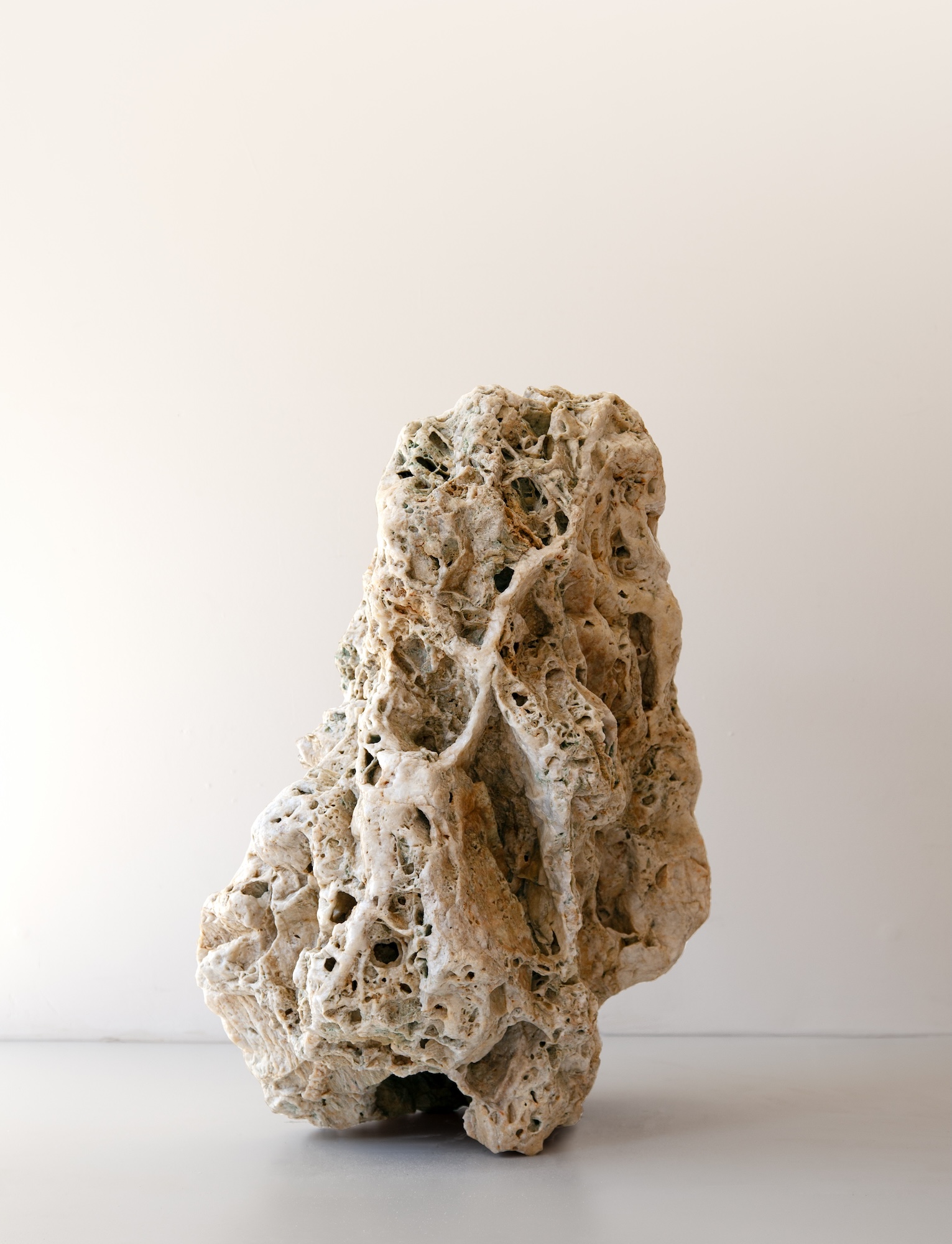
Turning toward Stone (2026) at the center of the gallery, the exhibition moves from the thickness of light into the time of matter. Compared with Forest’s translation of natural processes, Stone appears more conflicted and unsettled. It is a work of extraordinary patience. From its holes, wrinkles, and gradually revealed quartz structure, viewers can almost sense the long duration of labor, trial, and error. Lichty accelerates the process of erosion by removing softer minerals and continuously adjusting the stone’s surface and internal structure with dental scrapers, water guns, and micro-blasters. It is precisely this acceleration that makes the work’s ethics unstable. To simulate a natural process through entirely artificial means requires tremendous patience and imagination, but it also evokes questions of artifice, human intervention, and even anthropocentric entitlement. The question remains whether this piece of quartz, if left to the slower logic of geological time, would ever have arrived at the form Lichty has made visible. The artist's intervention appears to accompany the material as it reveals itself, but this intervention contains the violence of deciding the material’s future form on its behalf. For this reason, Stone not only presents its intricate process of making, but also exposes a paradox concerning material autonomy: the work follows the structure and potential that seem proper to the stone, yet the process of artificial acceleration also compresses geological time into an artifact that can be immediately viewed and collected, inevitably participating in cycles of capitalistic consumption. From this perspective, Stone moves beyond a simple imitation of nature, entering a dimension between the scale of human and natural interaction and its ethics.
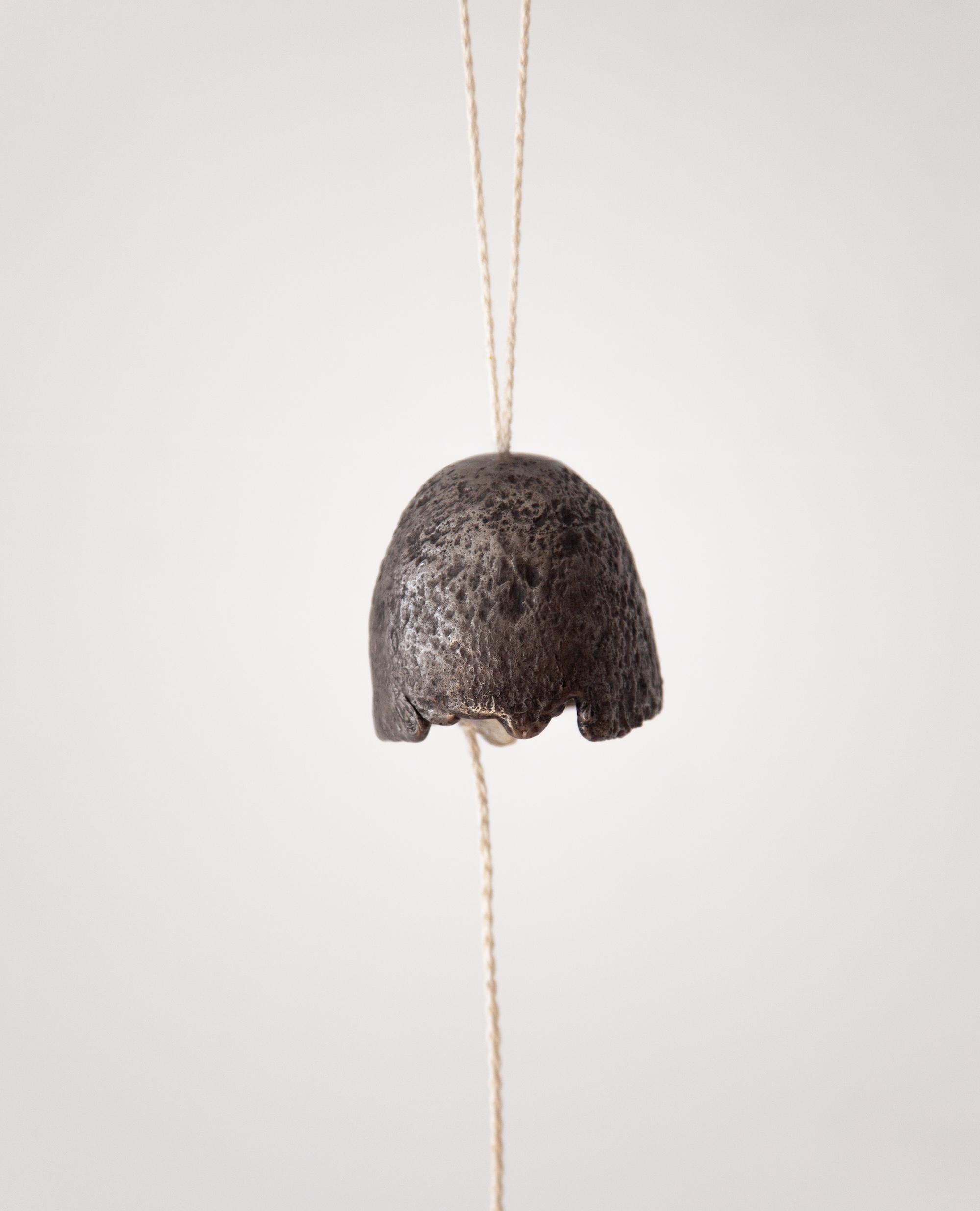
Returning to Bell (2026), as both the first piece and the bookend to the show, Ghost Stone reframes this tension through the circulation of material across geography. Black iron sand, the material that forms the bell’s body, is a mineral-rich residue of iron ore washed downstream from the Sierra Nevada to the shoreline through the long movement of water. Gathered at San Francisco’s Ocean Beach, it was separated, smelted, cast, and eventually polished by Lichty into the form of a bell. As an extension of the exhibition’s reflection on the violence of mining, this mode of collecting material appears more restrained. Working with matter already left behind by geological movement and historical processes avoids acquiring resources through renewed damage to the land. The quartz clapper of the bell from Liberty Hill brings Bell back into the context of the mine, establishing a material connection among the coast, the mountains, the mining site, and the gallery. For this reason, Bell does not need to sound in order to be recognized as a bell; it functions as a boundary and signals that Ghost Stone unfolds along questions of extraction and ethics.
The strength of Ghost Stone lies in the artist’s awareness of care and intervention; it does not treat material ethics as a clean, contradiction-free position, nor does Lichty fall into either a return to or a critique of the context. His works remain grounded in the interaction between nature and culture, handling and interpreting materials that have already been marked by violence, movement, and time. When the viewer returns from the warm light of Forest to Bell at the gallery entrance, this bell also becomes a suspended threshold, one that constantly reminds the viewer how to touch the world without fully possessing it.
Stephen Lichty: Ghost Stone is on view at YveYANG, New York, from May 8th throigh July 3rd, 2026.