%2C%20dir%20(2).%20Brydie%20O%E2%80%99Connor%20-%201.jpeg)
.webp)
Editors' Selects: September 2026
Review
What I can name cannot really prick me.
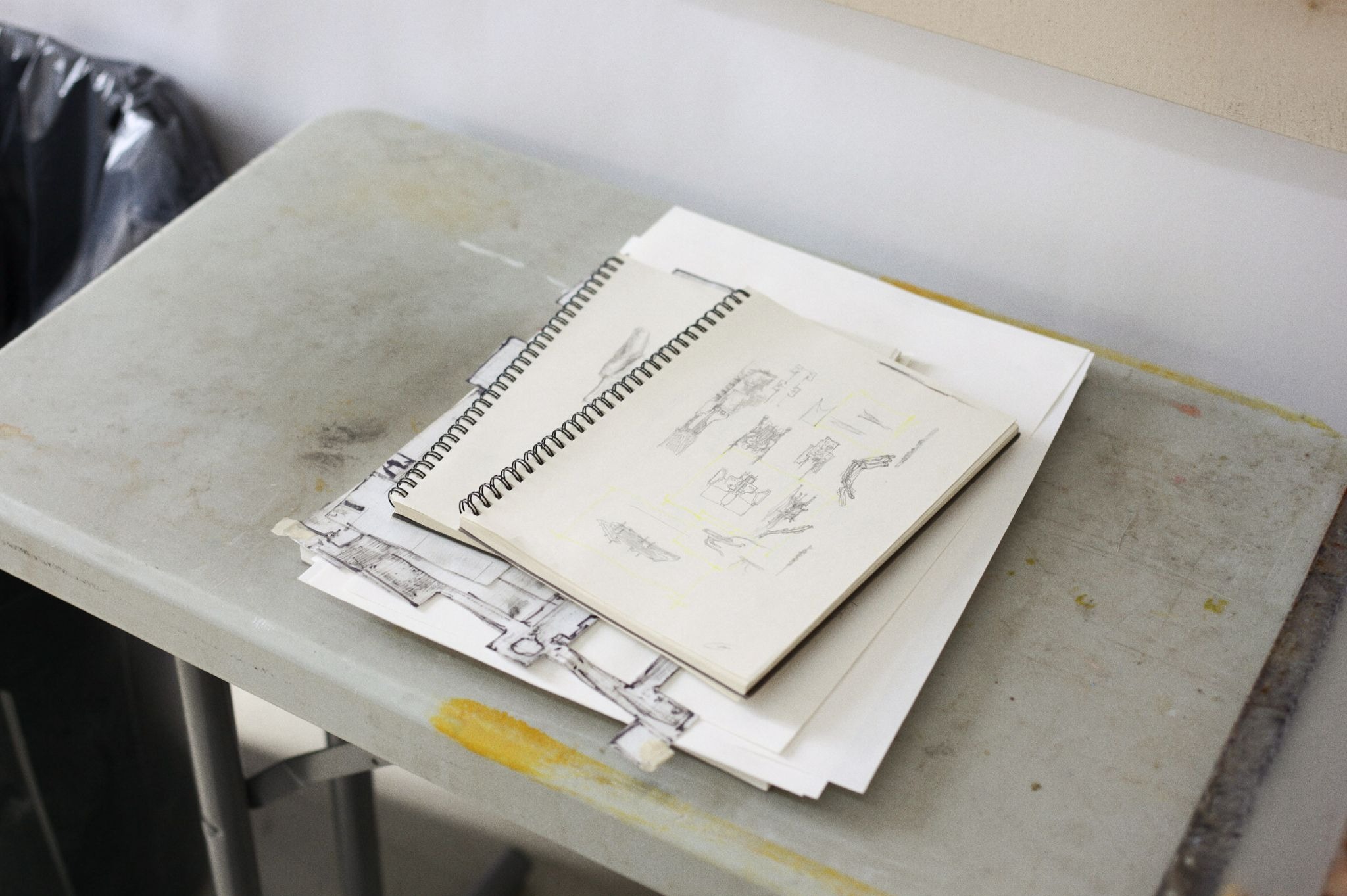
There is a distinct kind of estrangement that occurs when looking at something that appears at once familiar and unidentifiable. A faint portrayal of a figure, an object, or a landscape invites recognition before withdrawing upon closer inspection, breaking into incoherent limbs, fragments, or contours that make initial associations feel provisional. Artist Bryce Kroll contends with this very dissonance, creating works that inhabit the confines of this uncanniness, refusing full perceptual resolution in pursuit of something tethered between reality and the imaginary.
His recent turn toward typography approaches that same instability from a different direction. Instead of beginning with an object that looks vaguely discernible, Kroll is now exploring forms whose familiarity is imbued into their architecture. While letters may be among the most immediately legible visual structures, in his hands, their alphabetic outlines begin to loosen and blur, hovering between image, object, and language while resisting full categorization as any one type.
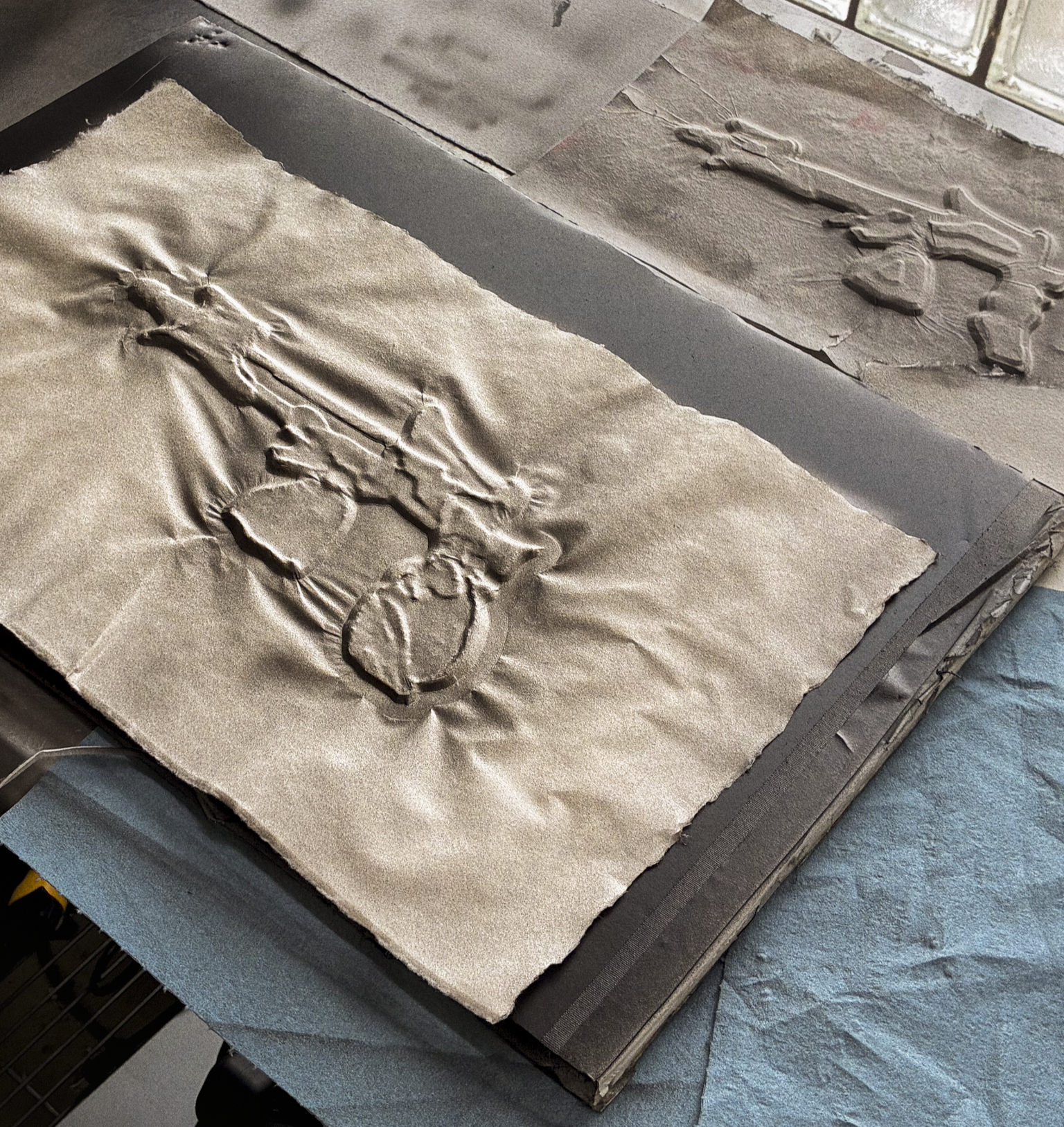
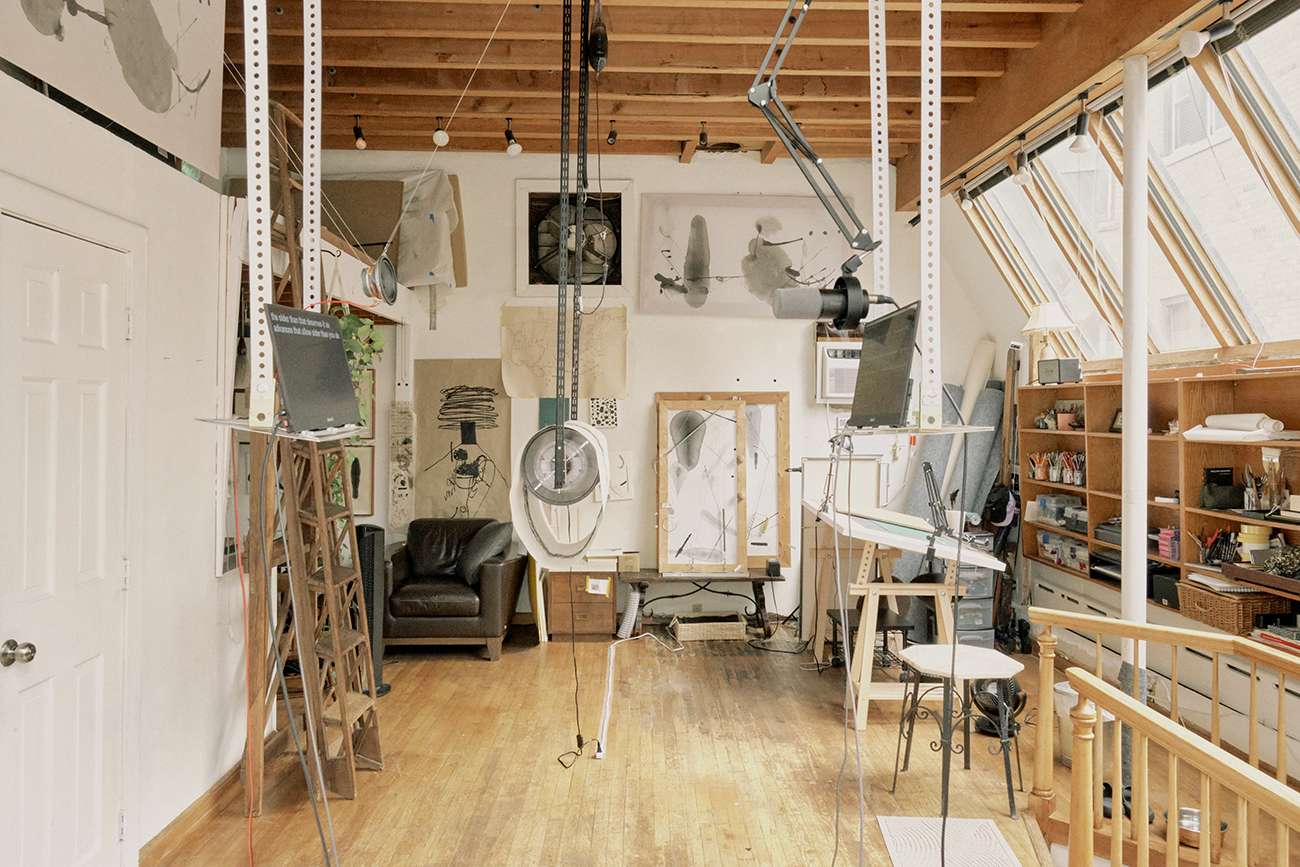
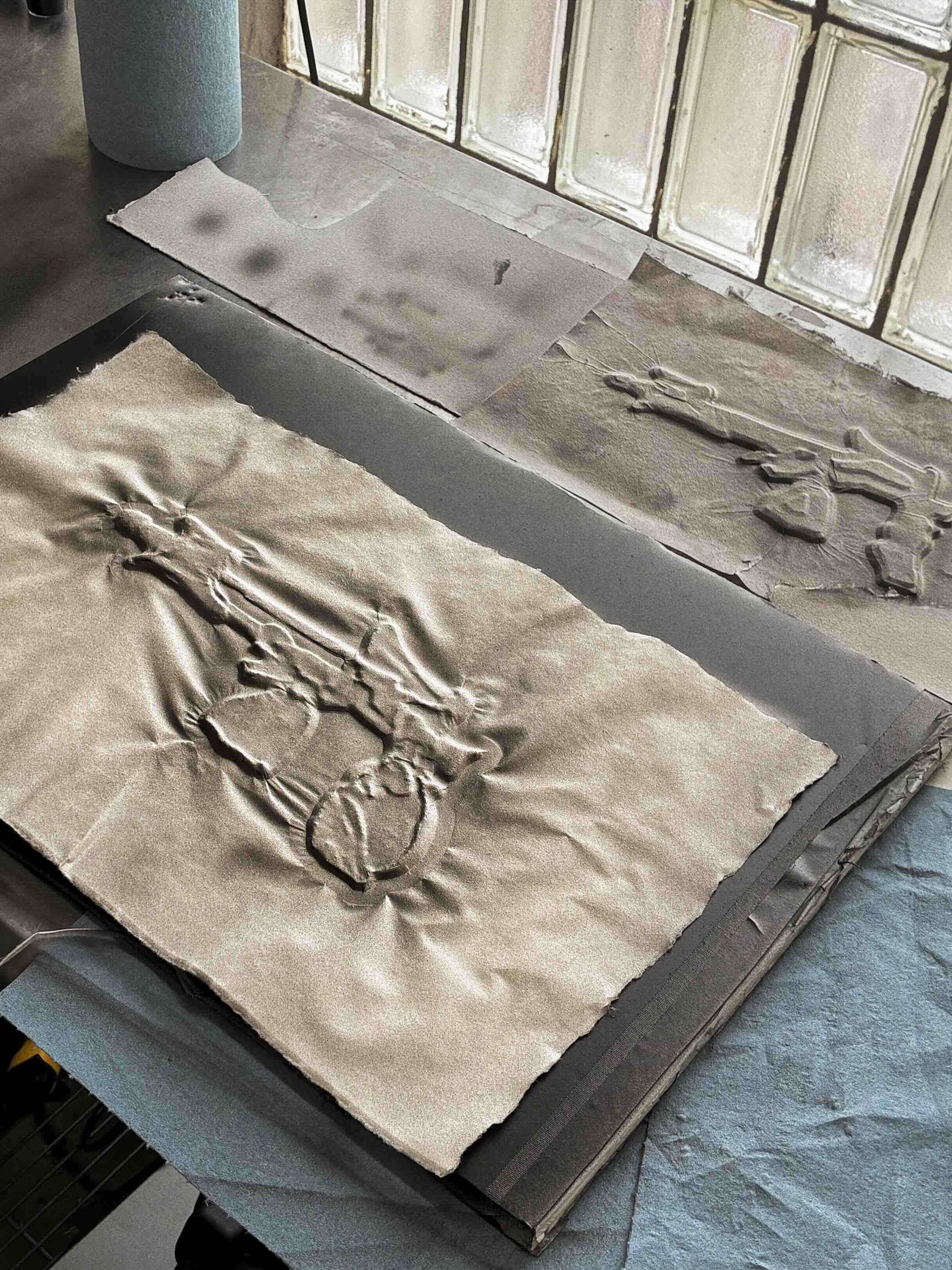
Spread across his studio table are samples and renderings of a particular letterform with arrangements of curves, stems, serifs, and ornamental flourishes that Kroll eventually developed into a new series of editioned prints in collaboration with IMPULSE, titled Big Picture (2026). They are recognizably typographic and simultaneously historical and personal, diagrammatic and sculptural. Here, typography becomes less a vehicle for language than a way of foregrounding the unsteadiness between a form and the meanings we are trained to assign to it. A conventional alphabet is functional due to its reliance on established systems of information. Kroll calls attention to, and, in a way, subverts the latent assumptions embedded in this process of linguistic signification: at what point does a mark cease to function as an image and begin to function as a unit of communication?
Kroll has referred to various projects across his creative oeuvre as rooted in a conceptual alphabet, one in which forms can be generated, replicated, repurposed, and assayed across mediums and applications. The artist explains how he views an exhibition as a temporary vessel through which these images are conceived, accumulated, and interpreted: “When I'm sketching, I am making drawings of sculptures, and I work and think in shows. The individual work can be taken out of context just fine, but it's vital that it was originally part of a specific body of work.”
A provisional form often begins with what Kroll calls “high-stakes doodling,” his attempt to describe a mode of drawing that is “not quite automatic, not quite planned, and not quite dumb.” Once entered into this broader system, the drawing’s lifespan expands, as it becomes available for continued processes of transformation and transcription. Its significance consequently emerges not from singularity, but from recurrence. As curves repeat, proportions echo one another, and certain shapes mutate while others remain stable, relationships are organically and gradually forged across a growing, interconnected map of work. What begins as a collection of discrete forms starts to behave instead like a generative network, one capable of perpetually producing further variations of its own.
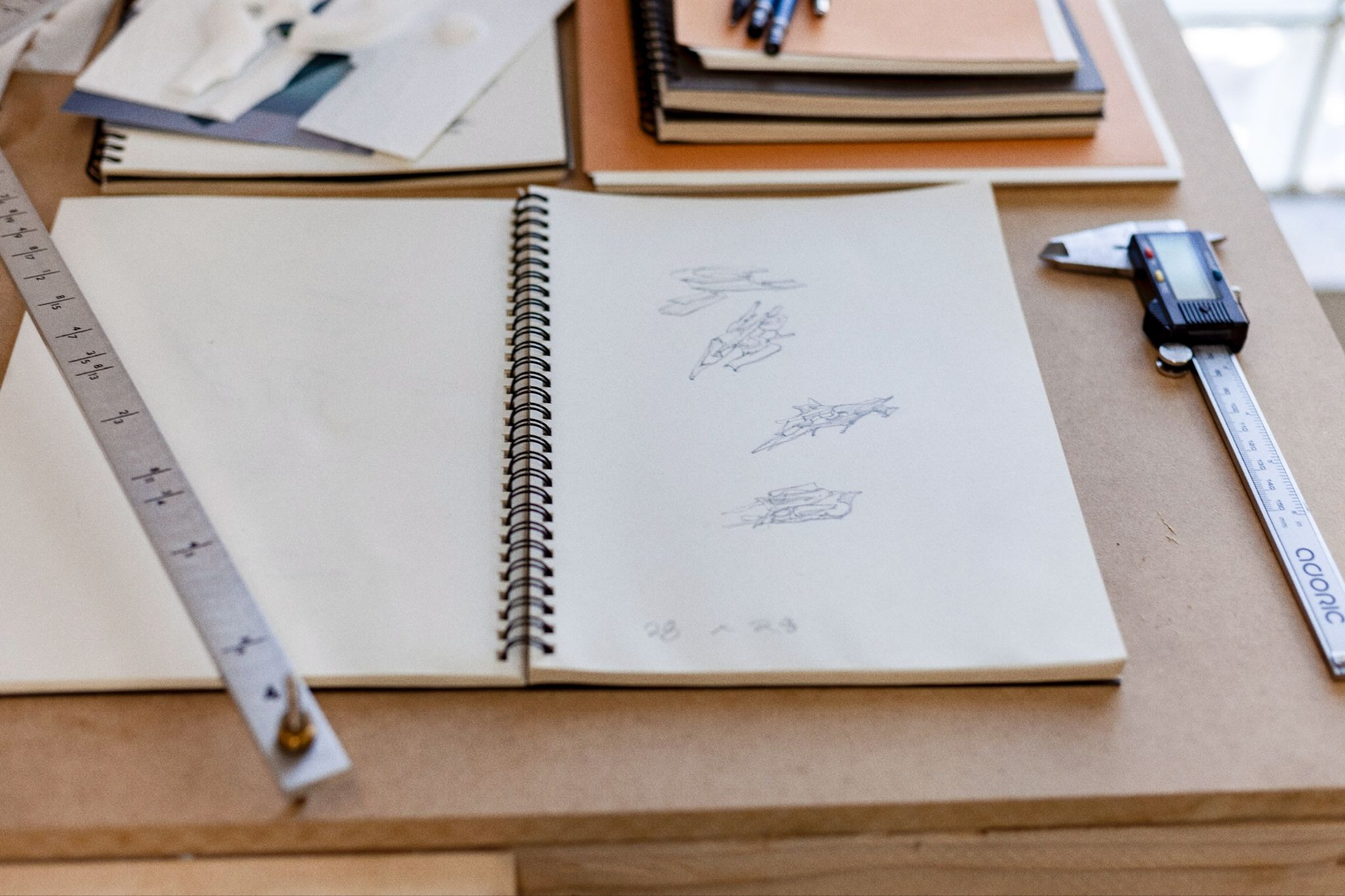
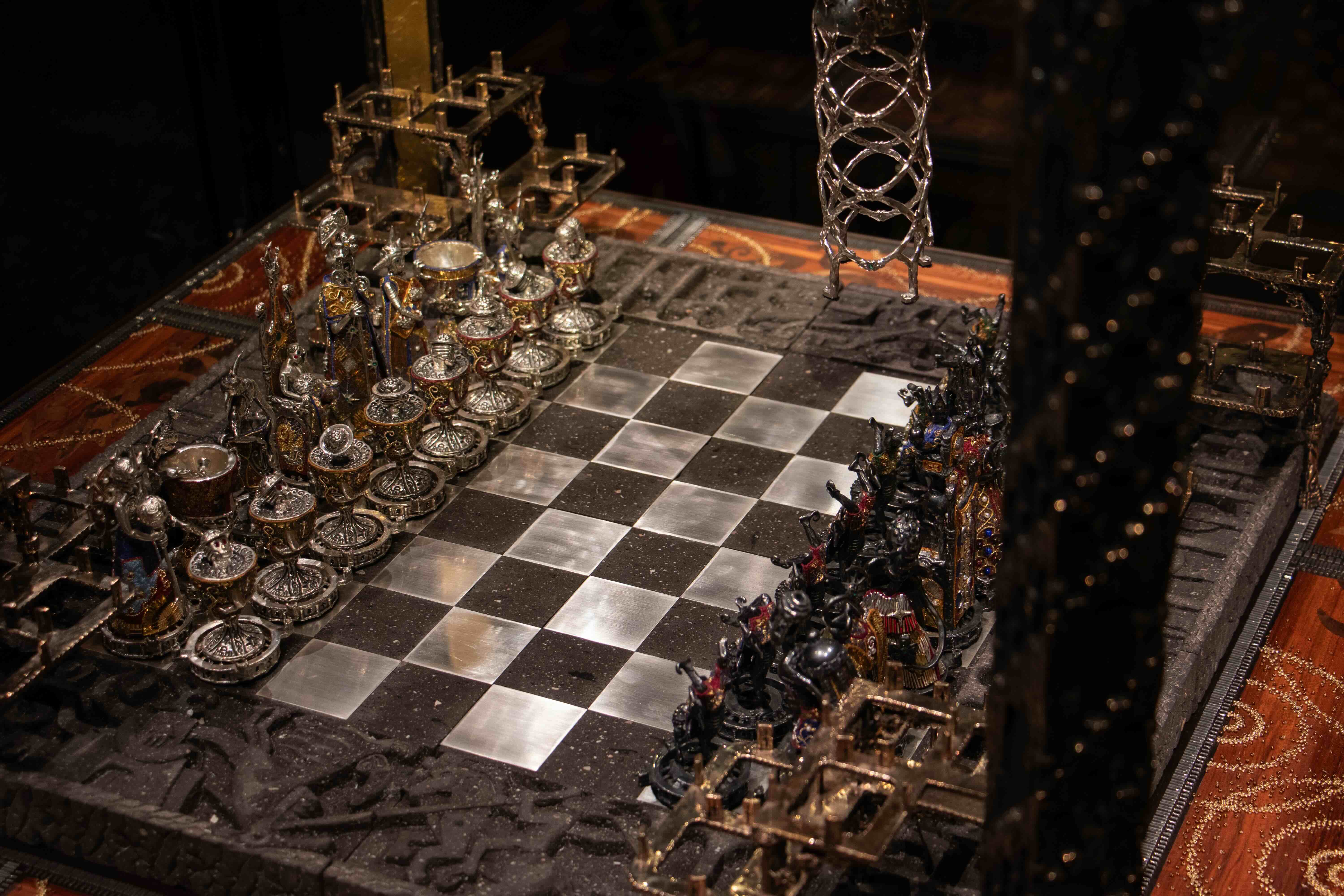
In this sense, Kroll’s conceptual alphabet borrows the iterative logic of both design and language, while suspending their usual demands for fixed legibility or semantic content. Private drawings become reproducible structures, shaped not only by the artist’s hand but also by the technologies, formats, and accelerated conditions through which the works are made. At times, Kroll takes on the machine’s repetitive labor himself, turning his own body into something resembling a printer. At other times, he deploys technologies of reproduction only to exploit their failures. The pantograph, a centuries-old device used to enlarge or reduce drawings, is one of these instruments. Kroll works from minute sketches and scales them upward, using the apparatus to exaggerate and preserve the smallest irregularities in his mark-making. What should function as a technology of accurate reproduction instead magnifies precisely the subjective deviations it might be expected to hide or suppress.
Kroll’s use of artificial intelligence extends this willingness to work within, rather than outside, the technologies that shape contemporary images, though he is adamant that he does not consider himself an AI artist. “Being anti-AI is fundamentally correct,” he clarifies. “It’s an extractive technology in every sense.” What interests him is less the technology itself than the way it intensifies a longstanding concern with the unstable relationship between seeing and knowing. He describes contemporary visual culture as part of “a larger shift in moving away from trusting what’s in front of you.”
“We might become even more detached from reality,” he remarks, “but it could be freeing if you think you have some influence over probabilities.” For Kroll, that tension between detachment and agency is what makes AI compelling as a tool, introducing new degrees of mediation while still leaving room for judgment and intervention, although it is important to remain wary of the interests it serves.
Yet despite the linguistic metaphor, the artist is careful not to suggest that this notion of an ideational vocabulary coheres into a decipherable code of any kind. “It’s definitely not meant to become legible in the traditional sense,” Kroll states, “maybe in the sense of a clear, simple idea that suddenly coalesces.” The alphabet, then, transforms from a system through which meaning can be translated into a mode of thinking about how forms accrue meaning through reiteration, with each reappearance altering the terms through which the form is presented and understood.
There is an apparent contradiction here between Kroll’s iterative methodology and his expressed desire to “make something that doesn’t look like anything else.” Yet the two impulses are perhaps less antagonistic than they initially appear. In his work, repetition rarely results in imitation or uniformity. Rather, the copy becomes one of the principal means through which difference is articulated and exposed. Forms are enlarged, printed, fabricated, modeled, redrawn, and recontextualized until the act of replication itself begins to destabilize the possibility of an original altogether, depicting it instead as a retrospective fiction.
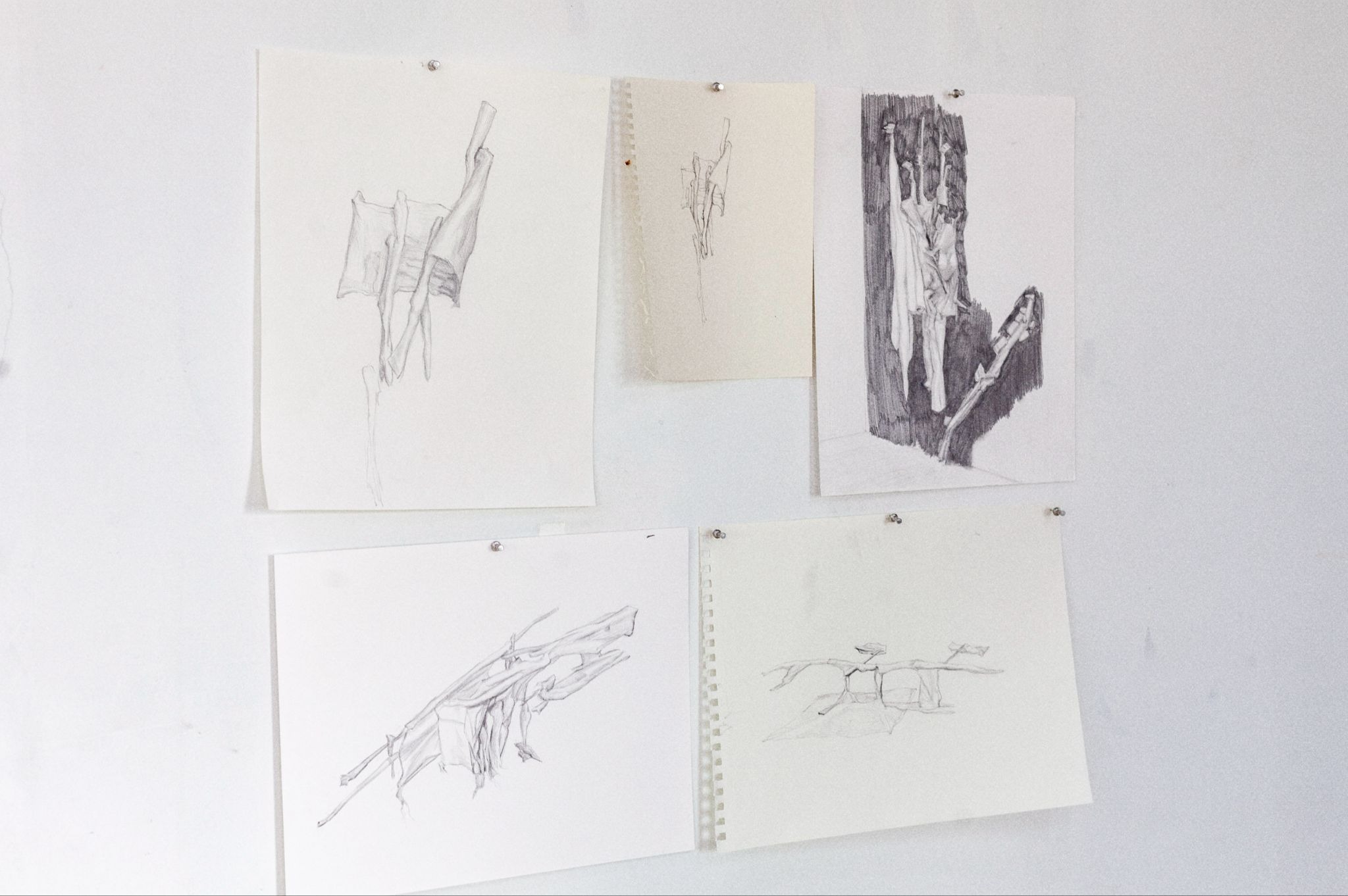
“What interests me is the process of actualizing something from a foggy idea into a reality,” Kroll says, “when there was never really an original.”
For an artist whose previous work has moved between found machinery, invented forms, painting, sculpture, industrial fabrication, and digitally mediated imagery, typography might initially seem like a departure on account of its comparatively codified historicity. In some ways, however, it is closer to a return. As someone who also works in brand design, Kroll spends substantial time outside of his artistic practice drawing letters and typefaces, as well as tracing their trends in commercial industries. The division between these two modes of production (design and art) becomes increasingly porous in his studio. Both rely upon systems, editing, formatting, and selection; both are profoundly shaped by the technologies through which images are created, circulated, and remembered; both negotiate the friction between individual authorship and the conventions that make visual language accessible in the first place.
Kroll’s interest in typography is therefore inseparable from a broader preoccupation with the conditions under which certain aesthetics become dominant. He points to recurring periods of visual excess and reduction, with ornament giving way to minimalist simplicity before maximalist complexity begins accumulating and gaining traction once again. For Kroll and other artists around him, histories of art are also histories of changing ideologies and technologies, which feels especially true in the present moment. One criterion he finds himself returning to when looking at historical work is whether it appears faithful to the period in which it was made, though what interests him is less contemporaneity as appearance than the ability of an artwork to register the pressures of its own moment. As he puts it, “It’s very difficult, if not impossible, to make anything visual that is actually outside these conditions.”
That fidelity to the present does not necessarily come from trying to capture it objectively, nor does it require every artistic gesture to culminate in some deeper theoretical commentary. Kroll is equally skeptical of the art world’s tendency to ask artists to endlessly psychoanalyze their own work as a means of generating value around it. If his practice repeatedly invites interpretation while withholding complete resolution, perhaps there is something fitting in allowing its motivations to remain similarly open-ended. Rather than defining a creative identity through either compliance with or resistance to external pressures, Kroll describes his own approach in far simpler terms:
“I try not to do anything if it isn’t interesting to me and I hope for the best.”
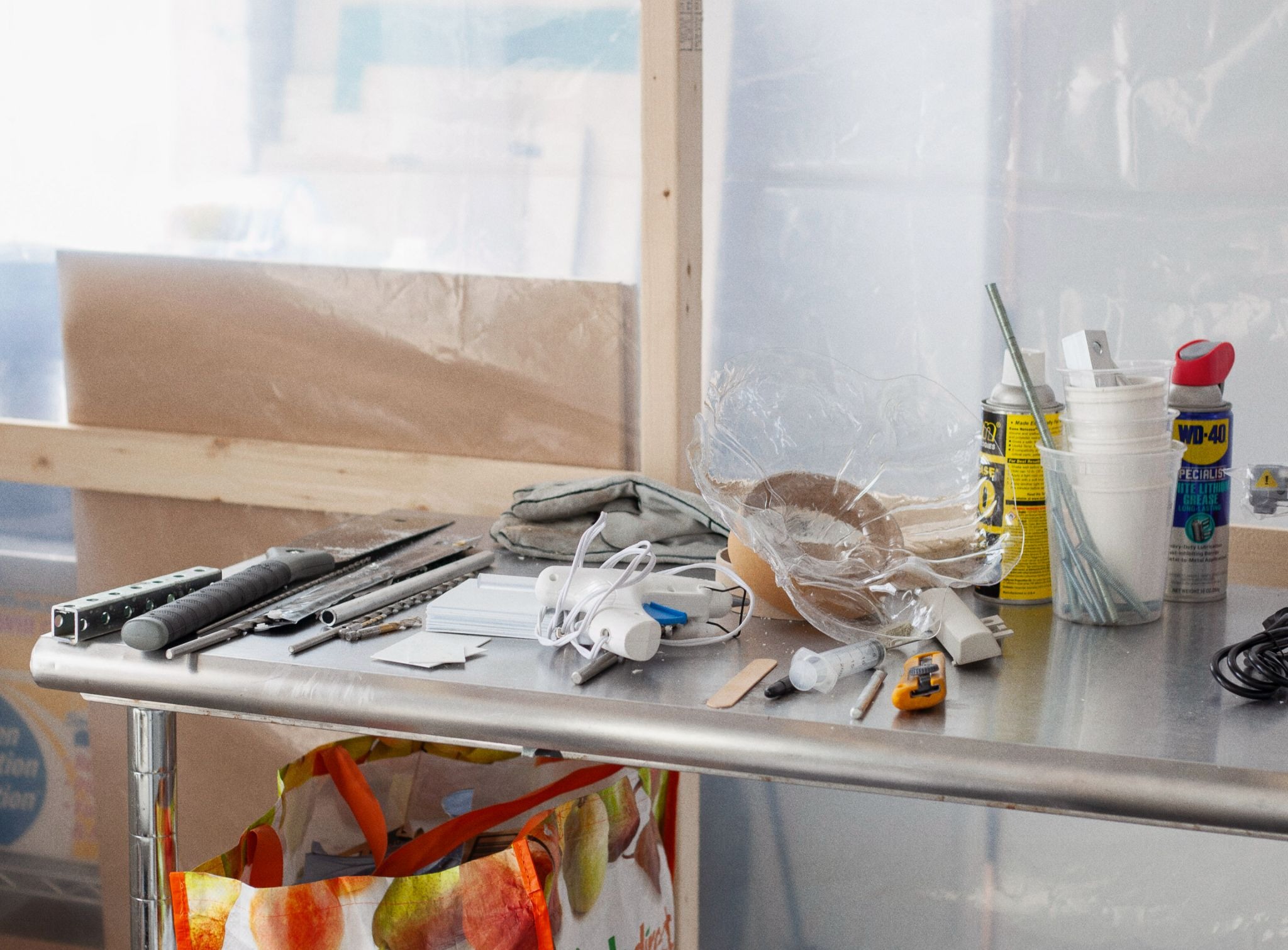
Bryce Kroll's Big Picture (2026) is available for purchase at IMPULSE.