In Conversation with Yvonne Shortt
Interview
Recently, I went on a tour of the White House. A few weeks ago, I sent a request to the office of Congressman Pat Ryan, my district’s representative, not expecting to hear back. But within a week, I received an email from an official dot gov address: “Your tour is confirmed.” I ended up spending several days in D.C.: I got a Library of Congress researcher card; I walked the National Mall, imagining myself as District Attorney Jim Garrison in Oliver Stone’s film JFK; I skirted around tour groups of twenty or thirty gathering to see the Constitution.
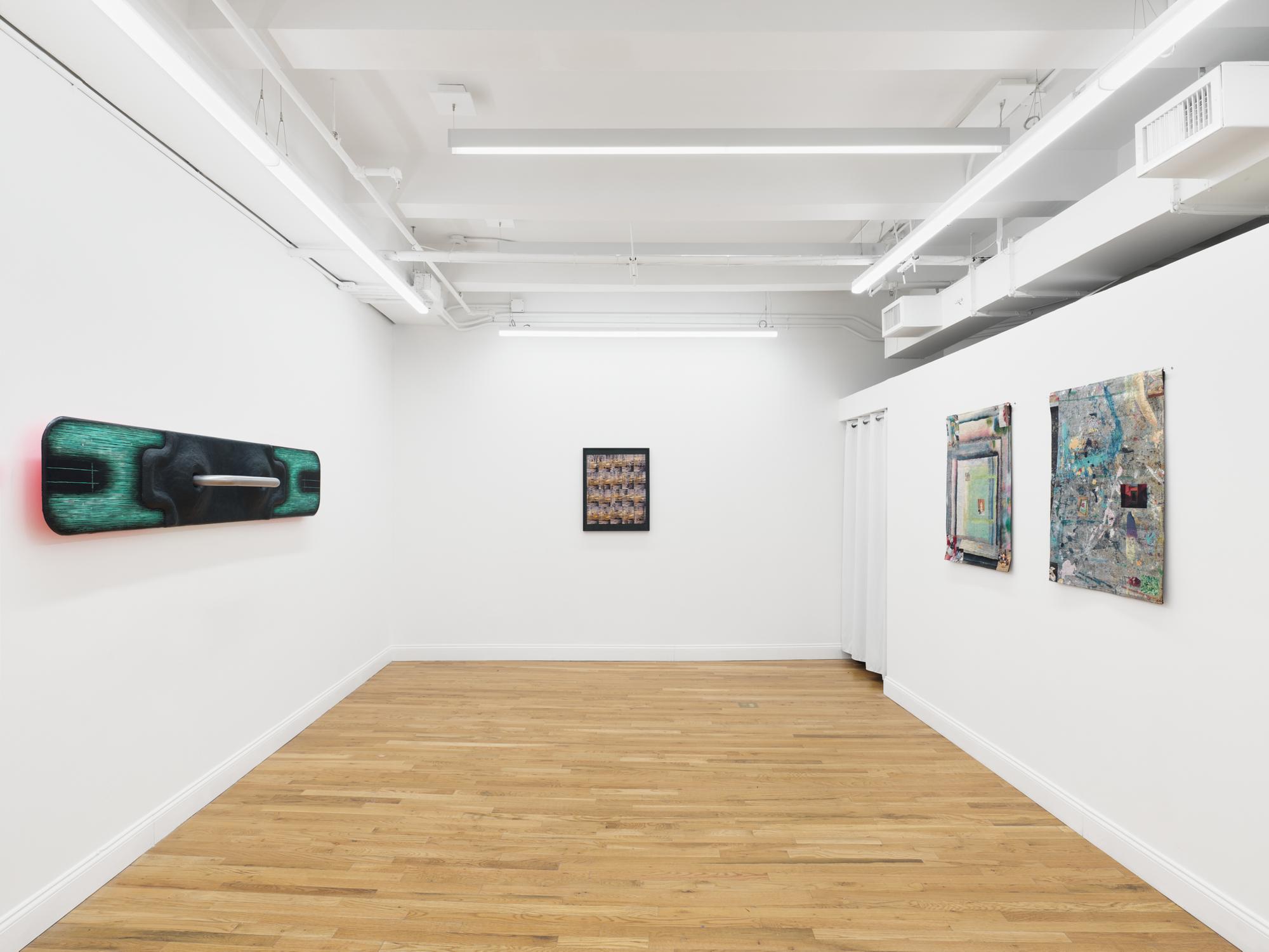
The truth is that this trip would not have been something I would have considered had I not been researching and collaborating with the artist and scholar Sophie Kovel. Kovel, one of three artists featured in my thesis exhibition at the Center for Curatorial Studies at Bard College, makes work that isolates and investigates the social, political, imperial, and ideological realities behind the material and aesthetic manifestations of property and cultural heritage. Her practice focuses not on grand narratives of wealth, but on microhistories as both reflection and symptom of larger systems.
Confronting the confluence of aesthetics and power, the work that introduced me to her practice—and which brought me to America’s capital city—is The Diplomatic Reception Room (Views of North America) from 2024. The work recreates a wallpaper which, though originally designed and printed in 1834 by the French company Zuber et Cie, is best known for being installed in the White House by First Lady Jacqueline Kennedy in 1961, during her restoration and redecoration of the space. Kovel’s work takes several of the 32 original wallpaper panels, depicting an idyllic vista of Niagara Falls populated by some key figures and a steam ship, depicted in a style evoking the images of the American frontier that once justified and legitimized Westward expansion, settler colonialism, and frontierism. Installed in the White House’s Diplomatic Reception Room—which serves as a waiting room for foreign diplomats coming to meet the standing President—the panoramic wallpaper is surrounded by grandfather clocks, crystal chandeliers, ornate furniture, and oil portraits. Kovel intervenes by isolating, enlarging, and rearticulating the wallpaper within the space of the gallery such that viewers may see it not as background, but as an object of imperial power in and of itself. Kovel’s statement is the work itself; when shown outside of the aggrandizing context of the White House, the image purported by this wallpaper is called into question.
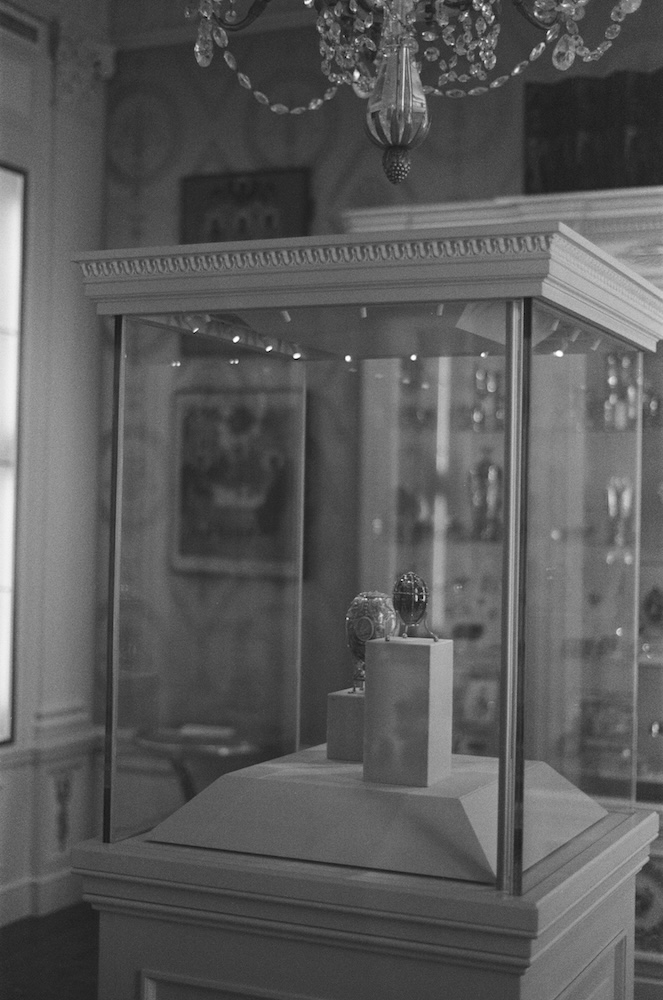
Her more recent work builds on this project and the specific tension between class, aesthetics, and public image that they establish. The photographic project Donations and Estates (2024/25), which recently debuted at Art Basel Paris, takes as its subject other famous Washington D.C. destinations, such as the Hillwood Estate, home of Marjorie Merriweather Post, the 20th-century breakfast foods magnate, who was a key developer of Palm Beach architecture. In the project, Kovel documents both Post’s home, and her donations to the Gems and Minerals wing of the Smithsonian Museum of Natural History alongside such famous jewels as the Hope Diamond.1 Shot through stanchions and glass cases, which always linger in the foreground, Kovel’s photographs clearly center the objects of Post’s collection: diamond-encrusted Fabergé eggs made for Catherine the Great and Tsar Nicholas II, furniture once belonging to Marie Antoinette, a diamond necklace formerly owned by Napoleon—each previous owner named in the titles of the photographs. As with the wallpaper, her photographs isolate discreet elements of an overwhelming, palatial collectionneur’s atmosphere; in speaking of why photography is the ideal medium for this project, she noted, “The images compress space, shortening the distance between the viewer and the object or the viewer and this history, or aspirational history.” To view the home itself, as I did, is to be enmeshed in the world that Marjorie Merriweather Post created, considering only the beauty of these objects without the weight of their histories. It could indeed be said that Kovel’s work simply replicates or displaces this beauty—in her words, in fact, “viewing Donations and Estates, it remains unclear what is in which institution, or if these images were taken in the US altogether.” And yet, similar to the Zuber wallpaper, the work operates through the distillation and pastiche of these historical styles, reminding viewers of both their fragility and their historical inaccessibility.

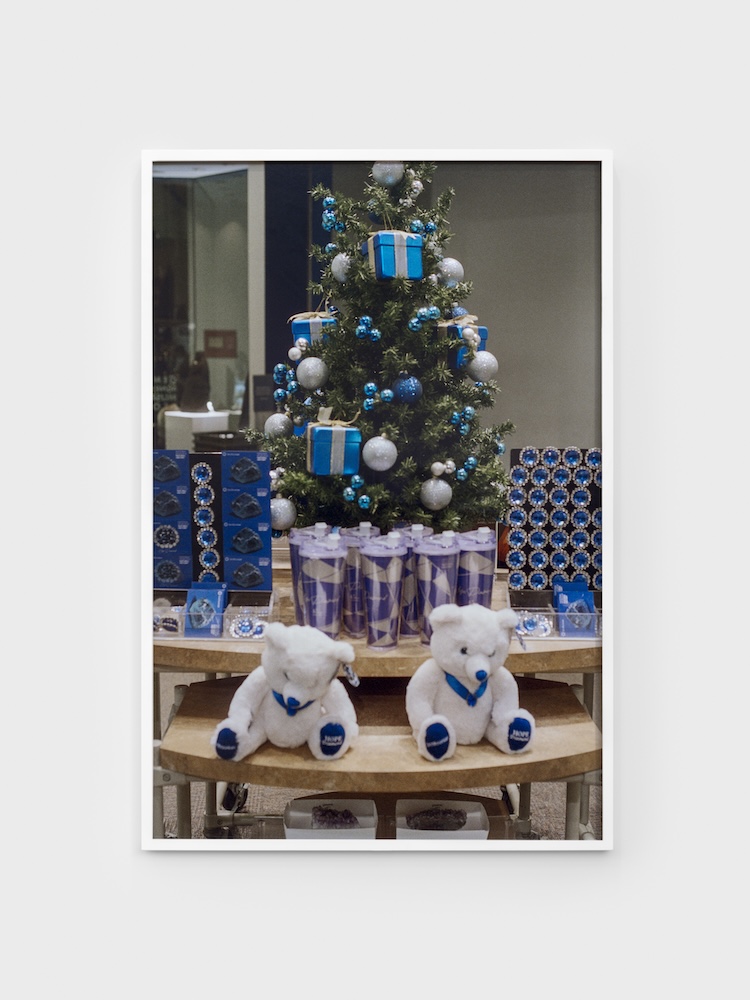
This is underscored by the photographs taken at the Smithsonian in general—in which the reflective glass barriers, dramatic lighting, and display didactics betray their presence in a museum—but especially by Kovel’s choice to photograph the gift shop displays as well. In one photograph, around a Christmas tree decorated in blue and white, is a grid-like display of plastic reproductions of the Hope Diamond, some notably having been removed and presumably purchased, accompanied by two Hope Diamond-themed teddy bears. Another photograph shows a display familiar to anyone who has visited the gift shop of a natural history museum: bins of minerals such as gypsum, calcite, and quartz, as well as stacks of novelty mining helmets. These are the only objects that the visitors of these spaces might actually partake in; you can’t own the actual Hope Diamond, but buying these minor objects may offer a kind of recollection of having seen it. These two images—of a cheap emulation of opulence—were created to serve as a stark reminder of one’s own position, insofar as they present a kind of aspirational version of ownership. But they also bring to mind, perhaps, the specificity of the Smithsonian’s status as a “public trust” charged with safeguarding objects that are, according to Kovel, “endowed to the people of the United States”—thereby relating to the democratic principles supposedly defining American civil and political life. And yet these photographs lay bare the extractivism and flaws within that system and the values beneath it, questioning notions of pride, heritage, and publicness put forth by such institutions.
Another recent project, entitled Metes and Bounds, turns this incisive investigation towards a home’s chain of title, owned by a more contemporary magnate-figure: Jeff Bezos. Growing out of the same research into famous estates that led her to Marjorie Merriweather Post, the series centers on the Los Angeles estate of Jack Warner, the former president of Warner Bros., which was subsequently owned by music producer and cultural philanthropist David Geffen before being bought by Bezos in 2020. The property is infamous not only for its storied past in the entertainment industry but also as an elaborate land grab; over the course of its existence, its various owners expanded the property lot by lot until it reached its current size, the same as that of its 28 neighbors combined. To Kovel, “what’s happening in terms of property or land accumulation is mirrored in its owners’ media acquisitions and corporate expansions, this estate first being home to Warner Bros. and now Amazon.” Consequently, both types of property may read as indicative of the financialization of our current environment. This is apparent in each of Kovel’s case studies: Jackie Kennedy adopting French historical aesthetics; Marjorie Merriweather Post enveloping herself in the extant materials of the European aristocracy; Jeff Bezos and David Geffen investing in the property of Jack Warner. Kovel makes visible that in these American lineages of property ownership, a storied past is a kind of legitimizing force for the present.
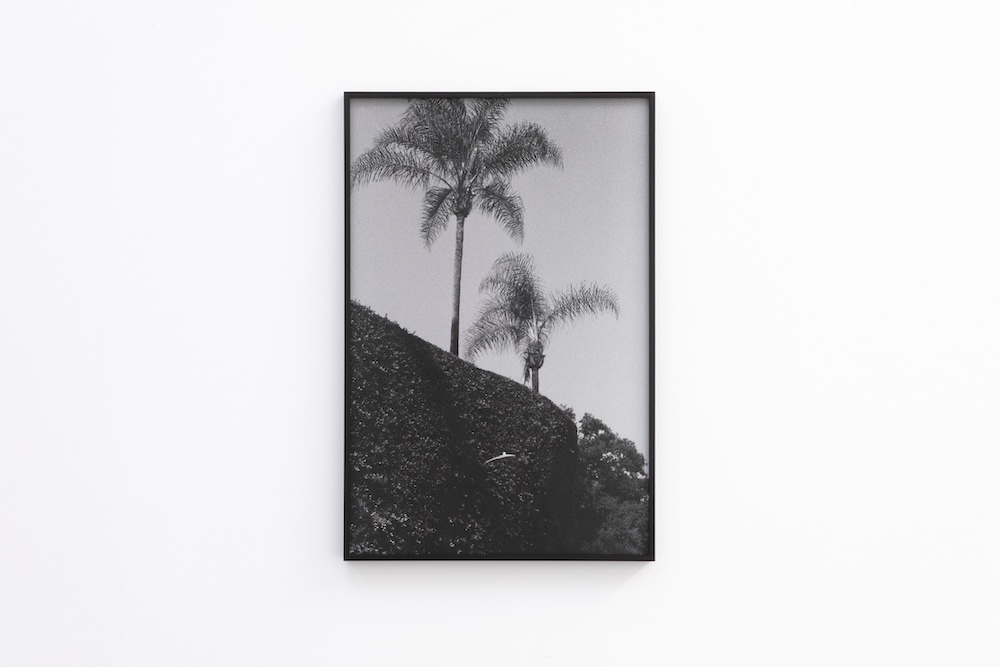
The photographs themselves, which debuted in 2025 at diez gallery in Amsterdam, display the hedge that borders the property, which Kovel identifies as one of the tallest residential boundaries in the country. Taken from the street, the black-and-white photographs show the scene outside: the hedge nearly dwarfing the palm trees growing around it, the fortress-like gates barring both visibility and entrance, and the nearly hidden security cameras peeking out from the foliage. Located in the more remote neighborhoods of Beverly Hills, Kovel recalls that she was one of the few pedestrians in the area, as if trespassing on public property. The towering of the hedge and the ever-watching cameras impart this imposing, ominous feeling onto the viewer. Like her inquiry into Post’s estate and the Smithsonian, this series explores the boundaries of commons and of property.
While in Washington, D.C., I couldn’t help but reflect on Kovel’s work. Of course, in this moment when the opinions and decisions of technocrats and media figures have tangible effects on our daily sociopolitical lives, the relevance of work that examines these individuals and their motivations behind their acquisitions is vital. But when I was within the White House, often referred to as “the people’s house,” being enclosed within this image of grandeur felt not personal but alienating. There, recalling Kovel’s process of distillation was a grounding experience. In showing another way to look at this space—at this system—her work offered me another way to be within it: a means of trespassing within what was meant to be public.
Note:
[1] Post built numerous resorts with the intention of them becoming retreats for US presidents after her death.