

.webp)
In Conversation with Michael Connor
Interview
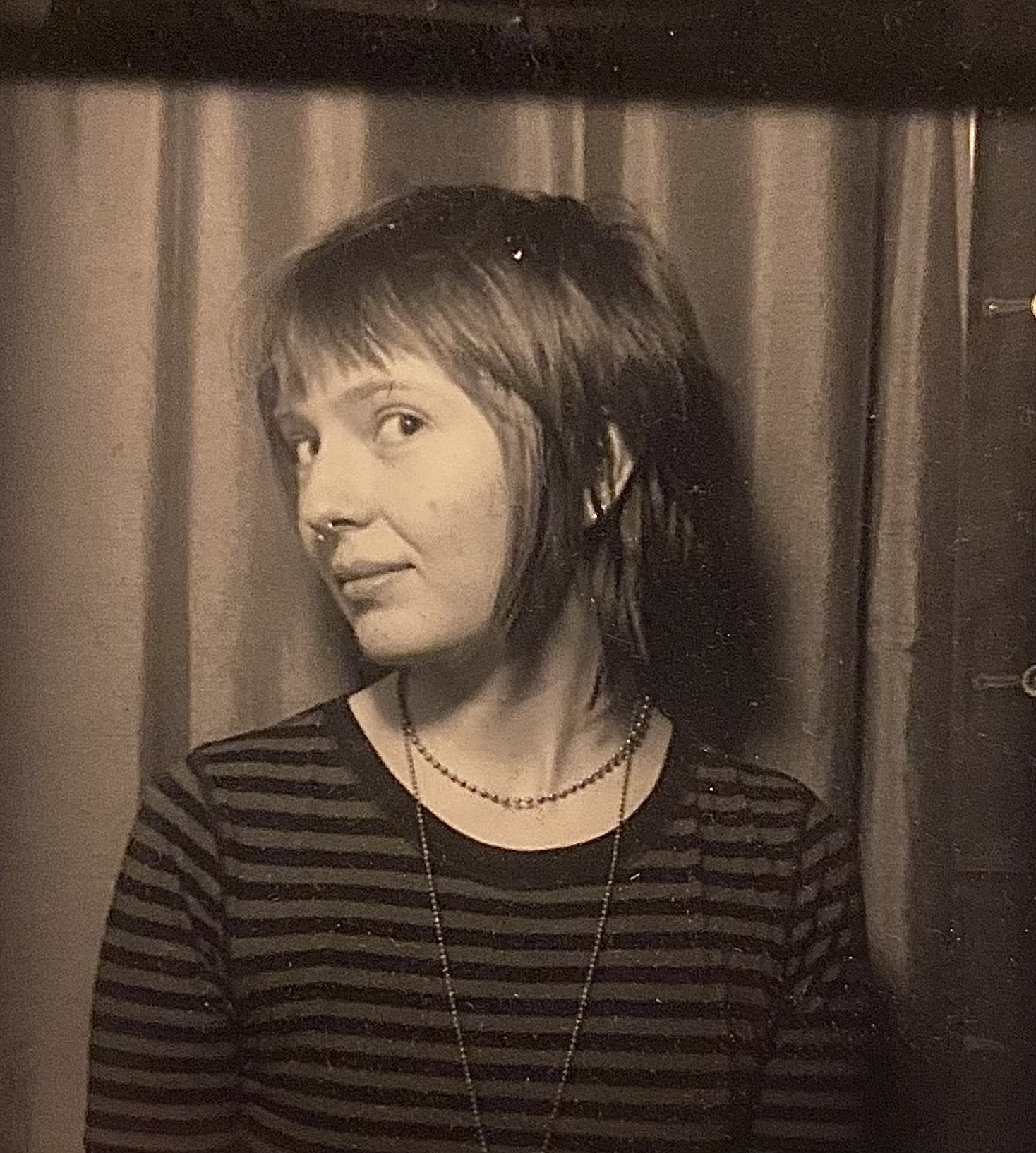
In the carefully constructed worlds of Brittany Markert, dreams and nightmares hold hands. Absence and presence are questions, not givens. One becomes their own voyeur twice over, peering through Markert’s lens and into the anonymized spaces, mirrors, doorways, and bodies she constructs for the spectator.
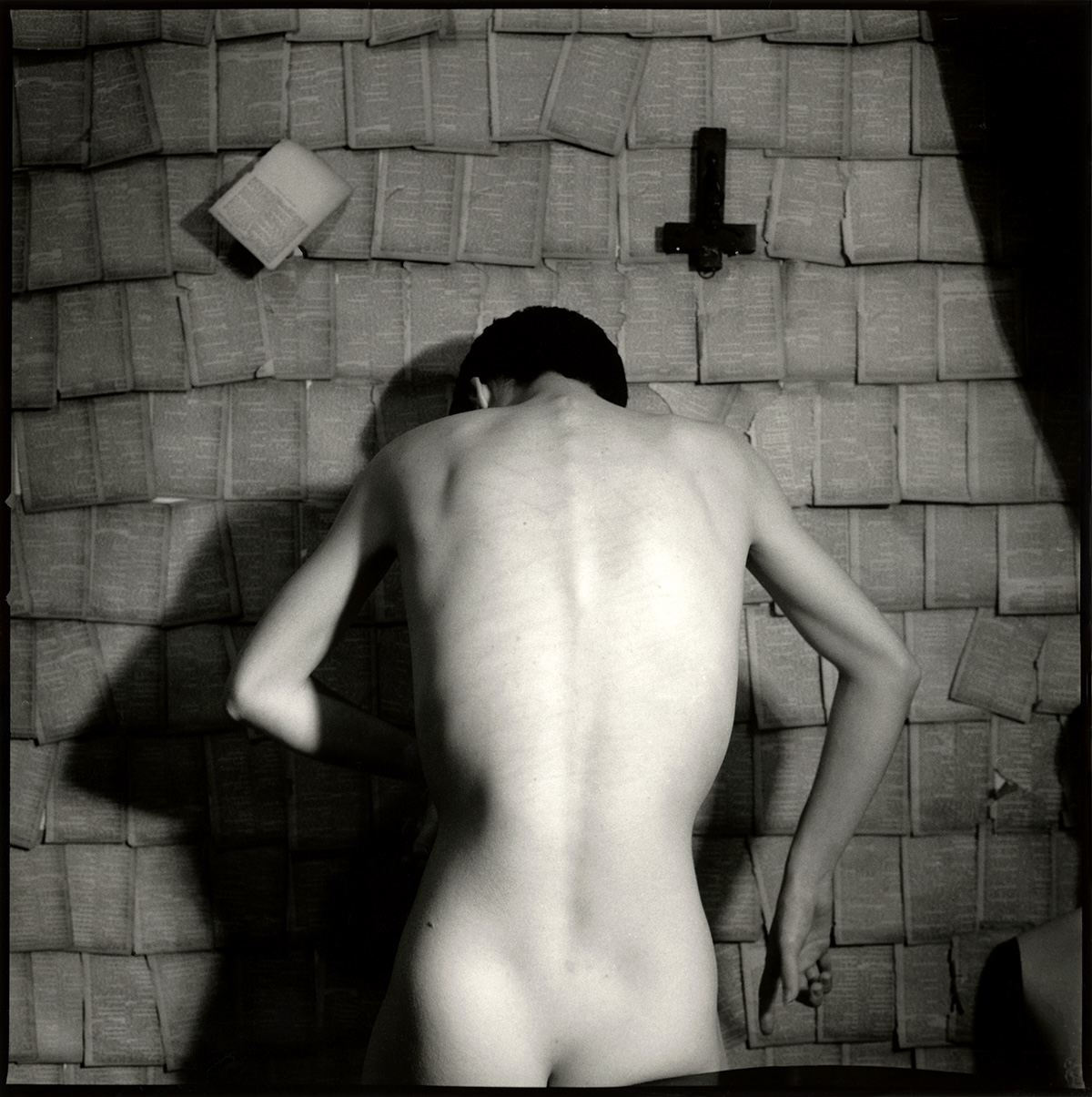
For fifteen years, Markert has worked on her photographic series In Rooms, playing with and plying at the relationship between room and occupant. Grounded in a reverence for the surreal, Markert constructs murky worlds where the architecture of both space and body become pliable. Inverting how we think of physical space, she peers back through the camera lens at the rooms which witness their occupants’ most intimate daily moments, their ruin, and their ecstasy. In fabricating a dialogue between self and space, Markert offers her audience an abundant dreamland, inviting in its suspense and curiosity.
Ruby Alexander: When was the first time you picked up a camera, and what sparked that first interaction?
Brittany Markert: The visions came to me first as I stared out the car window on the way to school. I saw flashes of a surreal black-and-white landscape, an entity holding black balloons under the tree by my childhood home. When the color-soaked world around me felt fake, performed, hollow and empty, I thought there must be another place I’d belong to.
Then, I was eighteen years old, alone in a room with a man I barely knew. I wore high heels, a mini skirt and a short sequined shirt. He gazed at me through the lens as I heard the shutter click and film rewind. The room filled with a psychic pulse of desire, secrecy, and an all consuming atmosphere as the aperture opened and closed.
It was in this space, the tension between what was seen, felt, and left unsaid, that I felt compelled to return to the camera.
RA: In Rooms includes a significant amount of self portraiture. What is your relationship to the camera, both behind and in front of it?
BM: The figures in In Rooms take many forms, at times including my own flesh. I do not see the body as a fixed identity, but as a site where something unseen can briefly appear.
Behind the camera, I am the architect. In front of it, I become the vessel.
RA: Now, 15 years from the beginning of In Rooms, you have created a sustained and profound archive. What evolutions, interruptions, or seasons of life do you see reflected there?
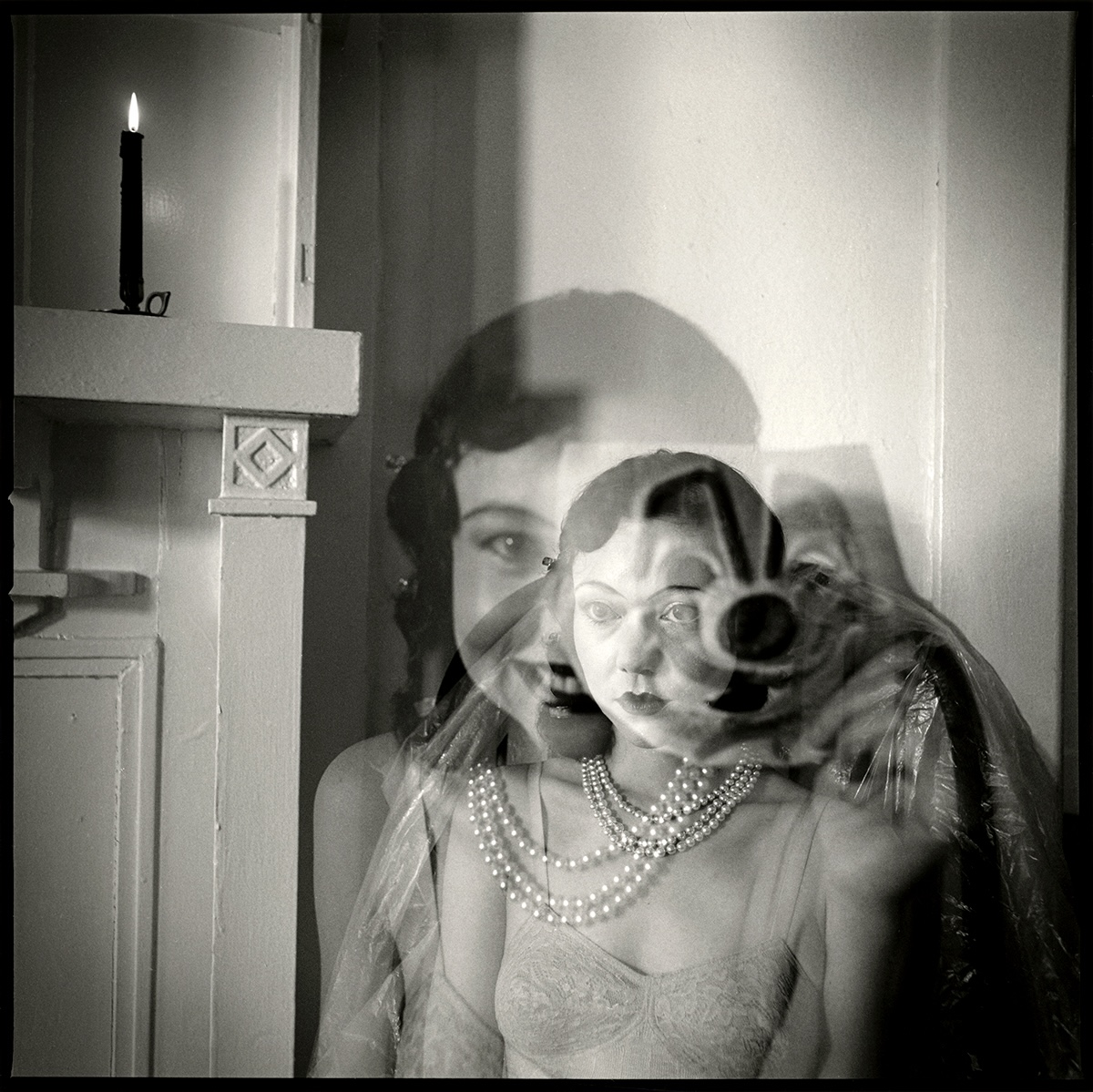
BM: I have always experienced In Rooms as a collective inquiry and investigation. In 2014, through a ritual and my camera, I offered my spirit to the unknown. I etched the words “He Seeks whom He must devour” onto a print with the idea that I was opening myself to the underworld of humanity, allowing these forces to pass through me and into the work.
However naive I may have been, this journey has been deeply enriching and transformative. This past year, I felt a door closing on that original offering, completing a twelve-year cycle of my book series shot on the Hasselblad. In many esoteric traditions, twelve is understood as a sacred number of completion, order, and spiritual passage. I remain open to receiving messages, but now with far more discernment, boundaries, and respect for what I allow to move through the work.
Over the past fifteen years, the work has reflected many seasons of life. It holds periods of seduction, curiosity, longing, childhood nostalgia and rupture, silence, betrayal, death, and rebirth. At times, the images have seemed prophetic, knowing more about the path unfolding before me than I did. The prints also revealed emotional and symbolic truths before I had the language to understand them.
When I look back at the archive, I see a record of feeling and thought spiraling both inward and upward. I experience time collapsing: moving backward into ancestral wounds and forward toward a future state of consciousness I do not fully grasp. Sometimes I wonder whether I arrived here guided by my past or my future self.
RA: Is there a first room that inspired the beginning of a series so intertwined with physical architectural space?
BM: My childhood bedroom. One wall was tall mirrored closet doors. I spent many hours staring through them. I was not looking at myself or objects specifically, but noticing the strange sensation that through the mirror, another reality seemed closely visible. The mirror made the room feel doubled, as if it contained a portal to a hidden world.
RA: How do you find or select your rooms? Is there meaning behind those selections behind the aesthetic?
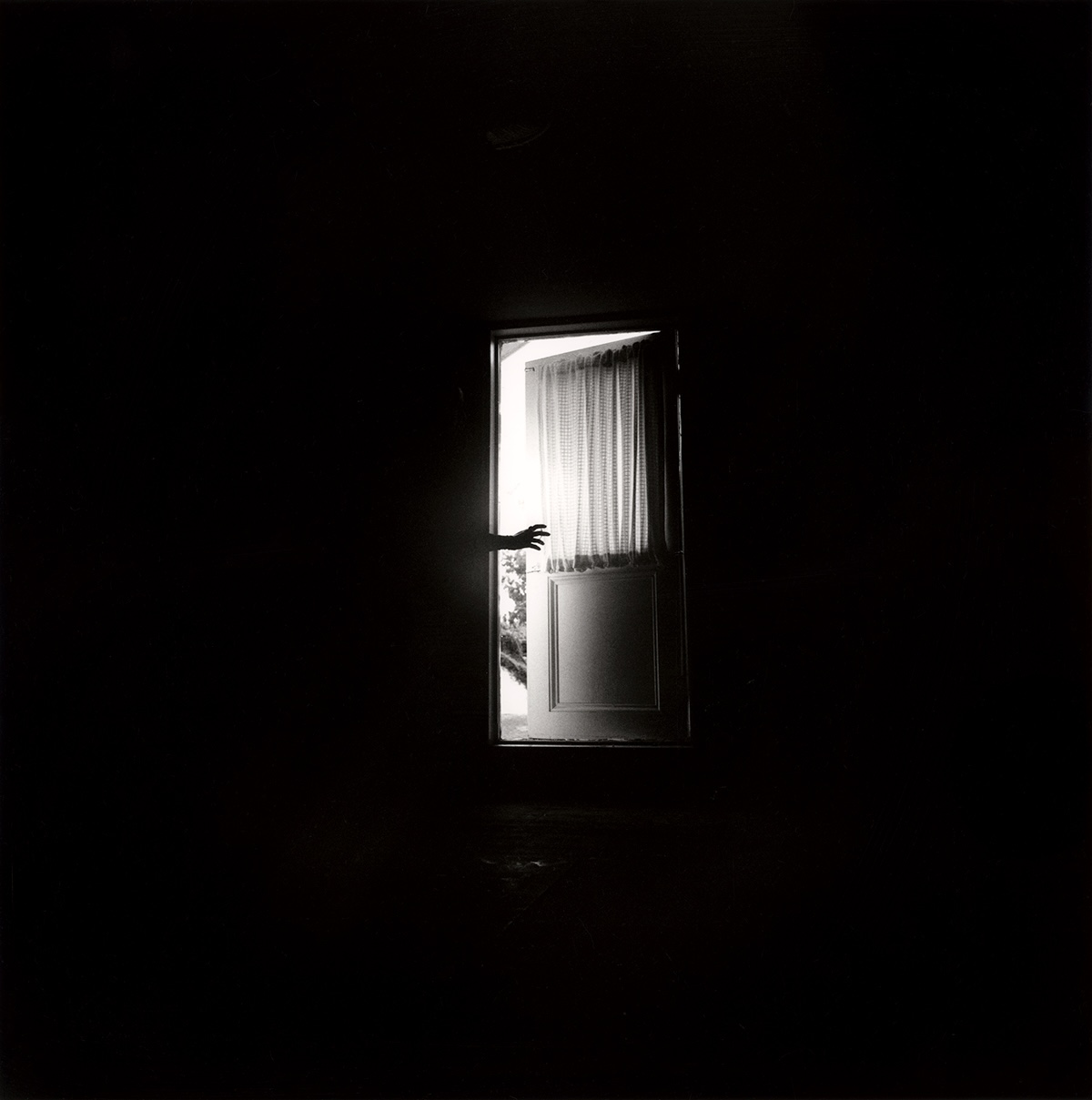
BM: Something piques my curiosity or lights up my soul, the same way my heart flutters at the beginning of summer love. I feel open to possibility, transported and aware of the energy held in the space.
Aesthetically, I am drawn to craft: handmade or gilded furniture, painted wallpaper, old mirrors and objects that carry a charge. An artisan’s hand possesses a riddle of humanity, an imprint of lived experience. I am moved by rooms with a soul. I want to discover their secrets.
My camera is a device for listening, for being present. I approach the untouched corners with love and curiosity. Sometimes, after moving through the pictures, the space feels lighter, more aware, and released of a tension it may have been carrying for generations.
RA: Do you feel a particular connection between rooms as places of secrecy, intimacy, and violence and the experience of occupying a feminine body?
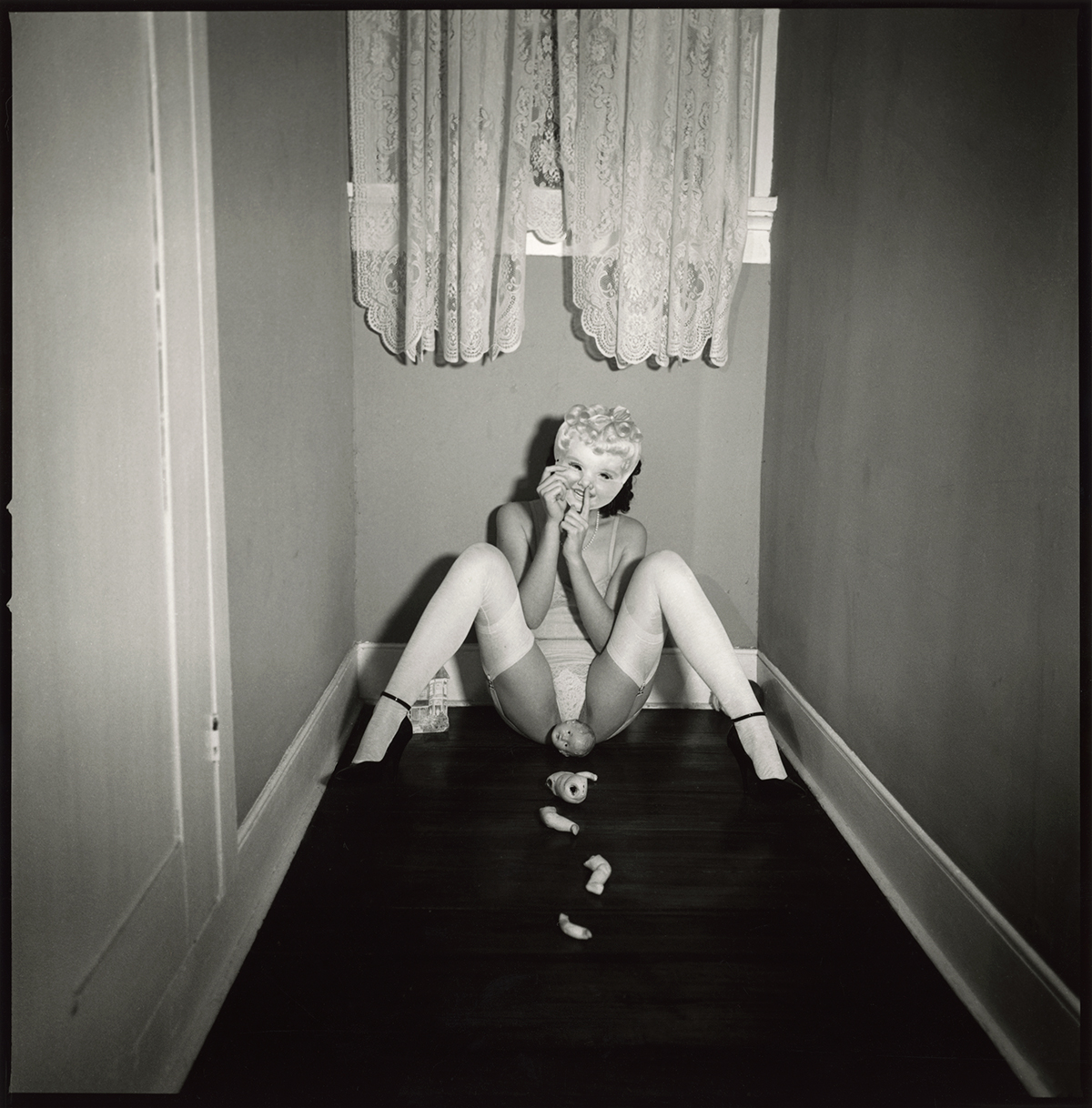
BM: Rooms, within walls that obstruct public view, are where women have historically been desired, hidden, watched, eroticized, silenced, dismembered, and expected to perform. The outside has always been for keeping up appearances, but inside is where the truth remains unseen.
Rooms hold secrecy, intimacy, and violence, but they also hold revelation, healing, joy, and transformation. To bring something into the light that has been repressed may be uncomfortable, but it is not dangerous. Sometimes naming what has been hidden is the first act of liberation.
RA: Do you feel we all reflect the rooms we occupy? Can we separate our identities from the physical situating of our bodies, or is the relationship between body and space always a reflexive one?
BM: Why is it that we act differently in the bathroom or bedroom than we do in the kitchen? Every room presents the body with a set of instructions, a hidden code on whether or not to relax, take a seat or grab a knife and slice an onion.
I don’t think identity can fully separate from the physical situation of the body. We enter a space and immediately begin adapting to the atmosphere.
The relationship between body and space is always reflexive. We leave traces of ourselves in rooms, but rooms also leave traces in us. They shape our memory, behavior, and the version of self we allow to appear. I am interested in that exchange, the way a room becomes a mirror, and the way the body reveals what the room has been holding.

RA: Can you tell us what it means to make a room your own? Are we always visitors?
BM: How can anything be our own? We enter rooms that existed before us and will continue long after us. Even the rooms we rent, buy, decorate or photograph are never fully ours. We exist as temporary visitors, always passing through.
What kind of visitor? To make a room your own, then, is not necessarily to possess it, but to enter a relationship with it—to listen to it, study it, care for it, leave something of yourself with it and allow it to alter you in return. A room becomes yours through care, ritual, memory and the way your body inhabits its light.
Even if we are always visitors, it does not make the encounter meaningless. Devotion, alignment, care and deep consideration become a way of life. Some rooms hold us through transformation, others take us out of our comfort and bring forth perspective, and some rooms give us space to grow.
RA: You write of your spaces as evolving where both “self and others” appear. Tell us about the others in your spaces.
BM: In the beginning, the others were people in my personal life, friends, lovers, and partners. Later on, through more boundaried containers, other professional creatives, artists, and performers. Recently, with intake forms, consultations, and more communication, I am starting the process with strangers. The work is intimate and demands my full presence, regardless of who enters. Over the years, many of the others first reached out seeking me and the work. Other times, I noticed an archetypal quality in another artist, professional performer or close friend. These meetings can feel like a dance of shadows, two unconscious worlds entering the same room and allowing something hidden to surface.
When others enter my space, I attune deeply to their own interests and inner world. I seem to absorb atmosphere quickly—the tone of a room, the emotional charge of a body, the dense unconscious material of someone’s inner world, even when it is unspoken. My process is deeply reflective and alive, changing with each moment. I feel myself shifting in response to the other person, like a mirror that changes form in order to reveal something more precise. I set out to investigate the truth, or at least move deeply enough toward it that something real and universal can surface. Images can reveal wounds, projections, or desires that neither person fully expected to encounter. Other times, the process is deeply clarifying or transformative for those who enter, as if the room finally gave them permission to meet a version of themselves they had not yet seen.
That is part of the complexity of working with people inside a charged symbolic field. My camera observes and reveals emotional landscapes beyond my understanding. I try to hold this process with care, slowness, and consent, but I also understand that the truth of an image can exceed what either person thought they were entering the room to find.
RA: What do you dream for the future of this project?
BM: I dream of In Rooms having the support to be fully researched, produced, archived, and expanded. I want the work to continue evolving through photographs, books, films, writings, exhibitions, workshops, and eventually as a living foundation. I’m craving enriching collaborations and cohorts of craft-oriented artists. I wouldn’t be opposed to a studio financing a film. Can you imagine? In Rooms the film, the series, the theatre production. Where is my team of people? The possibilities are endless.
For many years, the work has been sustained through unwavering devotion, constant travel, and survival mode. I would like to build an in person ecosystem where others can encounter their own interior worlds through image-making, storytelling, study, and transformation. I’m in the earliest chapter of building In Rooms Foundation in the heart of The French Quarter.
I want In Rooms to become not only an archive of images, but a living architecture of care around the unseen life of artists.
This interview has been edited for clarity and length.