.webp)

Kern Samuel: “IM” at Derosia
Review
In the dystopian video game Cyberpunk 2077, there is a church in the Pacifica district where V—the main character—is able to buy digital absolution for $6. “Your sins have been forgiven; remember your penance,” is what the machine tells you, accompanied by a pixelated animation of an emoji changing from devil to angel. In this world of self-exploitation and corporate power, worship and divinity are transactional and immediate. N3O_iD011z (pronounced as “Neo-Idols”), curated by students of SVA's MA Curatorial Practice Program (Colleen Dalusong, Diana Sardaryan, Justin Apice, Kiera McIntosh, and Naomi Moser), brings together seven artists—Amon Silex, Demon Lovers, Dew Kim, Emma Beatrez, Kate Williams, Leah Ying Lin, and Viv Moe—who treat digital culture as a new site for devotion. Influencers and celebrities have replaced gods, posting has replaced prayer, and the distance and unknowability involved in faith have collapsed entirely.

The first thing you see when you enter the Pfizer building in Brooklyn is a gun pointed at you. Demon Lovers’ video work Let’s Meet Up and Die (2025) shows a compilation of videos depicting world events, digitally altered images, and text with phrases such as "abandon humanity, join AI,” “there are more cameras than eyes," and “can I cancel sin?" The video is structured in three acts, moving from recognizable footage towards increasingly synthetic imagery. By the final act, the pace has slowed down, and there’s a shift in tone: images of death and connection evoke hopelessness. “Never trust the data, always trust humans" is one of the messages that you last read, but the message arrives too late and comes across as unachievable. N3O_iD011z is operating inside a world where devotion has already been handed over, and the question is what is lost in that exchange: Distance is the answer.
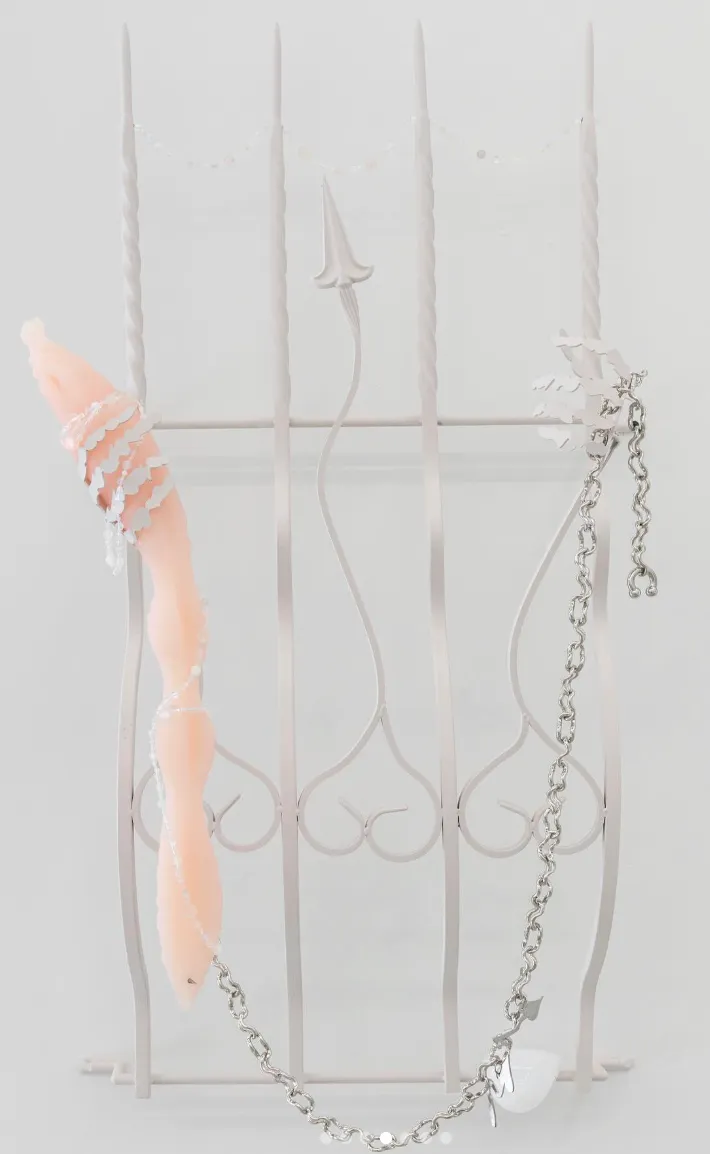
The divine is divine because it remains beyond reach, inaccessible, and unknowable. In this show, that distance is destroyed. Proximity is no longer a reward of faith but its foundation. Dew Kim’s The Anointed, Touch, Clasped, In Prayer, Piercing Flesh’s Veil (2025) conveys this shift through space and offers a message: From this point forward, you are in a place of worship. The steel sculpture resembles an altar or shrine, but unlike an altar, where the distance between the worshipper and the divine is deliberate and structural, Kim’s piece doesn’t offer that separation. You are in a sacred space the moment you enter, whether that was your intention or not.
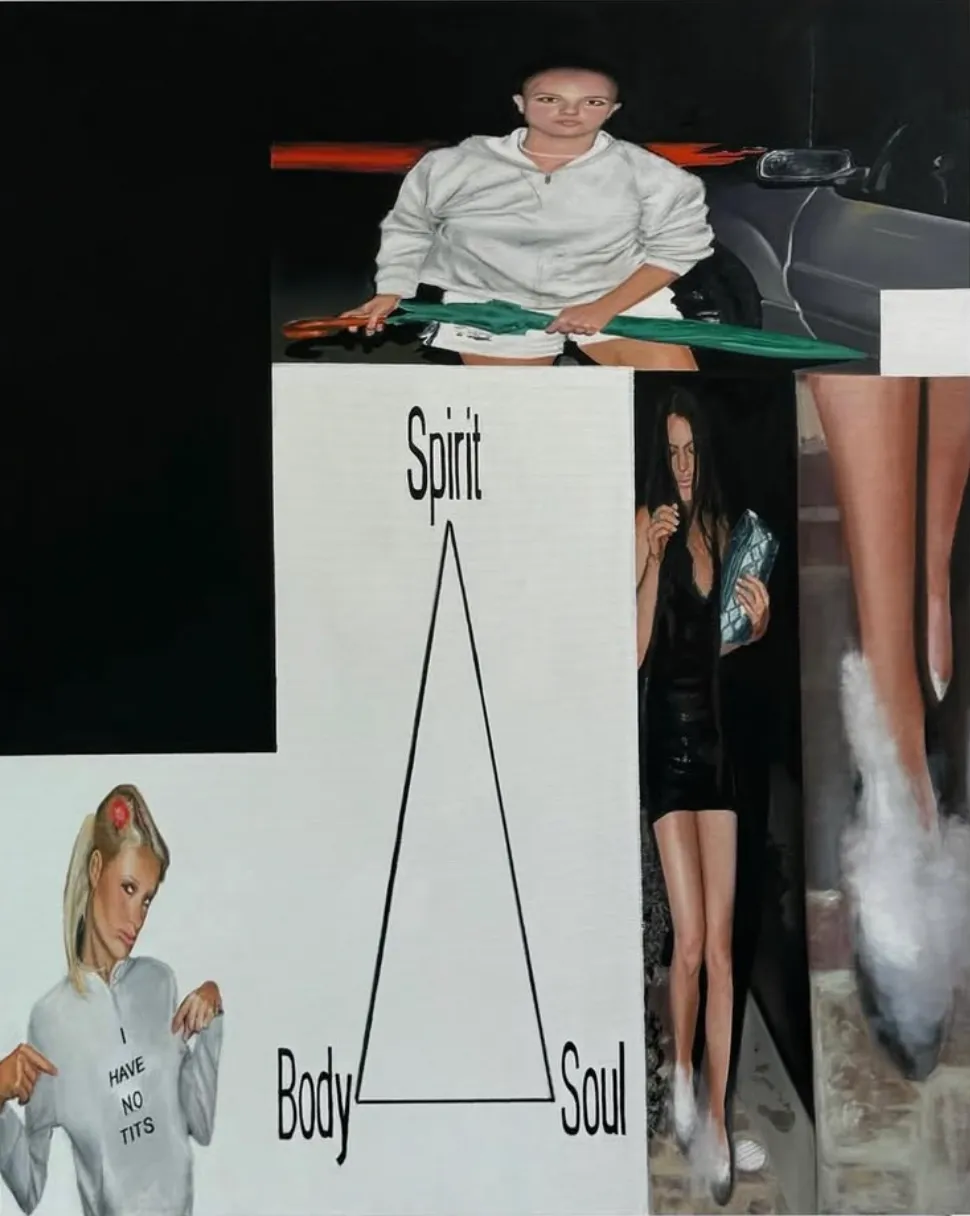
While Kim’s piece establishes the space as a place for worship, Viv Moe’s brat trinity (2024) fills it with its icons. At first glance it might look like a digital collage of iconic early 2000s celebrities, but the closer you get, you notice that it’s actually an oil painting. Moe uses a medium historically tied to religious characterization and canonical representation to translate meme culture, which acts as a baptism over the figures it represents. The idolization, however, is absent. These images are too familiar and circulated, and despite the efforts of the medium to sanctify them, we are too close to them to make belief possible. Overexposure replaces devotion and the meaning no longer holds. Emma Beatrez’s Garlands (2024) pushes this unease further. The painting depicts a figure embracing a chandelier in greenish tones, their face hidden and arms open towards the lamp as if in worship. Her work contrasts a celebratory image with occult ritual, as if this new type of worship is already aware of its hollowness.

Further into the space, there is a small, dark nook with the three screens showing the video works of Amon Silex. Core Disk (2026), Hex Machina (2026), and Life Throb (2026) show a compilation of images and sequences in rapid succession: global news mixed with uncanny digital imagery. The space mirrors a confessional, a manufactured space within the place of worship to confront your sins intimately. But while a confessional offers absolution, as manufactured as it is, Silex offers saturation. The work is an overload of the senses, rendering you unable to choose the content you're being fed. Similar to doom scrolling, this algorithmic cycle of content is not bringing the internet’s idols—influencers and celebrities—closer; it’s burying them until there is no difference between devotion and exposure.
Kate Williams's performance extends this saturation into the body. Dressed in a pink tracksuit evoking early 2000s celebrity fashion, Williams addresses the audience directly, discussing topics such as her pilates routine, dietary restrictions, and gossip. Midway through the performance, a call interrupts her. Meanwhile, the other performer accompanying her, dressed in an all-white bodysuit, distributes small round cookies to the audience. The scene mirrors a communion; speech and shared ingestion form a collective ritual in which Williams and the audience come together as a congregation. But this brief instance of community falls apart when the dancer turns on her, dismantling the persona she has created, until she breaks into an erratic movement. Her character is stripped bare, becoming unrecognizable to the audience she once interacted with. Without this persona, the manufactured intimacy falls apart, and there is nothing left to believe in.

N3O_iD011z depicts the wreckage of worship. The rituals of faith are there: the altar, icons, confessional, and congregation. But without the distance that transcendence provides, worship is directionless. Leah Ying Lin’s ∞ Fatalist (2023) has already accepted this reality. Her silver sculpture resembles a living organism with transparent drops coming down from it, as if the biological and the digital had merged. She embraces digitality as something inevitable rather than a loss. Here, worship circulates endlessly within systems of algorithms and manufactured intimacy, unable to reach beyond itself. What remains is not faith, but a continuous performance of closeness that is unable to sustain belief.
N3O_iD011z is on view at the Pfizer Building through April 30, 2026.