.webp)
“Love in a Fallen City” at lovers
Review
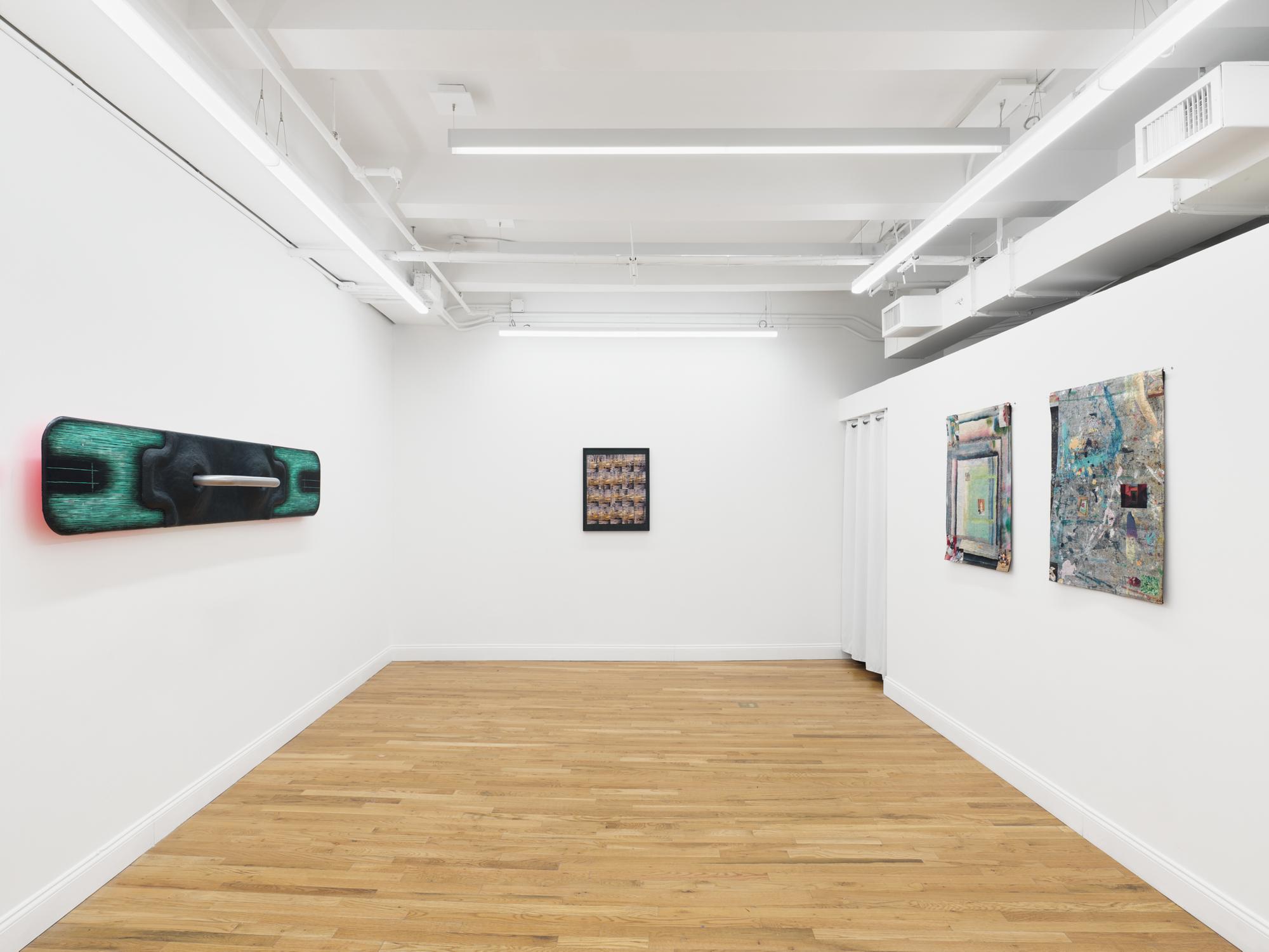
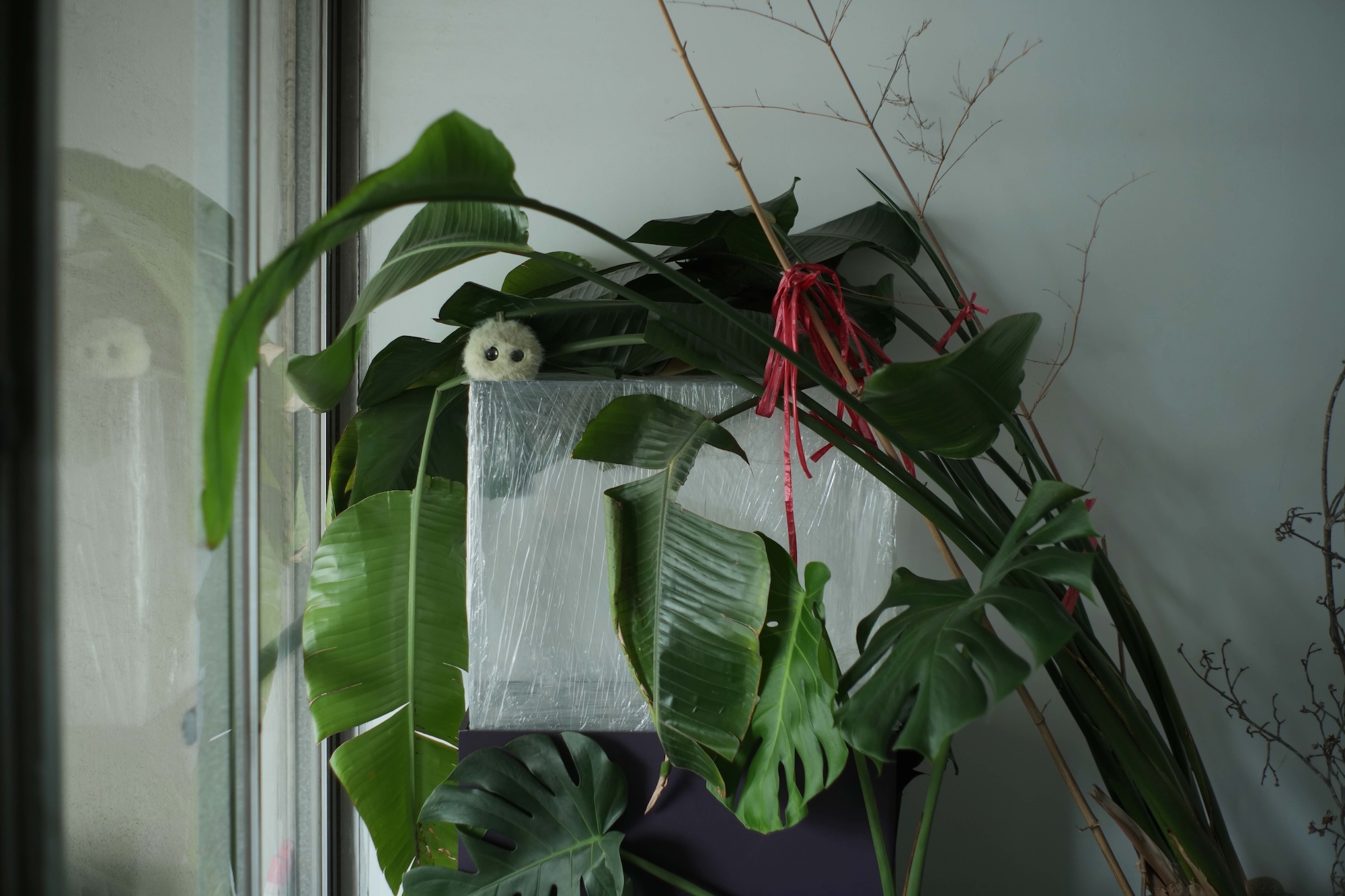
Slipknots is the multi-media curatorial debut of painter Xingzi Gu on view at Accent Sisters from June 2nd to June 21st, 2026. Known for her dream-like, colorful, and washy ink paintings of lithe young figures often in states of liminality or leisure, Xingzi Gu approaches curation like a painter: gesturally. Rather than using the exhibition as a vessel for a concrete thesis or idea, the connections that emerge at first appear tangled or uncertain, but like slipknots, are eventually effortlessly revealed when one follows the right thread.
Throughout the show, various formal thoughlines point to a group of artists collectively interested in themes that broach subjectivity and the complexity of intimacy. Literal threads appear a few times in the fourteen works on view. In Jen Chen-Su Huang’s large hanging patchwork tapestry Open Circle, Lived Relation (2026), threaded and pieced together amongst the indigo-dyed fabric fragments are photo-transferred images of Ruth Asawa's sculptures and what seem to be embroideries from different times and cultures. On the lower leftmost patch of the tapestry, viewers must crouch to read an annotated page of Édouard Glissant’s Poetics of Relation. Highlighted in apple green marker reads, “Opacities can coexist and converge. To understand these truly, one must focus on the texture of the weave and not on the nature of its components.” Reacting against colonial anthropology, Glissant proposes a mode of relating to others rooted in a “right to opacity”. Empathy comes not from having encyclopedic or analytic information about another subject but from respect and a radical understanding of difference.
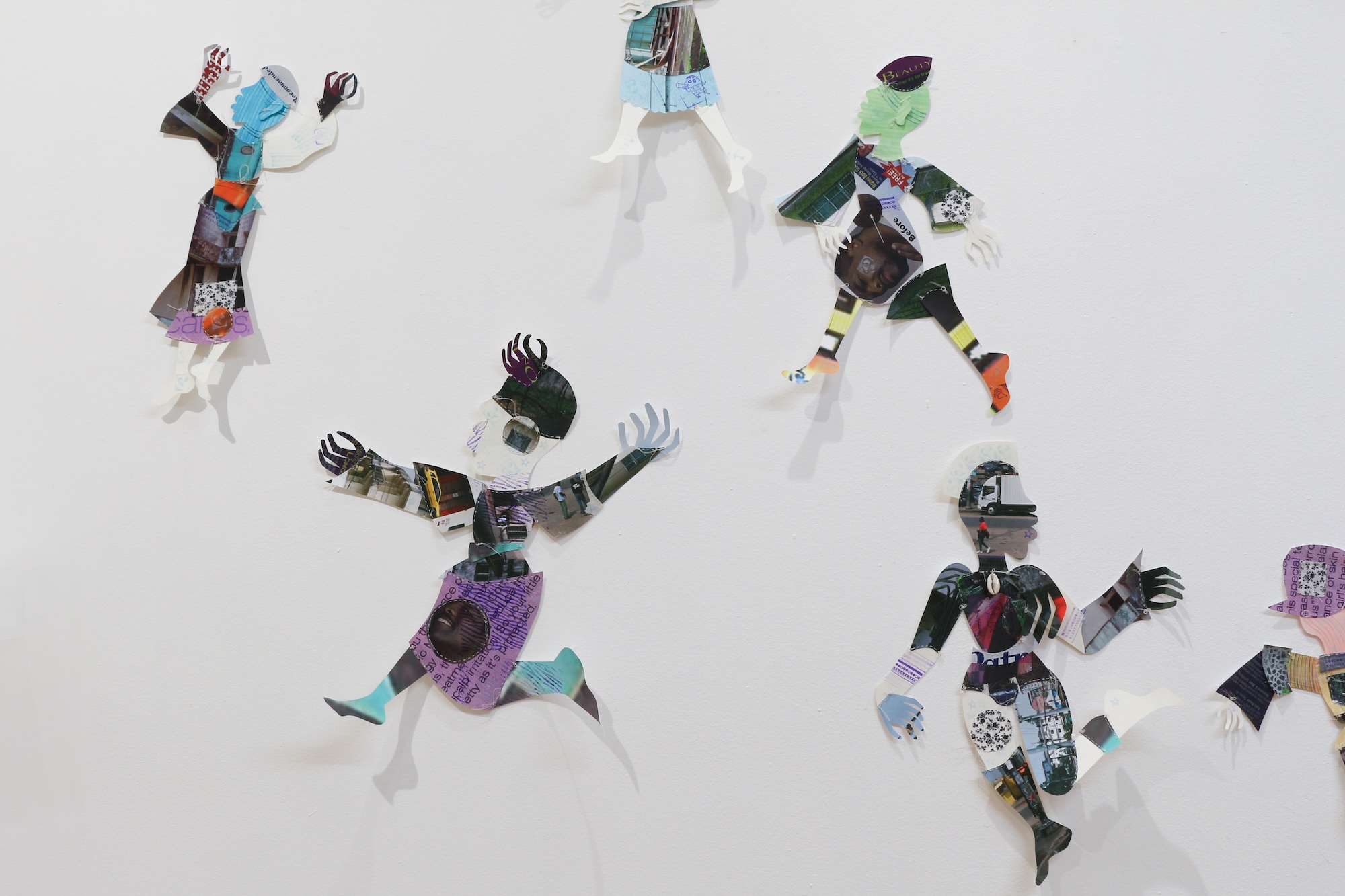
The idea of the right to opacity feels especially relevant nowadays, with artists from marginalized backgrounds reporting feelings of having to make their identity legible and commodified towards a largely white art market. One of the many pieces that resist legibility is Brittany Adeline King’s paper dolls. These dolls are collaged and hand-sewn from various sources, including the artist’s own photos, advertisements, nature, and street photography, as well as colorful textures and patterns. Their fragmented bodies remain glimpses into the other worlds that constitute them, never completely knowable. Who are these dolls that dance, play, and dream, and what do they want? Perhaps their beauty comes from the fact that they don’t seem to want anything from the viewer. More like an extension of the artist’s own mind’s varied references than a distilled idea, “journal entries” is what Brittany Adeline King refers to their paper dolls as in an interview with LVL3.

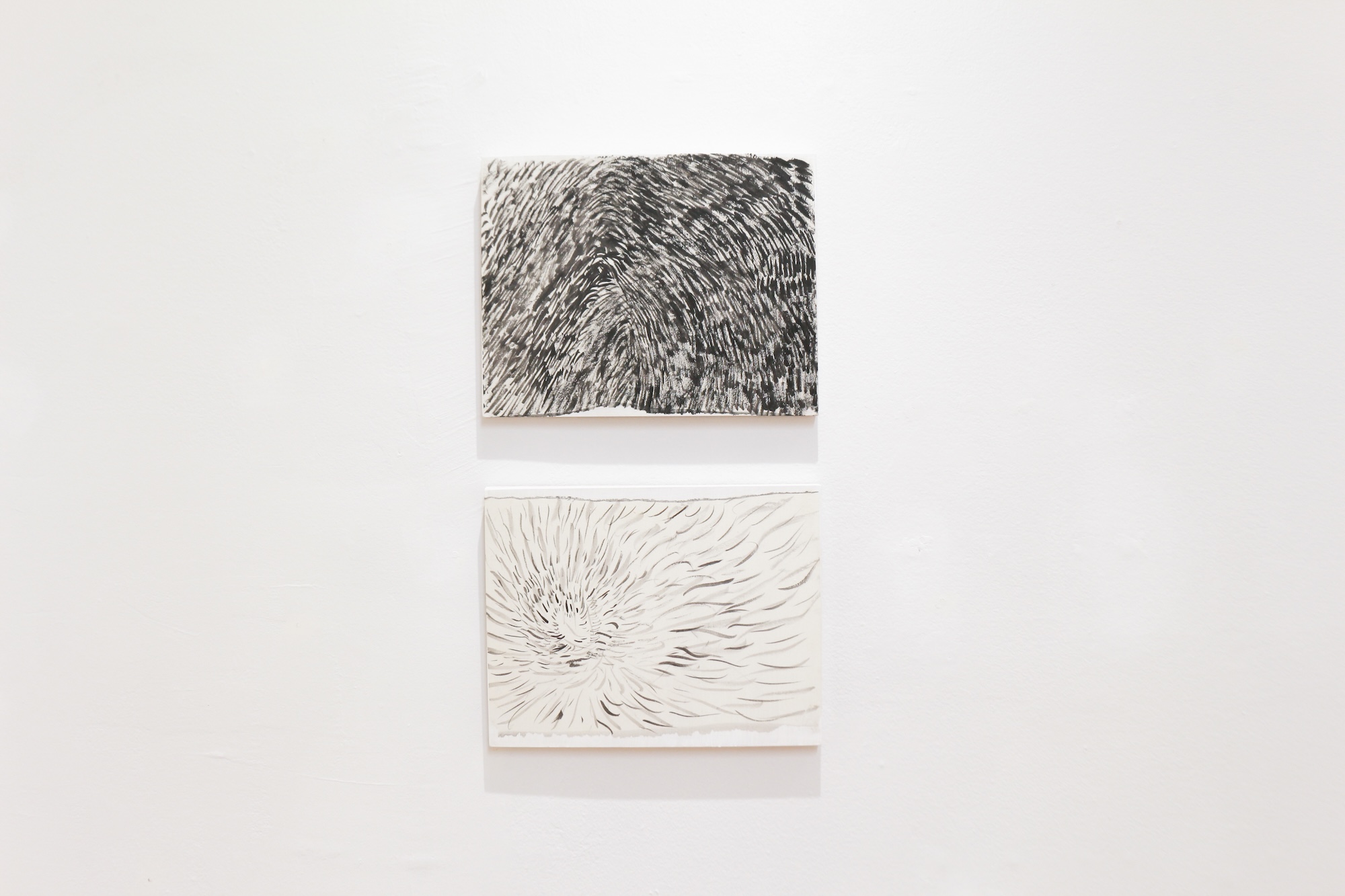
The diaristic impulse seems to be an important thread throughout Slipknots. Most of the works on view are small in scale or refer to small handheld objects. Xinyu Liu’s Soft Shift (2026) looks so much like a journal that one almost can’t help but reach out and flip through it. Siyu Chen’s the sense of belonging that is emerging (2026) consists of three etchings of what appear to be tarot cards. In these cards, two doors, “A” and “B,” present themselves in a room with a key on fire. Door “A” remains ajar; a spiderweb has a tangle on one of its threads, and a cracked eggshell sits atop a meticulously rendered wood-grain floor and feather. What do these signs and symbols mean? Their lack of concrete narratives invites open interpretations. Winnie Weiyun Szu’s I also find light in the dark with my black eyes (2026) is a diptych of two sumi ink paintings. Marks in the darker top piece swell and swim on the page, while the bottom piece features washier strokes that burst outwards. Operating in the liminal state between subjective experience and its rendering, these ink paintings are reminiscent of seeing shapes after pressing your eyes too hard.
In the corner of the exhibit is Alexandra Nelson’s installation piece, which features a typewritten and hand-bound essay on the importance of “full inquiry.” She writes, “Bringing myself to full inquiry…what a daunting task. Since then, this phrase has been guiding verbiage in my life; it is something I consider my north star and godmothers me through this practice I call life.” Full inquiry refers to the ability to listen to one’s internal desires and perceptions rather than following “external, alien” ones. Nelson connects this idea to Audre Lorde’s concept of “the erotic” which refers to not necessarily sexuality but to the spiritual and internal guide latent in all bodies, but too often neglected in a Western rationalist framework. The mirror, watch, and pen and paper for personal reflection in Nelson’s piece all urge the viewer to connect with the erotic in their own lives. Most of the artists in Slipknots would likely resonate with Nelson’s pursuit of “full inquiry,” an embrace of subjectivity, an institutional escapism, and the precious knowledge born from pure feeling.
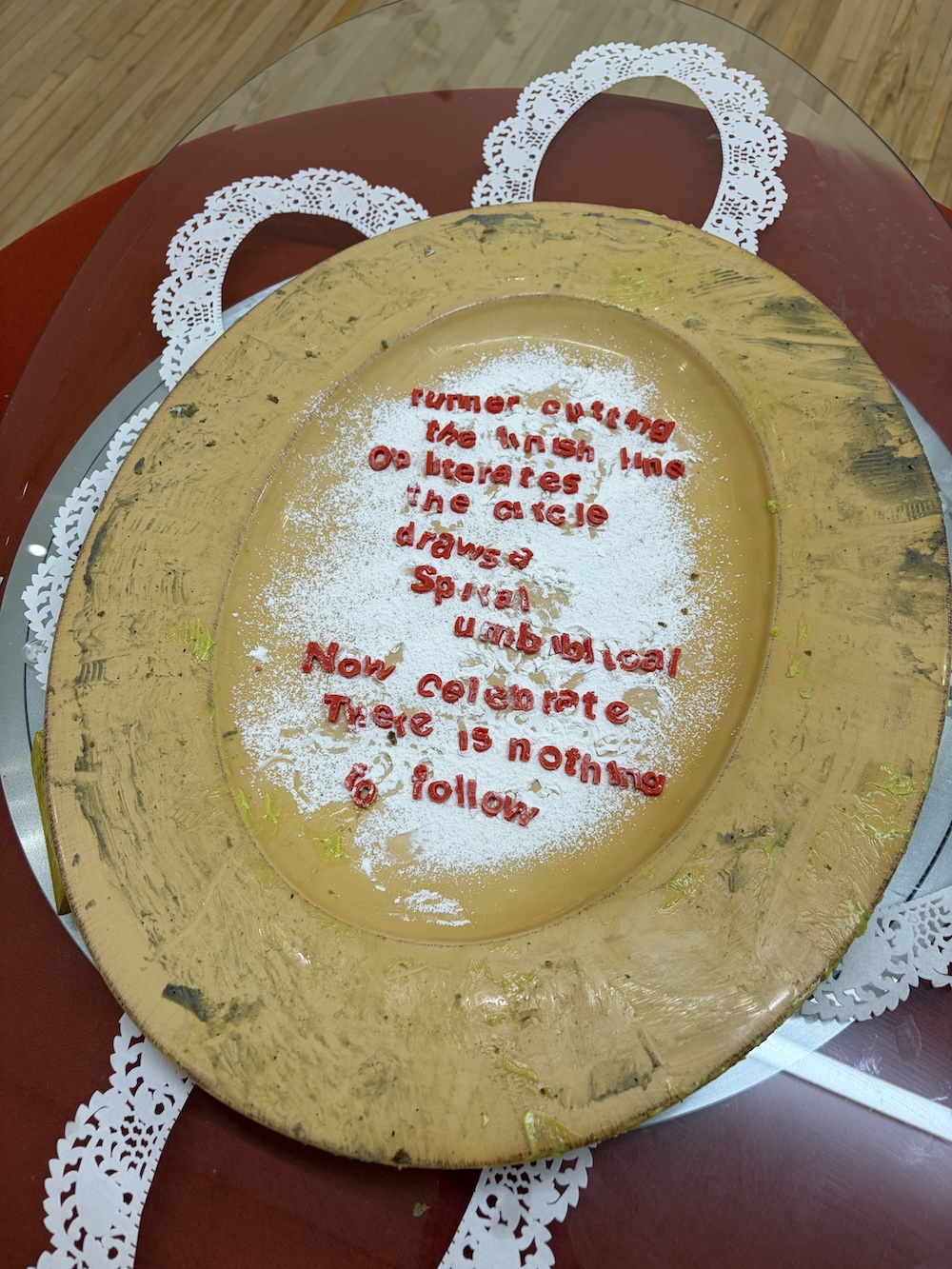
Rayer Ma’s performance-installation (Said the words to the cake) (2026) was a delicious crepe cake shared amongst viewers and formed into an oblong shape encircling a poem written by the artist. The poem’s last stanza reads “Now celebrate / There is nothing / to follow.” There is a sort of erotic (in Audre Lorde’s use of the term) nihilism about these lines. Rayer Ma encourages the viewer to “celebrate [...] nothing” but simultaneously celebrate everything. There is a zest for the everyday, and it tastes like black sesame and lime.
Slipknots is on view at Accent Sisters from June 2 through 21, 2026.