

.webp)

Tim Kent: “Sojourn” at Hollis Taggart
Review
Step inside Katherine Bernhardt’s iconic home in St. Louis designed by architect Gary Glenn, and she will immediately begin telling you how she restored it to its former 1980s glory. As a young girl, she would look out onto Lindell Boulevard, bordering the expansive Forest Park, and notice this bright, colorful house that stands apart from the more traditional Georgian manors on the block.
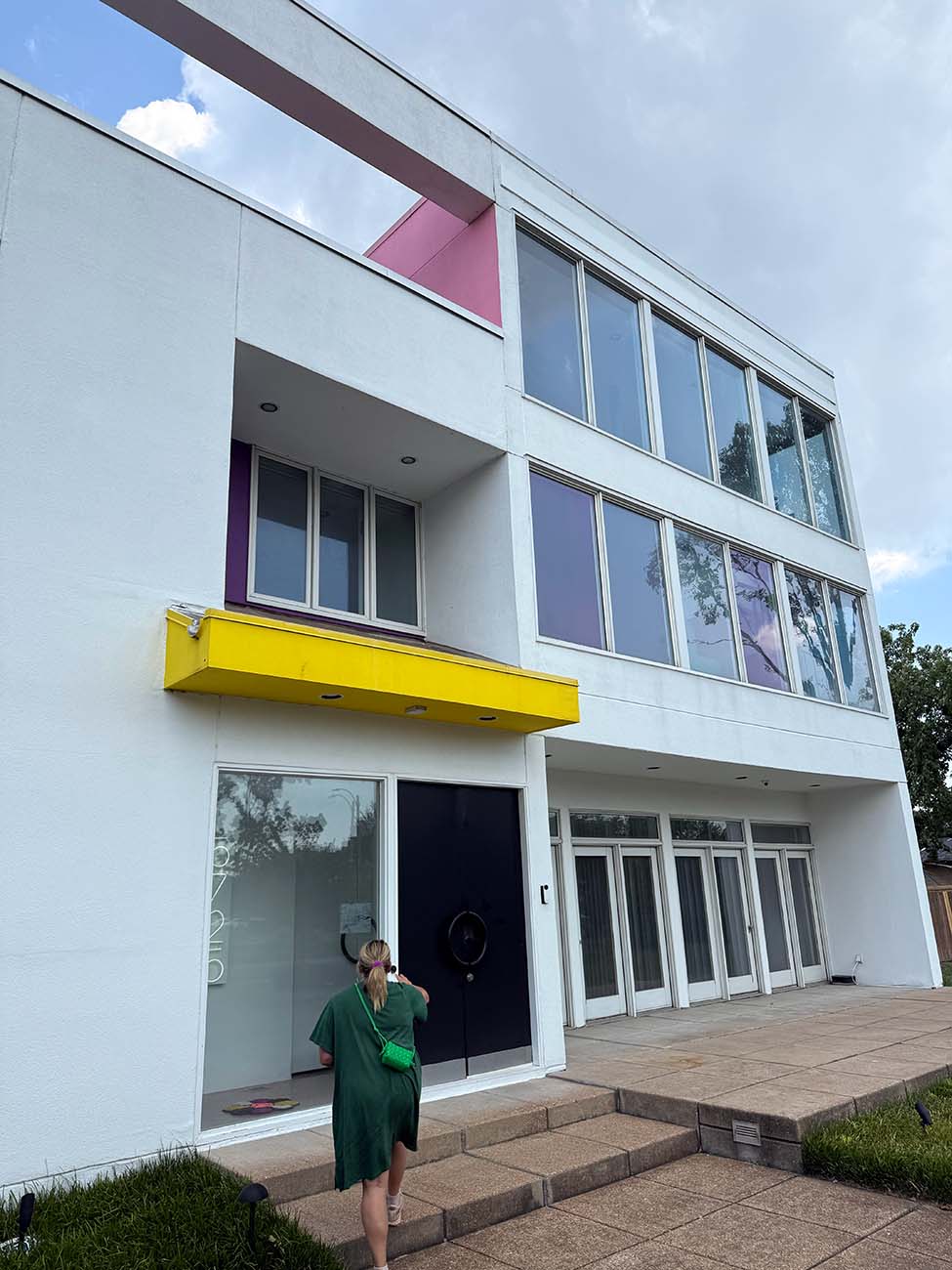
“I always knew that one day I wanted to live there, and when I was moving back to St. Louis, to be closer to my family, I looked on Zillow, saw it was for sale, and bought it,” she shared during a preview tour for her latest exhibition at CANADA, New York.
Unfortunately, the previous owners had followed the greige trend, and Bernhardt spent years painting over the insipid neutral walls, ripping out bland modern fixtures, and bringing the home back to its stylistic, postmodern grandeur—in 2023, the restored home was featured in T Magazine.
She takes pride in giving tours to visitors, pointing out the custom terrazzo floors she designed herself, her expansive collection of vibrant artwork, and her penchant for Memphis Milano furniture. One thing is certain: there is not a trace of gray left. In its place is color, vibrancy, and visual stimulation, a living, breathing extension of Bernhardt’s art practice reflected through her home aesthetic.
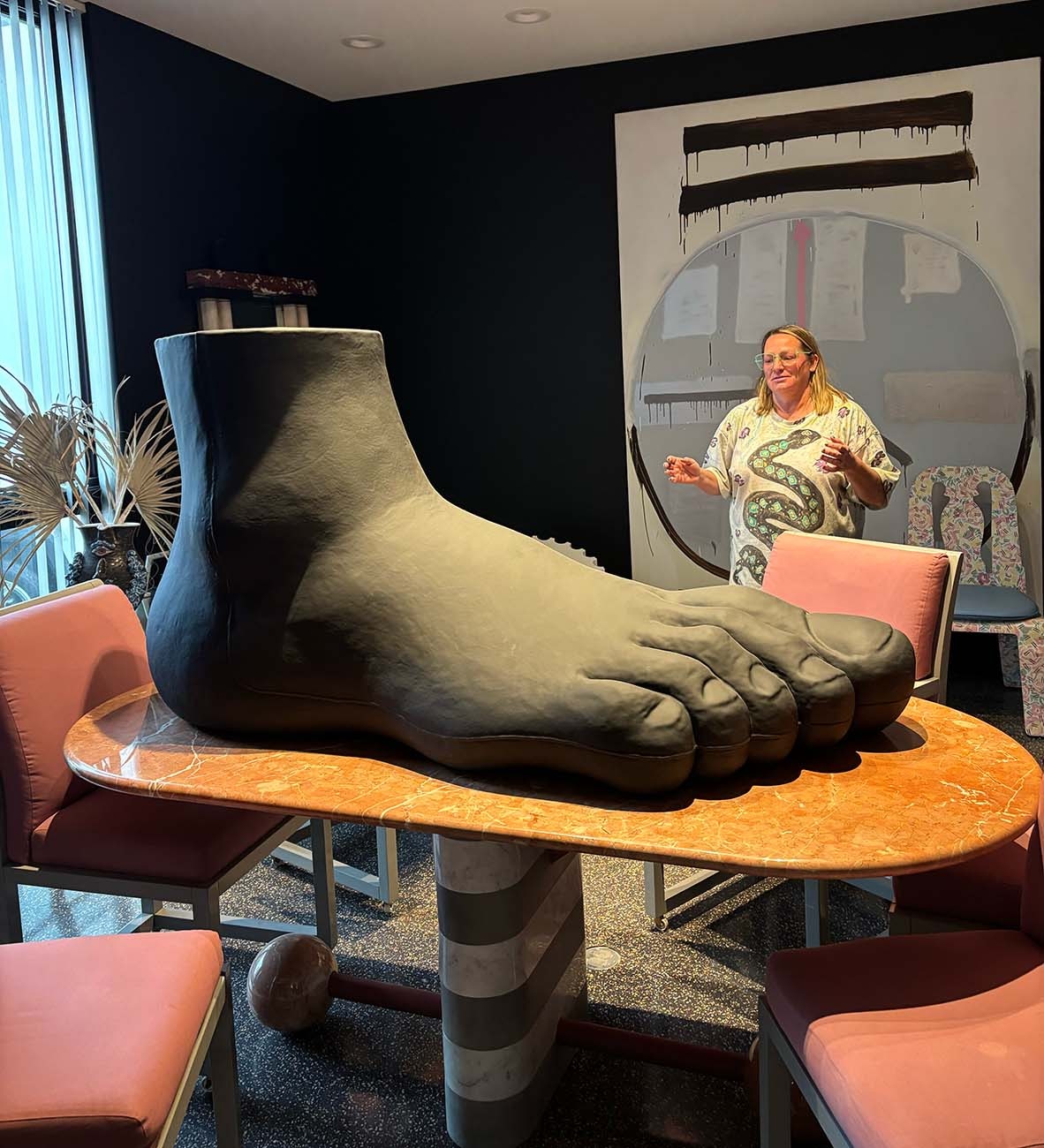
It makes perfect sense that this home, her passion project over the past half-decade, becomes the central focus of her latest exhibition, Peanut Butter and Jelly, at Canada in Tribeca, on view through June 20, 2026.
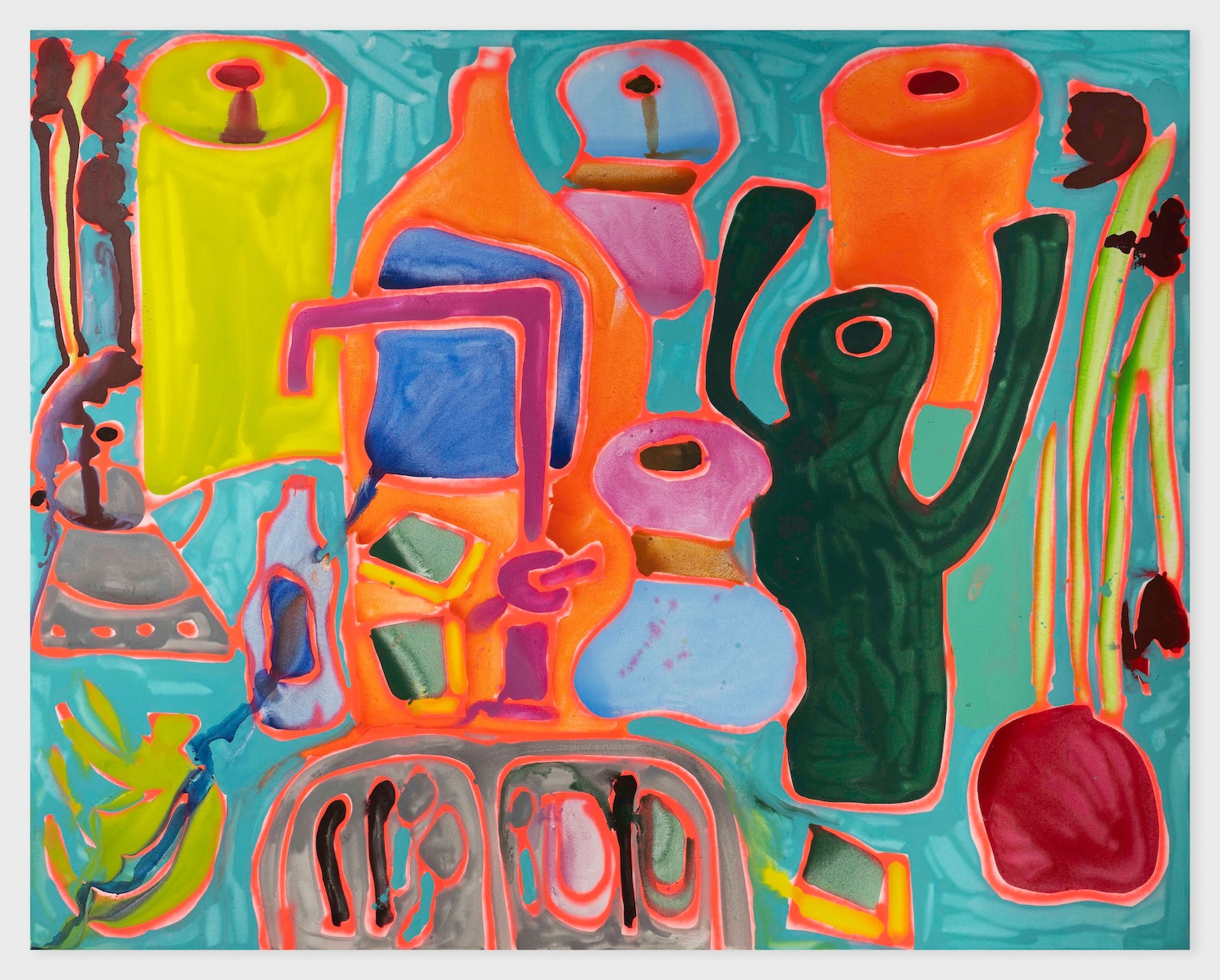
From kitchen sink still lifes to intimate portraits of her family, Bernhardt brings her unmistakable visual language of lurid, dripping color into a new methodological process. Beginning with smaller observational studies painted directly within her home, she then translates these compositions into monumental paintings, reaching up to 8 x 10 feet. The resulting canvases burst at the seams with vibrant imagery, transforming everyday domestic scenes into immersive explosions of color, pattern, and gesture. “I have a special long brush to reach the center,” she laughs when asked how she manages to navigate the oversized surfaces.
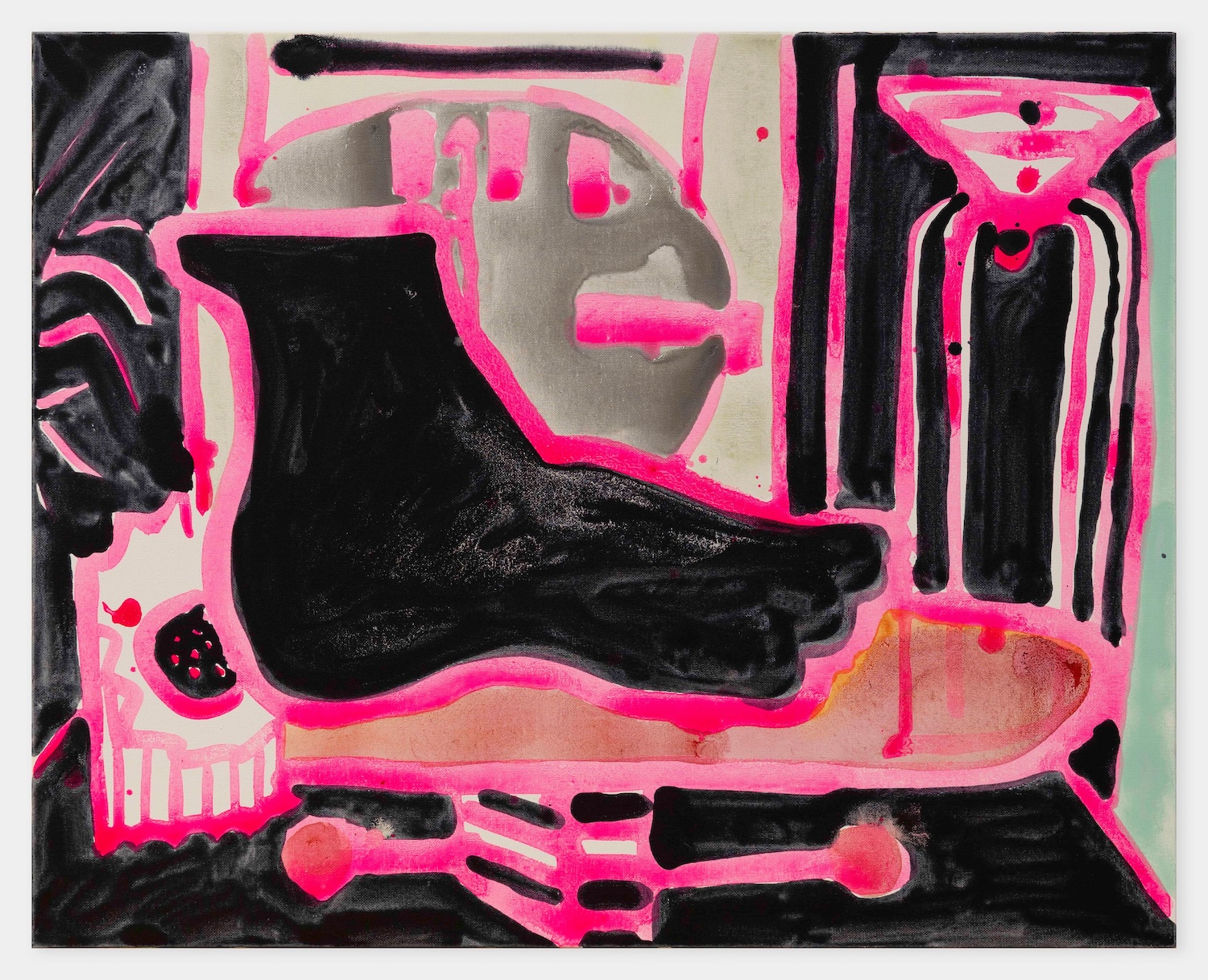
Working entirely solo without the aid of assistants in her studio, Bernhardt begins by positioning the massive blank canvases upright and spraypainting loose outlines derived from her still-life studies in garish neon pinks and oranges. From there, she lowers the paintings horizontally onto a pair of sawhorses, transforming them into makeshift tables where she begins her process of pouring, mixing, pooling, and painting the compositions in what feels almost like a chaotic paint-by-numbers system. The thinned washes of color twirl and meld together, forming diaphanous layers of pigment through which the bright neon underdrawings continue to glow, peeking through the abstracted shapes and fluid forms.
Expensive paints and precious materials are hardly the focus. Instead, Bernhardt works with gallon jugs of watered-down Blick acrylic paint, mixed in dozens of quart-sized red Folgers containers scattered throughout the studio. There is a humility to the process, a sense of directness and labor that feels both meditative and deeply physical. Despite the exuberance of the finished paintings, the work itself is grounded in repetition, discipline, and routine.
Family remains central to Bernhardt’s life and practice, and was one of the primary reasons she ultimately returned to St. Louis after decades of living and working in New York. This closeness and sense of familial intimacy radiate throughout both the exhibition and the opening itself.
In addition to depicting various family members in the paintings, Bernhardt herself also appears throughout the exhibition in a series of self-portraits, instantly recognizable in her signature Kelly green glasses paired with a matching green Bottega Veneta bag. In one particularly striking work, her reflection emerges through the mirror of an ornate Michael Graves-designed Memphis vanity, creating a layered meditation on self-image, domesticity, and performance. In Bernhardt’s universe, life and art continuously fold into one another, each reflecting and amplifying the other in exuberant color.
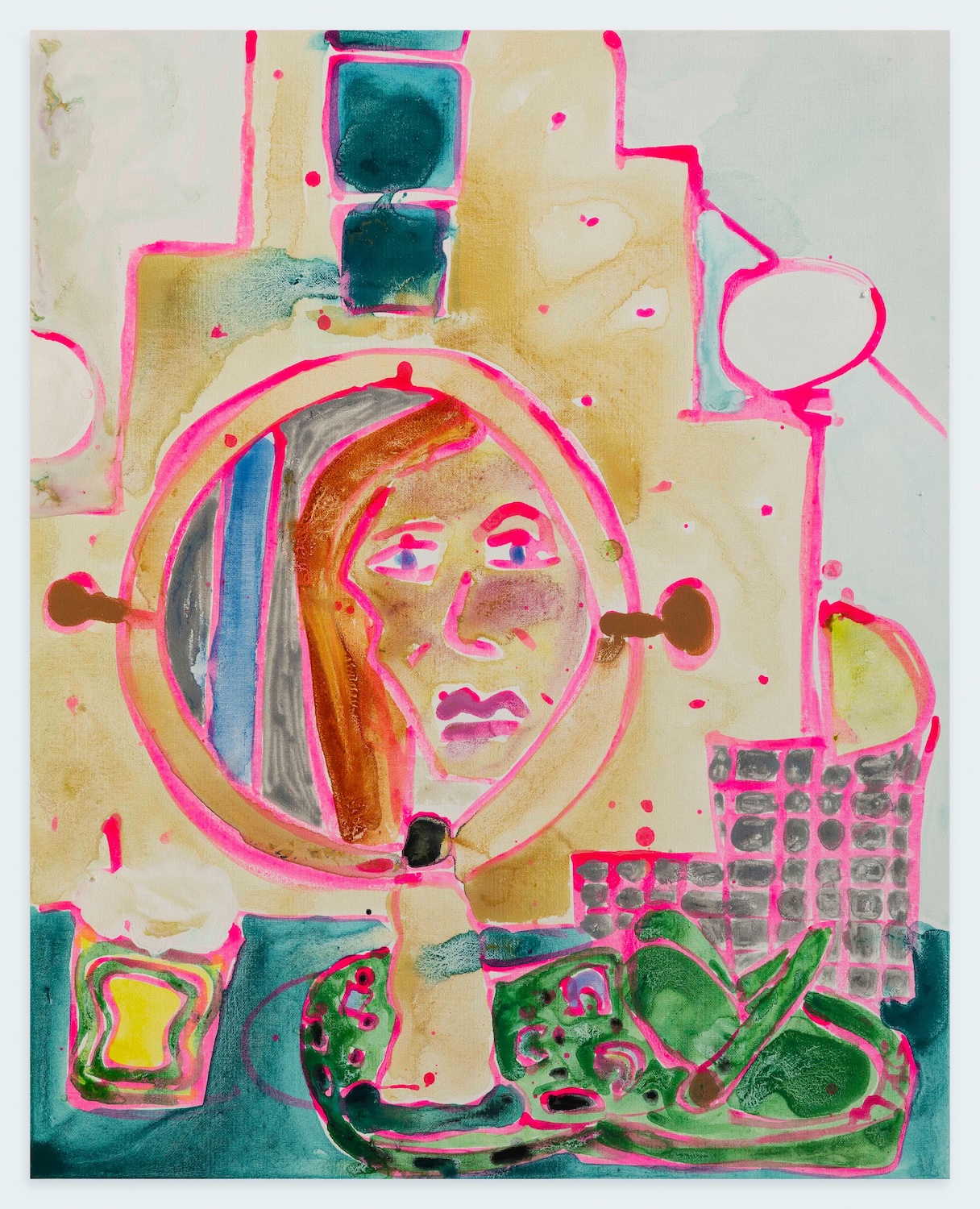
The key to understanding Bernhardt’s work lies beyond the imagery she depicts. Ultimately, it is the act of painting itself, its abstract gestural materiality, that becomes the true subject upon closer inspection. Water blooms pigment across the canvas where it pools and settles, creating intimate moments in which the paint appears to take on a life of its own. Similar to Helen Frankenthaler’s “soak stain” paintings, Bernhardt’s process of working horizontally allows gravity, absorption, and fluid movement to become active collaborators within the composition rather than forces to be fully controlled.
In many ways, loose control becomes essential to the work. Bernhardt allows for spontaneity, for accidents, for colors to bleed together and create unexpected relationships that speak to a larger philosophy of intuition and surrender. While the quotidian imagery remains recognizable, plants, sinks, sponges, handbags, mirrors, and domestic interiors, the true energy of the work emerges through the movement of paint itself and the tension between representation and abstraction.
What Bernhardt ultimately achieves is a celebration of excess and visual pleasure in opposition to the increasingly homogenized aesthetics of contemporary life. In a world dominated by gray interiors, cookie-cutter architecture, and algorithmic sameness, Bernhard, in defiance, chooses color, vibrancy, and emotional impact. Her paintings reward sustained looking, revealing themselves slowly over time, offering more than their bright, riotous surfaces initially suggest.
Katherine Bernhardt: Peanut Butter and Jelly was on view at CANADA, New York, from May 15 through Jun 20, 2026.