.webp)

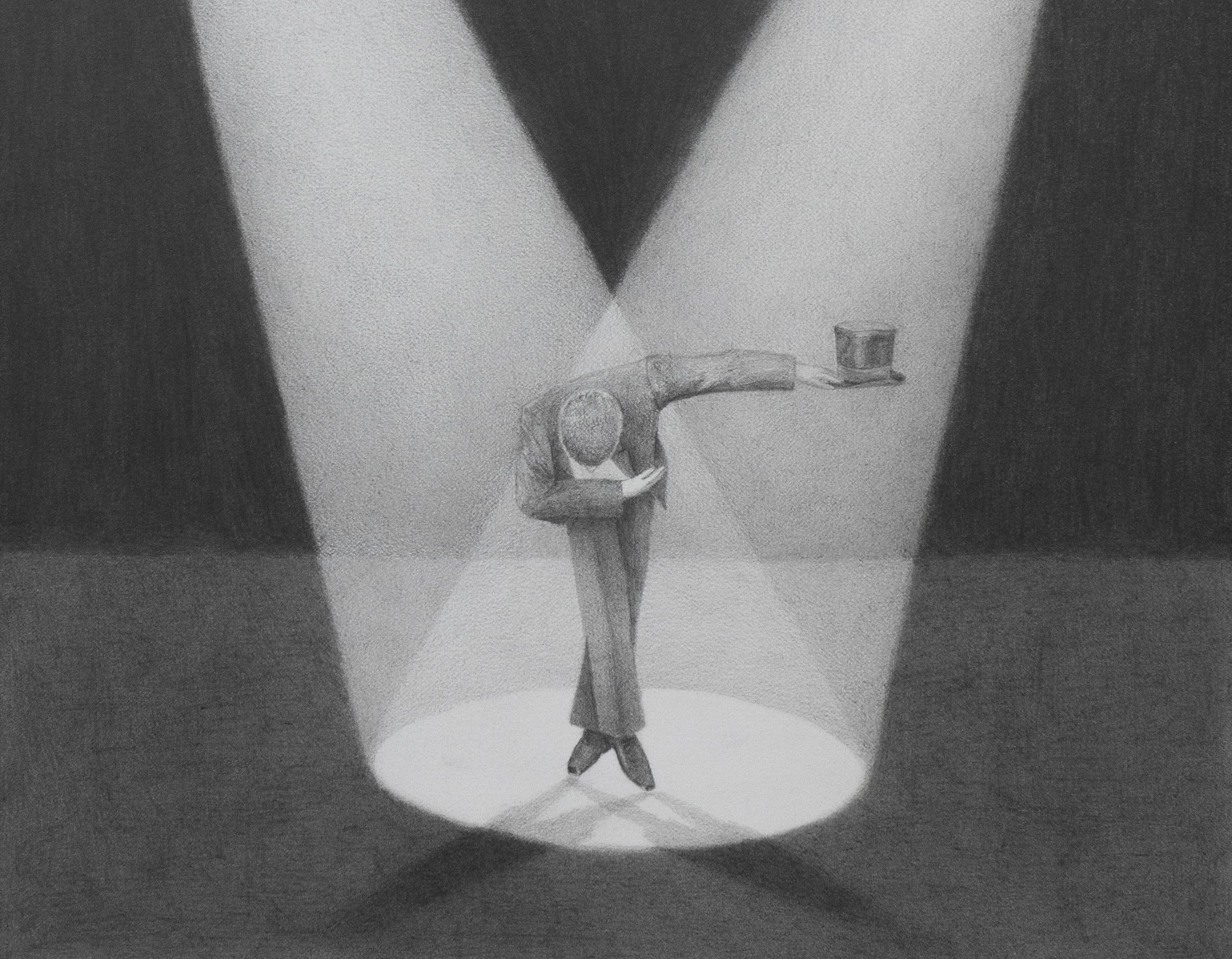
Samuel Alexander Forest: “A Bag of Tricks” at Ortega y Gasset Projects
Review
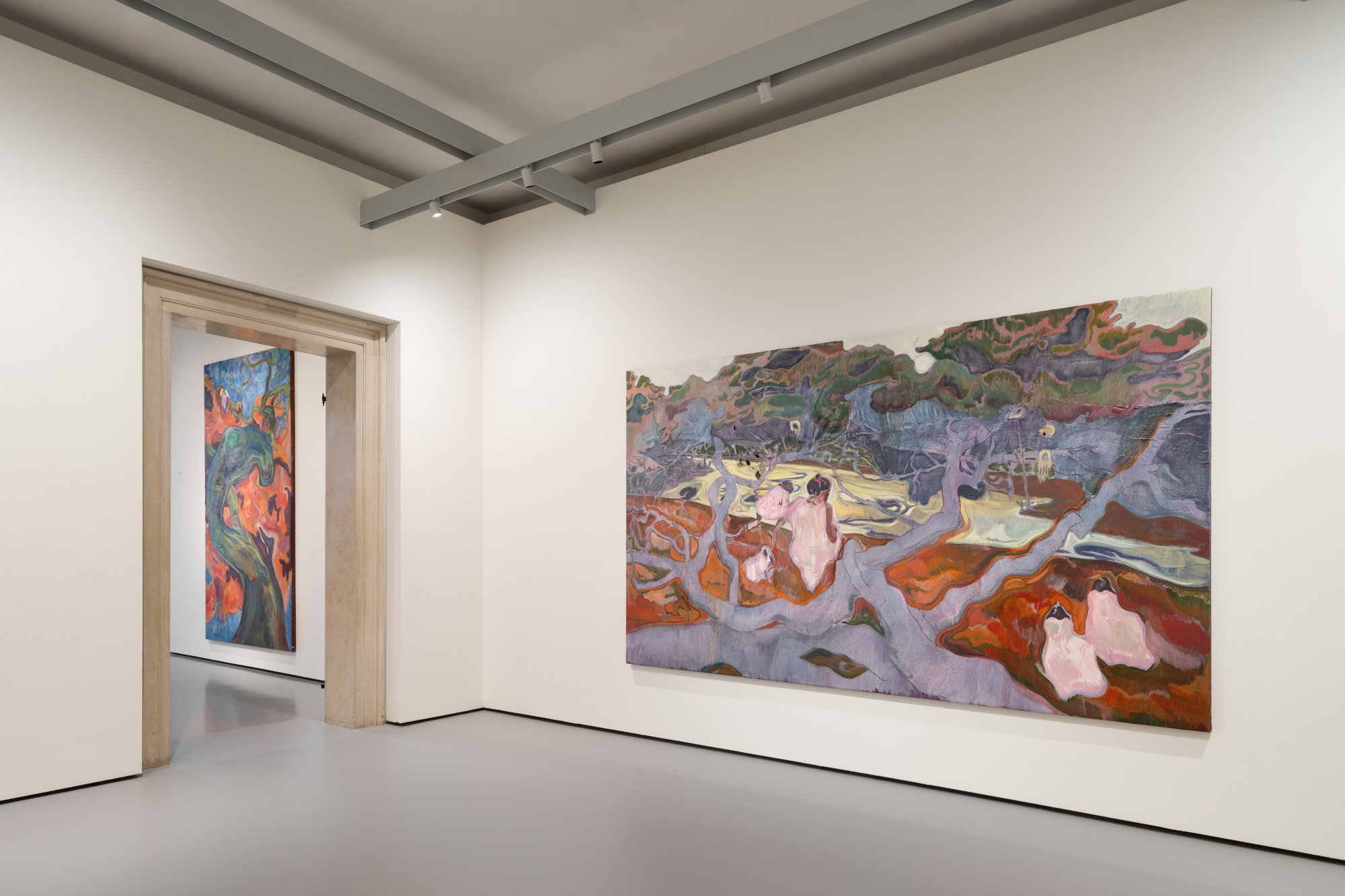
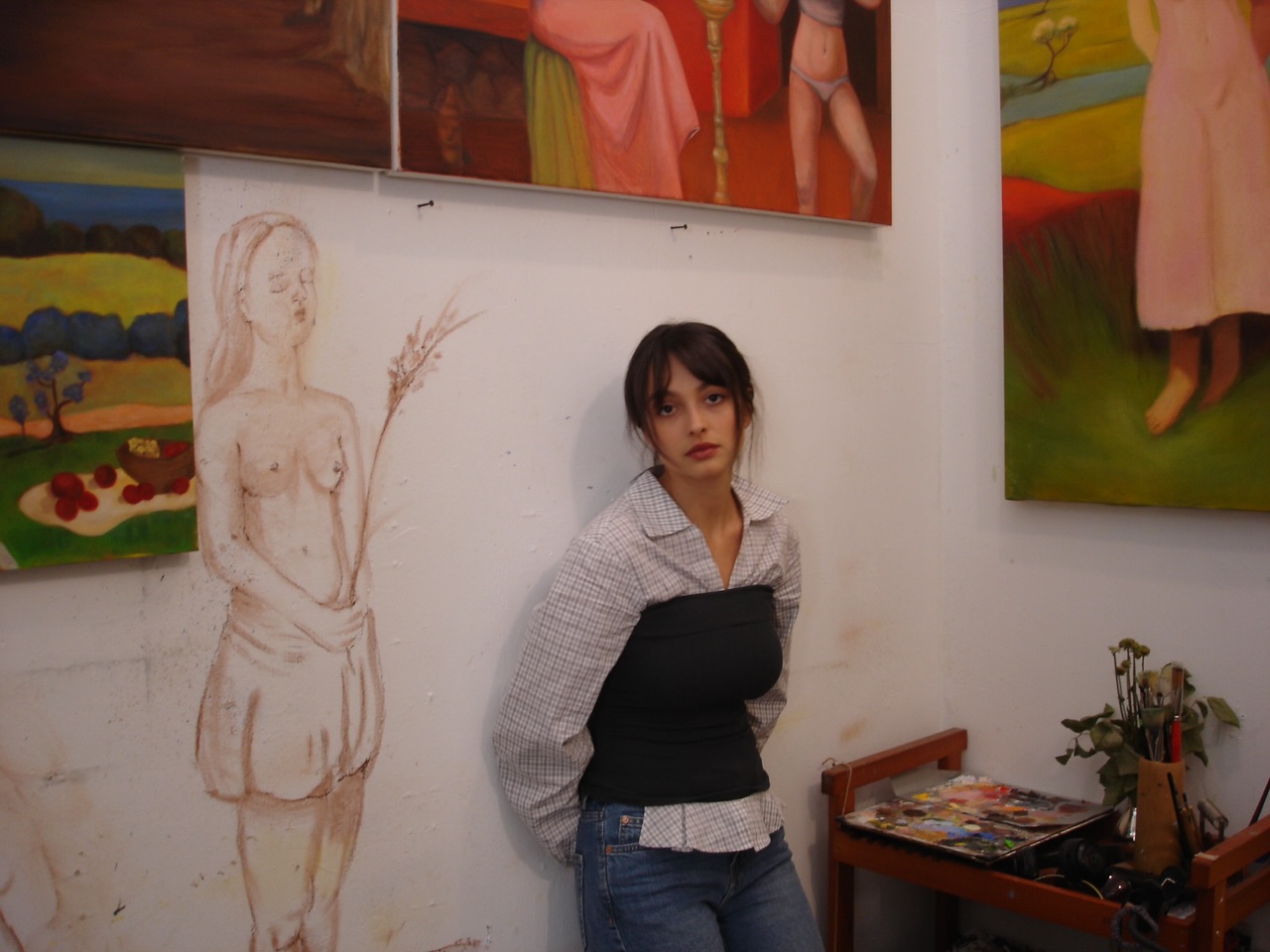
Spanish-Norwegian painter Iréne Norén approaches the female body as a psychological vessel shaped by memory, lineage, and inherited expectations. Working primarily in oil on canvas, she creates figurative paintings that depict female nudes in environments where the boundaries of the interior and exterior collapse entirely. Drawing inspiration from the narrative cycles of early Renaissance altarpieces, her figures become archetypes through which perception is constructed, imposed, and ultimately undone.
Reliquary of the Body: Returning to Eden, her first solo exhibition at Harper’s, brings together six works that follow a psychological pilgrimage through exposure, shame, judgment, and release. Each painting functions as its own stage in this cycle, featuring quiet and still figures that create a devotional and intimate atmosphere. Through appropriating the Catholic iconography and visual language—which she grew up surrounded by on the Mediterranean coast of Spain—Norén examines the body as a sacred site and what remains of it when it’s no longer mediated by shame.
Mer Mora: How did the idea for Reliquary of the Body: Returning to Eden first emerge, and what drew you to the female body as your starting point?
Iréne Norén: Up until the show, most of my work was focused on women and on placing them in environments where they can just exist. Looking back, I think I was unconsciously creating those spaces for myself too, trying to recreate a sense of home while living in New York.
When Harper’s offered me the exhibition, I realized I wanted to go beyond simply painting beautiful landscapes with women in them; I wanted to understand how I arrived emotionally and psychologically to those spaces. That became the starting point for Reliquary of the Body: Returning to Eden. The project is personal, but I tried to leave enough ambiguity for people to enter it through their own experiences. What interests me most is not autobiography itself but the points where personal experience becomes collective, especially among women.
I divide this whole journey into six paintings: The Performance, The Exposure, The Solitude, The Judgment, The Ritual, and finally, Returning to Eden (all 2026). Each work acts almost like a stage, or like a psychological and symbolic cycle. For me, Eden is not necessarily paradise but a state outside of judgment, where I feel safe and seen. It’s a place where the body can exist without shame or moral projection. That is the reliquary for me, the realization that the body itself is sacred.
As women, we inherit ways of seeing ourselves before we fully understand where they come from. They exist in our lineage, in our mothers and grandmothers, and in things left unspoken but still transmitted. That was the true starting point of the work.
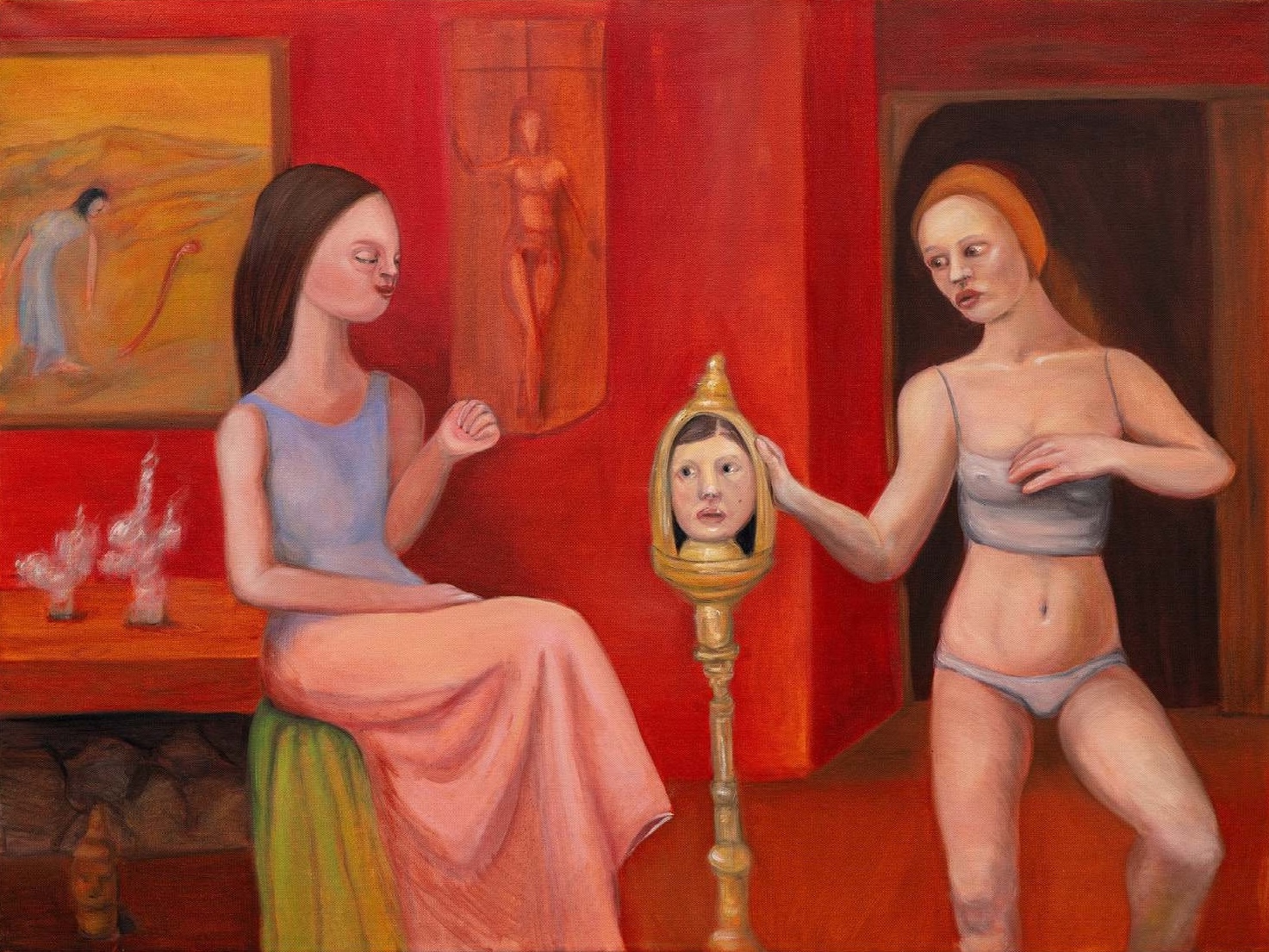
MM: You grew up in El Albir, Spain, on the Mediterranean coast. In Spain, Catholic iconography isn't just something you learn about in art history; it’s extremely intertwined with everyday life and tradition. What drew you to reclaim that visual language for this work?
IN: I grew up surrounded by medieval and Renaissance Catholic imagery, and that was my earliest connection to art. I paint mostly from imagination so I think those visual structures unconsciously remained inside my mind; they’re part of how I think and perceive images. My relationship with spirituality has always been present in some form. Since I was young, I’ve had the sense that there is something beyond the visible world, and Catholicism was the closest language available to me growing up.
There is also a devotional aspect to my practice. For me, painting requires precision, attention, and a certain kind of devotion. I think we’re losing that in contemporary art. So in a way, the work is not only reclaiming my roots but also reconnecting to an older understanding of painting as something contemplative. It was only after the exhibition was done that I realized how much the structure resembled religious imagery and early Renaissance altarpieces. It wasn’t something I planned in advance; it just emerged naturally from the visual language I grew up around.
MM: In this exhibition you approach the body as a “psychological landscape shaped by inherited ways of seeing.” How does that idea translate into the way you construct a painting?
IN: I don’t think of the body as something idealized or something that needs to be corrected. I embrace distortion and imperfection because perception itself is unstable. For me, the canvas and the body become similar things; both are vessels. They carry memory, lineage, insecurities, and projections, things that are not only ours. Our relationship to how we look is never purely physical; it’s shaped by many things like experience, shame, desire, fear, or history. So when you break down all of that, what remains?
That becomes the starting point for the paintings. Once that structure exists psychologically, the images begin to emerge naturally. And in a way, painting also becomes a form of awareness, embracing imperfections and learning how to exist beside them honestly.
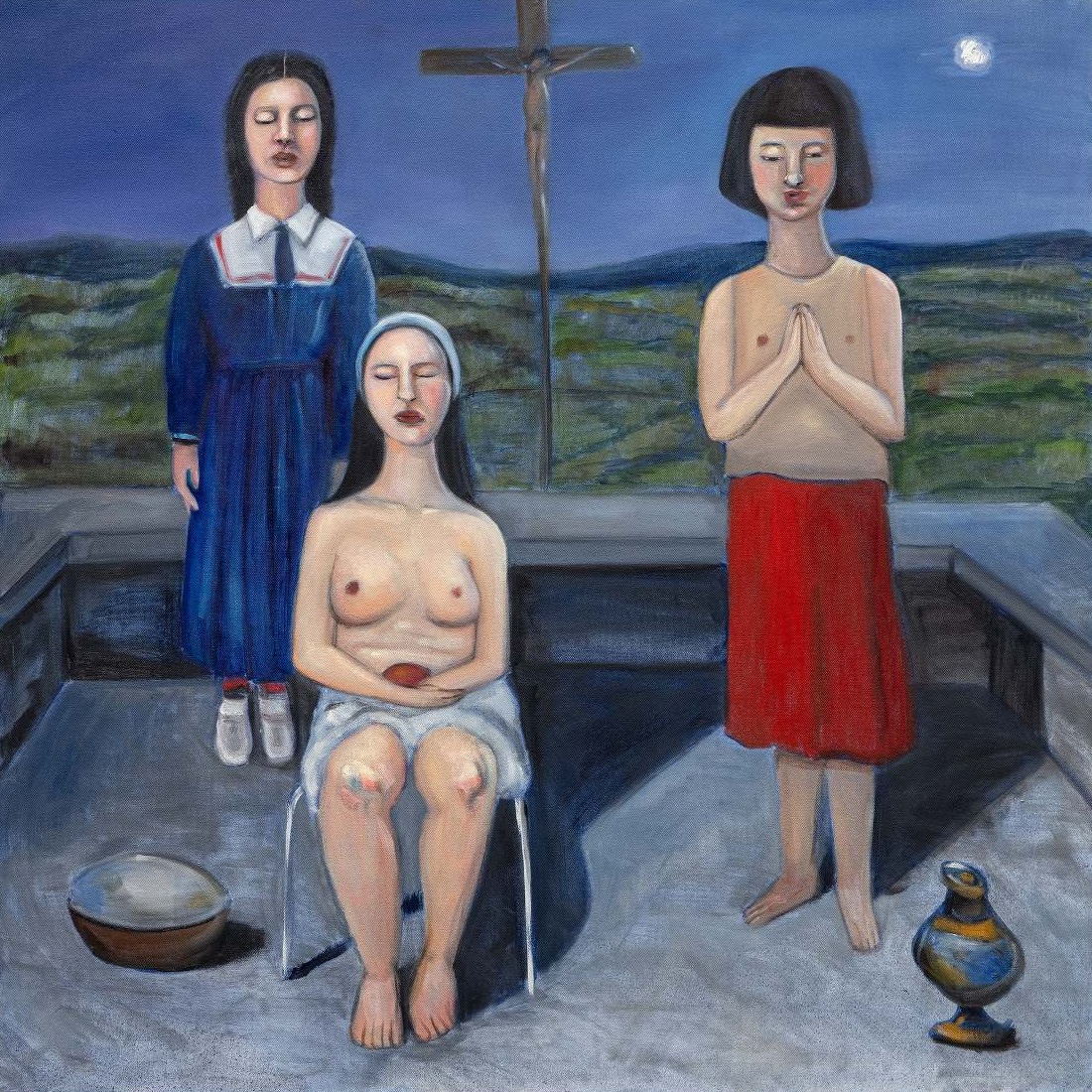
MM: The figures are nude and placed within symbolic environments, yet the paintings feel intimate rather than exposed. How do you approach that balance?
IN: A big part of it comes from the structure early Renaissance painters used, which is something I follow closely. There’s a quietness in those works that I’m deeply drawn to. The bodies are still; there’s no drama in their presence. For me, these figures function more like icons than characters. They’re there to mirror something back to you rather than fully explain themselves. I want people to project onto them instead of just observing them.
Ambiguity is also essential to my work. Gestures and expressions can communicate too much sometimes, so I try to reduce them as much as possible. I think that if the figures became too specific emotionally, the paintings would close themselves off. I want anyone to be able to look at them and feel some sort of awakening. So when you’re viewing them, you understand something emotionally, but never the whole picture. That tension is important to me.
MM: Catholic allegories like shame and sin have historically been directed at the female body, such as Eve or Mary Magdalene. The female nude in Western painting has also often been painted by and for the male gaze. You're working in both of those traditions simultaneously, and shame is one of the stages your figures move through, specifically in The Solitude. How do you use these references without reproducing the power dynamics that came with them?
IN: I’m very interested in contradiction and tension. Religious paintings historically position certain women as sacred while excluding most others from existing in that same space. When I look at those paintings, I begin to wonder what happens if that same symbolic weight is transferred onto ordinary women like mothers, daughters, and women carrying invisible histories.
The moment you try to translate the structure of an icon into an ordinary woman, you also have to erase the shame and the gaze attached to that history in order to get to the archetype. My figures are not meant to be idealized religious symbols; they exist somewhere between archetype and human presence. If they became too graceful or too perfect, I would lose the ambiguity the work depends on, and that's not something I want.
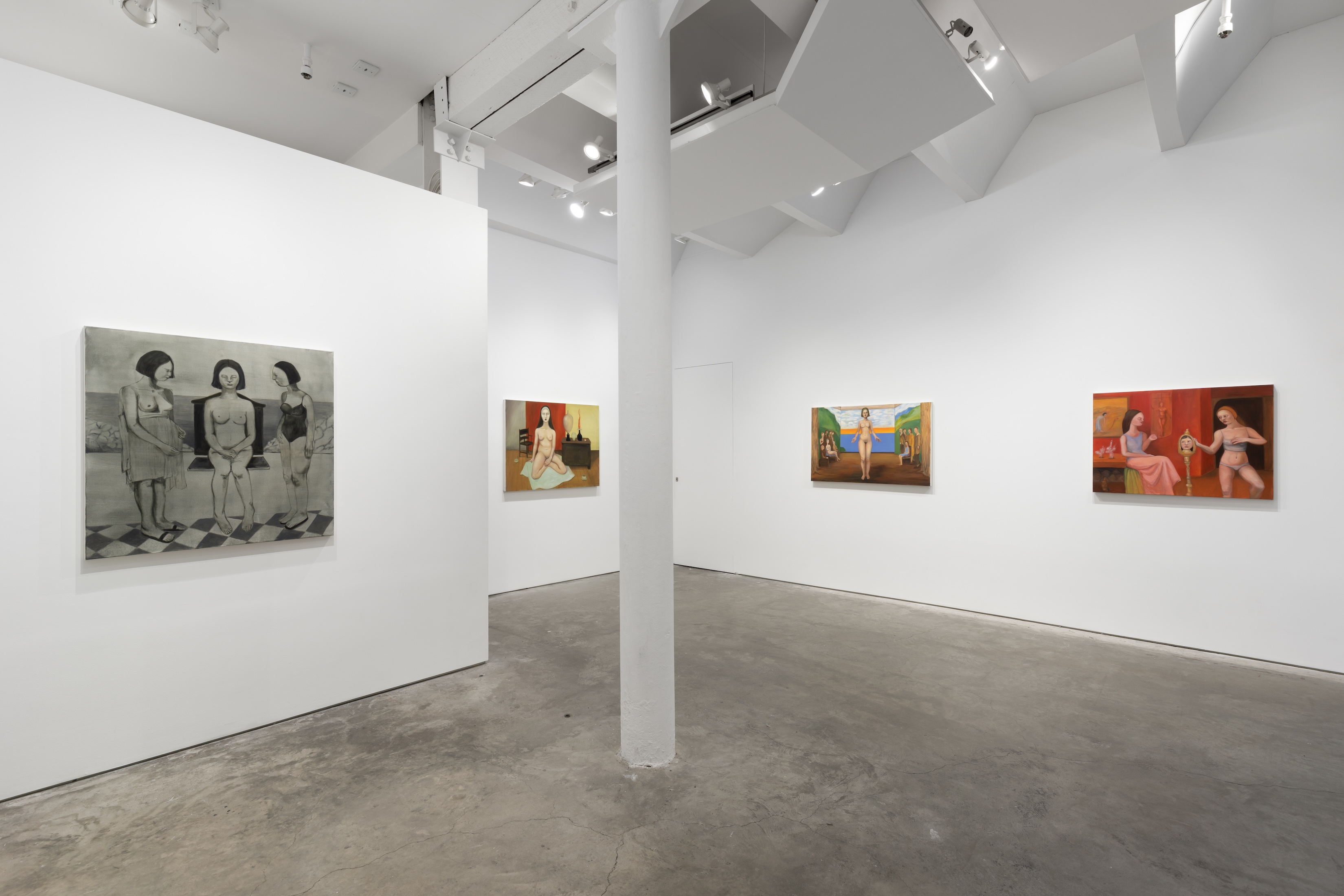
MM: What kind of experience do you hope these paintings create for viewers, and what do you want them to leave with?
IN: I do not want to give answers; I want people to remain inside the question. For me, curiosity is much more important than certainty. I think conversations really happen when people are curious. I'm a very curious person and I want people to feel that curiosity too. This work started as an act of curiosity. The moment something feels completely resolved, it stops moving.
The exhibition itself is cyclical; the last painting leads back to the first, so there is no true conclusion. One day you might recognize yourself in one stage, another day somewhere else entirely. What matters to me is recognition. Becoming aware that certain emotional and psychological patterns repeat themselves, and understanding that awareness already changes your relationship to them.
MM: The six paintings form a cycle moving through exposure, shame, judgment, and release. When did you feel like you had finally arrived at that state of freedom, at Eden?
IN: I was working on several of the paintings simultaneously during winter in New York, and it was a very intense process emotionally, especially painting The Solitude. I was having horrible nightmares at the time, but I also knew the work was pushing me toward something necessary. But I don’t think the realization came from finishing the paintings themselves. It happened at the opening, when I saw all the works together, surrounded by people I love.
That was the moment I understood the work no longer belonged entirely to me. I lost the authority and, with it, the fears, attachments, and doubts. Once the paintings entered the gallery, they became something other people could project themselves into. That felt much more meaningful to me than simply finishing a painting and thinking it looked complete. I was released.
MM: This is your first solo exhibition. What does it feel like to show something this personal for the first time?
IN: At first it felt terrifying. I kept the entire exhibition completely private while I was making it, and I didn’t show or share the paintings until everything was finished. It was a risk, but one I was willing to take. It became something sacred. I knew I needed to make something that challenged me psychologically and artistically, and I wanted to make work that felt completely honest to where I was at that moment. So when Harper’s offered me the opportunity to do the show, I said, “Okay, I’m going all in.” I never thought about becoming a professional artist, but art has become a way of processing experience and trying to understand myself and the world around me.
The fear disappeared while I was painting but returned the night before the show opened. I was so nauseous I couldn’t eat. Then the moment people entered the exhibition and began connecting with the work, it dissolved completely. I felt just at peace. Everyone carries fears and contradictions; the difference is whether you choose to confront them or not, and I chose to confront them.
MM: What are you hoping to explore next?
IN: The body was only the beginning for me. Through this exhibition I realized I’m less interested in narrative itself and more interested in the structures that shape perception psychologically, spiritually, and even architecturally. Lately I’ve been thinking a lot about interiors, memory, silence, and the way consciousness itself can become a kind of space. I think the next work will move further inward. More than anything, I also want to keep arriving closer to freedom in painting, not technical freedom but clarity. A place where the image feels discovered rather than set. That’s what I’m moving toward.
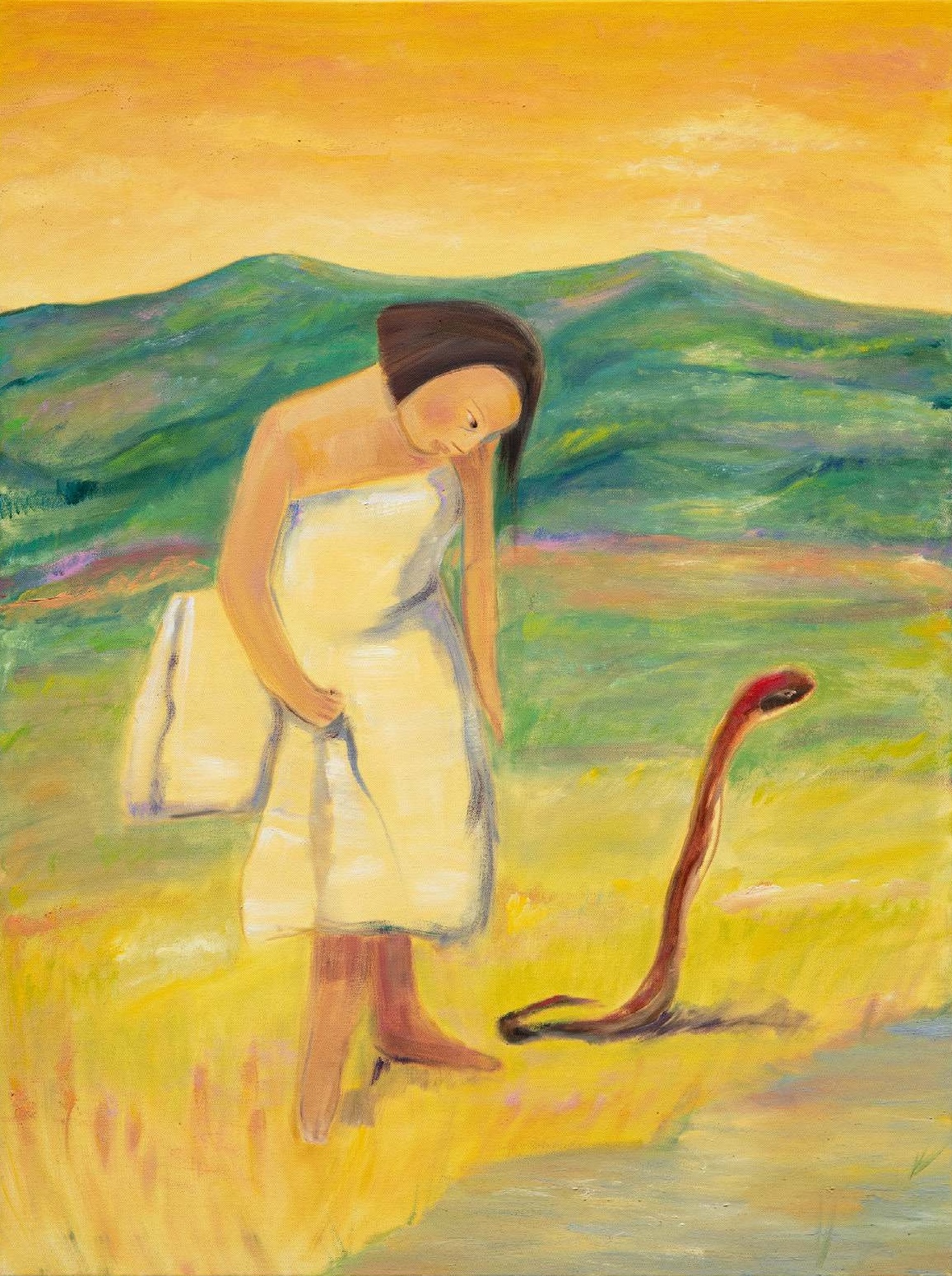
Reliquary of the Body: Returning to Eden is on view at Harper’s through June 20, 2026.