

.webp)

Camille Henrot: “Commedia dell’arte” at L’Alliance New York
Review
INT. THE RICHARD B. FISHER CENTER FOR THE PERFORMING ARTS AT BARD COLLEGE - EVENING.
Over the J.S. Bach cantata “Actus Tragicus,” on the stage of the late Frank Gehry’s polished, curvilinear auditorium jewel-set into the relative wilderness of Tivoli, two DANCERS repeat a series of movements that seem almost readymade, lifted from life—now in unison, now delayed. They move geometrically, like digital copies of one another, but we’re so close we can see them breathe and sweat.
In the second movement of Lucinda Childs: Momentary Reprise, dancer-choreographer LUCINDA CHILDS appears waiting in the wings before she emerges for her solo, tethered by an elastic harness to an invisible backstage anchor. Her performance begins with a rectangular video work by the artist Anri Sala that, at first, approximates the abstract texture of a concrete wall. As Childs begins her protracted crossing from house left, the projection behind her blurs and unblurs like an optical glitch that forces our eyes to flatten the three-dimensional image of the performer into a flickering, superimposed cut-out.
This piece is called Geranium ‘64. Context is revealed in flashes that give way to legible FOOTAGE—a windy, wintry 1964 NFL Championship game between the erstwhile Baltimore Colts and the Cleveland Browns: a historic upset by the latter and the first league title game to have been televised by CBS.
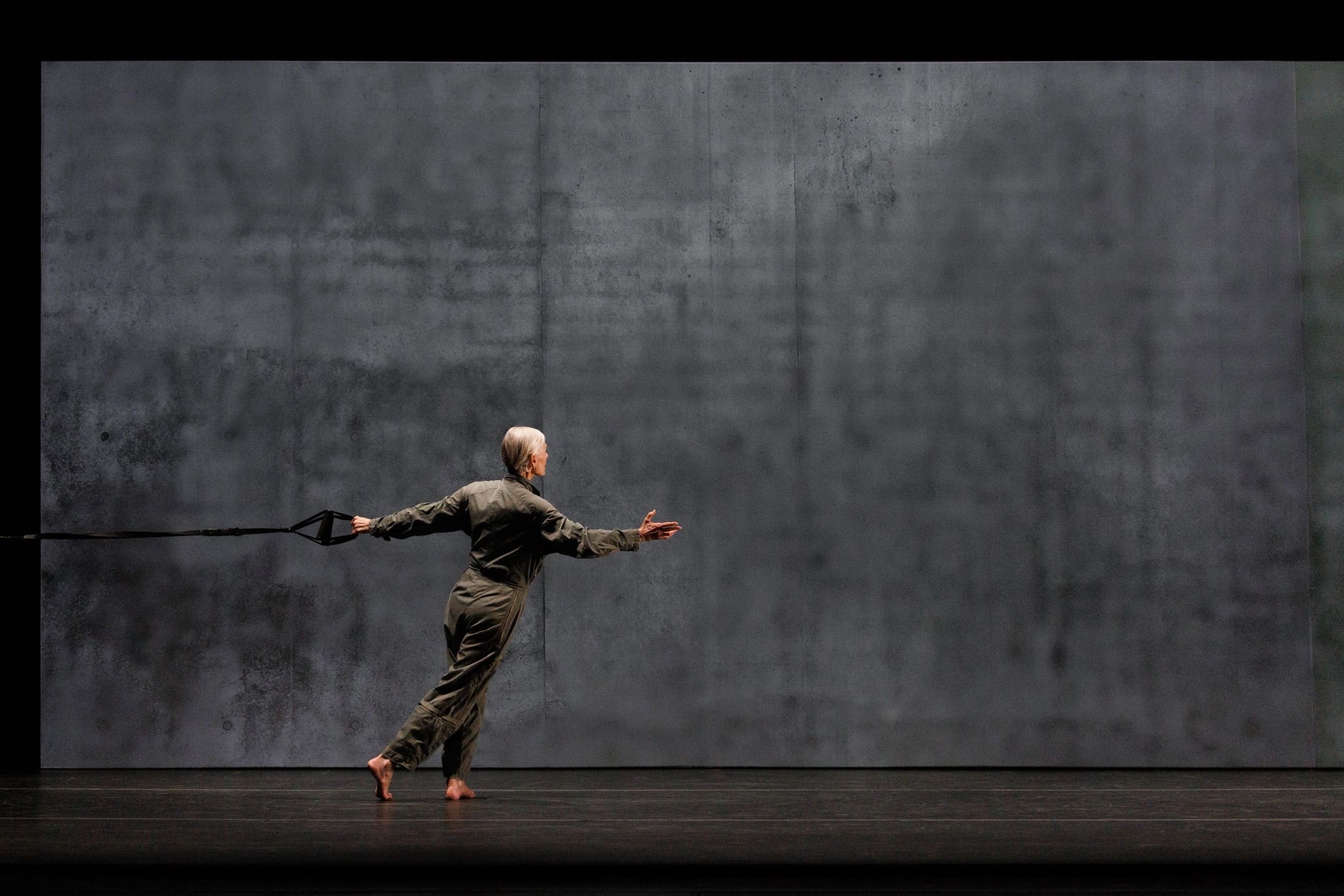
Childs moves like a tai chi practitioner, as if through water or against heavy winds, with resistance, without weight. Not a single gesture—including the paradoxically methodical, buoyant giggles with which she peppers her mid-performance game commentary—is anything less than perfectly controlled. Tonight is her eighty-sixth birthday.
EXT. FISHER CENTER - CONTINUOUS.
Though the rest of the show is beautiful and evocative, it pales in comparison to Childs’s gripping, regimented charisma drilled repeatedly over the six decades of her storied career. Moments into a spontaneous interview with a few BBC REPORTERS recording post-game audience reactions, the taillights on the back of an off-screen GOLF CART fire in a display of synchronistic choreography: illuminating us right on cue. Between the floodlight glare and the camera eye, we’re briefly caught center stage.
CUT TO:
EXT. PS21: CENTER FOR CONTEMPORARY PERFORMANCE - DAY.
The next day, we meet a TRIO broken out from JEREMY NEDD’s five-person company—each dressed according to their individual movement style—on a basketball court-like concrete plane under a cloudless sky.
MUSIC CUE: Radio hits from the 1960s and 1970s (e.g. Marvin Gaye’s “I Want You,” Lonnie Liston Smith’s “Bridge Through Time,” and The Ebonys’ very apt “Life in the Country”) that suggest a broader continuum of community joy and resistance embodied by social dance.
The seats are arranged in a circle exposed to the elements; we bump into several New York City friends including artist NANA WOLKE, writer-editors EMILY SANDSTROM and PHILLIP PYLE, and artist-writer GENEVIEVE GOFFMAN. Most of us give up halfway through and move into a shaded area behind the performers, who (along with the camerapeople) don’t have that option. Out here there is no “backstage.” Their breaks come in the form of interstitial, choreographed posing sessions in front of a step-and-repeat. Toward the end of their set, they ladle clear red liquid from a punch bowl into their plastic cups, drinking some, pouring the rest out. It’s endurance art.
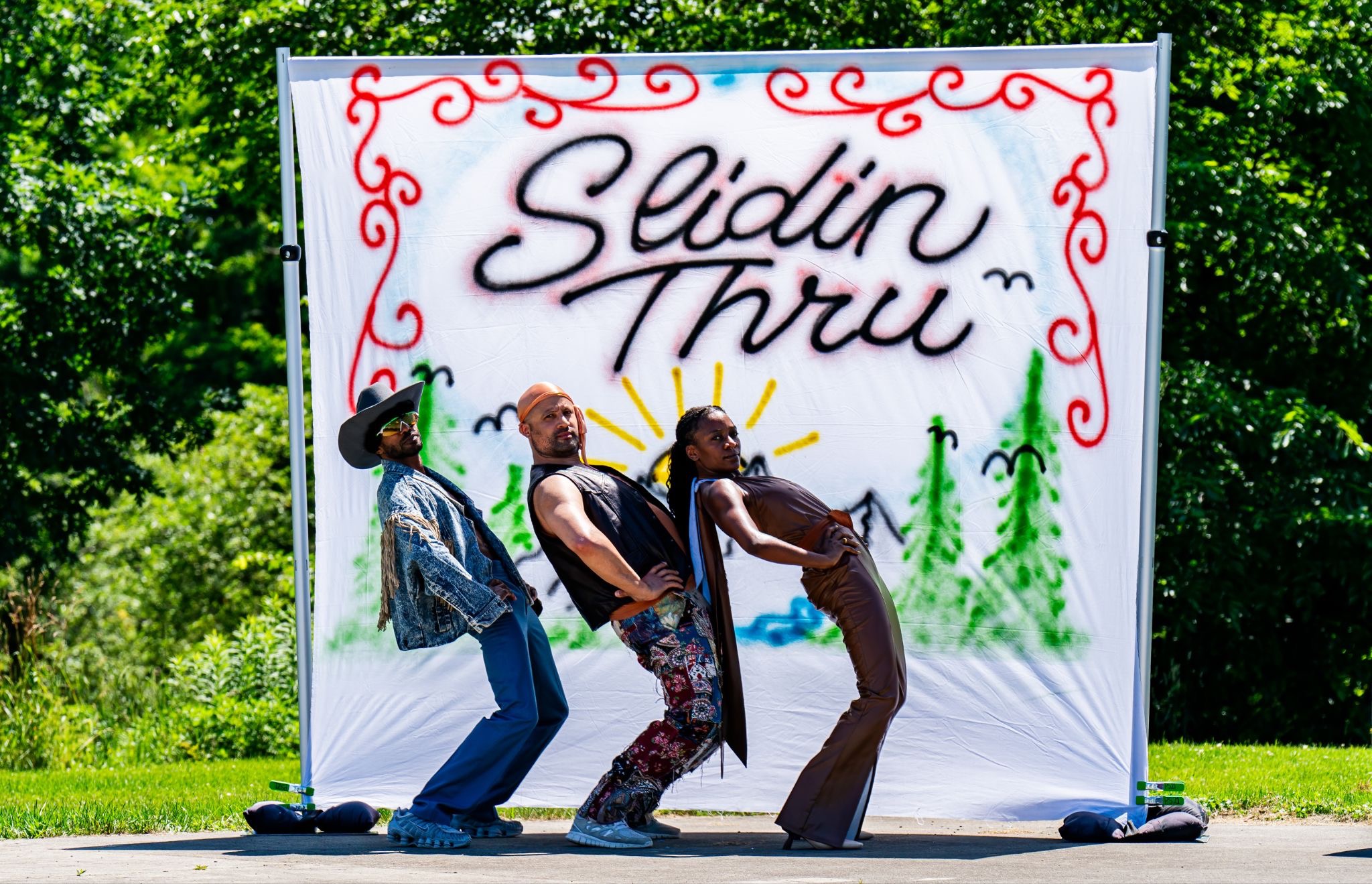
Later, writer MÁNA TAYLOR points out the fact of the lyrics’ legibility. As in Childs’s layering of Sala’s screen with her own voice and body, we’re meant to think about the text (delivered aurally) in conversation with the performance (delivered visually). To close out the afternoon, the performers ask us to join them in the easiest part of their dance, which has woven its way throughout the weekend, slidin’ thru its architecture—
REWIND TO:
EXT. PS21: CENTER FOR CONTEMPORARY PERFORMANCE - EVENING. TWO DAYS EARLIER.
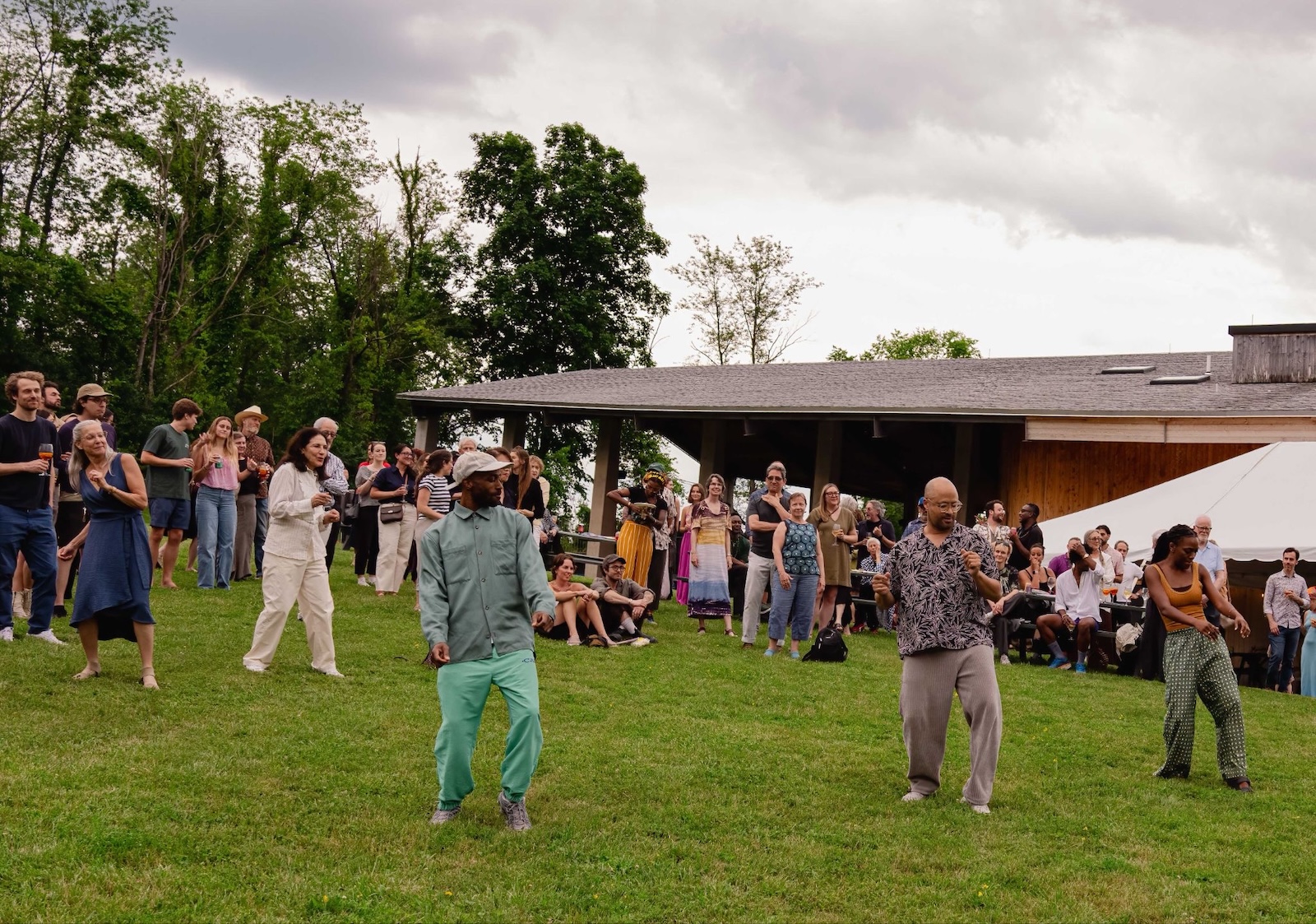
On Thursday night we are gathered for a kickoff event, carpeting the rolling hill neighboring PS21’s stage with glasses of local vermouth and cider in hand, watching founder HELEN TOOMER introduce UPSTATE ART WEEKEND in a shawl a few shades brighter than the lush grass beneath her Simone Rocha platform Crocs. Her remarks are brief; they mainly serve to introduce the stars.
After performing a simple line dance, the trio from Jeremy Nedd’s company—in earth-toned civilian dress—invite their audience to follow along. Some of us WEEKENDERS haven’t danced in a while, but we shrug off the dust to stomp and rotate with the LOCALS, together, like bees in a communal patchwork pattern. We don’t know it yet, but this figure will repeat itself throughout the coming days: a welcome inside joke, per multihyphenate-writer AVALON ASHLEY BELLOS, a haptic shibboleth.
CUT TO:
INT. PS21: CENTER FOR CONTEMPORARY PERFORMANCE - EVENING.
This time, all five of the JEREMY NEDD PERFORMERS are initially clad in matching sweatsuits in a few different shades of blue and gray. They expand from a rock-like central formation like a dynamic geologic element of their alpine stagescape. From rock to rock… aka how magnolia was taken for granite traces the evolution of the Milly Rock from its creator 2 Milly (a Bed-Stuy street name-turned-stage name that stands for “Too Militant,” as explained by critic-editor RAVI GHOSH) through its appearance in Playboy Carti’s hit song “Magnolia” and its corporate co-option as a Fortnite emote. While the dancers perform the same move, it looks different on everyone.
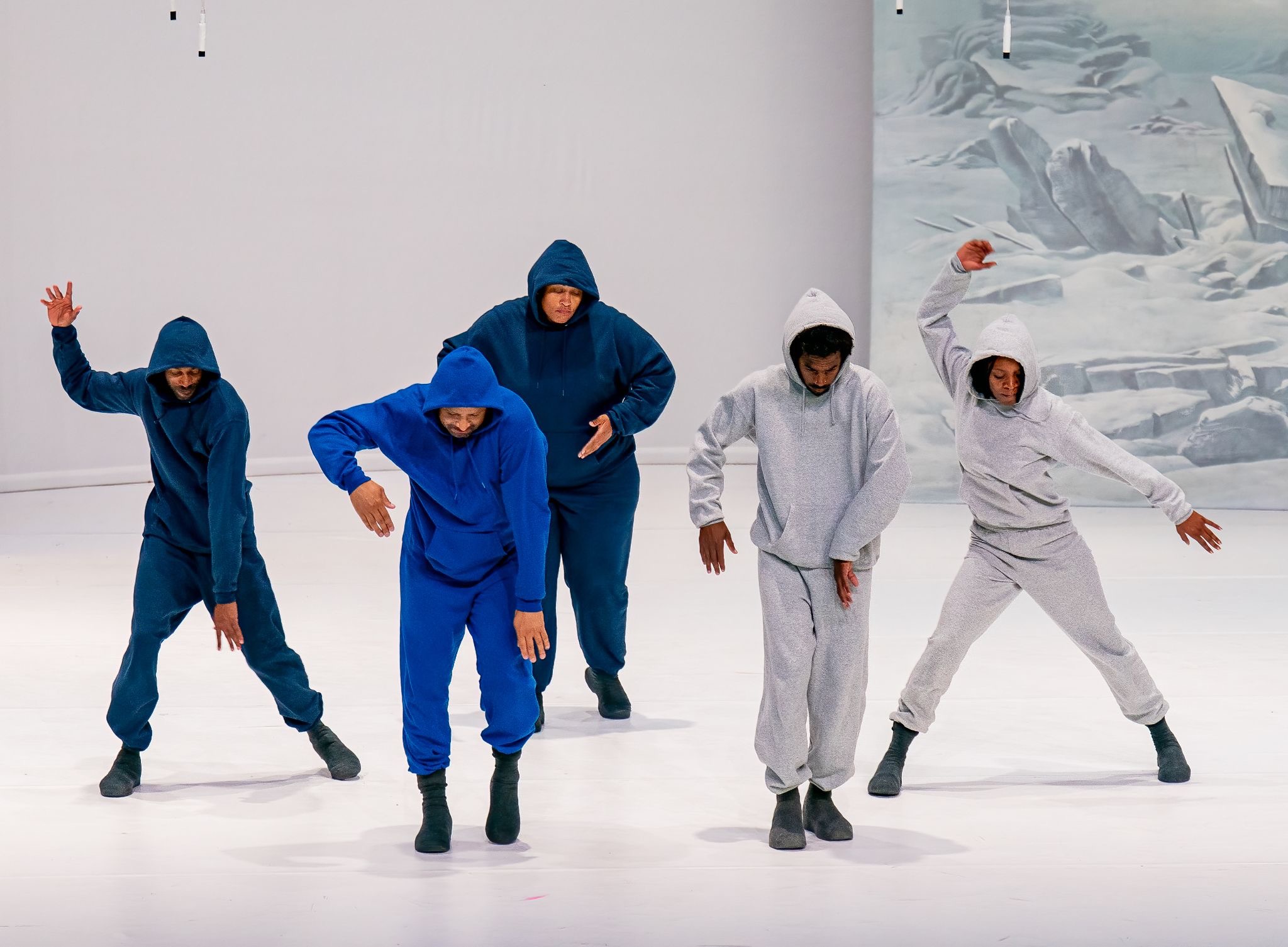
To whom does social dance belong? Or rather: who originates culture, and who profits from its extraction? The answers to these questions are located both in identity and in relation to the land.
From rock to rock… is deeply felt and sharply analytic. A stirring duet in which two MEN combatively, then joyfully dap each other up culminates in a poignant embrace. A Robocop-masked E-BOY (emo boy) rolls onstage alone, hoverboarding around the false landscape of painted fabric mountains like that Caspar David Friedrich painting (you know the one) with the real landscape of the verdant, ancient CATSKILLS looming in the background.
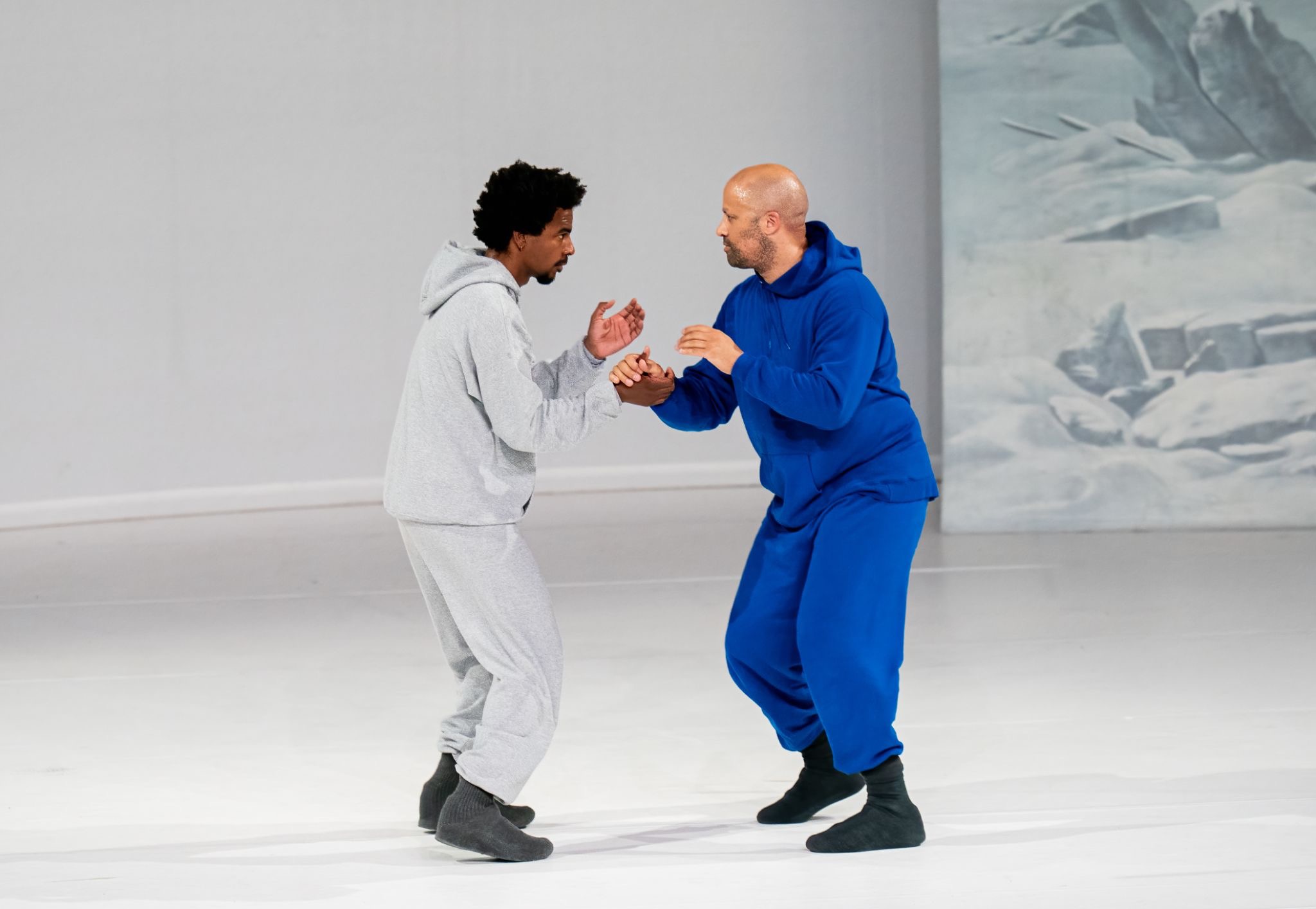
The performance eventually climaxes and compresses into an earwormy APHORISM: “Don’t take us for granite.” We are reminded of the smaller trio’s performance earlier that day on the concrete, under the sun, and of our relative lack of stamina. The closing line approaches something like “We outside, you online.” And it’s true, though—especially in this particular linguistic formulation—one condition doesn’t necessarily preclude the other.
CUT TO:
EXT. MACDOWELL, PETERBOROUGH, NEW HAMPSHIRE - DAY.
We are gathered under a tent to celebrate renowned artist-composer ANTHONY BRAXTON’s reception of the 66th Edward MacDowell Medal at the eponymous residency: a setting that triggers inexplicable sensate memories of graduation. The press section is right by a drum kit that rests empty and waiting.
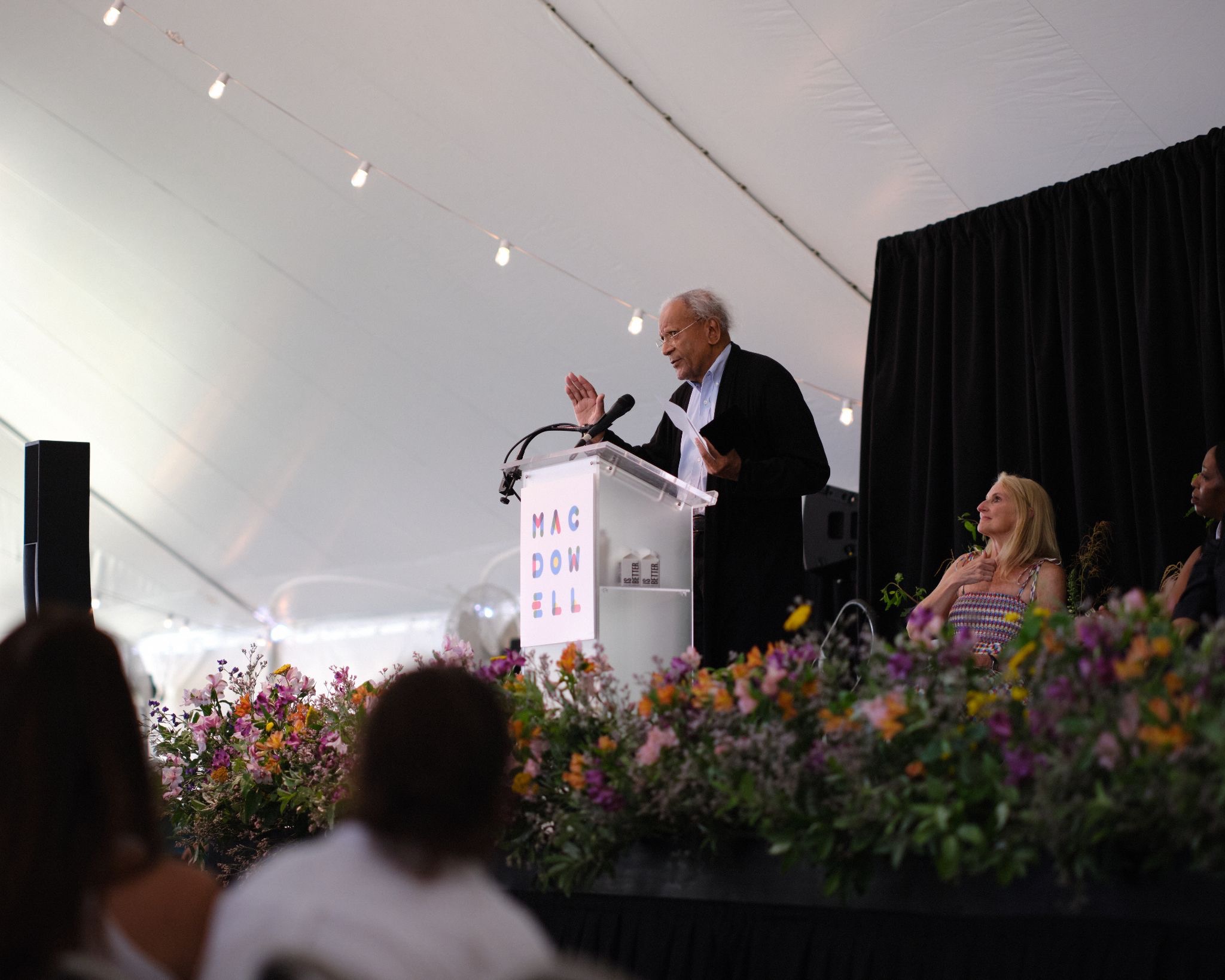
Today is something of a local holiday; the greeting “Happy Medal Day!” resounds like “Knicks in 5!” back in New York City. VOLUNTEERS from the area staff the MacDowell grounds. Executive Director CHIWONISO “CHI” KAITANO (who, in her crisp white blouse and massively chic cat-eye glasses, will soon traverse the forested trails with the rest of us) sets the stage for TYSHAWN SOREY’s introduction. Across the board, the remarks—which center around joining the past with the future—are witty, moving, and above all true. When Braxton tears up, we do too: on cue again.
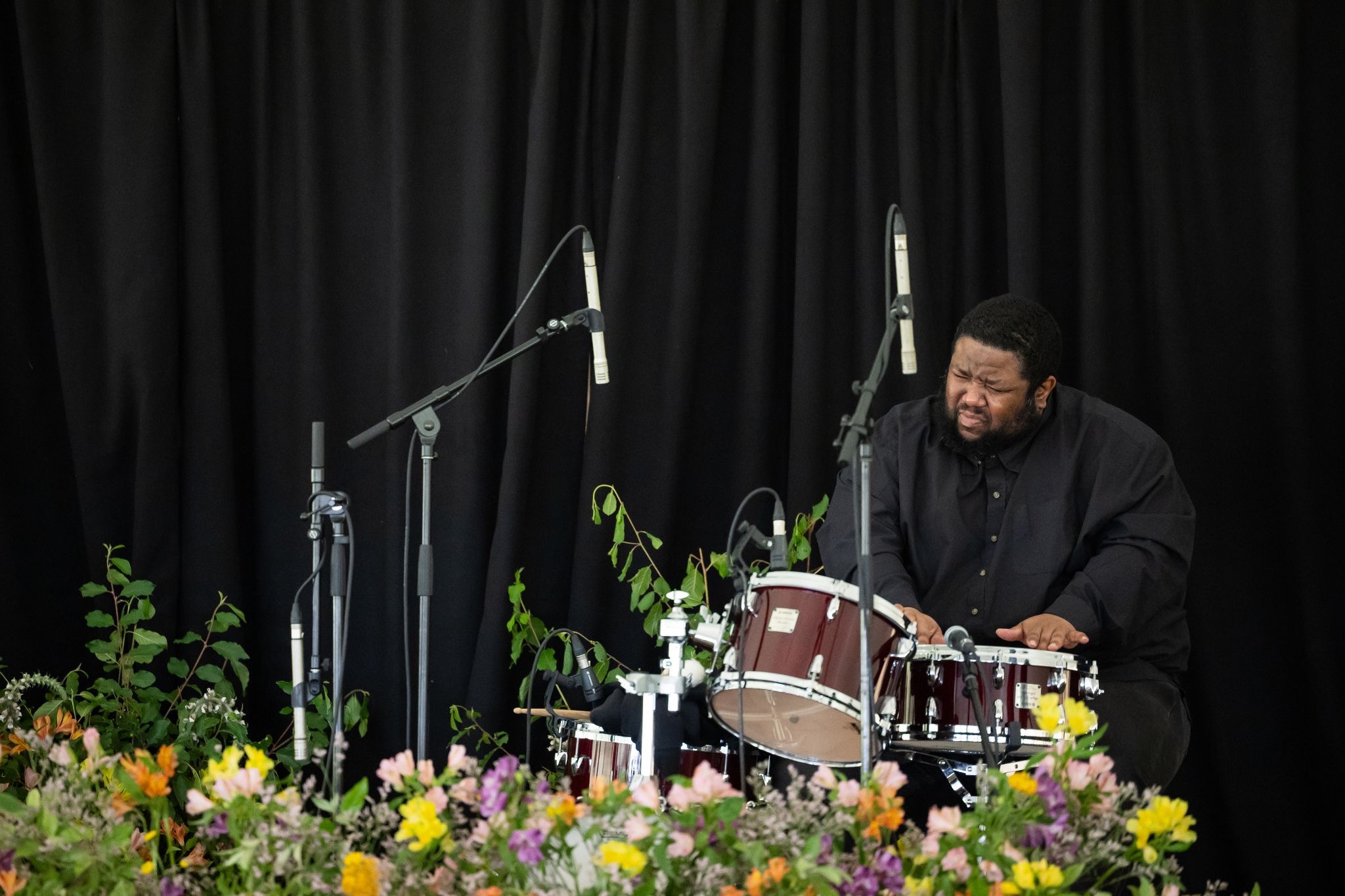
Braxton shares his spotlight with Sorey, an absurdly talented composer-instrumentalist whose performance closes out the ceremony. Sorey is a percussionist in the way that Daniel Day-Lewis is a method actor; the figure’s gravitas redefines the category. Through his innovative intuition and attention to subtle detail, he animates imperceptible technical elements of his craft, creating an interior world into which he invites us. For a moment, it is as though Virginia Woolf’s “invisible elastic net” links us all: crystallized in touch and rhythm, sonic line and shade.
Like the nature that surrounds us, shaped by centuries of environmental interactions and millennia beyond human presence, culture has always emerged from motions of living. Although its products can be mimicked and reproduced, its fundamental ESSENCE weakens with distance from its SOURCE. These performances do not exist solely for performance’s sake. They ask us to go back to basics; to reach out, touch grass; to recall the substrate from which art sprouts; to return—not to constructed fantasies of the past—but to the real ROOTS of things.






.%20Performance.%20Courtesy%20of%20the%20artist_(2).jpg)