
.webp)

SPLIT LEVEL 2026
Review
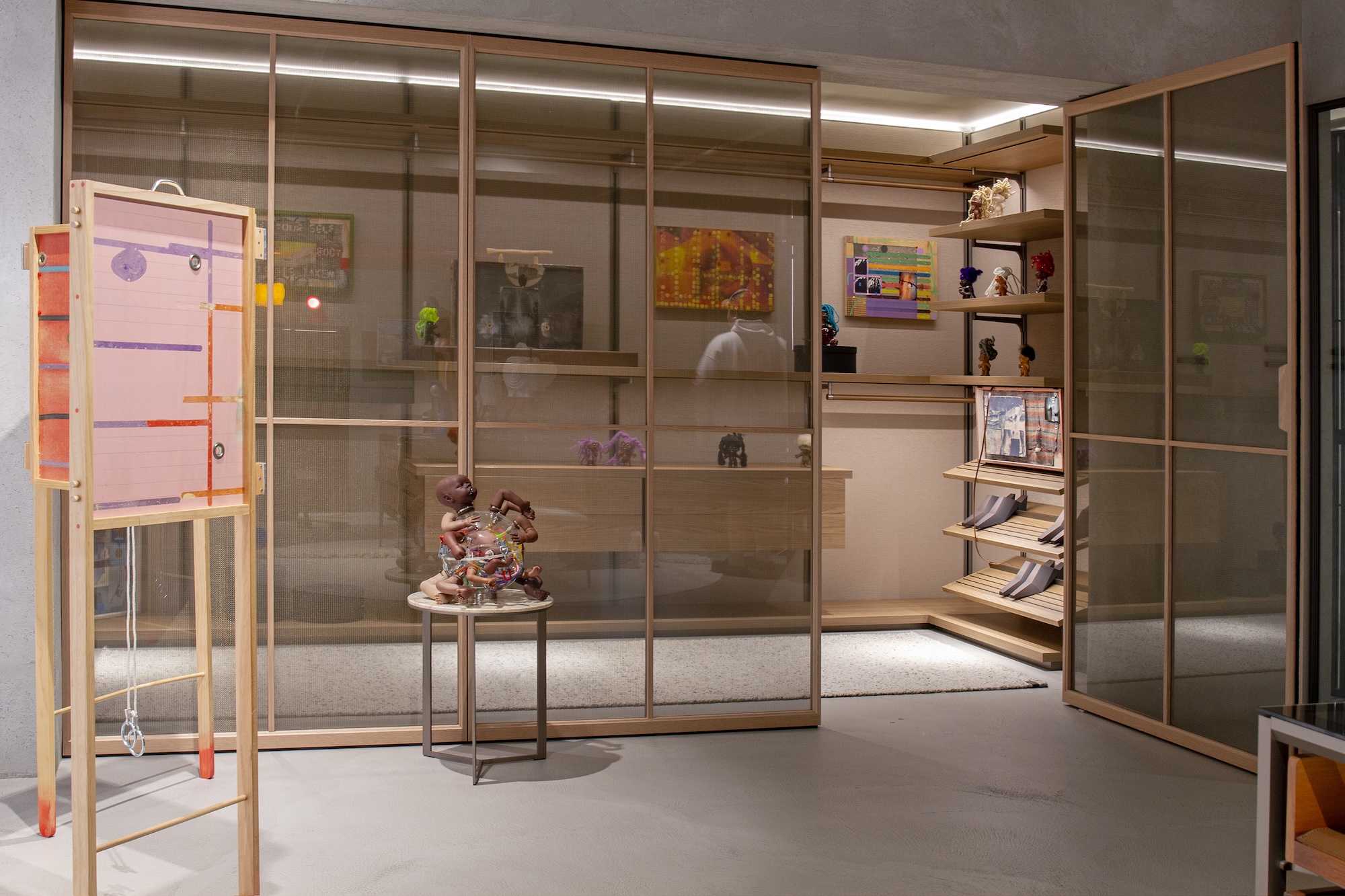
Four years after opening Subtitled NYC in Greenpoint, Jaejoon Jang reflects on the gallery’s history and how the current show reflects his curatorial interest in mistranslations and cultural memory. I had the pleasure of speaking with Jang and Pap Souleye Fall, one of two featured artists (alongside Char Jeré) in Subtitled’s current show, On Other Terms. In the exhibition, Fall and Jeré’s practices have intertwined physically and conceptually to form a uniquely collaborative, multi-sensory installation.
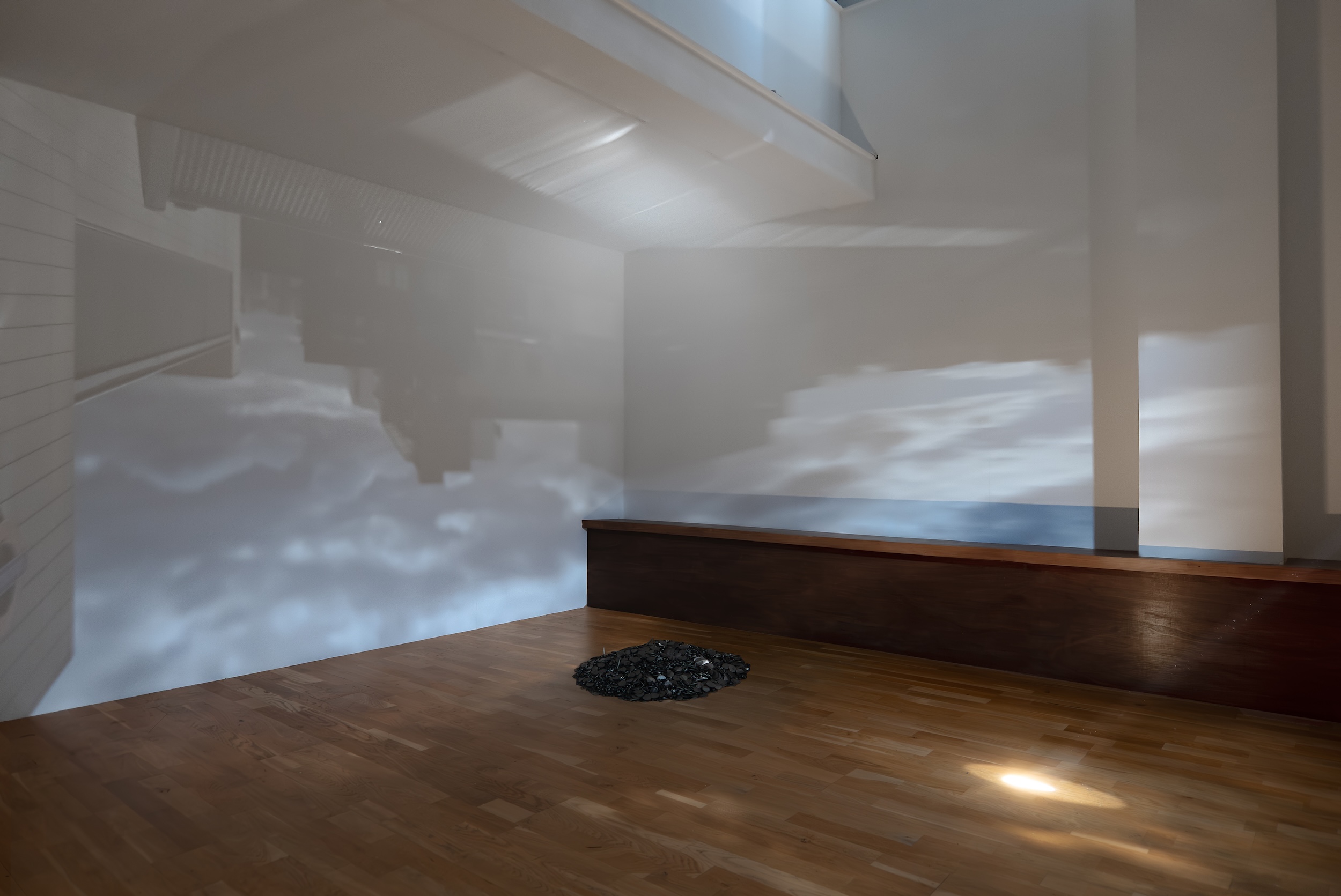
Their work cleverly evokes images of childhood within urban, immigrant communities, inverting our perceptions of home space through an intentionally roughshod tree house structure hovering above a back yard full of junk—the kind of junk that’s so specific and loaded with symbolism, we can’t separate ourselves from it. By activating found objects such as action figures, radios, metal detectors through the adhesion of raw materials—wooden branches from a forest juxtaposed with wooden planks, like the bones of a construction site—each framed artwork on the wall serves as a self-referential portrait, conjuring faces and scenes for and of a selected audience chosen by Fall and Jeré, as if their ancestors were watching from their family home’s porch, through windows confronting both the alienated world of US urban communities and the intimate worlds shaped by the immigrants within.
Connor Sen Warnick: Tell me the story of this exhibition. How did it come together?
Jaejoon Jang: On Other Terms is a two-person show curated by Ho Won Kim. I knew Ho Won for a few years through mutual friends. We always wanted to collaborate. I trusted Ho Won, and he knew Pap and Char. Pap and Char didn’t know each other in person, but they knew each other’s work. Ho Won thought they would be a good pair, so he proposed the show after that.
CSW: Why do you think this show works with your gallery?
JJ: I always want to do more experimental and site-specific work in my gallery. Especially with both of these artists, who do more installation-based work. They’re not just hanging work on the walls. At Pap’s previous show at Blade Study, he made these super big peanuts with cardboard. It was very site-specific to that gallery. Char’s recent show at Andrew Kreps and previous one Artists Space a few years ago was also very unusual, with site-specific installations. Since my space is relatively small, once they spent time in the gallery, they figured out how to handle the space in a way that fits.
CSW: Jaejoon, could you talk a little bit about the evolution of Subtitled?
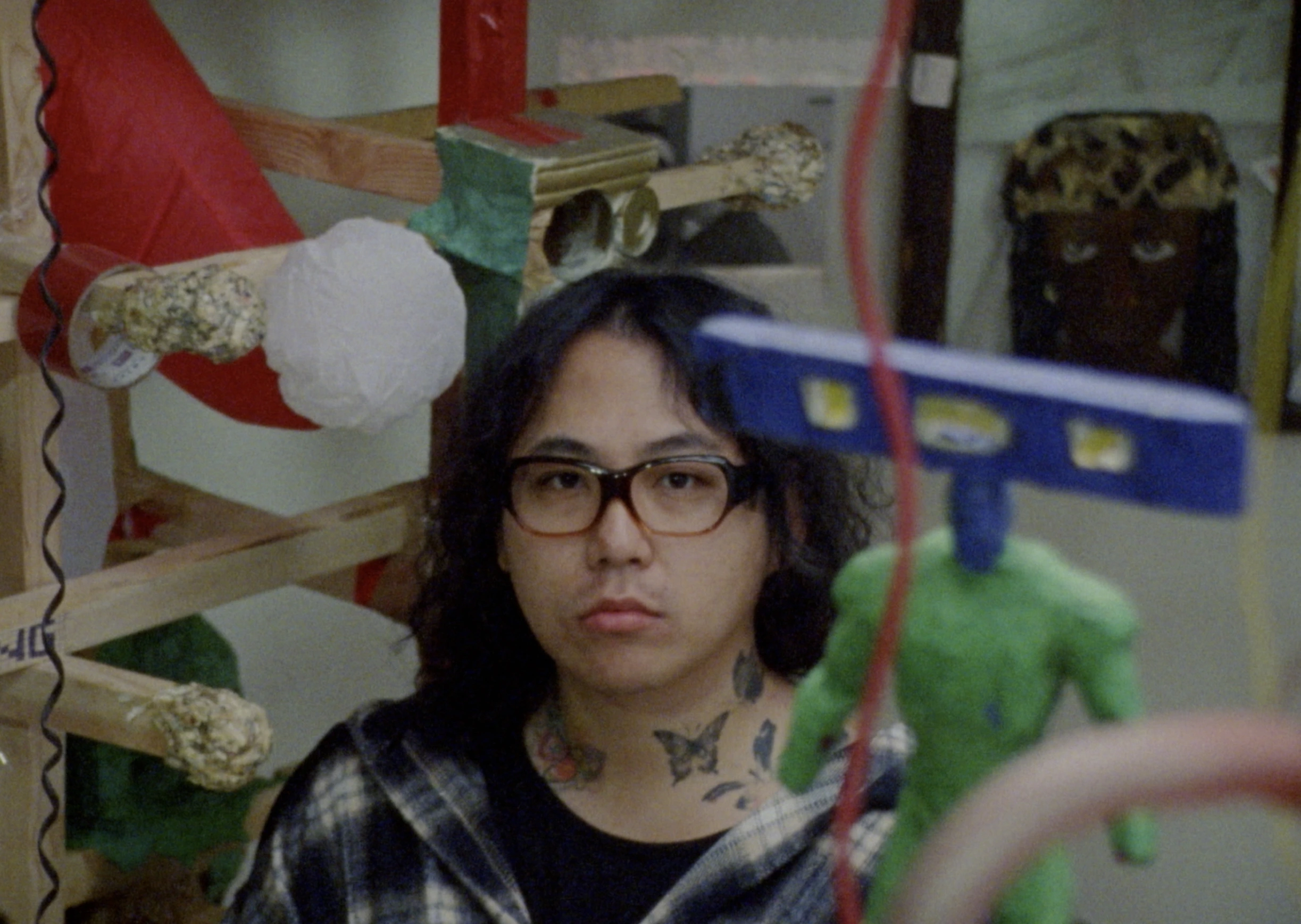
JJ: Yeah. The space has developed over the last four years. At first, I started Subtitled more impulsively, without much of a plan. I used to make art, and then after the pandemic happened, everything paused, so I took a break. When things were back to normal, I tried to make art again. I thought I could run a gallery space, where I could ask my close artist friends if they want to show work and make some cool exhibitions. It started that way, where I didn’t think about it too much. The longer that I’ve run the space, I see fewer of these things happening in New York, so I’ve learned from there. I want to keep trying to do something else.
My gallery is not a commercial gallery space, so I can focus more on the exhibitions themselves for people who want to do something that they cannot easily do in other spaces. When I look back at past exhibitions, especially this one, when I collaborate with Ho Won, he knows what I’m doing, and we trust each other. So then I push for more experimental work from the artists.
CSW: Why did you choose this location?
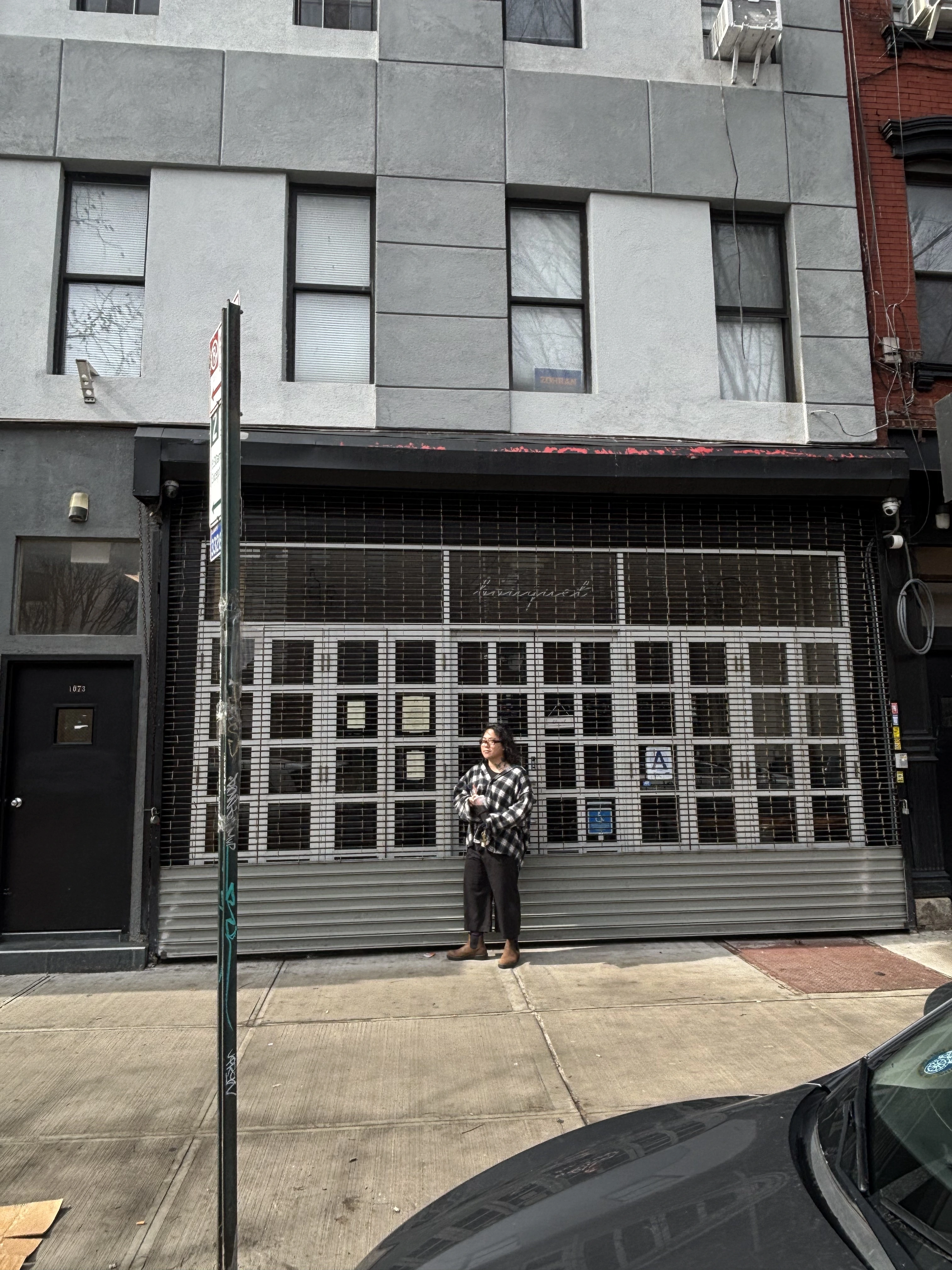
JJ: When I first looked for a space in New York, I looked in Lower Manhattan. At the time, those spaces looked too much like office spaces. Too many white cubes. I kind of came to Greenpoint by accident. When I found this space, I really liked the space, and I really liked the skylight. After I got this space, I recognized that this was where Korean artist Bahc Yiso, whom I’m really inspired by, used to work. He had a gallery space in Greenpoint from 1985 to 1989, ten minutes away from here. That’s why I liked Greenpoint for my space.

CSW: How did you all get connected?
Pap Souleye Fall: I’ve come to this space a couple of times and have always been super interested in doing something here. I love the space itself so much, and the curation here is always really great. Ho Won, the curator who brought this show together, is a friend and had reached out directly to Char and me about doing a two-person show. It was cool that we saw something, and then someone else was like, “I see what’s going on there,” and put it together. I think this show was the beginning of something for us. We probably will continue this dialogue and envision other ways for our work to mix.
CSW: Can you tell me about the works in the show? Obviously, they’re very intermingled, but how would you describe the work and characteristics of the show?
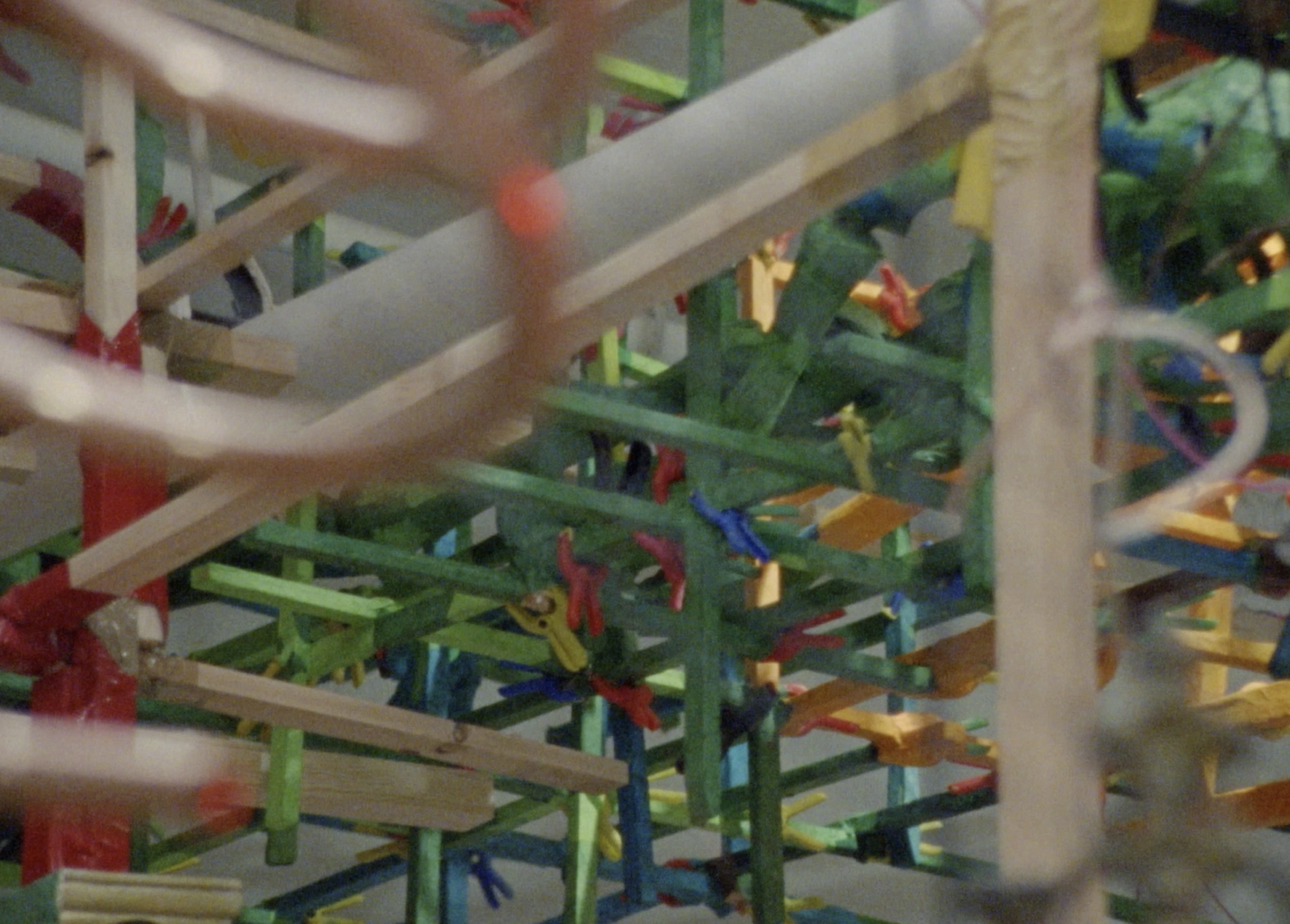
PSF: It’s kind of like a fort, or scaffolding that’s taped together haphazardly. There’s no nail support; it’s all using the space itself as support and then building away from or within that. It began as an experiment, and the more I worked on it, the more I realized it had all these other questions about connecting with loved ones and finding places of sanctuary. It turned itself into that. Some days it would just be me, or it would just be Char, but the days when we were both here, we would have conversations about this. Then it became more apparent that there was actually a lot of crossover in our work.
CSW: Jaejoon, I’m curious about the installation process itself. Were you hands-on at all about it?
JJ: I don’t really expect anything before we start. I’m very open to any kind of stuff that the artist wants to do in the space. Then I want to challenge something in people’s expectations for our space. When Pap showed me the material at the store, it was just a lot of wood. There’s nothing much beyond that—it’s just labor. My biggest duty is often physical labor. It’s always fun moving heavy stuff around and then making a huge installation here. I’m always open to that. For example, one of Pap’s works was too big for our door, so we had to cut it down just to bring it in.
PSF: [laughs] We had to cut it down a bunch to get it in here, actually.
CSW: Did you feel like the process of working in this specific space was different than the gallery you’re represented by, or shows you’ve done in the past?
PSF: Definitely. Knowing the shows that have been here, the level of experimentation that happens is really open. Especially because I do a lot of installation work, it’s rare to have gallery spaces in New York that want to do installation because there’s so much of a market thing. Whenever I’ve had a chance to do something like that, I’ve had to jump through certain loops because I have to accommodate or not accommodate certain things. But I felt very welcomed here.
CSW: How have comics, anime, and manga influenced this show?
PSF: American comics, for me, always deal with social issues. But the issues are so centered around the character, so there’s not enough room for the fantastic or the spiritual to happen. In manga, there’s so much ridiculousness that happens that isn’t generally a part of popular culture. I lean more towards manga because it was always moving toward the fantastical and the absurd.
JJ: I like how you talk about how your work is different from American comics and Japanese manga. I feel similar things. In Marvel stuff, they often touch the real world, and New York specifically. Spiderman is from Queens. In Japanese comics, there’s more creation of a new world.
PSF: It’s a cultural thing, for real. This is something I wish somebody would write about. A lot of Black people, Africans all over the world, love manga so much. They generally don’t love American comics as much, but they love manga. I think that the way it processes trauma is different from American comics. Like with Akira, it’s basically about the new age of bombs that could destroy Japan. That understanding of trauma—Black people have that. They turn their trauma into expression. I don’t know if anyone’s written about this, but it’s so there. And I feel like my work is all about that—how these cultural influences happen, what people remember.
CSW: In your work, where the audience is less mainstream than, say, superhero comics or movies, do you think consciously about referencing these modern-day myths? It seems like there’s a similar type of world-building happening, but on a smaller scale—how do you navigate that?
PSF: For me, it’s become a strategy. It’s become a way to step in and out of the art world and art history. A lot of art history tends to collapse within itself. I want to feel closer to my audience. Especially in this day and age, everyone can be a content creator, and the level of criticality has plateaued in a sense. It’s hard to always be like, “I’m gonna be critical of this, I’m gonna be critical of that”. Finding a niche space, like comics, where people are constantly exchanging, thriving, and surviving, is an ecosystem that I’m interested in. It’s anti-capitalist, but in some ways it’s also running within. Those sorts of strategies are what I’m trying to emulate in my work. I can participate, but I’m not really with you, you know? I try to remain in a place where there’s no way to completely surround me.
CSW: Jaejoon, do you think about audience or market pressures in relation to your gallery at all?
JJ: I always watch how the art world runs. But on the other hand, I don’t really want to participate, as Pap said. There’s always a double side, the ironic side. The art world in New York needs exhibitions like this—art is mostly institutional, and after artists finish school, it’s hard to do work like this because they don’t want to take a risk, and the galleries only want to sell things, but it doesn’t really compensate that much.
CSW: I’m curious about the name “Subtitled.” Is translation something that you consider, conceptually, as part of your ongoing curatorial project?
JJ: The name of the space kind of came out of nowhere. When I first thought about opening a space, I collected some reference images in a folder on my computer. Then I just titled the folder “subtitled” because I couldn’t think of anything else. Then I kept thinking about it as the name of the gallery, because I’m an immigrant, and I think it’s an important point in New York that more than half of the art world is immigrants. Everyone could be an immigrant. And I always need subtitles to see certain shows, or movies, or whatever. So I think subtitles could be my identity in a way, because I don’t really care about the language that much, and people around me don’t really care if I’m fluent in English anyway. Subtitles can be helpful as a substitute for language. So I decided accidentally, but I like it.
PSF: English is my third language, too.
JJ: I also like it when the subtitles are badly translated. This gap is always fun. I don’t feel pressure to explain. I run the space, but the people who come here as guest curators, I don’t think they need to understand my intentions, really—it doesn’t matter. What I want to say is important, but misunderstanding is also important. The only thing that matters for small spaces like Subtitled is drawing people’s interest. Nobody really knows this place exists. But once they come, they see something.
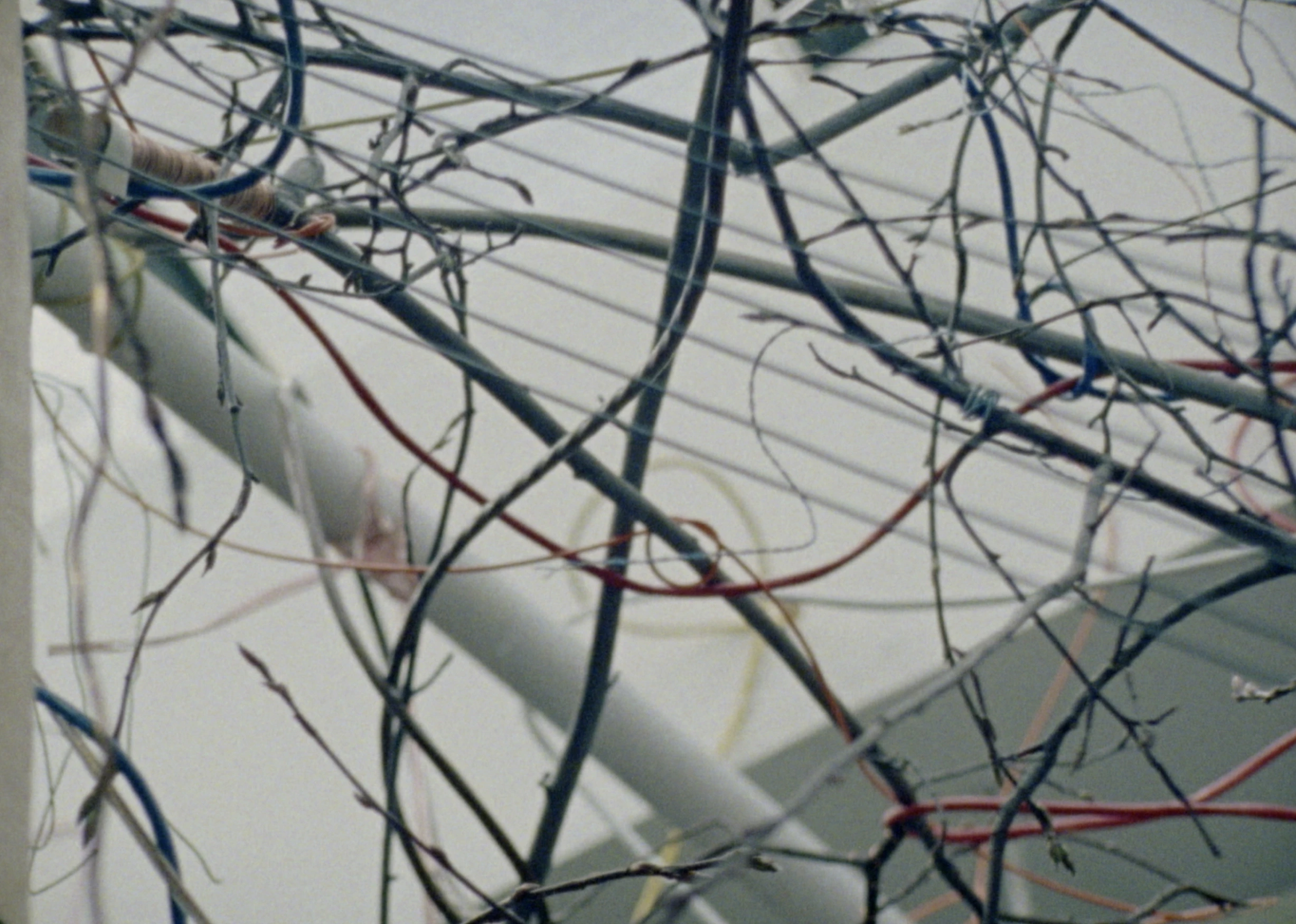
Pap Souleye Fall and Char Jeré: On Other Terms is on view at Subtitled NYC from February 19 through March 5, 2026.





%20.jpeg)