
.webp)
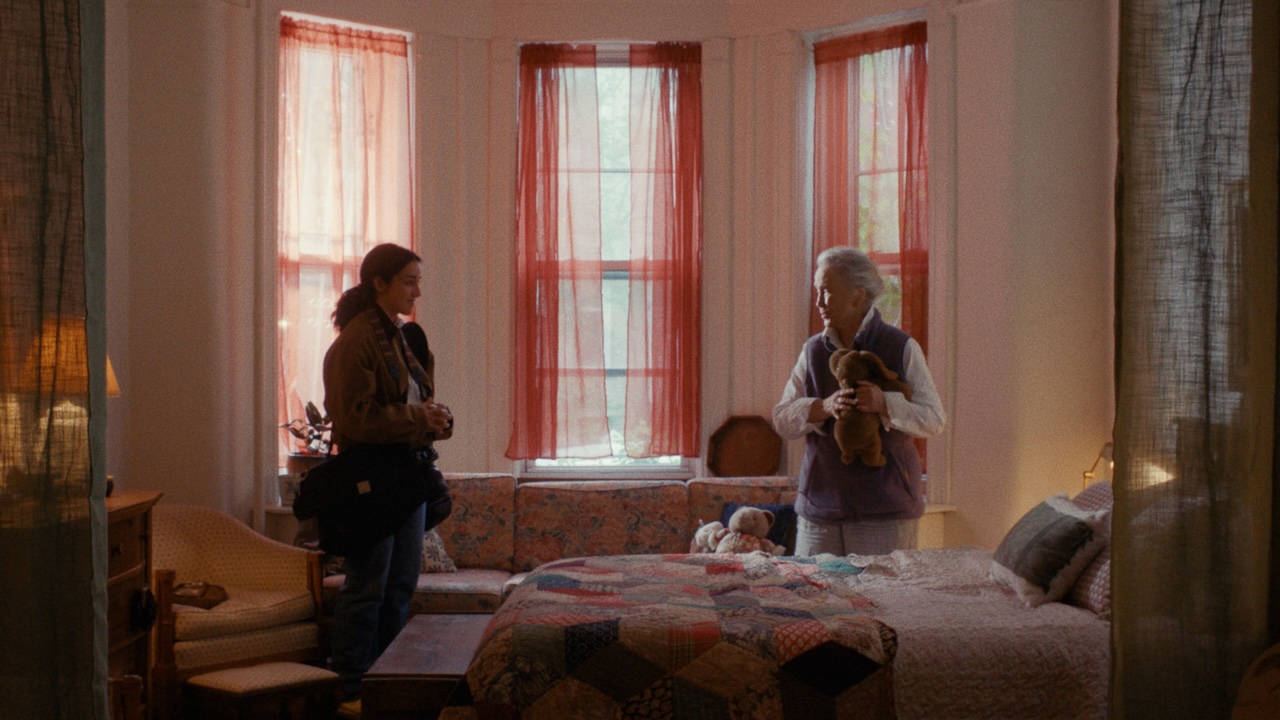
"The Scout" (2025) dir. Paula Andrea Gonzalez-Nasser
Review
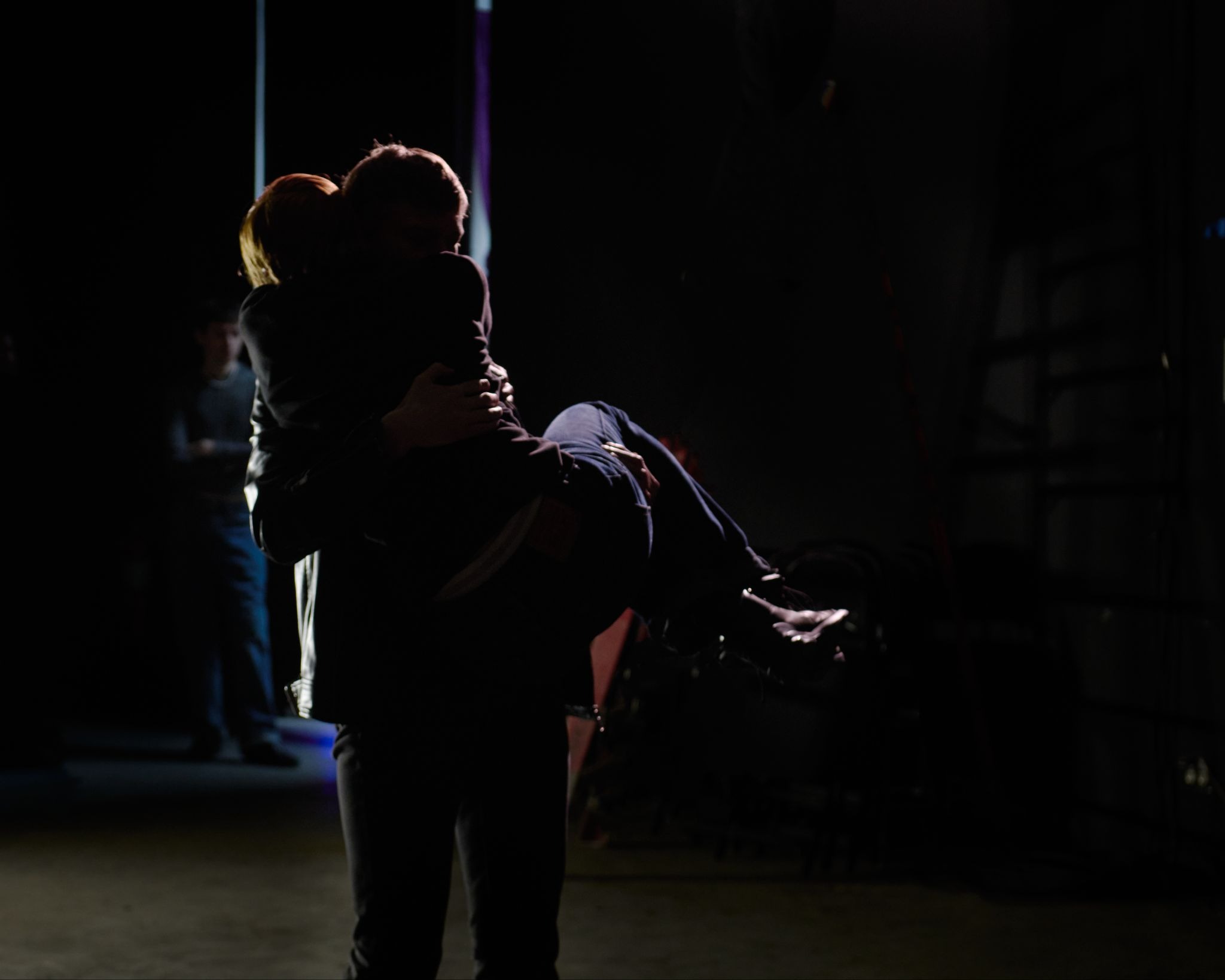
"Come on. Please, Dad. Five more minutes." In Fantasia, Neva Guido’s show at Brooklyn DIY-venue Life World, Chloë Engel protests as a child squirming in performance artist Tamâs Marquardt’s arms. As if it is their unchosen duty, Marquardt continues walking offstage, slowly separating Engel from us and the scene of our last shared fantasy. I’m unready to say goodbye to this image in the middle of the performance, but I understand with an empathetic pang of fatigue that this suspension of reality can only last so long. You can’t fight nap time forever, at least until you are a grown-up. The stage clears. A new constellation of power pushes through the beams of warehouse light.
This time, Angel Acuña recounts a story of caring for a needy chihuahua. Nailah Murray performs the affected shoulder rolls of an attention-seeking DJ. Jack Meriwether monologues as a hyperhetero boyfriend apprehensive about his girlfriend moving in too soon. Meriwether exits with a balletic leap, which feels surprisingly fitting: our performed selves hold hidden desires that can jump out abruptly, often before we’re ready to face the relational consequences.
How do fantasies help us practice the intimacies of our daily lives? And when do these lived and imagined realities preclude us from reckoning with the disparities of power and possibility that we enact in our own relationships? Guido’s speech-heavy quintet resists offering an easy prescription, instead building a clubby ambience of overlapping dialogues that cohere and grind against each other in moments of desire made manifest. And desire, Guido affirms, is far from a problem to be solved.
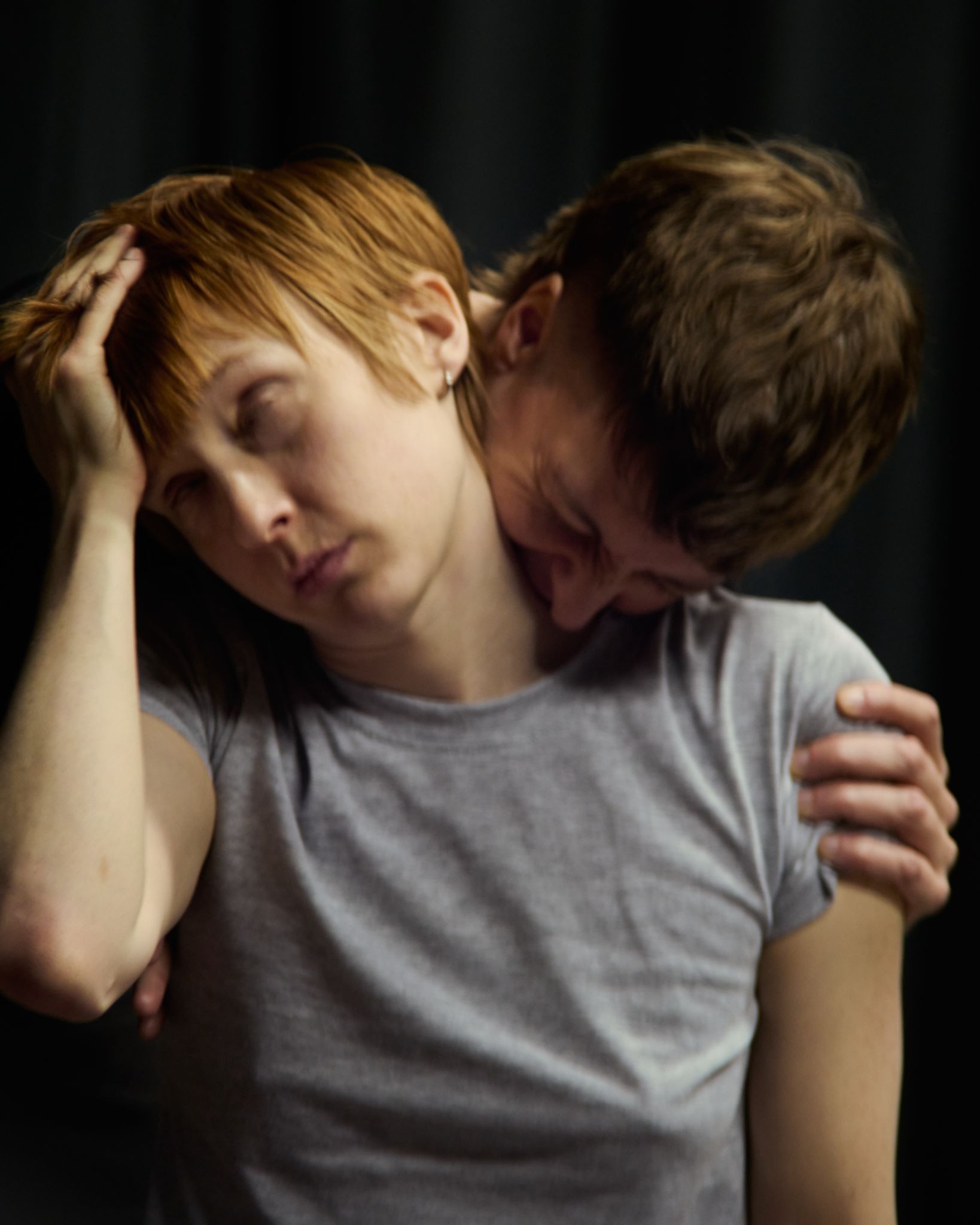
Announcing hidden wants and embodying forbidden roles, Guido’s performers reveal their sexual dreams and secret bodily fascinations with charming, unfussy delivery. At one point, Marquardt, as an impatient vampire waiting for their Tinder date, kills everyone on stage with a series of neck bites. It’s Buffy meets Tumblr fan fiction meets lonely late-night thought spiral. It’s a personal fantasy compiled from many others’, compelling enough to enthrall those moving within its orbit.
Guido hands the shapeshifting power of fantasy over to their performers with both the playfulness and limitations of a magic wand; as the dancers wield it, we observe the affirming potential of performing submission, pleasure, and grief outside the rote frame of societal expectations. Equally, though, we witness the dissociative dangers of make-believe. To slip so freely through states of desire is also, potentially, to risk losing the friction of real bodies. On a catwalk running the length of the stage, Meriwether struts and speaks into an echoey mic. We hear one side of their conversation, but it’s unclear what or who is meant to receive it. Is it us? If so, we’re too far away to really grab hold.
Fantasia’s catwalk puts in the work, structurally and symbolically. The catwalk is a wise stage-shaping tool in itself, framing performers as they step across it in an otherwise flat room. The consequence is the performers’ inability to disappear into the background while onstage; in this performed world, the options seem to be either visible or more visible.
The shadow of the internet feels present here, though never explicitly mentioned. While watching, I’m moved to reflect on the hypervisibility of my own digital selfhood and the ways in which I’ve watched my own desires morph through the knowledge of my constant perception by an unseen audience. Why did I share that thing online in the first place? I don’t remember, but a new story has already scrolled into view. And I might want that new thing just as much.
Fantasia demands my focus while at times making my presence feel special, or at least consequential to the unraveling movement, like I’m front row at fashion week or courtside in comped seats. The performers engage with me up close during stage crosses, full of eye contact and well-timed winks. Mid-show, Engel steps between rows of audience chairs and sidles by, exposing their bare belly within inches of our faces. "It kind of hurts," they hiss.
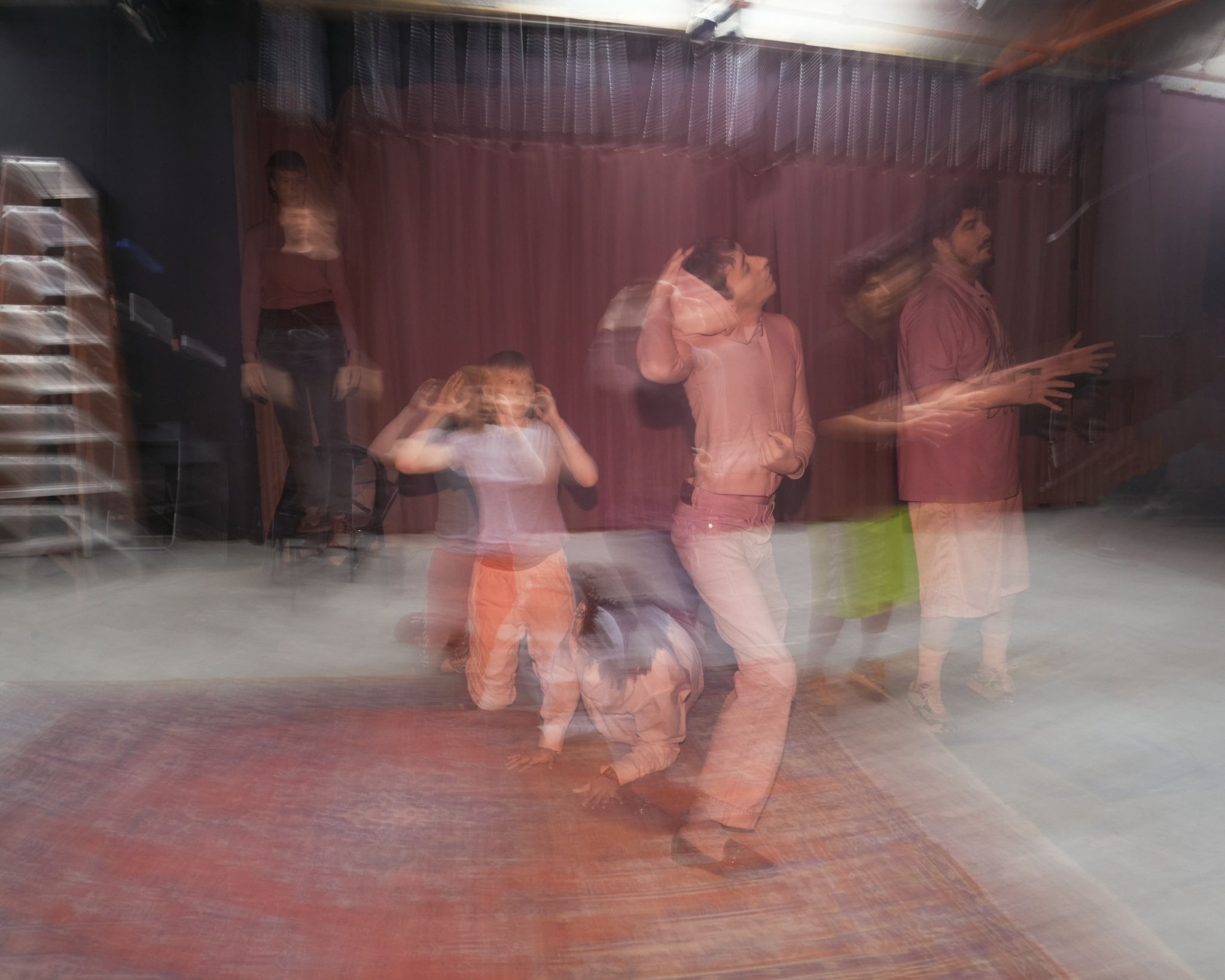
Such striking proximity is impossible to ignore, but Guido avoids trapping us within any uncomfortable image for the sake of garnering an emotional response alone. No compulsion here: performers continually shift in and out of focus such that we’re offered a way out of any fantasy whose rules no longer feel useful. Engel moves out of my line of sight, and I take in Acuña, who is reminiscing in their glitter shirt and underwear.
Pacing back and forth through fading light, the ensemble embodies the dual contradiction and gift of fantasy: to see other people in all their particularities hinges upon our own willingness to be seen. Sometimes purposefully, but mostly with the accidental force of a car crash, we construct fantasies together as essential responses to the dark, tender, and stupid desires that, when hidden in unspoken corners, keep us stuck in the illusion of unchanging selfhood.
Neva Guido’s Fantasia was performed on March 28 and 29, 2026 at Life World in Brooklyn, New York. Fantasia featured Angel Acuña, Chloë Engel, Jack Meriwether, Nailah Murray, and Tamás Marquardt, with scenic design by Em Adamo and music by Dyan Marx.