

.webp)

Tim Kent: “Sojourn” at Hollis Taggart
Review
In Gratin Gallery’s new lofted Tribeca space, Mónica Mays’s work looks right at home. Car exhausts complement exposed pipes, and the thick gesso gunking up shutter door slats match the overall “landlord special” on the engaged Corinthian columns and plated ceiling. The gallery holds a total of ten artworks, consisting of new sculptures and assemblages made this year. Many of the materials in these works are found—banisters, shutter doors, exhaust pipes, and foundry molds. The title of the exhibition, Blinds and Shutters, speaks to themes of concealment (or partial exposure), which appear throughout. The accompanying essay reveals that the fantasy of the American West undergirds Mays’s work in this exhibition, a reference that can be found in material choices such as slatted shutters and saddles. Artwork titles extend these associations, borrowing from both cowboy mythology (eg. The good, the bad, and the ugly) and industrial language (eg. tool and die).
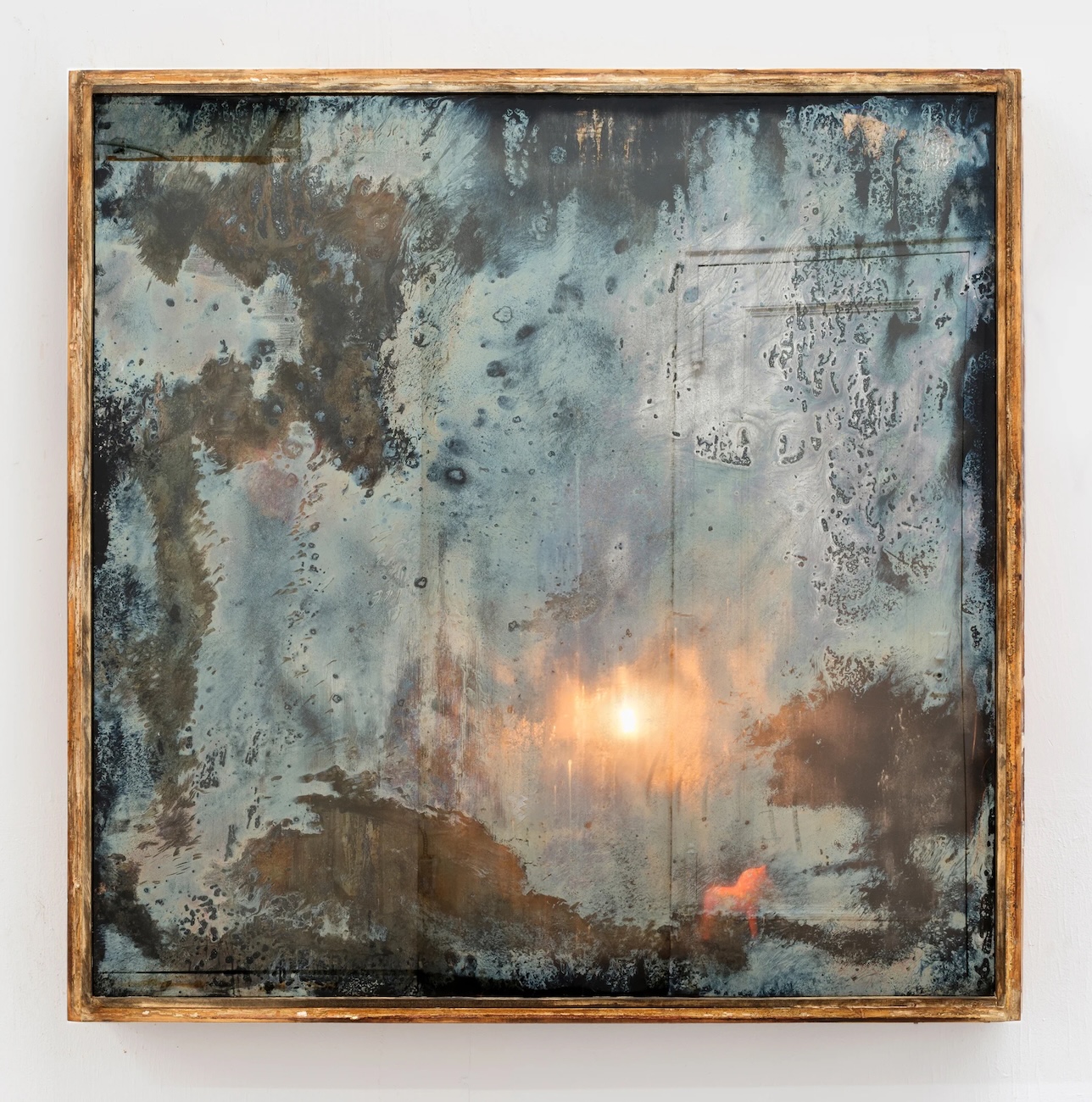
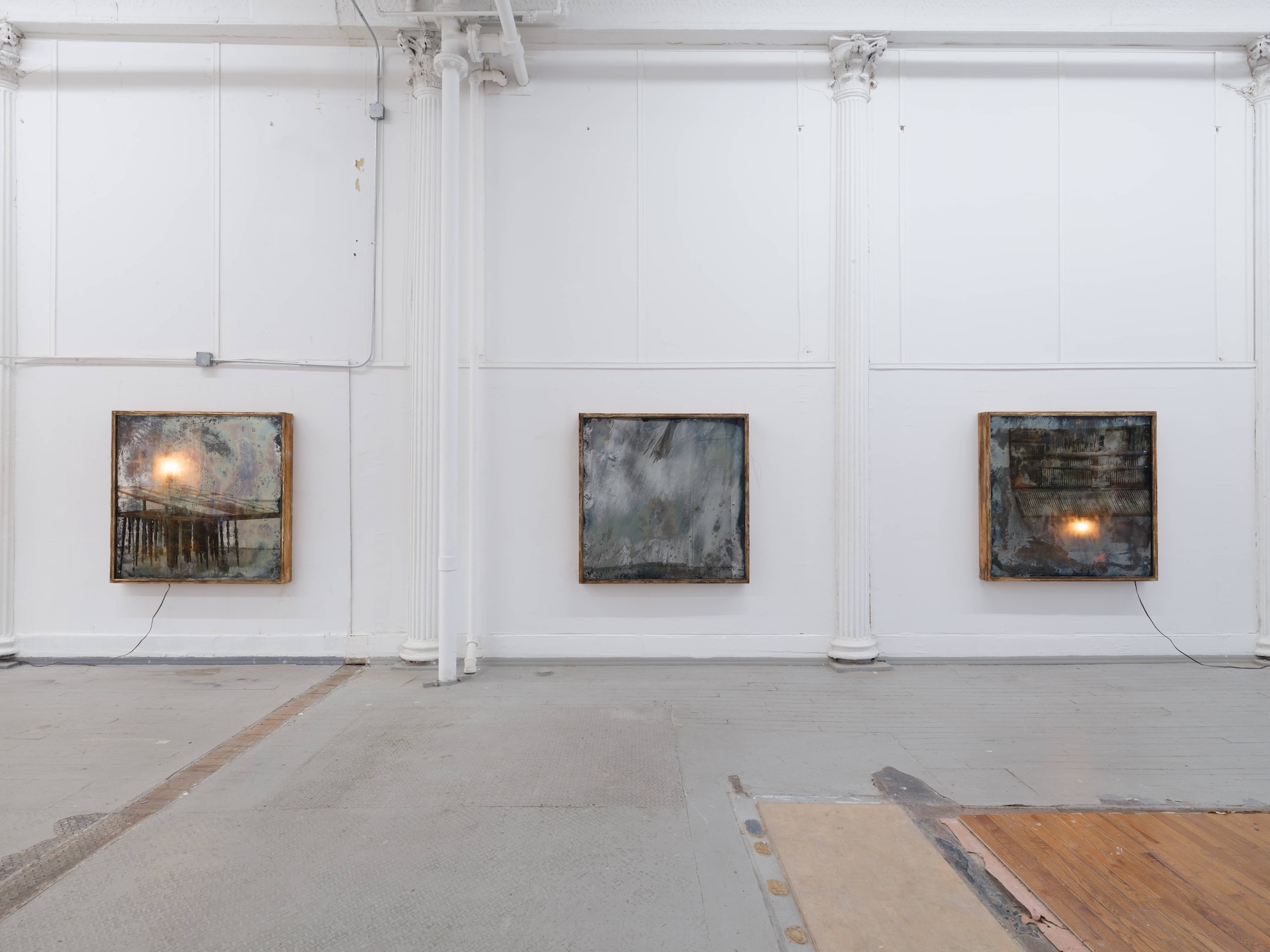
In Blinds and Shutters, Mays also investigates our proximity to and distance from history through the illusion of time. Artificially aged mirrors, stained gesso, and thick applications of wax on tarnished steel give the effect of oily, abandoned, and eventually rediscovered objects. Along one wall of the exhibition are four vitrines (all titled Vanity) which, from afar, read as grand vintage wood-framed mirrors. The front pieces of glass have been treated with silver nitrate, creating an antique mirror finish; however, Mays has allowed for small areas of translucency across the glass surfaces, which reveal paper clippings, horse figurines, and other found ephemera illuminated by the warm glow of a carousel light. The experience of viewing these works is decentering. As the viewer searches for these scarce windows of translucency within the mirrors, there is a strange denial of the self that occurs as the viewer sets aside their own reflection in order to see into these dimly lit vitrines. It feels as though the objects are training your eyes to act as a camera, shifting apertures and moving between depths of field to see behind and beyond the glass surface.
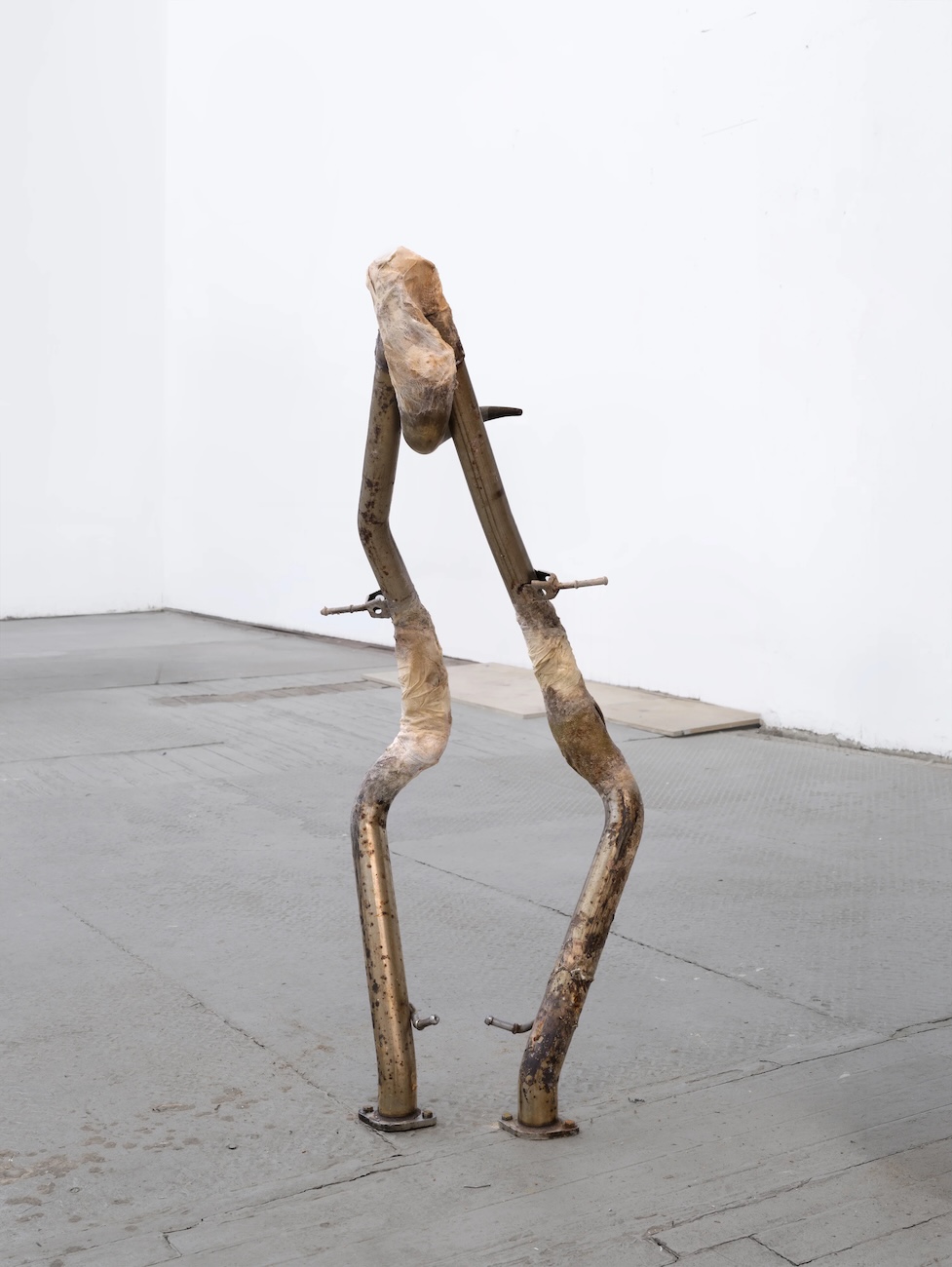
In the back of the gallery, car exhaust pipes have been manipulated into sinuous vertical forms, reaching just below hip height. Due to their size and shape, the pipes of Batwing Buckaroo resemble the uneasy legs of a newborn calf as well as the swagger of a seasoned cowboy, complete with a phallic appendage and pseudo-spurs. The noted appendage is made of a bull horn, a cleverly on-the-nose confirmation of the object’s allusion to the myth of masculinity. Here, especially, we are able to see Mays’s play with perception. Where is the fine line between instability and hyper-masculinity? While the bullhorn of Batwing Buckaroo points outwards, almost threateningly, the horn of the rodeos y revolveres curls inwards towards the pseudo-body. The raw materials and evidence of the artist’s hand in slatherings of wax and folds of wrapped vellum conjure the forces of labor and industrialization while their size and fatigued postures evoke human sympathy. As a result, these artworks toe the line between object and subject. Meanwhile, the shutter door sculptures that appear directly behind these artworks, titled tool and die, act as a backdrop. These objects and their arrangements stimulate the imagination and allude to the role of fantasy in the construction of history through the formal language of theater, filling in gaps and smoothing over folds.
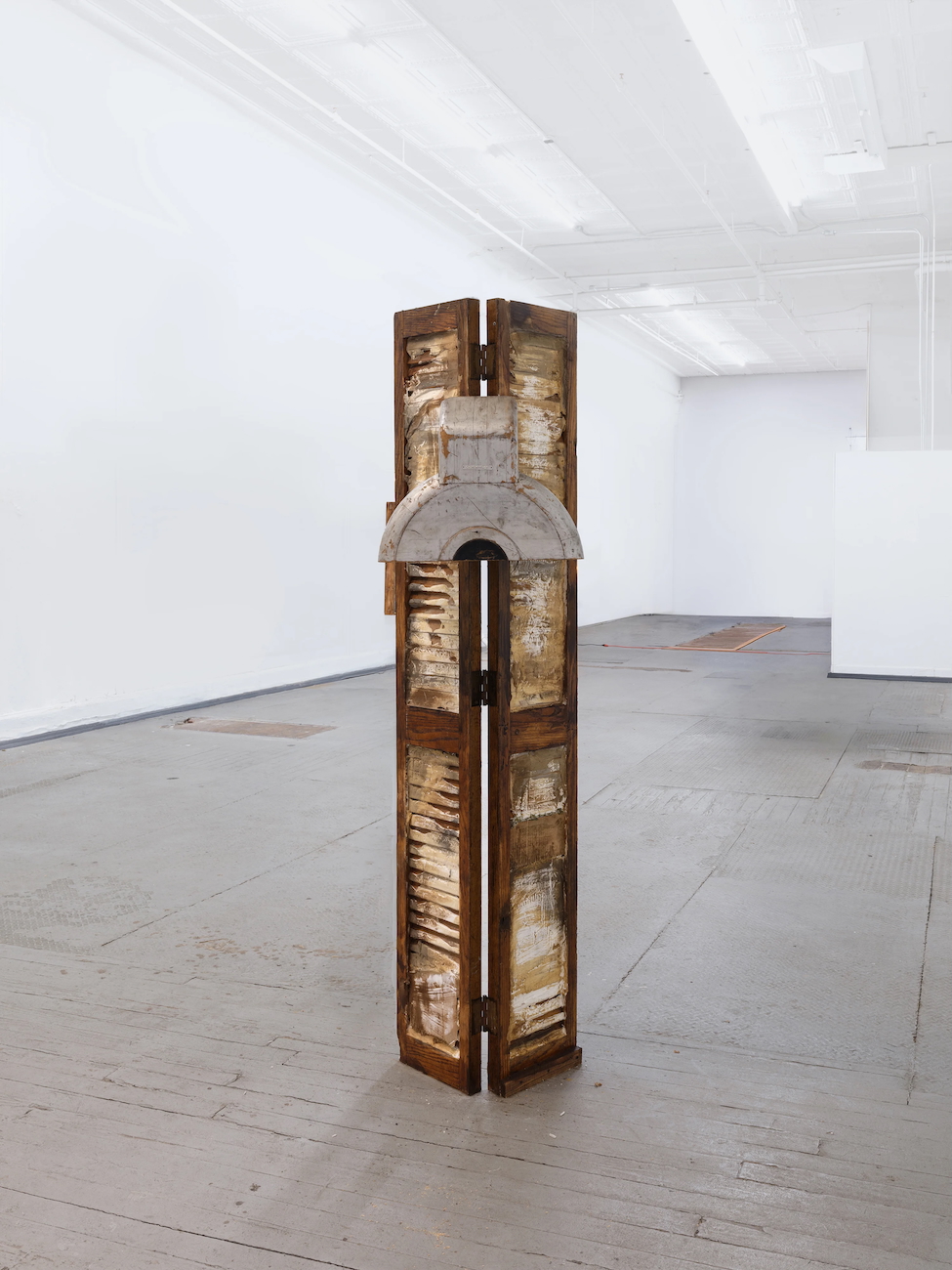
In moments of obscuration and revelation throughout this exhibition, it is easy to draw the connection with the American legacy and its selective amnesia. Shuttered saloon doors themselves were considered to be a means of protecting the "innocent" of society from witnessing the spectacles of debauchery occurring inside. The fact that looking or seeing is not a neutral act is well-trodden theoretical ground. What Mónica Mays offers to this discourse is not the choice of looking as being about sight or the absence of it, but the possibility of prepositional seeing: looking at, looking with, looking through. Blinds and Shutters feels like a constant interrogation of the act of viewing and how one chooses to see. Instead of depicting the realities of the American West or its details, Mays highlights our distance from it. Her work effectively simulates the hazy, fetishized myth of America and its raucous cowboys that many understand as the core of the “Wild West” today, placing a critical lens on the act of looking.
Mónica Mays: Blinds and Shutters is on view at Gratin, 15 White St, New York, from May 15 to June 20, 2026.






%20.jpeg)