In Conversation with Gao Hang
Interview
Artists are consistently underestimated, overextended, and underserved. Lately, much attention has been given to the shortcomings of art institutions, but Yvonne Shortt is less interested in identifying those failures than in imagining other possibilities within such systems. The Queens-born artist has long been dedicated to carving out alternative approaches to living and working as an artist, developing forms of support that do not depend entirely on fickle markets or precarious institutions.
Be the Museum—her ongoing initiative with collaborator Daria Dorosh—empowers artists to understand themselves in terms of infrastructure: as people with resources, values, and histories. Her more recent, related project, Be the Endowment, includes a financial co-op model to help artists think through community endowments, financial literacy, and collective sustainability. Rather than waiting for institutions, galleries, or sponsors to provide continuity, Shortt asks what artists can build among themselves, within the ecosystems they already inhabit.
These initiatives are connected to a larger project over the past decade led by Dorosh Shortt and John Tomlinson: Museum for Contemporary Artists (MfCA). The name signals a subtle but meaningful shift in the typical MoCA language: these are spaces for artists, not simply of art—a “by us, for us” mentality steeped in service. There are currently twenty locations and sites that make up this fungal network of artist-activated and sustained museums. The use of the word “museum” is especially interesting here: not as a way to delegitimize existing institutions, but to imbue and validate the resources, relationships, and foundational work artists are already doing, and have always done.
At Shortt’s museum in Wappingers Falls, the board consists of both humans and non-humans, including Sprout Creek, which is consulted and cared for as part of the project’s programming. One recent effort involved working with neighbors to stop using toxic tick insecticides and return instead to effective agricultural trimming techniques that reduce tick exposure while protecting the surrounding ecosystem.
As arts funding becomes more elusive, sponsors become more cautious, and museums continue to operate like sealed treasure chests, Shortt’s relational work offers a necessary pathway forward. Her holistic approach continually recenters the milieu. A true relational aesthetic. A total work.
Jesse Firestone: You are an artist. Can you tell us about your practice?
Yvonne Shortt: I usually start with a question, and I end up with another question. Then all these other materials become things I work with to investigate that question.
For example, I was thinking about my hair and Afro picks. So I got clay from a creek near where I live, and I made Afro picks. I used them in my hair and shared some with other people. I was thinking about my relationship to my hair and to the Afro pick. The Afro pick was an object for me, and it was an artwork, but it wasn’t the art.
The art, for me, was the relationship. It was the relationship I might develop with the water, with the soil, with another human being. The relationship was the art.
JF: For readers unfamiliar with the project, what is Be the Museum? What did it start as, and where is it now?
YS: In 2020, I joined A.I.R. Gallery and got to meet a lot of different kinds of artists. One thing I started seeing was how many people believed that the gallery was such an important space for them. A.I.R. has a fellowship, and we would get something like six hundred applications for six or seven spots.
There were so many applications for so few spots. And I realized you can make your own opportunity. You can be your own museum.
My friend Daria Dorosh, who has been part of A.I.R. since 1972 as a founding member, and I started being in conversation about this. We formed something called Research and Development, a committee at A.I.R. Gallery, to investigate new or different ways we, as artists, could operate within the context of A.I.R.
I had this space upstate, and I thought, why can’t we use it? I’m going to take my place and turn it into a museum. I’m going to give it a name: Museum for Contemporary Artists.
I didn’t want my board to be a normal board. I didn’t want to mimic the kinds of boards I see. I wanted my board to include animals, soil, the creek, the fox that runs around at night. So I made my museum board humans and nonhumans. That was really important.
Then Daria made her own museum upstate. She published Be the Museum in a book she was writing a chapter for, and people started wanting to understand more about it. I said, the museum can be anything we want it to be. It doesn’t even have to be a building. It could be a home. It could be something you carry on your back. It does not have to be a gallery space at A.I.R. or a museum like the Whitney.
We can make places that are important to us museums. We can define what it means to be in the museum. To me, the objects are not as important as the relationship to those objects and to the people. The artwork is there, but the art is the relationship. Once I was able to think about it in those terms, everything else started to open up.
JF: I’m curious about this idea of an interspecies board, or a board across human and nonhuman lives. How do you engage, consult, or listen to those board members?
YS: Let’s take the creek.
I like to take soil from around the creek because it has great clay content, and I can make objects with it. So I thought, how do I give back? Let me look at the water. Let me test it and see if the water is okay. Are there problems? What can I do?
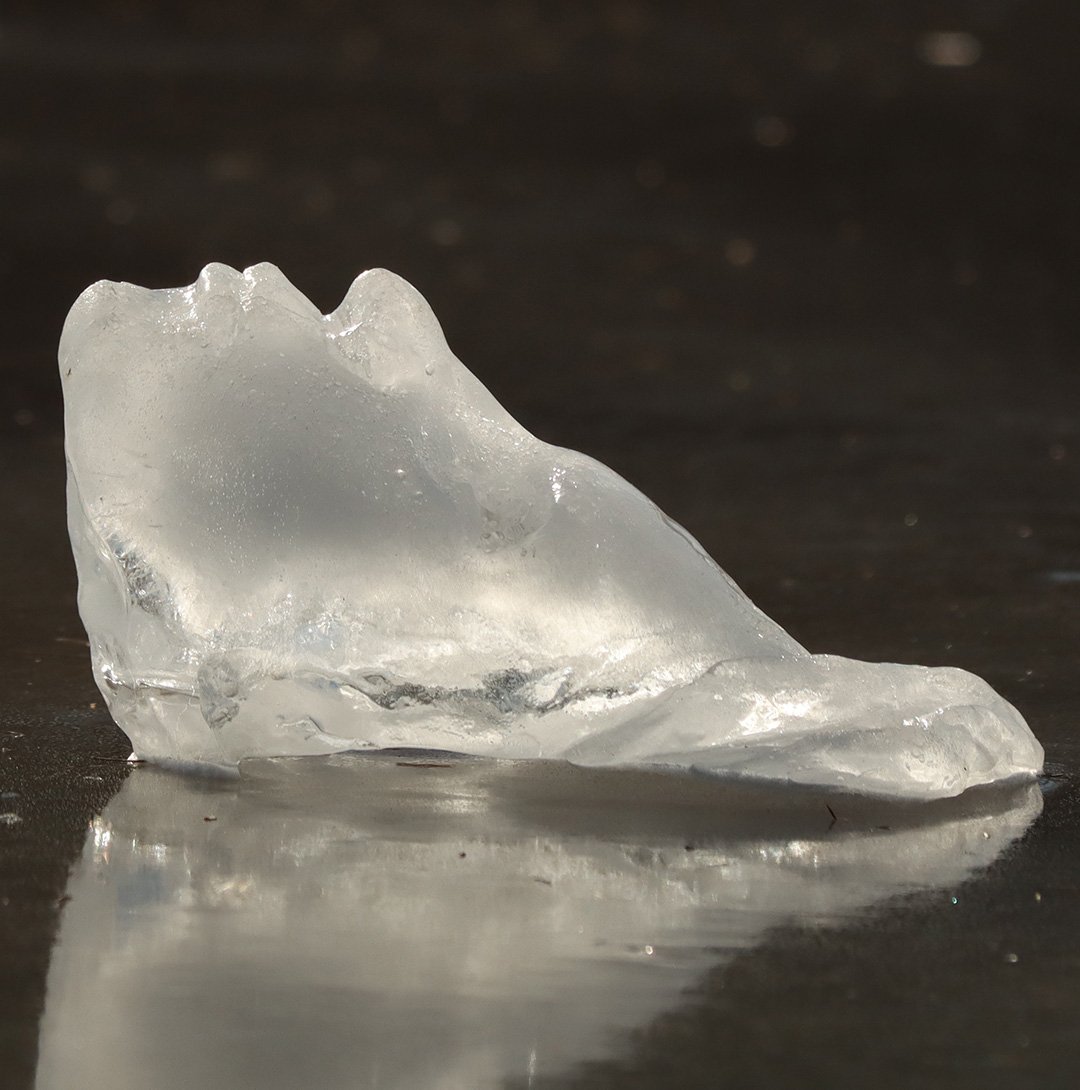
One of the first things I started to do was filter the water. Then I made little molds out of the soil and created ice sculptures. I would put them back into the water, and because the ice sculptures had been filtered, it was a cleaner version of the water going back in.
That was one way of looking at the creek, seeing what it needed, and thinking, how can I help with that? Because that’s a board member. I’m responsible to it. Just as people are responsible for regular boards, I’m responsible to the water.
In the Hudson Valley, ticks are a major issue, so people use certain things to kill ticks. But we can ask: can we use more non-toxic things so they don’t filter into the creek? We started advocating for wide pathways cut very low, so people can walk on them and stay away from ticks without using toxic chemicals.
That’s one way I can be beholden to my board. It becomes: Sprout Creek is on my board, and they’re not happy. What do we do?
JF: There’s also a roadmap for reproducibility in this project. Why is it important for there to be an iterative aspect that is hyperlocal and dispersed?
YS: As we’ve been going through it, we’ve been changing the idea. You don’t necessarily have to come up with a logo. You don’t necessarily have to come up with a location. Everyone’s museum is going to be different.
When you first start, oftentimes you duplicate what you see. You think, I need a logo, I need a location. Now, after doing this for several years, I think: everyone’s museum is going to be different. That idea of a logo, where did that even come from? It’s not wrong, but you don’t necessarily need it. You have to think about what is important for your own museum.
I have a museum in Washington State. We had a tree that had decayed and split in two, and it had to be removed. There was moss growing on a little piece of log, and I said, okay, I’m going to take that moss and that log. I don’t want that destroyed.
I set it in this little forest area. Then the next week, I put it on my back and walked around in Granite Falls. I was like, this is my little museum. There’s no logo. There’s no ownership. There’s nothing. This is my little museum.
That museum in the Hudson Valley has a logo and a name. The one in Washington State does not. It has this whole ecosystem growing on it that I’ve documented and learned about. There are little spiders and insects. It’s magnificent now.
You start with one thing, maybe you mimic what you see, and then you may find there are other ways of going about it. That’s okay, because really, a museum is whatever it becomes for you.
JF: I want to shift into the infrastructure of museums and the landscape this work may be operating as a foil to. What do you think museums often get wrong about supporting artists and communities?
YS: I think what I started to realize is that continuity—the ability for me to continue to exist—was going to be very difficult to happen because of museums and their infrastructures.
I realized I needed to develop my own form of sustainability. My answer was to create what I call the Be the Endowment Rooms. The Museum for Contemporary Artists was one kind of museum, and this was another kind: the endowment rooms.
I started thinking about continuity, self-sufficiency, self-sustainability. Could I create that for myself? Sometimes I get commissions. Sometimes people buy work. But is it really enough for me to exist? Am I trying to appeal to collectors or museum people so I can have the money I need, but not necessarily in the ways I really want to work?
As a question-based artist, I started to imagine: what could it mean for me to exist in the ways I want to and be supported in those ways? That’s where the endowment rooms started.
JF: Can you talk more about Be the Endowment, practically? What did that look like, and what do you hope it grows into?
YS: Be the Endowment was about me wanting to sustain myself. I started devising these rooms for myself.
I came up with the idea of fieldwork or field study. How are people existing out there from a financial perspective, from a community perspective, from an artistic perspective? What prohibits us from existing the way we want to?
That involved asking questions, but it also involved making music with my flute and with my husband and family. We made music about grants, how we apply to grants, and how that’s one way for us to exist, but we have to keep applying, and sometimes we don’t get them. Then we can’t do the work we want because we don’t have the funding, and we need it to make a living and have healthcare.
Then I started researching systems already out there. How have other people and organizations been able to exist? That led me to the Mellon Foundation. I thought, this organization gives away all this money. Where did it come from?
I started seeing that we apply to these foundations, and they have financial vehicles that are invested. I have friends who say, “I don’t want to take money from X, Y, or Z,” and yet a foundation may be invested in X, Y, or Z. Because they’re one step removed, people think, “I’m getting money from the foundation.” But where does the foundation get its money?
The same thing can be said for myself. I was getting money from New York City’s Department of Cultural Affairs, and that felt good. It’s the people’s money. But who are the people? The people include hedge fund people. The people include JPMorgan.
No shade on anyone, but when you do the research, you start to see where all this money is coming from. It was learning. It was research.
Then I created the ceremony room to celebrate my research, my fieldwork, and my possibilities. I started creating all these rooms for myself in a cognitive way. I had been doing this for years, and then I started outlining it into a document for myself that listed the seven rooms. That was powerful because, as I started doing things, we started a financial co-op.
JF: What does the financial co-op look like?
YS: Five other artists and I pooled money, and we started learning about ETFs (Exchange-Traded Funds, pooled investment vehicles that trade on major stock exchanges like individual stocks), mutual funds, and stocks. We started asking ourselves: what does it look like if we invest in our own futures from a financial perspective? What kinds of questions would we, as artists, ask? Would we buy SanDisk? Would we buy Chevron?
That has been a really beautiful project.
But I also realized there are many ways I can exist and consider what an endowment is. One neighbor has thirty acres. Another has fifty acres. Another has an emu and a peacock. Another has thirty-nine trees. Over the last ten years, we’ve gotten to know one another, and we share resources.
I get to pick apples from my neighbor’s orchard and bring some down to New York City. I can grow flowers at another neighbor’s and have a reciprocity garden. We harvest pigment and make paintings based on the pigment.
I realized that’s another kind of endowment. Not a financial one, but a land endowment. I have maple trees upstate and in New York City. We started tapping them and making maple syrup, and we just gave it away to people. Then people said, “I’ve got wood for you when you’re doing your maple syrup project,” or “I have machinery. I can help till the land,” or “I have extra eggs from my hens.”
Those relationships started, and I was like, that’s my little maple syrup endowment. The endowment, from a Western perspective, maybe started as financial, but I realized that wasn’t the only kind of endowment out there. It wasn’t the only kind of endowment I had in my practice.
JF: What question do you wish people asked more often?
YS: We advocate for other people and other things, but sometimes it’s difficult for us to talk about how we exist within our own bodies, how we exist within our own ecosystem, and how to make that part of our work.
Money is something that’s not necessarily talked about as much. We don’t talk about how we’re making our living or the different communities helping to sustain us. I wish we could make that more a part of our day-to-day creative practice as artists.
My husband wrote a song about the one-time grant award. It was hilarious and beautiful. He wrote a piece for flute, banjo, and guitar, and then we put the whole thing together. It was about something that happens to us as artists. We get this one-time grant award, and then we’re like, okay, now the next, the next, the next. But we made it a creative practice.
I love us thinking about that more and incorporating it in, because so much more can happen as artists when we do things like that. How we exist is so important right now in a world that is capitalizing on our existence in ways that are detrimental for us as artists.
I think we must ask that question. We must share our answers with our fellow artists and other creative people. I think it’s really important for our survival.
JF: Is there anything else you want to add, or anything I didn’t ask that feels like it needs to be asked?
YS: I think I just want to say that we are all connected. Many of us are already asking these questions. We maybe don’t know how to frame them. We maybe don’t know how to talk about them with other people, with our own family, with our friends.
Being able to be in conversation with you here today and talk about that has been really meaningful and impactful to me. I think it can be meaningful and impactful to others in how they may go about starting to have these conversations.
This interview has been edited for clarity and length.