
.webp)
In Conversation with Nick Modrzewski
Interview
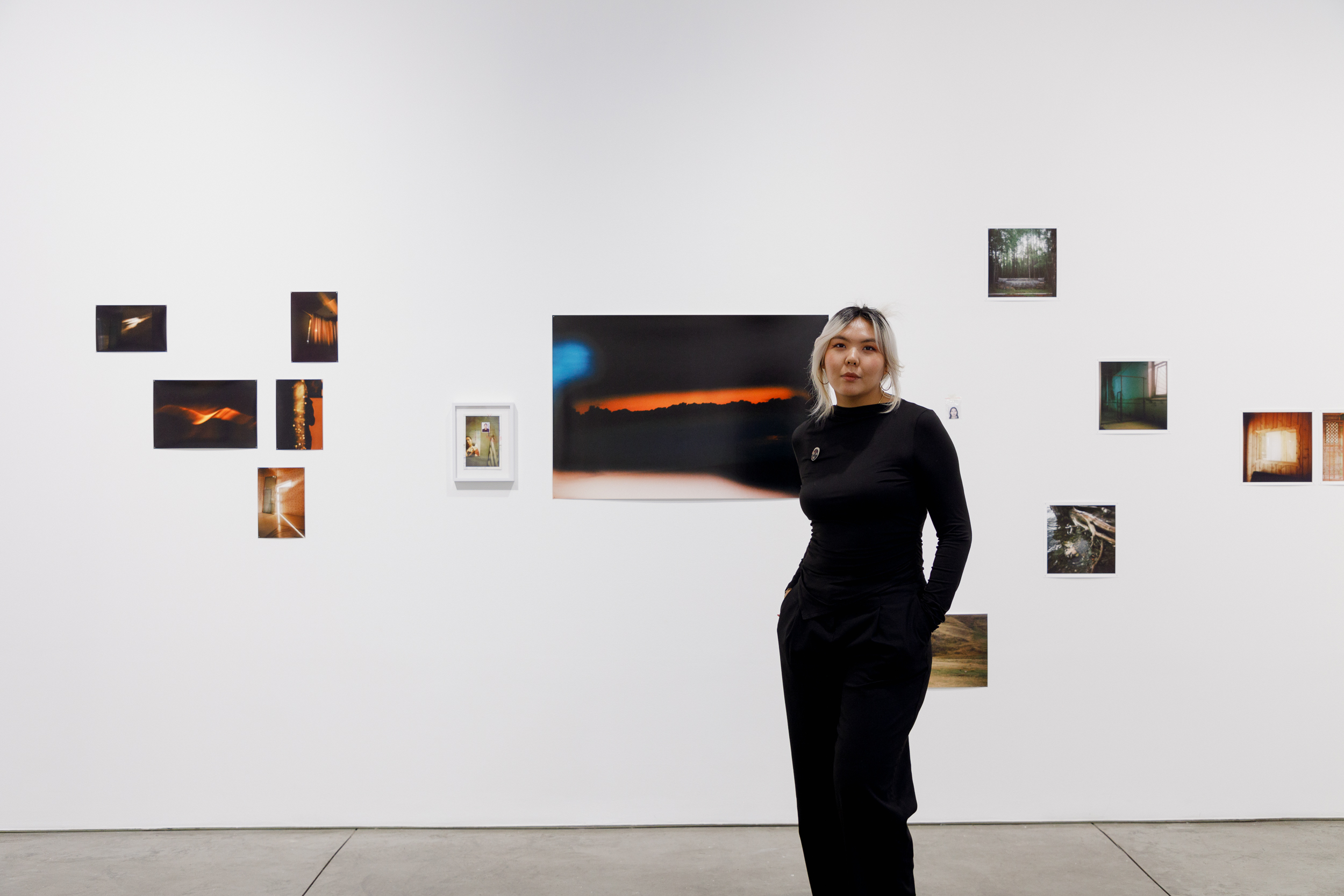
What does it mean to be findable, and who gets to decide? Suniko Bazargarid's photographs layer passport stamps and entry markings onto images of the Mongolian landscape, and multiply self-portraits across grids of ID photos collected over years of visa applications and renewals. Bazargarid was born in Ulaanbaatar, moved to the United States at ten, and returned to Mongolia at fifteen, the first of many relocations that would shape both her life and her photography. In exploring place, memory, and migration, the artist produces a kind of beauty that never lets you forget what it costs: the fees, the flights, the waiting, the stamps that decide where a person is and isn't allowed to be.
Eden Chinn: You've described your upbringing as transitory, moving between places before eventually living in New York and returning home to Mongolia. When did you first become conscious of the way movement was shaping your sense of place and identity?
Suniko Bazargarid: When I returned to Mongolia at fifteen. I'd moved to the US at ten, and coming back five years later, I felt intense reverse culture shock, distanced from a place that was supposed to be home. I arrived in late November, the coldest, darkest part of the year, and for the next few returns it was always winter. I never felt the warmth people talk about when they come home. Something changed when I came back in 2024, after finishing school at ICP. I arrived in mid-April and felt entirely different: more confident, more secure as an artist.
Growing up, I went to five different schools in Mongolia before I turned ten, and about twelve total by the time I finished school. Every move meant observing and trying to integrate fast. In the US, I never thought I'd go back. I assumed I'd go to prom, go to college, do the whole thing. But because I'd always moved, I knew nothing was ever going to be permanent. I used to see moving as a challenge I had to survive. Now I need it. It brings me back to life.
EC: That constant movement raises the question of what role photography played in it. It seems to function in your work both as an artistic medium and a personal archive. What role did photographs play in helping you hold on to different places?
SB: Photography has always been my one constant. I picked up a camera at fourteen or fifteen, the year before I moved back to Mongolia, and it's the thing that's stayed with me ever since. It helped me find community in Singapore, during college in Boston, and later, wandering rooftops and cities with other photographers as Instagram was picking up.
I didn't know I could actually be a photographer until much later, after a wedding studio internship in Singapore and making money shooting lifestyle and events in Bangkok. But I didn't understand what photography really meant to me until I went to ICP. It's like when you speak English, you can read Spanish without understanding what it means; I could see it, I could feel it, but I didn't fully understand until I tried to make meaningful work. That was when I realized this was the love of my life.
EC: You mentioned ICP as the moment things clicked. Was there a specific moment, or something someone said, that marked a turning point?
SB: I remember deciding to apply to ICP on a road trip to the northernmost part of Mongolia for a magazine story. I was photographing for other writers' pieces, but I had my own story too, and somewhere on that trip I thought: why am I still here after three or four years? I need to get out. I put my application together over a couple of nights by a lake.
Around that time, I came across a quote from Teju Cole, from one of his old New York Times columns on photography. I later met him at an ICP talk and cried meeting him. He wrote, "Not all portraits are created equal: To be great, they must contain presence, tension, a finely balanced amalgam of feeling and craft. ‘This is human,’ is the final meaning of a great portrait, ‘and I am human, and this is worth defending.’” That's it, I thought. I relate to this more than anything.
One of my first crits at ICP was for photographs of my sister, taken after we'd been apart for seven years. Our teacher required us to always show printed photos, never on a screen. I put them up and started crying before I could get through a sentence. Printing them, I'd felt nothing, but presenting them, I realized how much I cared. I'm not very good with words. Even in tears, I'm much more comfortable showing my photography than my writing.
EC: You also incorporate documents—passport and visa stamps—alongside photographs. What drew you to these materials, and what happens when something designed to regulate a person becomes part of a more intimate visual narrative?
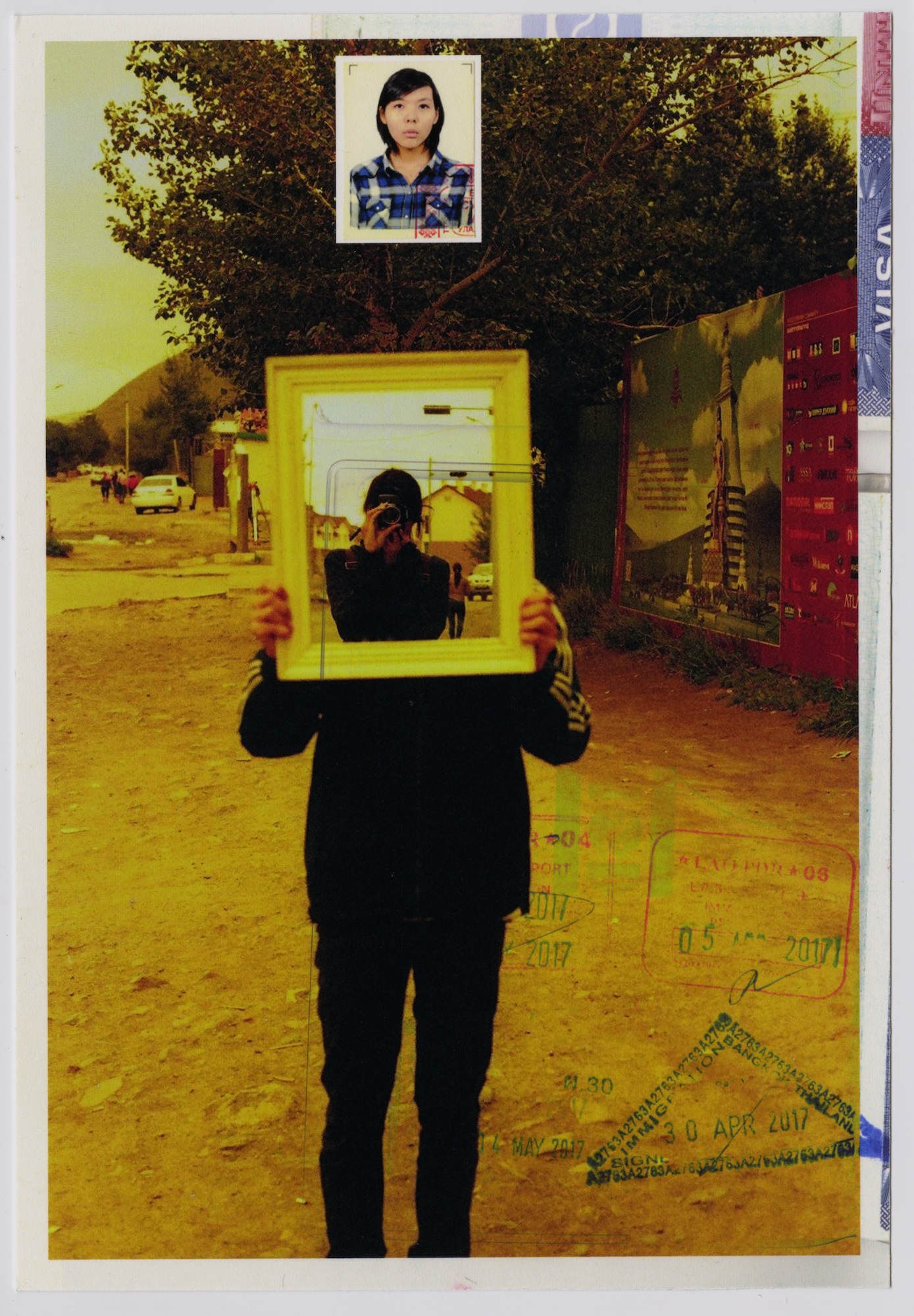
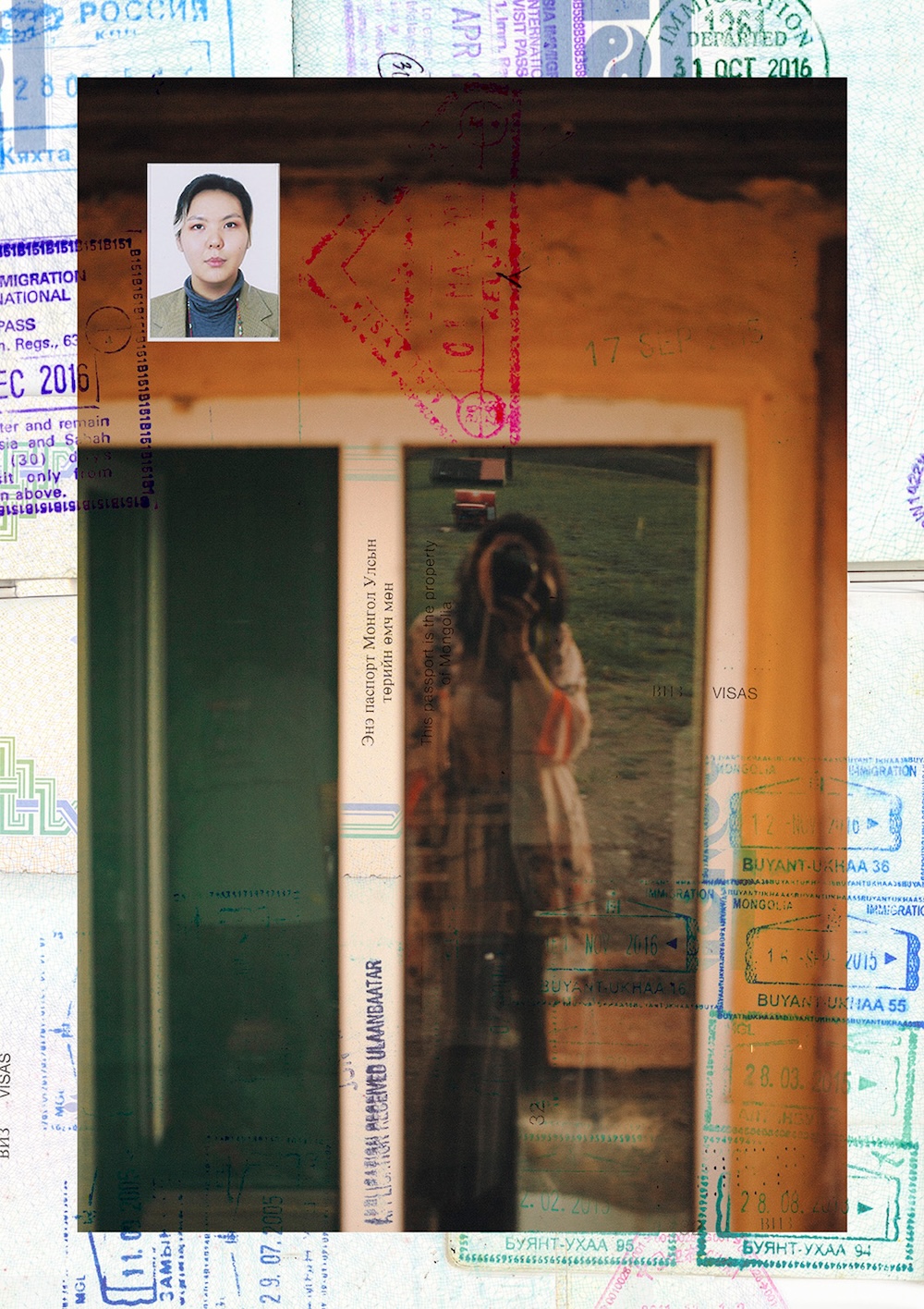
SB: All the passport scans are from my own expired and current passports. The ID photos are ones I've collected over the years for visa applications and extensions. Someone once told me she loved seeing all the stamps, that they meant freedom and travel to her. I never saw it that way. To me, they're reminders of the records that had to be made every time I went somewhere.
I started using the stamps as the literal borders of the collages. I felt bound to these documents. My expression and my life are connected, but I'm restricted by where I've been and where I can go. They're always in the back of my mind, and also reminders of where I've been.
EC: Let's talk about how the traveling exhibition, Where would we find you if we need to find you?, came together. How did the body of work develop, and how did the BAXTER ST residency shape it?
SB: When I first made the self-portrait collages with the ID photos, it felt like nothing, something I put together in a few hours. I showed it in the last five minutes of a crit, and my teacher asked why I wasn't leading with it. It matters that you made it, she said. It's gotten more attention than almost anything else I've made.
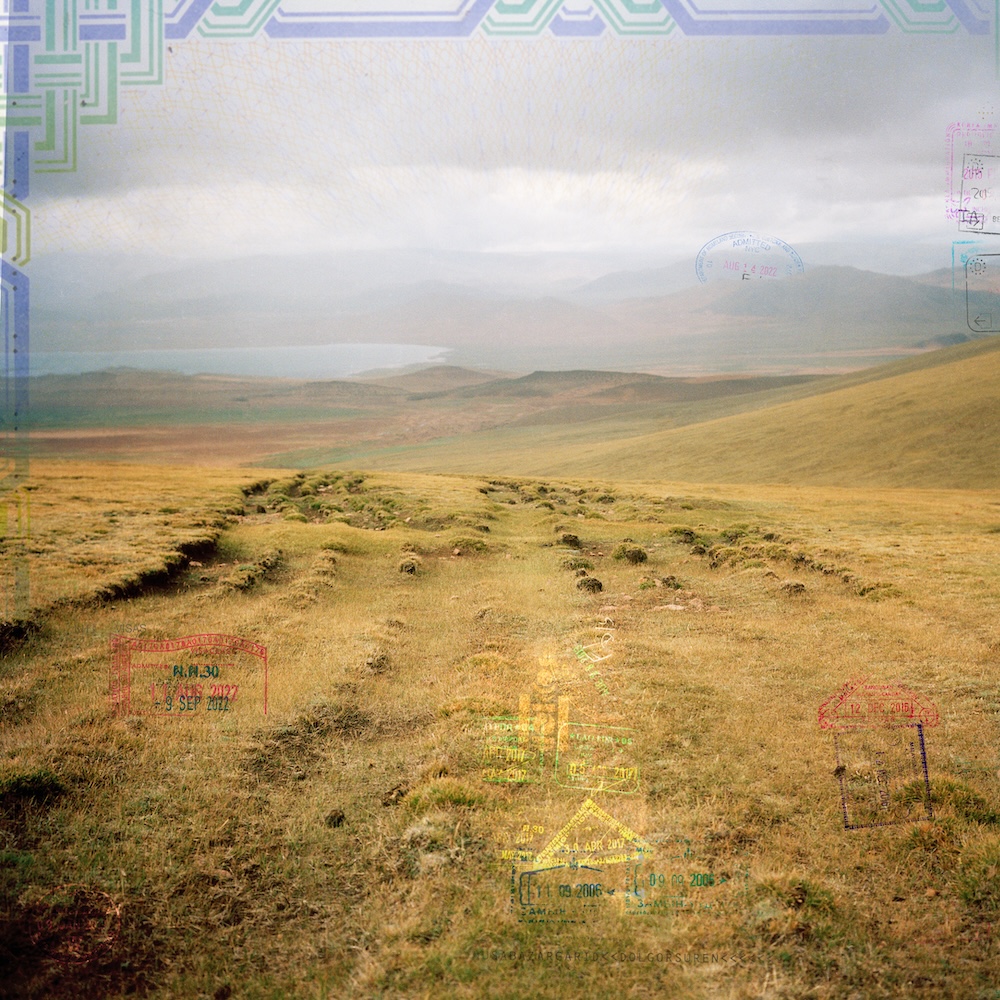
After I came back to Mongolia from ICP, I started photographing the land and sky, the vastness of the country. I wanted to see what the stamps would look like on physical land—a road marked with them, next to tire tracks the land is slowly healing over. The self-portraits feel more inward; the landscape pieces feel more outward, looking into the land while I was anxious, waiting on my visa. So I'd already made the images before I applied to BAXTER ST. The residency ran April through June of 2025, but I still didn't have my American visa, so I couldn't be in New York physically. BAXTER ST was understanding. When I did get to use the space, that's where the final selection and curation happened, and the idea for the floor piece came together there too.
EC: How has bringing the body of work home changed how you understand it?
SB: It's a very different reception. A friend once said: you're talking about international movement, but all your photos are so Mongolian. I'd never thought about it that way, but ninety percent of these photos were made in Mongolia, and there are elements that speak to a Mongolian audience directly. Yet wherever I go, I notice repetitions of somewhere I've been previously; I can always find reminders of other places no matter where I go, and to me this ambiguity comes through the photographs.
However, here in Mongolia, people look at an image and say, I know where this is. Even people who didn't grow up in this exact place can recognize something of themselves in it. In the US, most people don't know where it is, so they feel the wandering more and project their own ideas onto it—this looks like New Mexico, they'll say, even though the frame clearly feels Asian or Soviet.
This long-term project is really about returning, about finding some comfort in what it means to be Mongolian. In the US, it becomes more about borders and immigration. Here, it becomes more about a person returning.
EC: That question of who's welcome runs through the show's title, too. Where would we find you if we need to find you? comes from a real exchange. Where does it come from, and what does being findable mean to you?
SB: It came from entering the United States last summer with my mother, a few months after the current president took office and enforcement around immigration had tightened. I'd crossed that border before, and it was always a smooth conversation, but scrutiny was higher this time. I gave the officer the address of the school my mother was visiting for work, and he pointed out it was an administration building, not somewhere we could stay. I explained we were at a hotel the school was providing, and he asked for its address: “Where would we find you if we need to find you?” I remember thinking, why would you need to find me? He had an intimidating entitlement when asking the question, and I felt almost like a suspect, even though I was there legally.
I gave him the address and didn't say anything else. He told me my next entry to the US wasn't guaranteed, because I'd have a different officer next time, as if that were reason enough. It wasn't as bad as what some go through, but the question stayed with me. It's the same juxtaposition as the landscape collages: something that feels beautiful, with the pressure of bureaucracy always on it.
EC: Zooming out a little, Mongolian contemporary art is relatively underrepresented internationally. How does the photography community here connect to broader networks, and is there anyone or anything happening now that you wish were getting more attention?
SB: Mongolian fine art has much more infrastructure and recognition here than photography. There's a specific tradition, Mongol zurag, rooted in a long history, but photography as a fine art practice is still young. The community is small, and a degree program in photography only existed for two or three years, starting around 2019.
I only know about opportunities like BAXTER ST because I went to ICP and was in New York. There's some support here—the Goethe-Institut backs a few Mongolian photographers, shows work in group exhibitions in Germany—but it's small and rarely gets press. More often, it's foreign photographers coming into Mongolia to make books about communities here, which gets more attention, and which I find uncomfortable.
There are a lot of talented photographers here with real archives and real stories, and very few photo editors or critics writing about any of it, though I want to shout out the independent photo books that came out this year. Mongolia has been in the Venice Biennale several times; I don't know when photography specifically gets there. Language is also a real barrier.
EC: As the run of the exhibition comes to a close, what are you sitting with, and where do you hope this work goes from here?
SB: My relationship to the work keeps evolving. I was anxious about it when I made it, and I feel much more confident with it today. None of it would have come together without the friends, family, and strangers who showed up to support, put the work on the wall, and stayed in the gallery when I couldn't be there. Community matters. I hope it finds the right audience, and that this version of the show travels further.
This interview was edited for clarity and length.
Suniko Bazargarid graduated from the International Center of Photography's Creative Practices program in 2023, with the Arnold Newman Scholarship and a Director's Fellowship, and has since been published by the Associated Press and in Forbes, The Diplomat, and Musée Magazine. As a 2025 BAXTER ST at CCNY artist in residence, she developed the exhibition, Where would we find you if we need to find you?, which ran from September 10 through November 12, 2025. Nearly a year later, the project traveled to Ulaanbaatar, showing in a gallery run out of the Arts Council of Mongolia's office from August 18 through August 31, 2026.
Where would we find you if we need to find you? was made possible with support from the Arts Council of Mongolia, Leica Mongolia, Suuder Agency, the Mongolian Women's Fund, Gamma Agency, and Bitsy & Co.