%2C%20dir%20(2).%20Brydie%20O%E2%80%99Connor%20-%201.jpeg)
.webp)
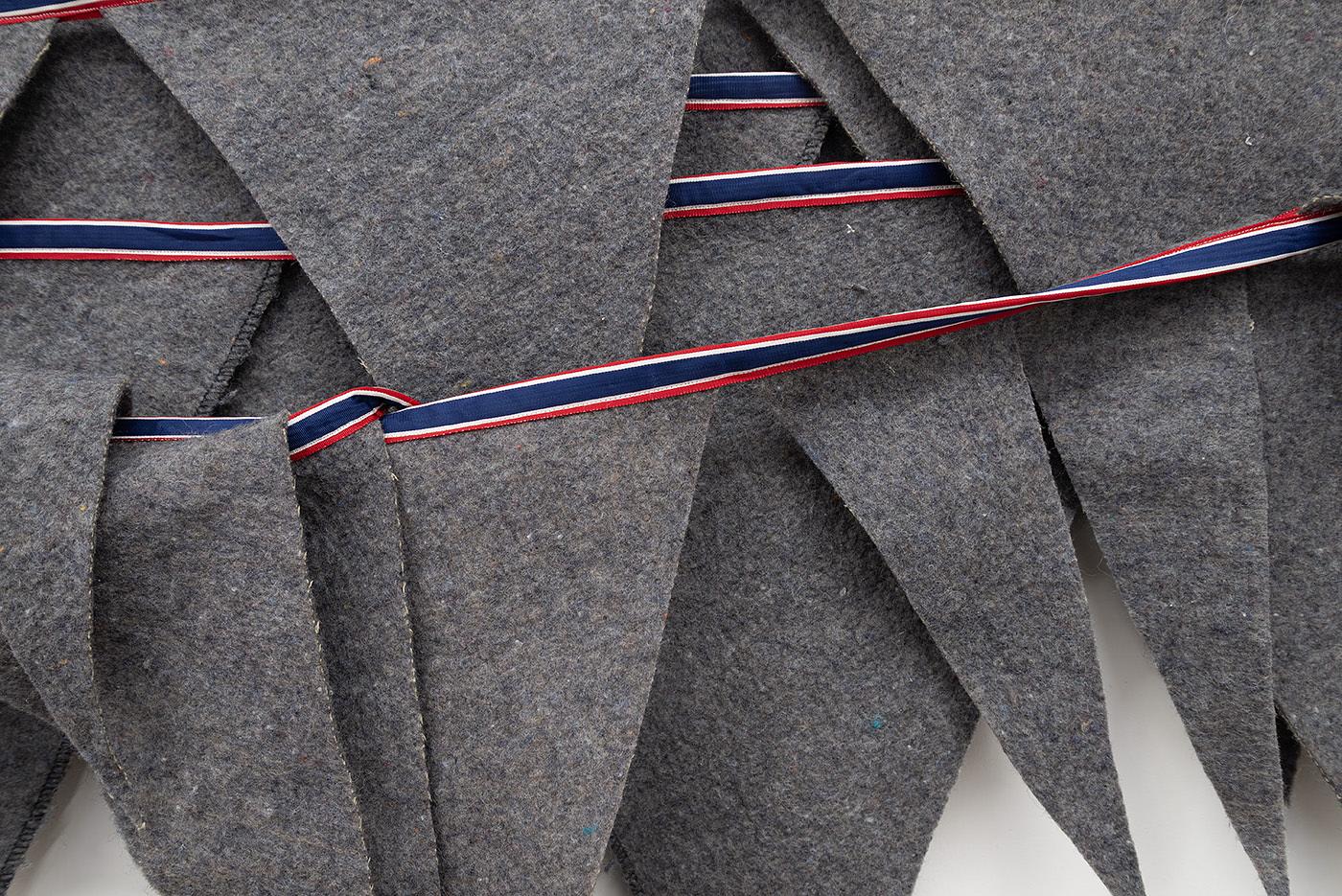
Kern Samuel: “IM” at Derosia
Review
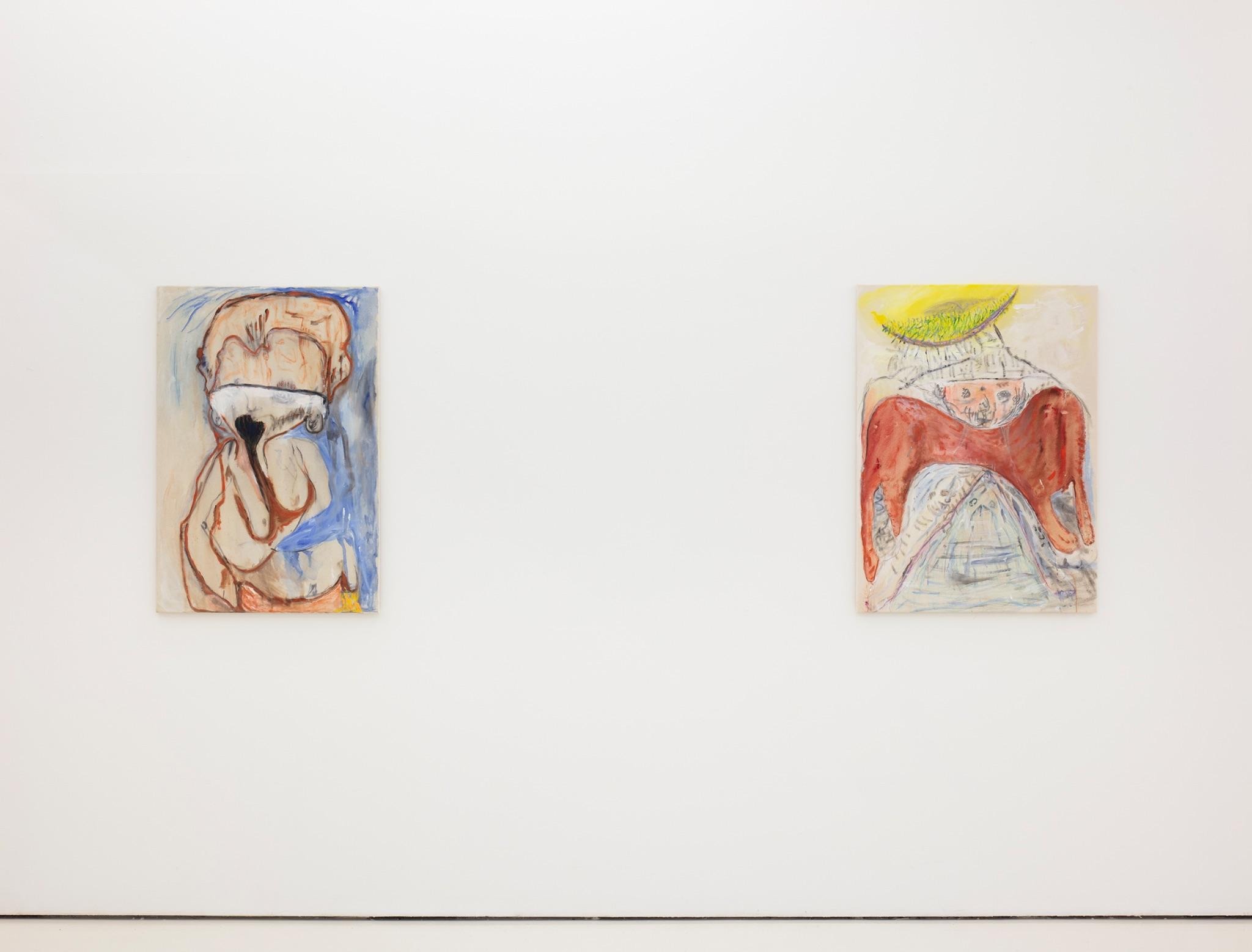
Janne Räisänen’s artmaking is guided by intuition and humor. Moving between painting and drawing, Räisänen layers figurative forms, some witty and some bizarre, with expressive brushstrokes. Recently, Räisänen has turned to self-portraits, through which he playfully ridicules both the messy, chaotic world and himself. Born in Pudasjärvi, Finland, and trained in the Academy of Fine Arts, Helsinki, Räisänen now lives and works in Berlin. Following his recent solo exhibition, Constructivism Begins at Home at Helsinki Contemporary, IMPULSE met to discuss his Finnish upbringing, the significance of humor, his diary of titles, and how drawing and painting shape each other.
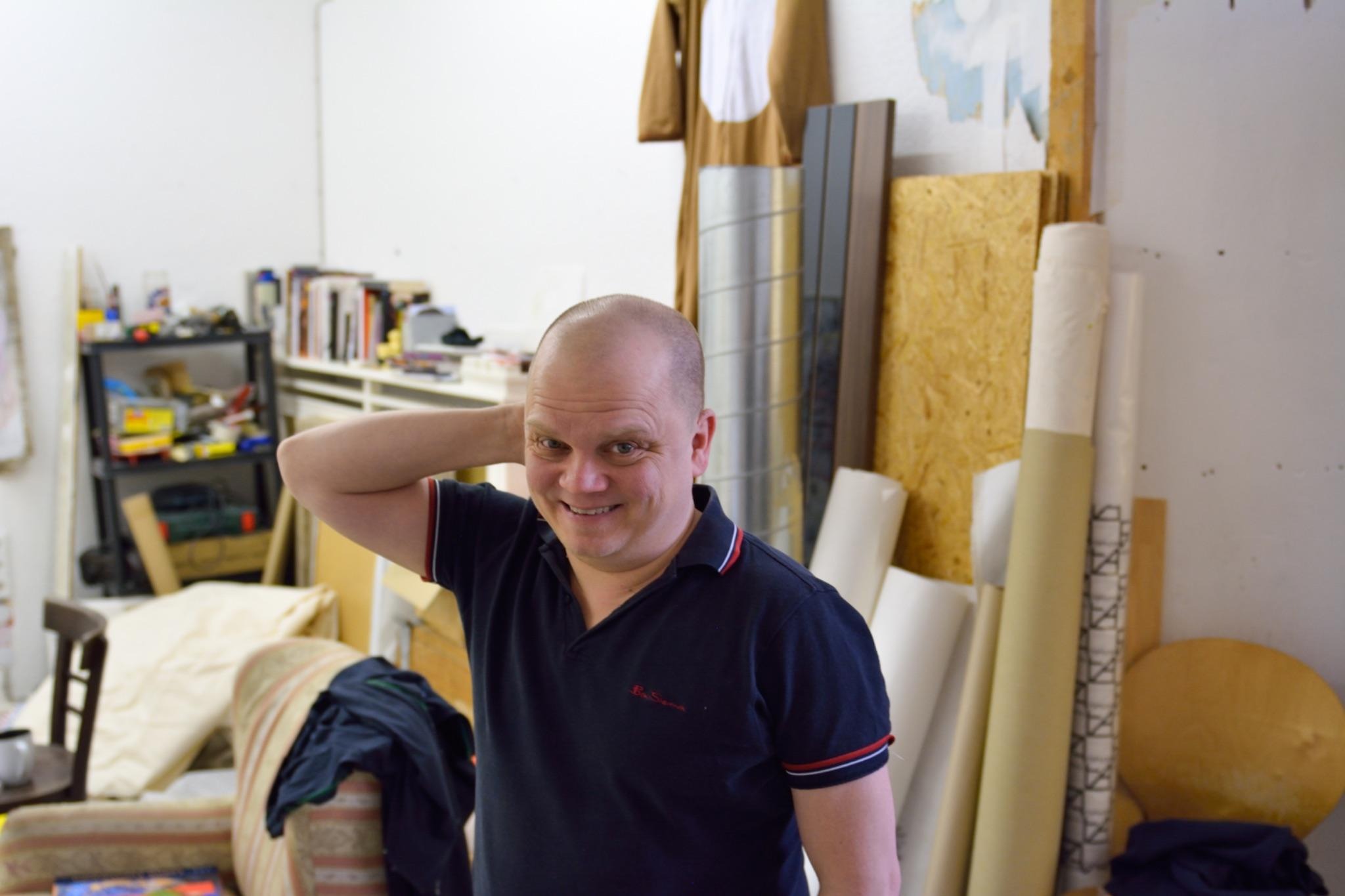
Laura Luo: Congratulations on your most recent exhibition, which was your first time showing in Finland in over four years. How was it like being back?
Janne Räisänen: It was exciting, of course. I’m from Finland, so people have known me for a long time. I was very happy about how everything went. The Finnish art scene has also grown a lot since I left for Berlin in 2010. Now it’s much more international.
LL: What was the process like putting together this show? Are you heading in a new direction or continuing what you’ve been developing?
JR: It’s both. I never really know where I’m going. I’m always trying to push toward a very new direction, but at the same time I’m continuing what I’ve been working on here in Berlin. The direction is more focused now. I’ve been drawing a lot lately, and it’s becoming more colorful.
LL: Speaking of drawing, what does your process look like working across different mediums from painting and drawing to watercolor?
JR: In the morning I start by drawing on paper, and it’s like I’m relaxing before I go to the canvas. I draw in my bedroom first, then I come to the studio to work on canvas and start painting. If I only worked on canvas, it wouldn’t go as well. Paper comes first—using pencils and watercolor—and then it starts affecting the canvas, and vice versa. They are working together very well. I’ve always loved drawing, but in the last fifteen years it’s become more and more central. I love that you can see the quality of the drawing in a painting, even when it’s underneath—it’s like an invisible thing.
I mainly studied oil painting in school, and I was using very thick oil, but now I work with it in a way that becomes almost like watercolor or drawing. I mix the techniques. Painting and drawing are instincts for me, and I cannot do anything else in life. It’s like I’m a vessel for something, and the paintings are calling me: do this thing, do that thing.
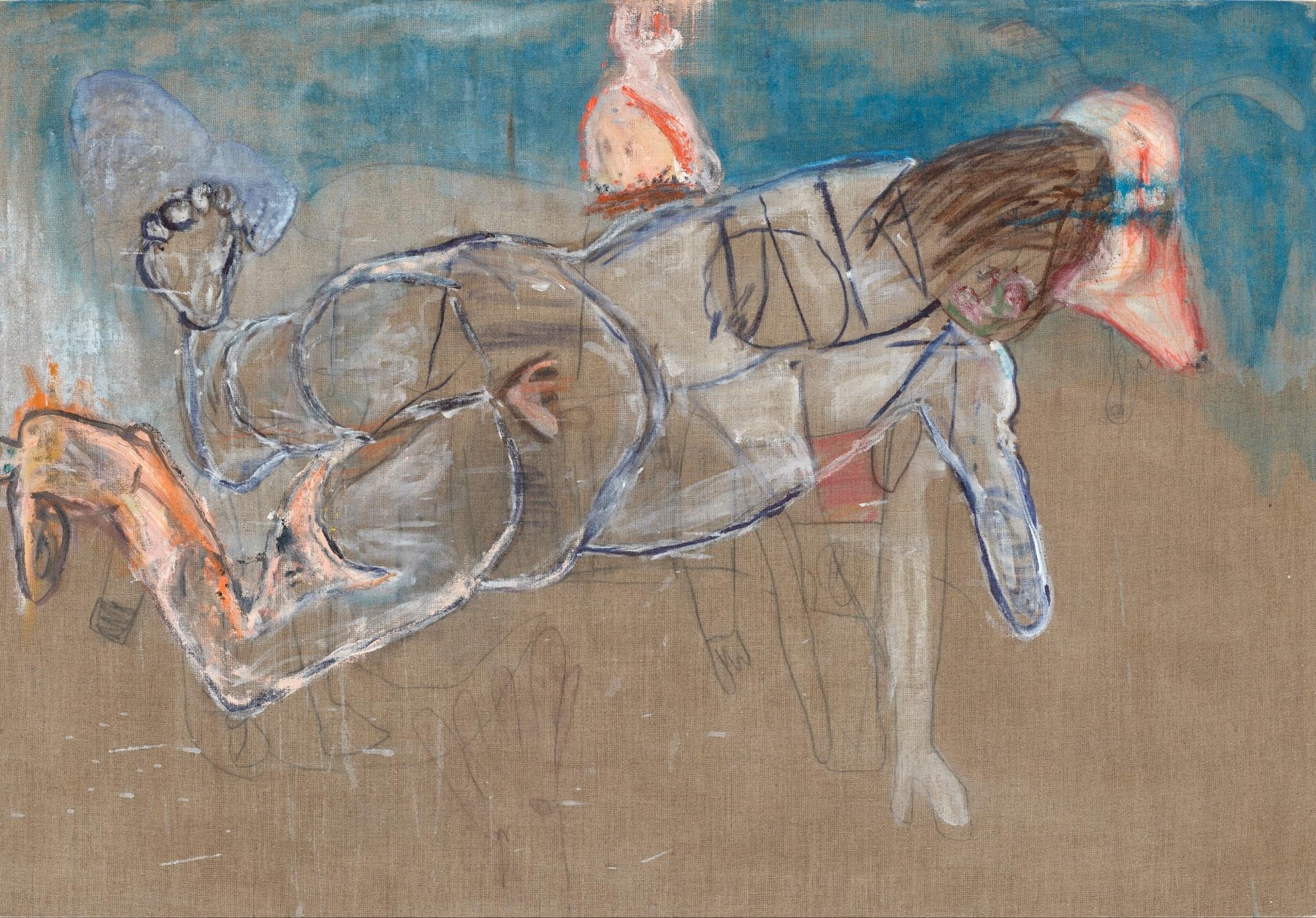
LL: There are a few self-portraits in your most recent show, among other figurative works. Are self-portraits new to your practices? Are you discovering new images of yourself through them?
JR: Yes, I’ve been including these imaginary self-portraits, or what I would call mental images, into drawings and canvases. The world is very messy. But in these images I can be any gender, and I can be anything, and I’m not attacking anyone. My paintings and drawings are sometimes a kind of joke, but I’m only joking about myself.
LL: Is this kind of self-ridiculing or self-deprecating humor central to your works?
JR: Yes, totally. It’s always been like that. Humor, irony, satire—these things are very close to me. When there’s enough satire and when I ridicule myself a bit, that’s when something starts coming together.
I very much love crime and comedy, English and American ones, and I love drama and movies too. I watch movies and I look at the paintings at the same time; then I paint more. The brain is working all the time.
LL: Other figures in your works can come from film, literature, and art history. How do you choose them?
JR: Actually, I don’t. It’s about associations and instincts. My paintings and drawings are very abstract to start, but when I continue, figures come to me, and they start to tell the story. I don’t really choose them—they come by instinct. I’ve been watching a lot of films, and I’m interested in political history. Living in Germany has brought certain subjects to me in that way.
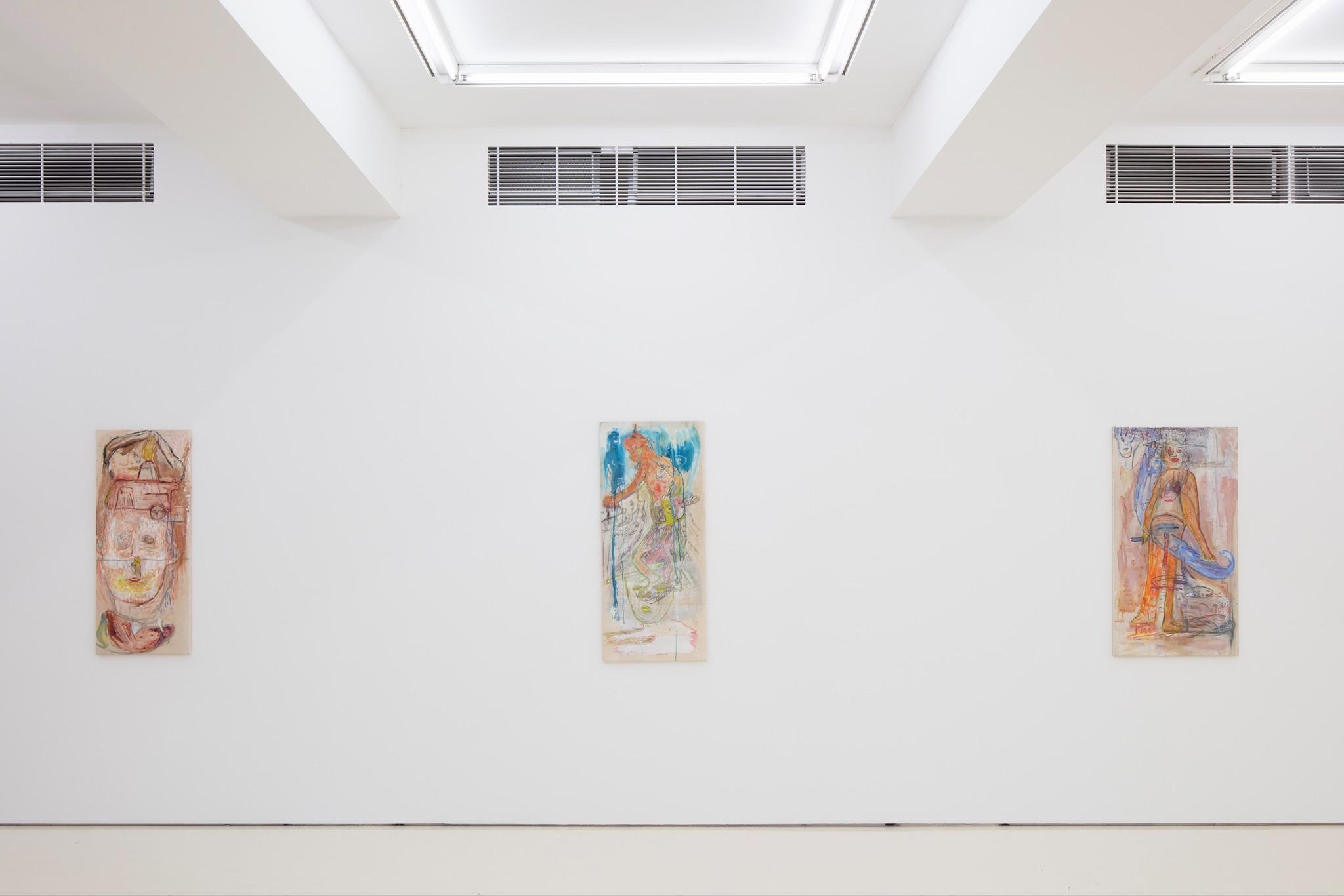
LL: You grew up in Northern Finland and later moved to Berlin. How has that shaped your work?
JR: I’m from the north of Finland where there’s a lot of swamp, a lot of reindeer, and a lot of animals, plants, and trees. As an artist I never think of myself as specifically Finnish—I feel more like an international artist. But from the inside, I’m from the swamp and it’s always in my heart.
I write titles mostly in Finnish and English, but also German, and I mix them. Some things from Finnish can’t be translated to German or English, and I find that very interesting. When I write in Finnish, it comes from my heart. I feel like I’m more of a country boy when I’m writing in Finnish.
LL: How does writing titles shape your art making and vice versa?
JR: Writing helps a lot with painting. I keep a kind of diary of titles. I’m writing titles all the time when I’m painting or drawing. I love literature and film, and sometimes I find single words inspiring too. When the title is ready, then it means the painting is more ready. But I can work on a painting for a long time—in a way I never know when something is finished. I love to work on about five paintings at the same time.
LL: What are some artists that are of particular influence to you?
JR: It changes all the time. In the ’90s it was Basquiat and German painters like Baselitz. My Finnish teachers who have passed away influenced me a lot in the beginning. I also love older art like that of Caravaggio. Lately I’ve been very interested in early 1900s German modernism, and Max Beckmann is very much in my heart right now.
This interview was edited for clarity and length.