.webp)

“Love in a Fallen City” at lovers
Review
Lebanese artists are not strangers to creating during war-torn conditions. Since the mid-twentieth century, the country has found itself repeatedly in conflict. Yet artists did not stop designing and crafting works during Lebanon’s civil war between the seventies and nineties, nor did they during Israel’s 18-year occupation of the country, which lasted from the eighties until 2000. Like their predecessors, many Lebanese artists today continue to create and are using their work as a way both to raise money for those impacted by the ongoing conflict, as well as to make the experience of people in war-impacted areas more legible to a global audience. For instance, earlier this month, Paris’s Galerie au Roi hosted Fragments of Memorabilia, a fundraiser exhibition organized by Moments for Lebanon, which showcased works from over 100 artists with ties to the Arab world. Last month in London, Lebanese and SWANA fashion designers came together for the pop-up clothing sale, “Dear Lebanon, With Love,” to support relief efforts in Lebanon. Now, Souk El Fan has organized Artists for Lebanon, a two-week online photography and illustration print sale raising money for grassroots organizations supporting those affected by Israeli attacks. In this interview, IMPULSE spoke with three artist-organizers involved in the initiative—Shirine Sbaiti, Ruwan Teodros, and Yasmine Atallah—to better understand the connection between art-making and mutual aid.
Jill Webb: What led up to the decision to put on this fundraiser right now?
Shirine Sbaiti: Basically, we were all feeling very helpless. [During] the first war, I really couldn't do anything. I was a bit too scared to function. But this time around, [Yasmina Hilal and I] met one day, and I was telling her that I'm brewing the idea of doing the fundraiser. She told me that a few of her photographer friends also are thinking about that. We started working on it three months ago, right when the second war happened.
Ruwan Teodros: [There] are so many proponents of culture, art, photography, [and] filmmaking in the region. I think everyone started to feel very helpless when the war on Lebanon intensified again, and so everyone wanted to put their skillsets to use. It was also just a way for everyone to stay busy and fundraise to support displaced people, because the war is ongoing and it's not likely to end anytime soon. Over a million people are still displaced. The need is getting greater and greater.
It's a short sale, and we can hopefully continue to host art fundraisers in the future through Souk El Fan, depending on the need.
JW: You're raising money for specific initiatives. Why were they chosen?
RT: Yeah, five initiatives. Egna Legna Besidet, founded by Ethiopian migrant workers in Lebanon, focuses on issues that migrant women domestic workers face in the Middle East, with a particular focus on Lebanon and Ethiopia. They also advocate for the rights of migrant domestic workers as women, laborers, and dignified members of society.
There are many migrant workers in Lebanon from Ethiopia, Sudan, and the Philippines. At times in these crises, many people abandon their domestic workers, the people who come to work for them at home or in private businesses. Those people have very few rights in this country. This is an often-forgotten community, and so it was important to include them.
Jeyetna provides menstrual products to those who don't have access. Something that people forget is that all these women who are displaced are menstruating and still need pads. Those things go missing in times like war.
We are also donating funds to a trusted volunteer-led initiative providing essential protective supplies to first responders across Lebanon. They work directly with communities on the ground, from the south of Lebanon to Beirut, and help ensure frontline workers have access to urgently needed resources to save lives.
These frontline workers are the people who are pulling people out of rubble after air strikes. They are rescuing people from collapsed buildings. They are providing life-saving support. Any help they can get goes a long way.
At the beginning of the war, Beirut Art Center opened its doors to relief organizations on the ground, specifically helping forcibly displaced people. Now they've shifted to cultural recovery and supporting artists from the south of Lebanon through exhibitions, performances, somatic workshops, and a collaboration with Stayha, a cultural space from Kfar Reman that had to close. All funds go towards keeping this space open for artists from the south to continue working.
Give Me a Paw is a beautiful organization that helps animals. A lot of people end up putting their animals in the street because they can't afford it, or they've been displaced. From saving pets trapped in evacuated homes to treating injuries caused by blasts and debris, the team is protecting animals in crisis. They also reunite pets with displaced families whenever possible and support those who can no longer care for them by covering food, medical needs, and boarding.
We tried to address all the areas of both more neglected and mainstream forms of support for Lebanon.
JW: Why do you think it's important to both create and share art during conflict?
SS: It's the way to preserve our culture, to tell our stories, and to show the world what our country offers, especially with whole villages getting erased. Photography has a lot of archival qualities, so we have to preserve everything we have in photos. For example, I have friends from the south who went out and took photos of all their homes because they know that they might not go back to them. There's a lot of nostalgia in the arts.
RT: As a photographer, I only really started coming into my own when I documented through the war when it started in 2023. I think it's like a coping mechanism for a lot of artists. I don't have the words to express how devastated or upset I am by what's happening. Who has the words to explain the kind of pain that we're all experiencing? But we have the photos. We have the illustrations. We have the ceramics. We have the sculptures. What words can't convey, our work can. Not only does being able to create at a time like this help you mentally, but you can also use that to help other people—it's just incredible. I think it gives a whole second meaning to the work we're doing in the creative space.
Yasmine Atallah: It's lenses and perspectives that you don't get from the news. These are people who mostly live in Lebanon, so their perspectives are very related to the country itself.
JW: Lebanon was pulled deeper into the war when things escalated in March. How do these conditions impact working artists?
SS: Whenever a war happens, the first sectors to really feel the pressure economically are the arts, music, and entertainment because no one is gonna pay money for this kind of work. There's a saying in Arabic, “keep your white cash for a dark day,” so that's kind of how it works here. It's very important to give a platform to these artists who are struggling.
RT: As I mentioned, Beirut Art Center is one of the initiatives that we're donating money to. I know of people who've had their studios destroyed or whose studios were across from buildings that were destroyed. I know of people who can't work anymore in the creative space because they've had to take on second jobs, or because they are displaced from their homes. They have no support from the Lebanese state or anyone really. So, how can one create when you literally don't even have somewhere to live? These are the conditions that artists are being forced to work in in Lebanon.
JW: Going into the specific works in the sale, are there themes you see across the fundraiser?
YA: What I find interesting about this fundraiser is the range of perspectives involved. Some images come from south Lebanon, which has been heavily impacted by the war. Even in photographs from Beirut and the north, there's a feeling of resistance. Across the works, there's a theme of living, not just surviving.
RT: South Lebanon is a beautiful, special place, and people from the region have a deep love for their land. You can see that dedication throughout the works. There are many portraits from rural areas in the south and the Beqaa, which has also been targeted during the war.
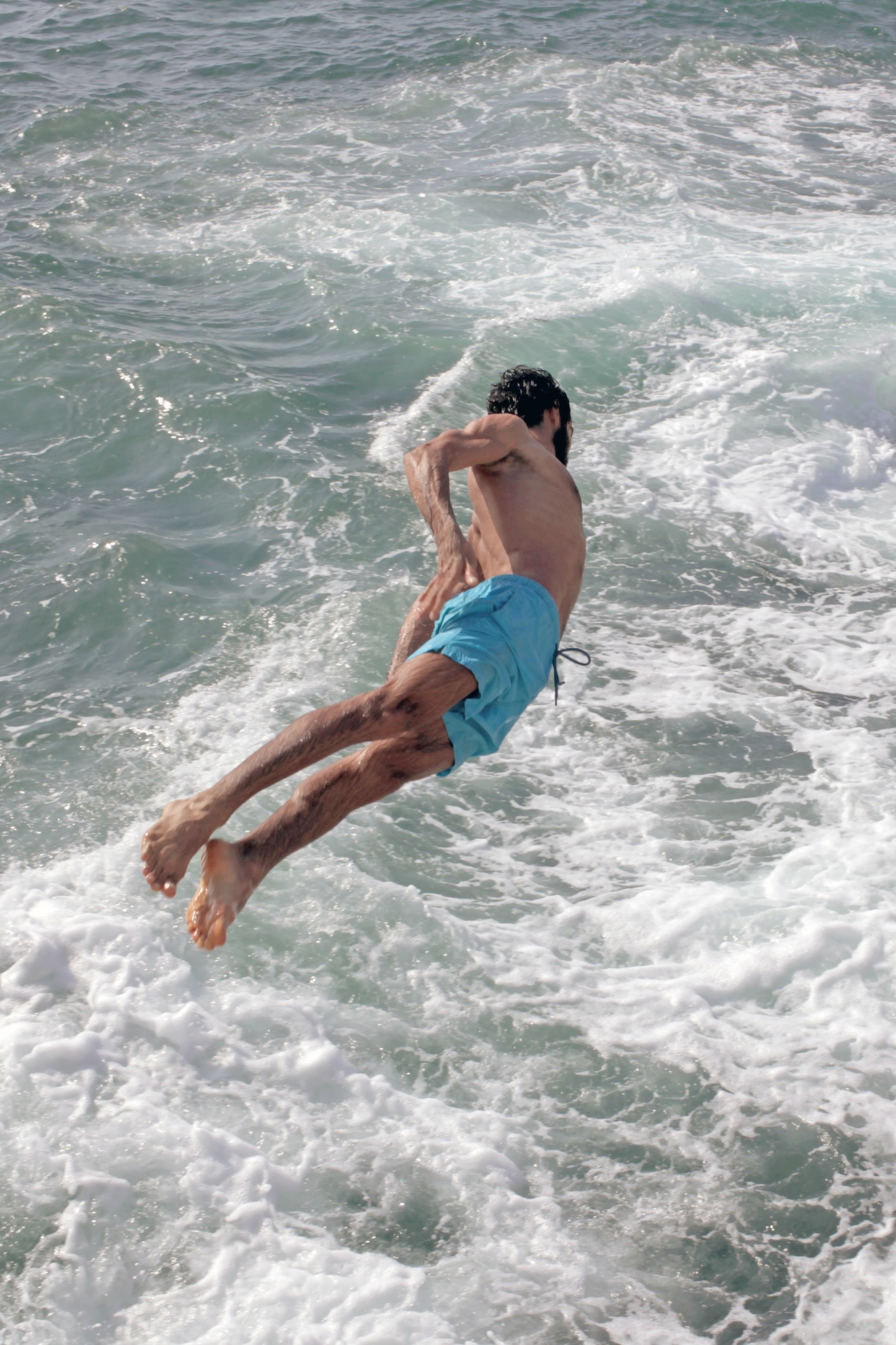
My photograph shows a boy jumping into the sea at Dalieh along Beirut's shoreline. I feel lucky to have taken it a year ago at 7:30 a.m.—a moment of freedom and joy. These are portraits of everyday people, the people we want to support and help, who are suffering so much.
In the illustrations, I see a lot of rage, bravery, and resistance, as well as pride in communities across Lebanon.
JW: Do you have a favorite piece in the fundraiser?
RT: I love the piece I bought: Tamara Abdul Hadi's photograph of a boy jumping into the sea, his face unseen. I've always loved photographs of people diving into water—there's something so freeing about them. Whenever I look at that image, I feel better. He has nothing around him but the sea, and there's something special about that.
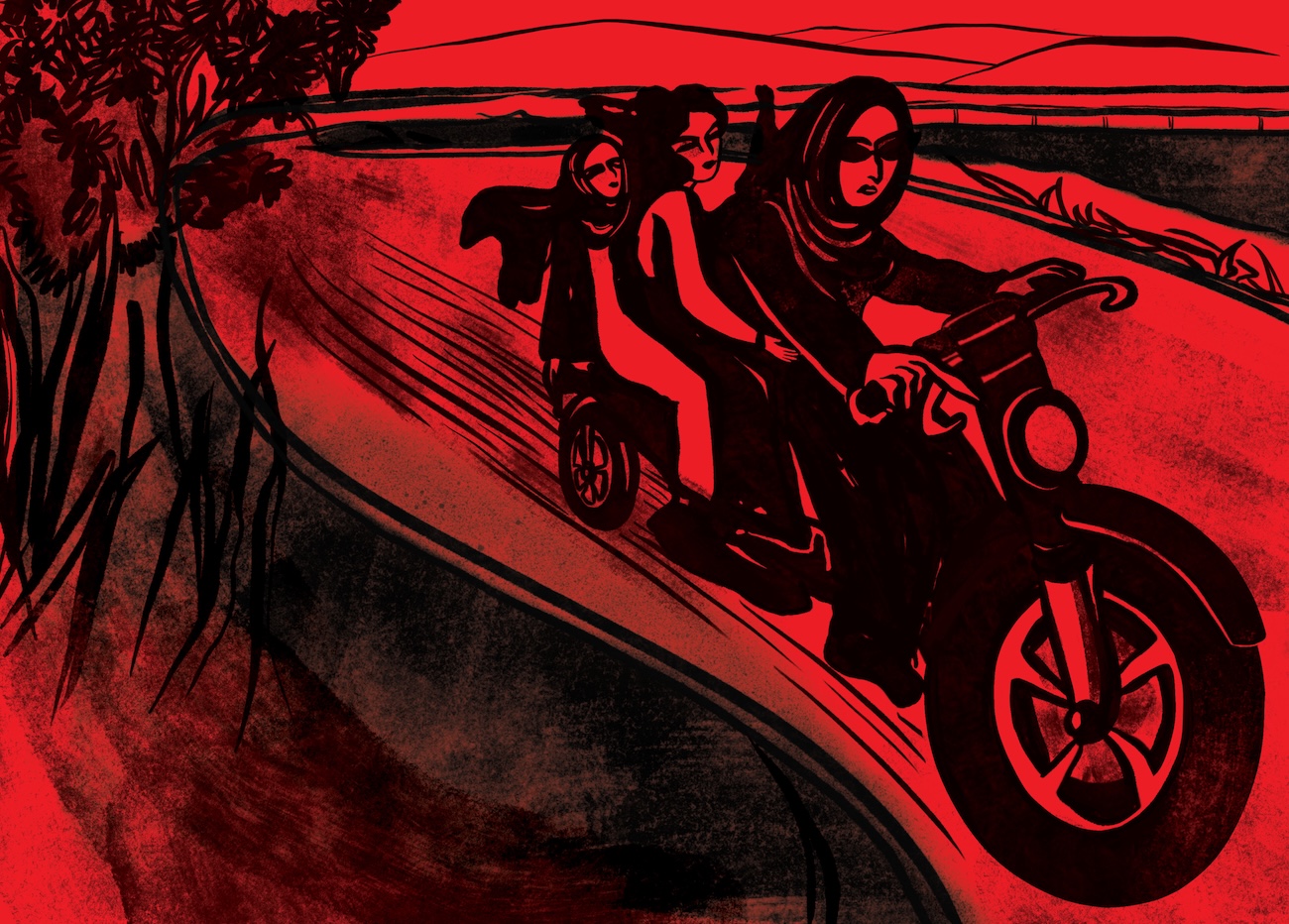
There's also a beautiful illustration by Laure Ibrahim titled Tal3in 3al jnoub ("We're Going Up to the South"), depicting two veiled women on a motorbike against a red backdrop. It feels fierce. There's enormous pride in the women of the south because they resist, too. Historically, they've even poured hot water on Israeli soldiers entering their villages. The work embodies the strength of women, and it makes me feel honored to share a world with them.
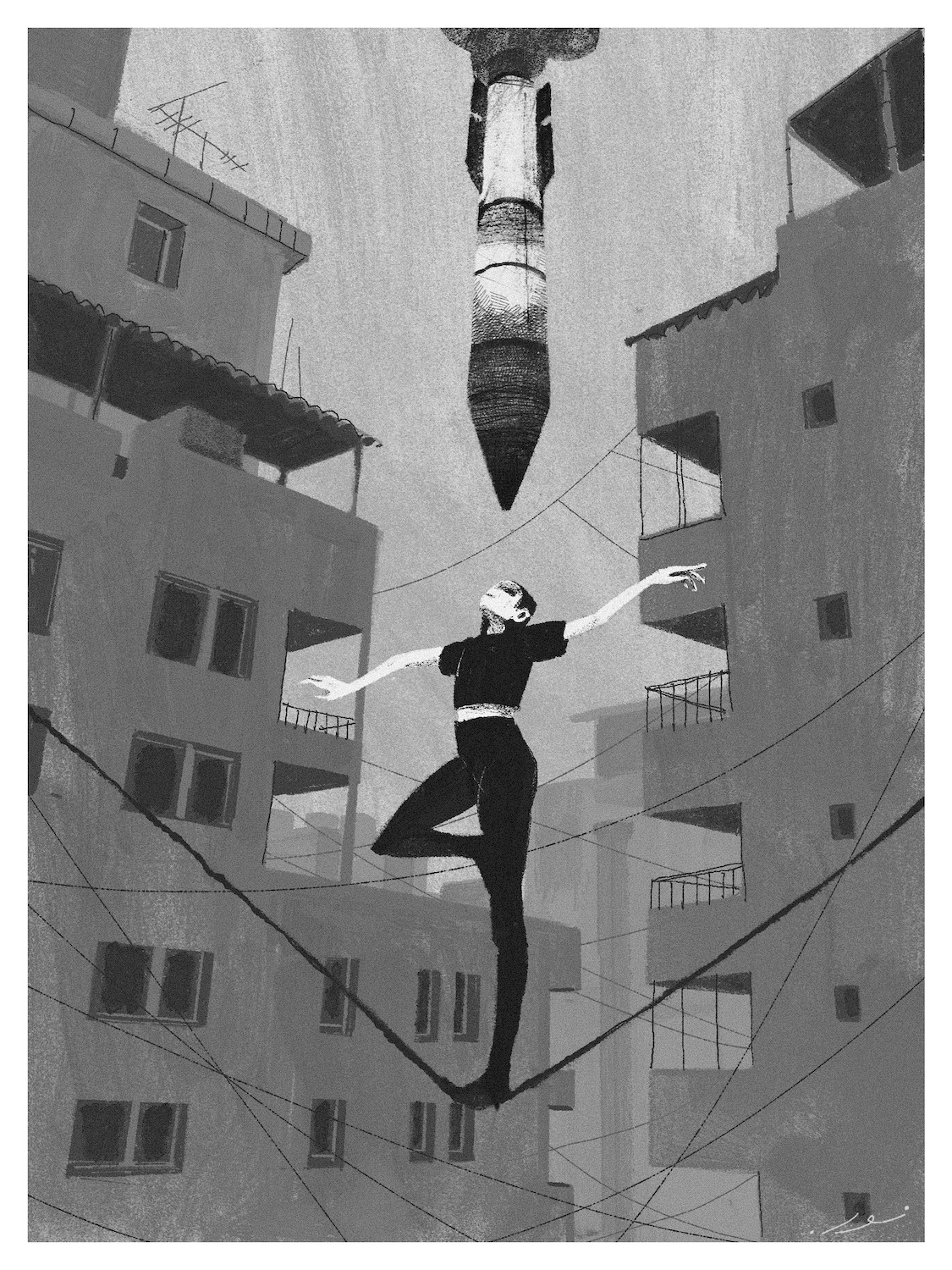
SS: I love Aude Abou Nasr's map of the south, which layers nature, animals, villages, drones, and explosions into a single image. I also love Nour Haïdar's illustration, which comes from a comic about her experience during the war. It includes the line, "When would it be my time to be liberated from terrorism?" and depicts a woman balancing on a tightrope as a rocket passes by.
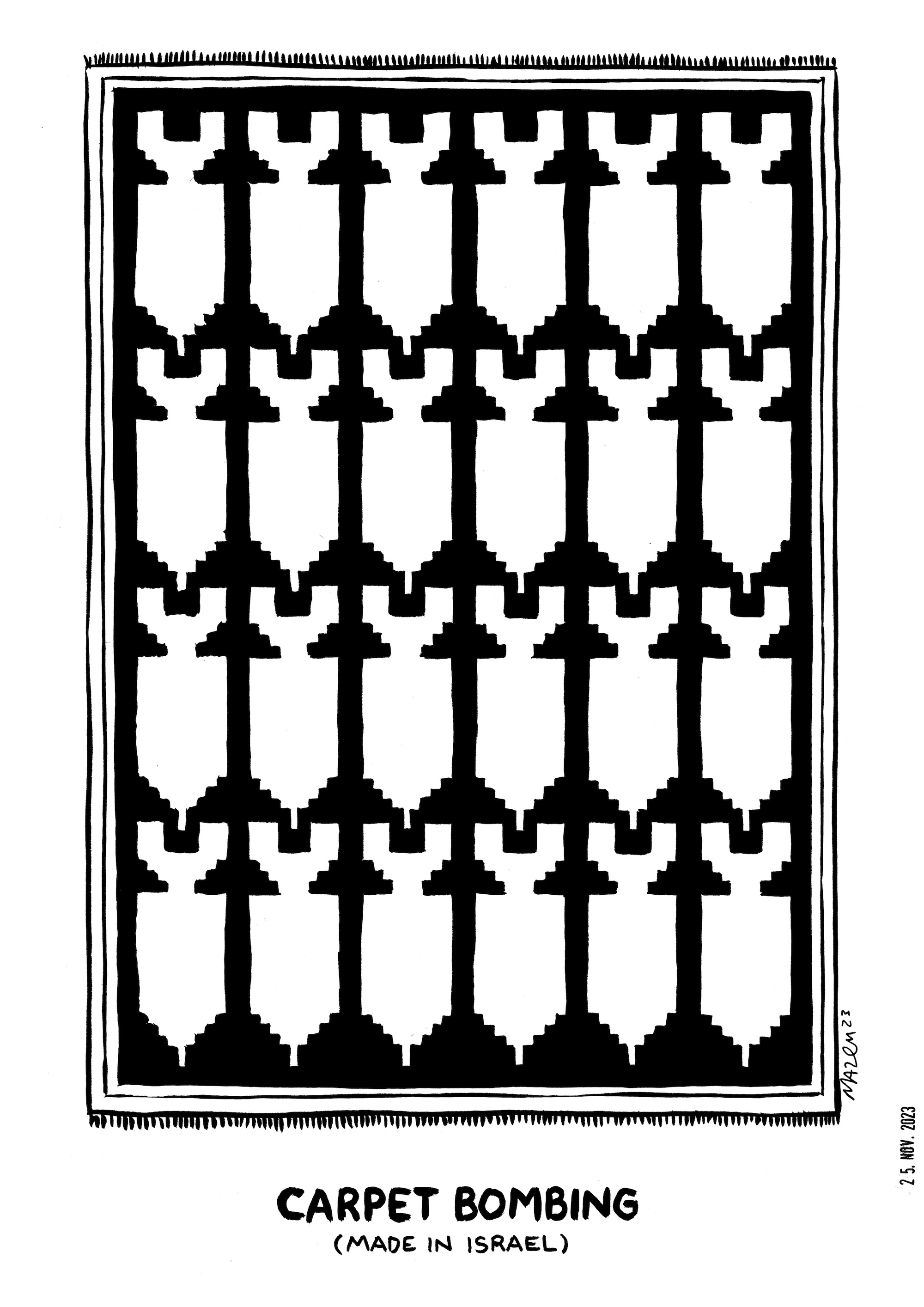
YA: I like many of the selected illustrations and photographs. Mazen Kerbaj's Carpet Bombing is brilliantly executed. It plays on the prevalence of carpets in Lebanon while referencing the reality of carpet bombing, which has affected both Lebanon and Palestine.
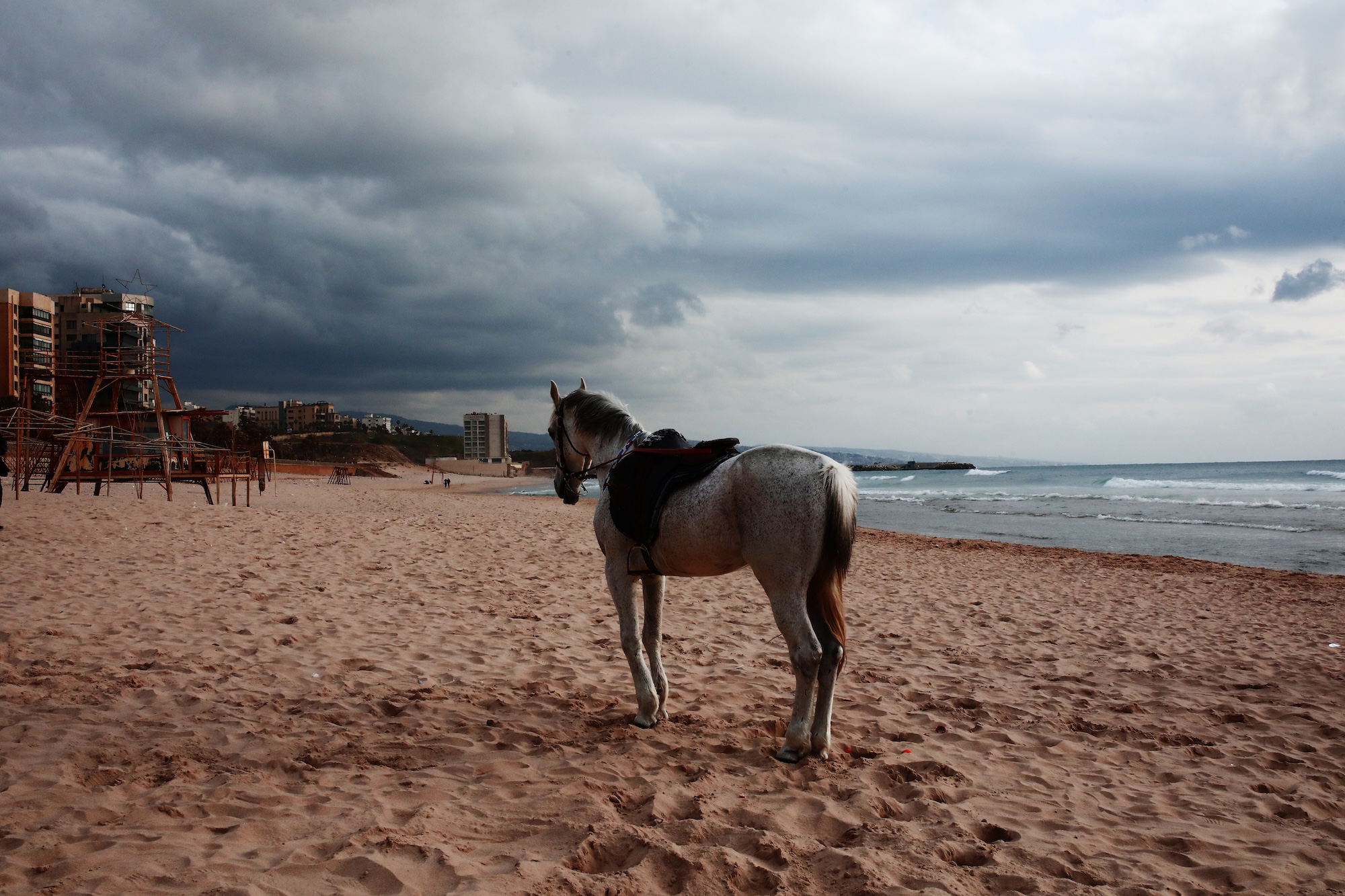
I also love Tamara Saade's photograph Horse, which shows a horse on one of Beirut's few public beaches. Despite the gathering clouds and approaching storm, the image doesn't feel trapped by them. There's a sense of liberation and, in a way, hope.
This interview was edited for clarity and length.