.webp)

Tim Kent: “Sojourn” at Hollis Taggart
Review
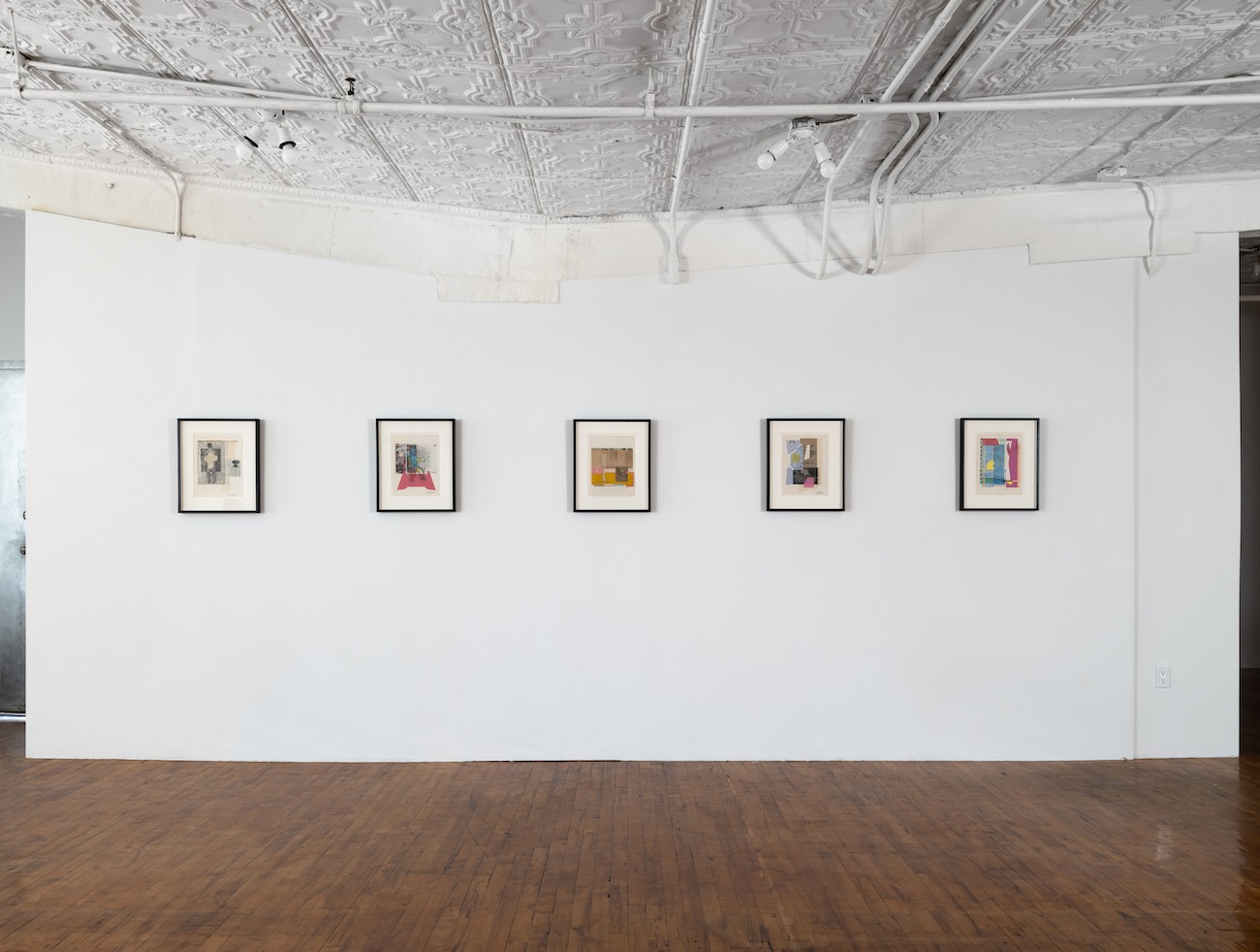
E’wao Kagoshima’s work shines in its hallucinatory figuration and DIY materiality—a combination that shapes the punk rock sensibility of the continually relevant but always elusive artist, a certified downtown denizen. His recent retrospective at CARA in Chelsea foregrounded two key facets of his work: the influence of the Vienna School of Fantastical Realism and his voracious use of found materials, which gives his work texture that mirrors the urban environment. In Deconstructed Bodies, on view at Ulterior Gallery through June 6, 2026, these two threads are on display in a veritable jewel-box exhibition. The tightly curated and intimate installation presents a carefully considered body of work. Though modest in scale, Deconstructed Bodies offers a surprisingly expansive view of what makes Kagoshima’s practice so compelling.
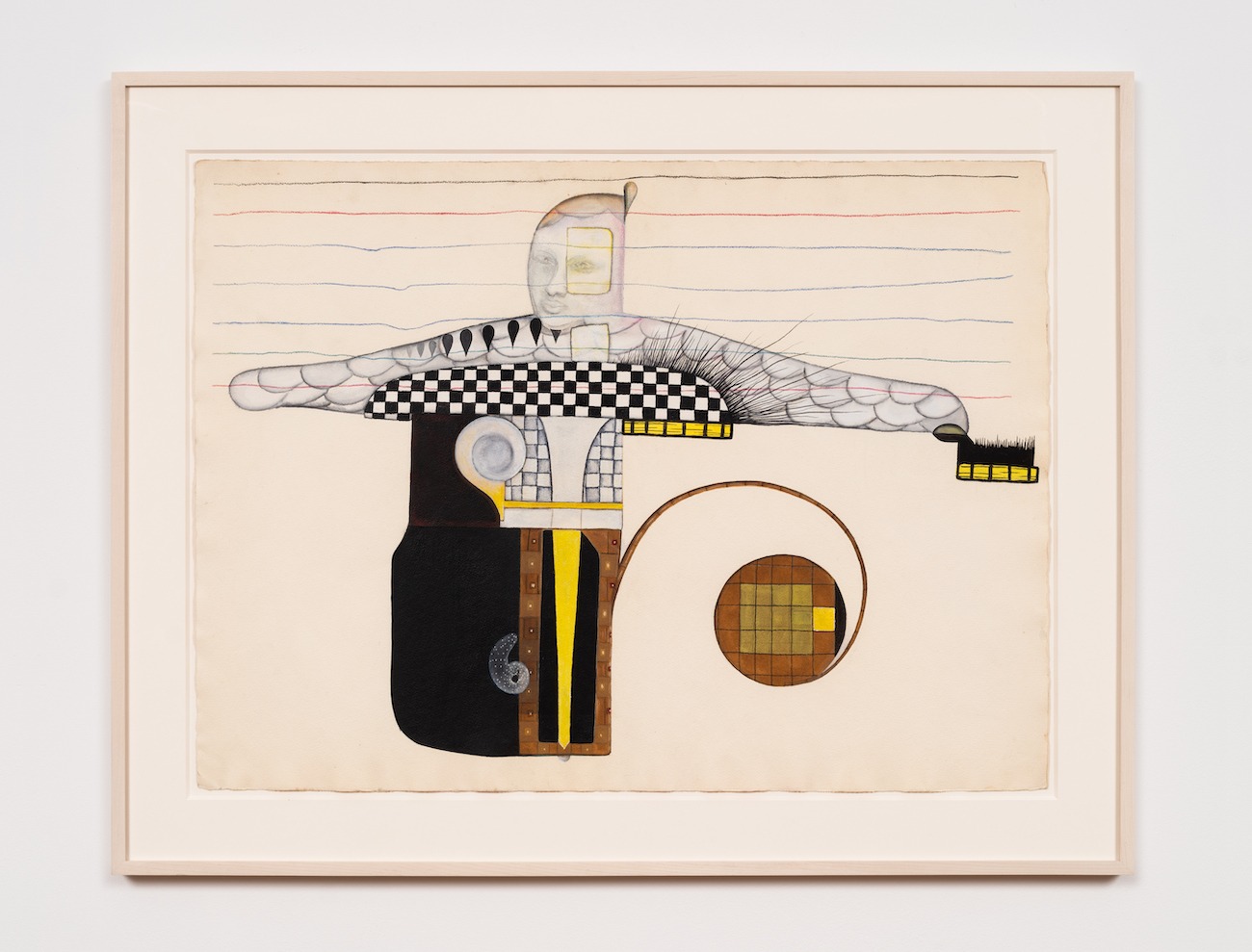
The three largest objects in the exhibition—two untitled works (c. 1976–1980) and a mixed-media work on paper 1207 (1976), all measuring thirty by twenty inches—are shining examples of Kagoshima’s idiosyncratic approach to figuration. In the 1960s, Kagoshima was introduced to the Vienna School of Fantastical Realism by Ginza’s Aoki Gallery. Kagoshima preferred to experience the work through color reproductions, which might seem unusual for a visual artist. However, this proclivity aligns with his longstanding interest in photomontage. The Austrian group of artists built on the traditions of Surrealism through compositions marked by hazy corporeality, with unstable psychedelic boundaries between figure and environment. Kagoshima’s oeuvre embodies this dreamlike ambiguity. The subjects in the three aforementioned works seem to shift between animate and inanimate forms, resisting rigid categories of subjectivity, gender, and species. It is unclear where one starts and another begins, as the figures seem to fluctuate, despite the static nature of the image.
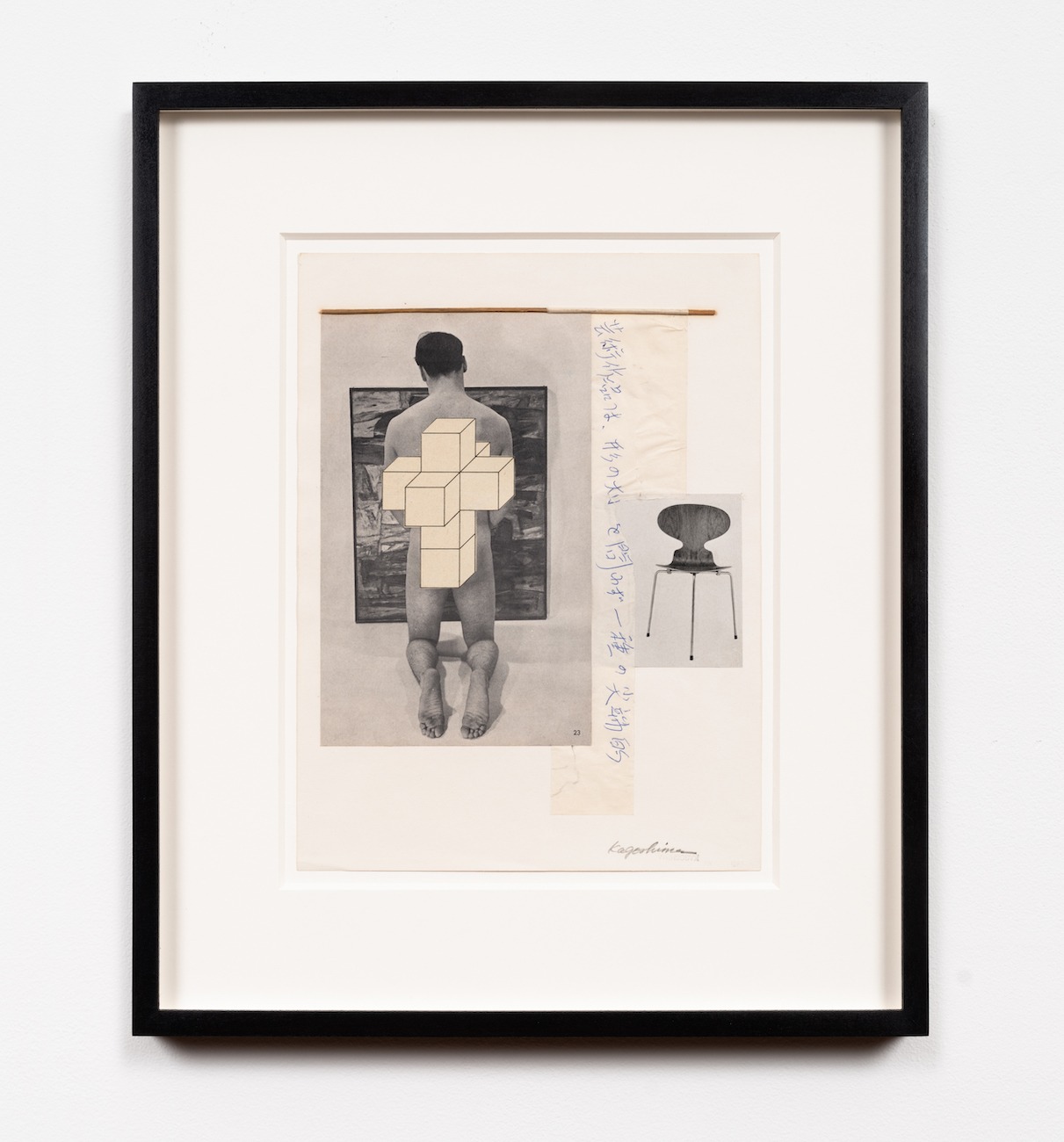
The artist’s proclivity for distorted figuration is further reflected by the works from 1981, which incorporate figures carefully excised from gay pornographic publications. The subjects’ physiques are segmented both gracefully and violently, objectified in a literal sense as bodies merge with televisions, airplanes, skulls, and pieces of furniture. The notable choice in media shows the artist’s phagocytic approach to found materials, collecting, processing, and incorporating mundane, non-art objects. As with much of the assemblage tradition in New York City, the objects were found on foot. Since these happenstance discoveries were geographically concentrated, the resulting work speaks to the aesthetic orientation of a neighborhood. At the time when most works in the exhibition were created, Kagoshima was living in the West Village, where gay media was both omnipresent and easily accessible. The utilization of pornography was a natural extension of the artist’s interest in corporeal distortion as a reflection of interior worlds. The more abstract collages speak to the artist’s intuitive approach to composition, balancing visual weight, pattern, and ambiguous imagery much like he handles figuration.
Over the Pacific (2012) is the only work created in the twenty-first century. Veiled in green plastic netting that might carry a bag of clementines, the mixed-media work offers a fitting chronological conclusion to the exhibition’s thesis. Two central figures are partially obscured, echoing the border: one painted figure is covered with an embroidered signature and the other collaged figure is situated behind a small red plastic cylinder. The various shrouds over the object itself and its subjects further reflect Kagoshima’s commitment to distorting the form. The assemblage pays homage to the visual clutter of New York City through the sheer volume of salvaged materials. The exhibition’s most contemporary work reflects the confluence of materiality—his construction with found objects—and conceptuality—his figurative deconstruction.
E’wao Kagoshima: Deconstructed Bodies is on view at Ulterior Gallery from April 24th to June 6th, 2026.






%20.jpeg)