.webp)

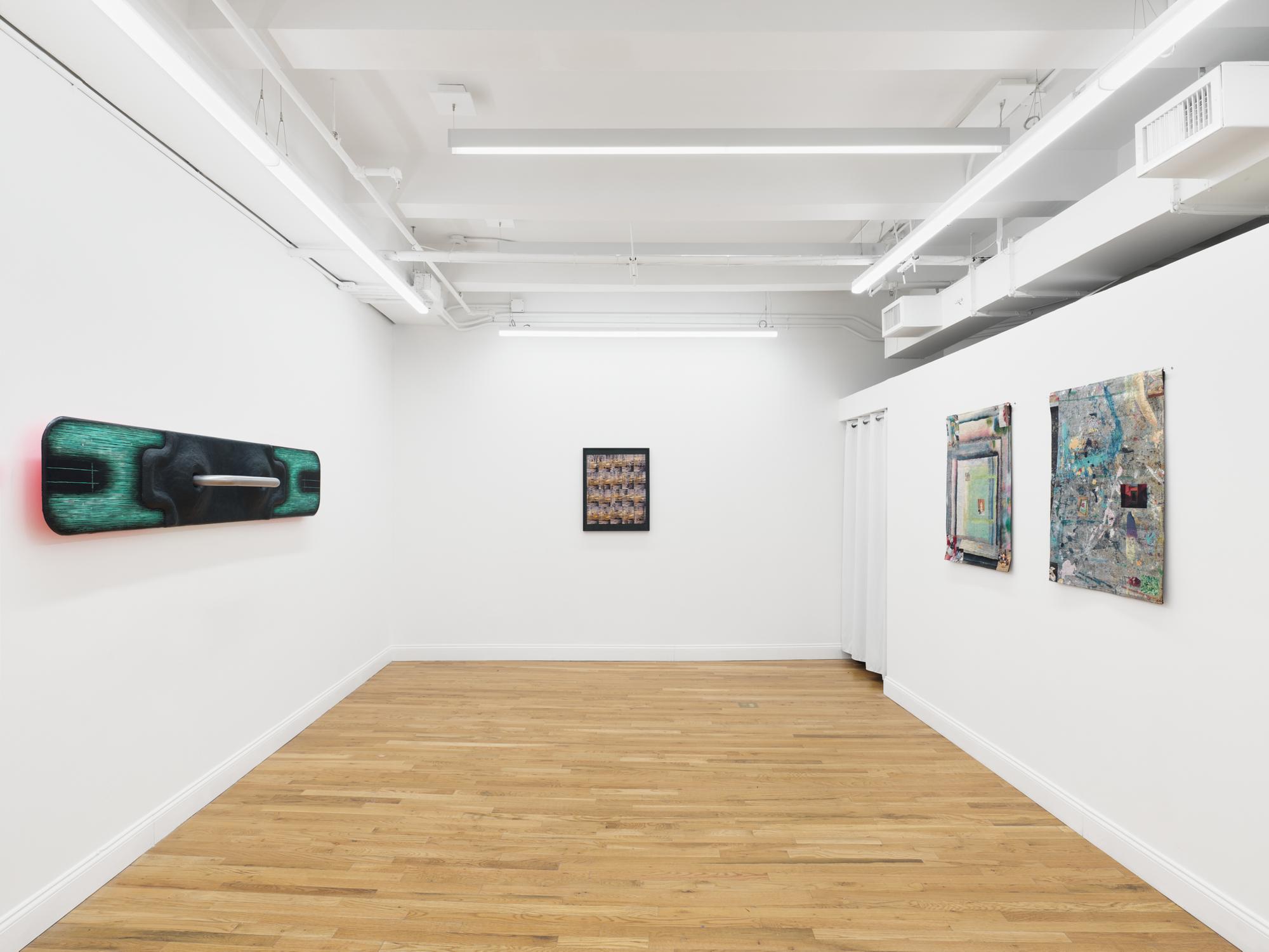
“Wetware” at RAINRAIN Gallery, Curated by Spine
Review
The contemporary world produces an unprecedented amount of information within elusive digital networks. Data and intelligence now function as forms of currency, their value increasing as systems of power demand new modes of control and suppress critical knowledge production. Most encounters with digital media are invisibly curated by algorithms that promote corporate interests. The inundation of “content” poses particular challenges—and perhaps certain opportunities—for curators. The graduate students at the Bard Center for Curatorial Studies explore the complexities of curating within an information glut in their thesis exhibitions, collectively titled Everything That Happens Will Happen Today.
The Hessel Museum presents these twelve distinct exhibitions, each with its own thesis and accompanying text. These projects are the result of two years of rigorous study at Bard CCS, which is considered one of the foremost curatorial programs in the world. While the curators demonstrate varied approaches to exhibition-making, they share a fascination with unearthing archives and lost histories.
Several presentations adopt the format of solo shows to propose new readings of modern artists, as in Maria Auxiliadora Silva; Imprinted in My Mind, curated by Bruna Grinstejn. Silva’s lush canvases are suspended on wooden armatures that span from floor to ceiling. Viewers circle each canvas as a discrete material entity, observing its verso. Silva might be one of the more traditional artists presented this year, but this curatorial intervention opens up possibilities of understanding the canvas as an object shaped by its historical and geographic context. This tactful mode of display illustrates the curator’s ability to think beyond the surface of the composition, evoking previously invisible perspectives.
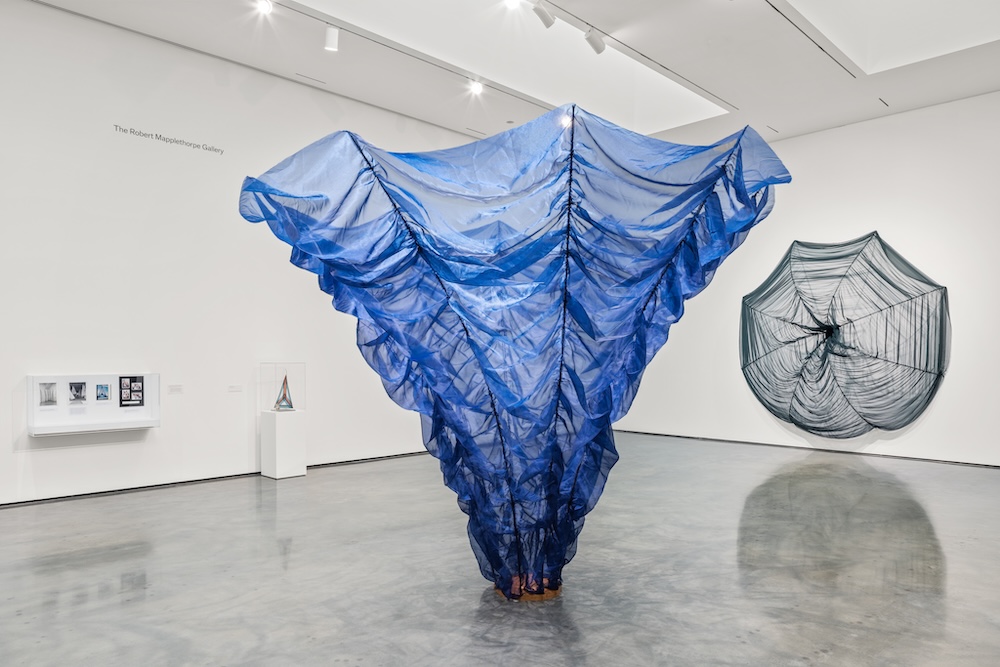
Curator Lila Gould models a similar commitment to thinking beyond the canon in Anne Healy: Logic of Intuition, which marks the first solo exhibition dedicated to the New York-based sculptor in decades. The show contains two of Healy’s large-scale textile sculptures that resemble parachutes or tents, with an additional sculpture installed outdoors on the Bard campus. A significant portion of the gallery is devoted to vitrines of archival materials and photographs from Healy’s installations in the 1970s, when she was a founding member of the artist cooperative, A.I.R. Gallery. The inclusion of this ephemera proves crucial in affording context for sculptures that seem to belong outdoors, in dialogue with the street. The curator provides tangible evidence of a practice lacking sufficient documentation online, while spotlighting the importance of archival research. The historical documents serve not solely to support the objects; the objects instead seem to simultaneously support the documents.
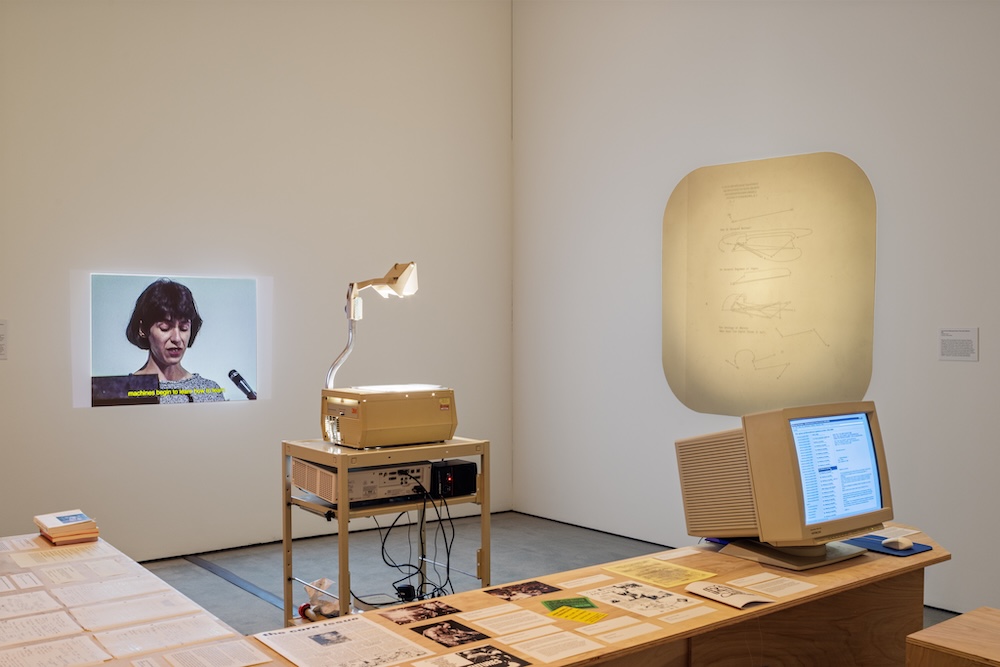
The exhibitions demonstrate a range of approaches to the status of aesthetic objects within archives. On one end, we see ephemera as the formal and conceptual focus, as in Assume Form, which examines the work of the Cybernetic Culture Research Unit (CCRU), a para-academic group founded by cyberfeminist Sadie Plant in 1995 and later led by accelerationist theorist Nick Land. Curator Emily Nola includes magazines, books, music, and videos that situate the group within its broader cultural milieu. The primary content of the exhibition is this ephemera, which is spread out on tables for perusal, with a nearby copy machine inviting replication of these materials, allowing visitors to take copies with them. Assume Form thus imagines the exhibition as an active site of alternative information distribution and relational interactivity. In keeping with the CCRU’s generative, science fiction-inspired approach, the exhibition embraces associative logic, collapsing distinctions between curatorial and artistic practice. This mode of presentation evokes the tactics of institutional critique by artists such as Marcel Broodthaers and Fred Wilson, in addition to the relational aesthetics of Rirkrit Tiravanija. The curator effectively emulates the subversive energy of CCRU as a group of artists that challenged the museum’s authority by positioning themselves as the distributors of ephemera and archival material.
Where Assume Form invited visitors to partake in research, other exhibitions spotlight artists as researchers. False Sponsor, curated by Ray Camp, explores the state’s involvement in the arts through three artists: Abigail Raphael Collins, Julia Weist, and Sophie Kovel. These artists examine both historical documents and contemporary records, assuming the role of researchers—or, in the case of Julia Weist, that of a licensed private investigator. Weist’s photographic assemblages of unearthed government documents serve simultaneously as art and as evidence in her case to retain her investigator’s license. Collins, meanwhile, presents a stack of declassified materials detailing the CIA’s involvement with the entertainment industry. Rather than positioning the viewer as a researcher facing a vast network of unfiltered ephemera, False Sponsor articulates its curatorial thesis through artists-as-researchers who synthesize and lend form to their findings. The distinction between artwork and evidence thus collapses into a single object.

A complementary approach appears in Christopher Gianunzio’s exhibition part of being alive, which features Sara Cwynar, Arthur Jafa, Mike Kelley, and Carmen Winant. These artists are united by an understanding of photography as a conduit for personal information. For example, Arthur Jafa’s binders filled with photographs offer an intimate window into the ephemera that the artist has chosen to preserve. Mike Kelley’s work juxtaposes black-and-white images from the artist’s yearbook with a re-staging of the same scenes in color. Kelley’s own archive is thus reinterpreted through this intervention, which questions the objectivity of photographic records. The artists in this exhibition model different ways in which the circulation of media becomes entwined with, and eventually inseparable from, personal narratives.
The overarching title of these thesis exhibitions, Everything That Happens Will Happen Today, evokes a frantic sense of simultaneity characterizing the present moment in which curators face more information than ever before. While it’s impossible to address all twelve exhibitions in this review, each curator navigates the challenges of translating research and negotiating the legibility of layered historical media while balancing conceptual and aesthetic interests. These shows together effectively advance open-ended questions of the complexities of curation in an increasingly dematerialized world oversaturated with content.
Everything That Happens Will Happen Today is on view at the Hessel Museum of Art from April 4 to May 24, 2026.