
.webp)

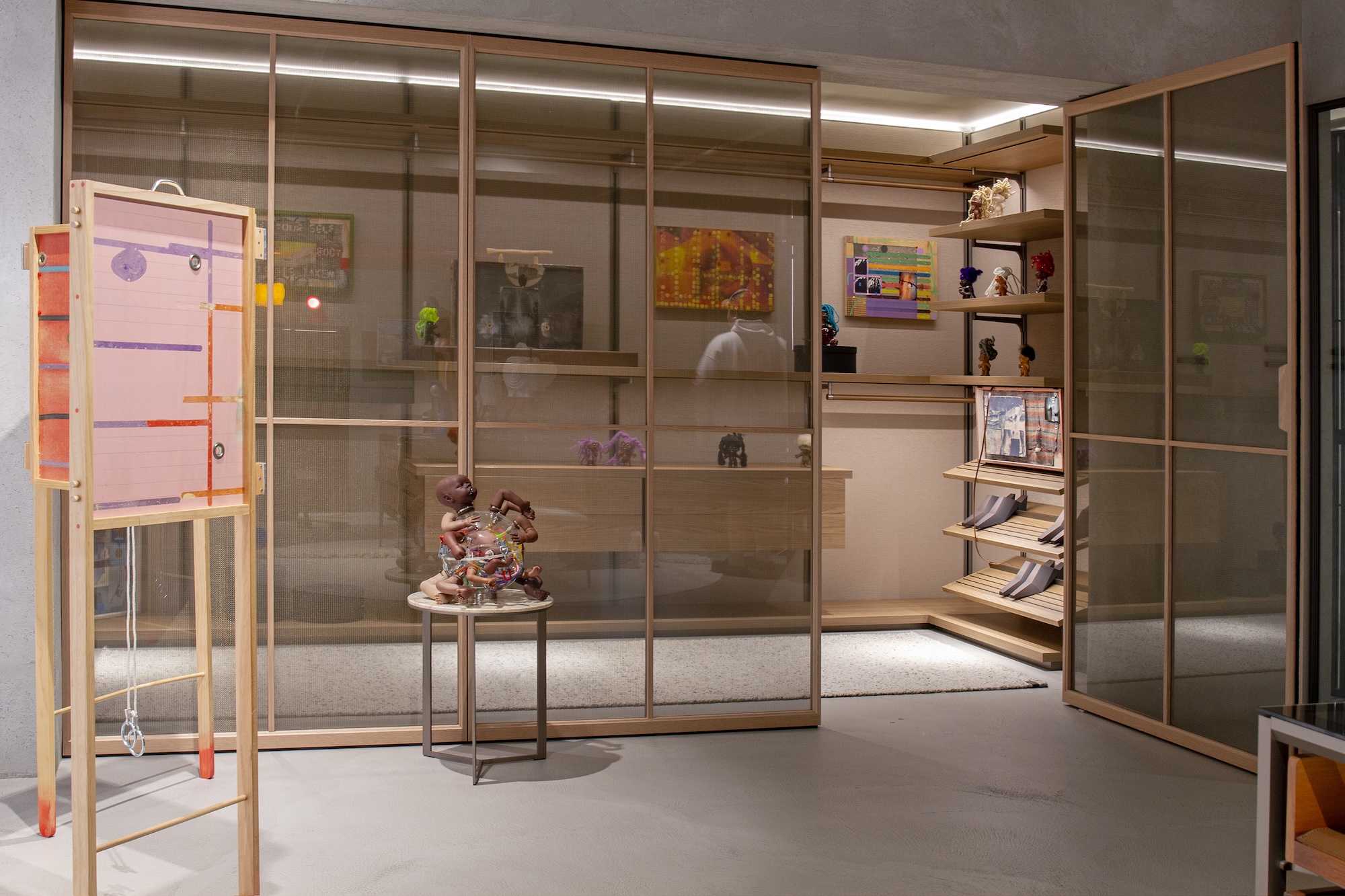
SPLIT LEVEL 2026
Review
In its third year, Esther continues to challenge the standard model for art fair display. Presenting an international showcase of 22 galleries, the fair engages with the decorative architecture of Estonian House and isn’t afraid to mount works in unexpected ways, hosting presentations that adapt and react to their surroundings.
Fairs play an integral role in the art world’s commercial ecosystem, even when the general dread of fair week has become something of an industry inside joke. In 2025, depending on the gallery’s revenue bracket, the percentage of sales that stemmed from art fairs ranged between 27%–36%, trending upward from 2024.1 Despite dealers’ skepticism at the increasing cost of art fair participation, opting out of fairs often poses serious challenges for commercial viability.
This raises the question of how and why art fairs account for such a significant portion of art market sales. There is an undeniable utilitarian appeal to the fair model, but it doesn’t lend itself well to the display of artwork. The art fair booth is a simulacra of the gallery space: art fairs attempt to replicate their flagship white cube spaces but end up diminishing them. But the illusion of the white cube is entirely dependent on the vacuum: when you enter the space, the outside world falls away. You see only what others want you to see, you submit to this, and in successful cases, submit yourself to the artwork. This de facto mode of presenting art has yet to be usurped by a dominant alternative, in many ways due to its utility in the status quo.
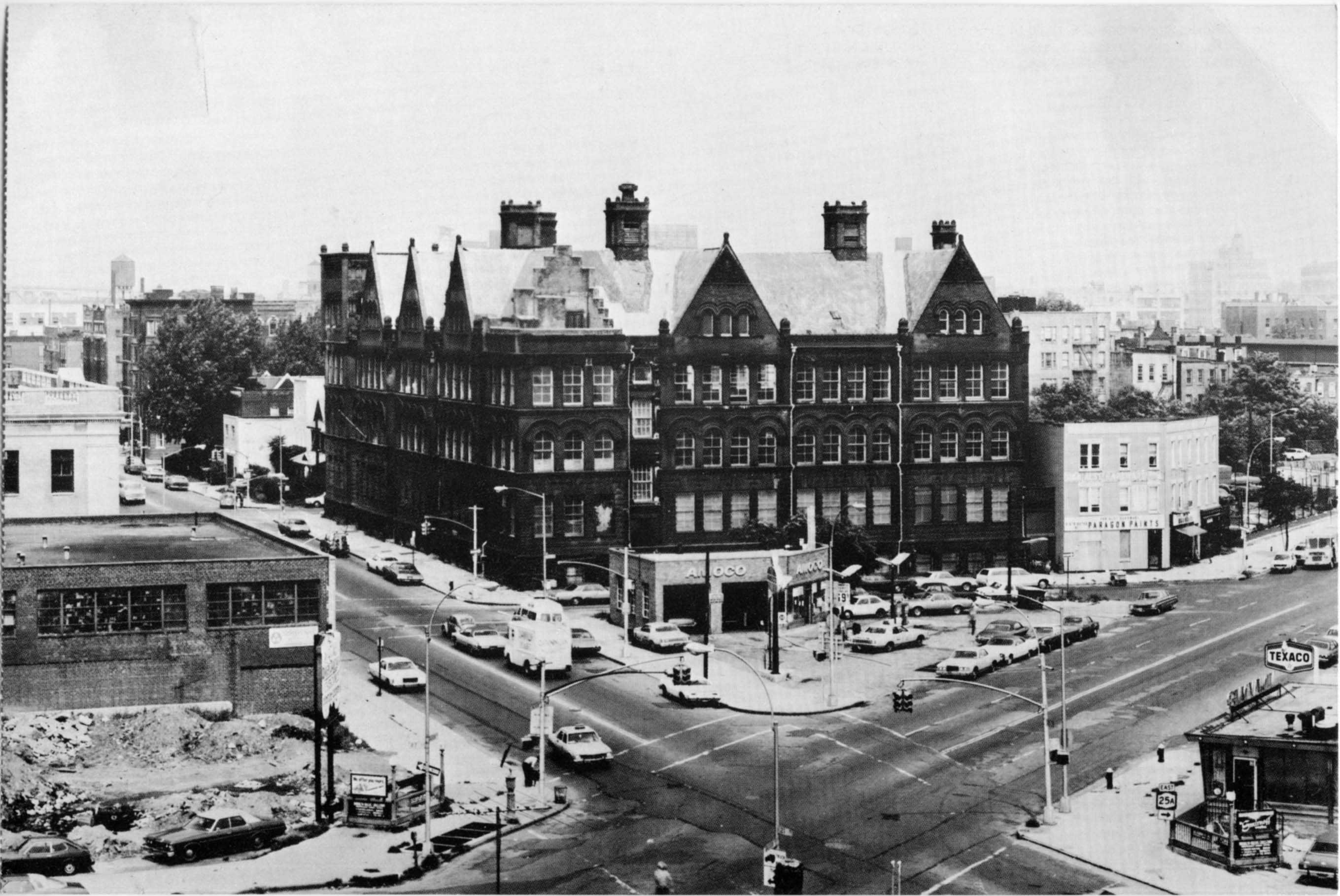
Esther is an acknowledgement of that paradox. On the one hand, galleries must participate in art fairs to circulate in a global economy, and on the other, the methods of display reduce art to its cheapest form. Since its inception, Esther has been hosted at the Estonian House on East 34th Street and 2nd Ave, and its identity as a fair is inextricably tied to its location. The Estonian Educational Society of New York (Estonian House) acquired the Beaux-Arts building in 1946, which was designed by Thomas A. Gray in 1899. Throughout the fair, the celebration of the building’s architecture is felt, not only through the vision of the fair’s founders, Margot Samel and Olga Temnikova, but also through the galleries that have been invited to participate.
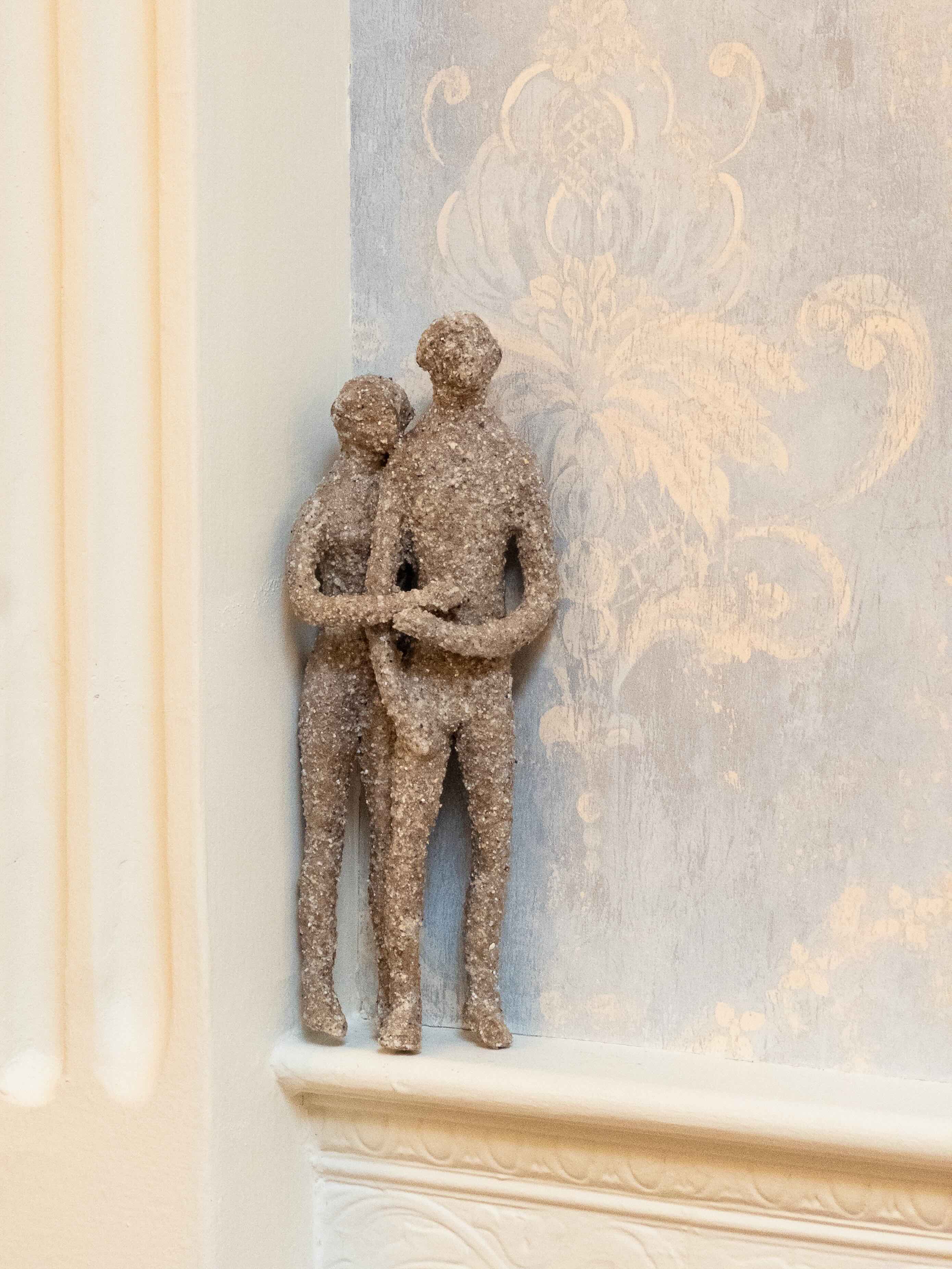
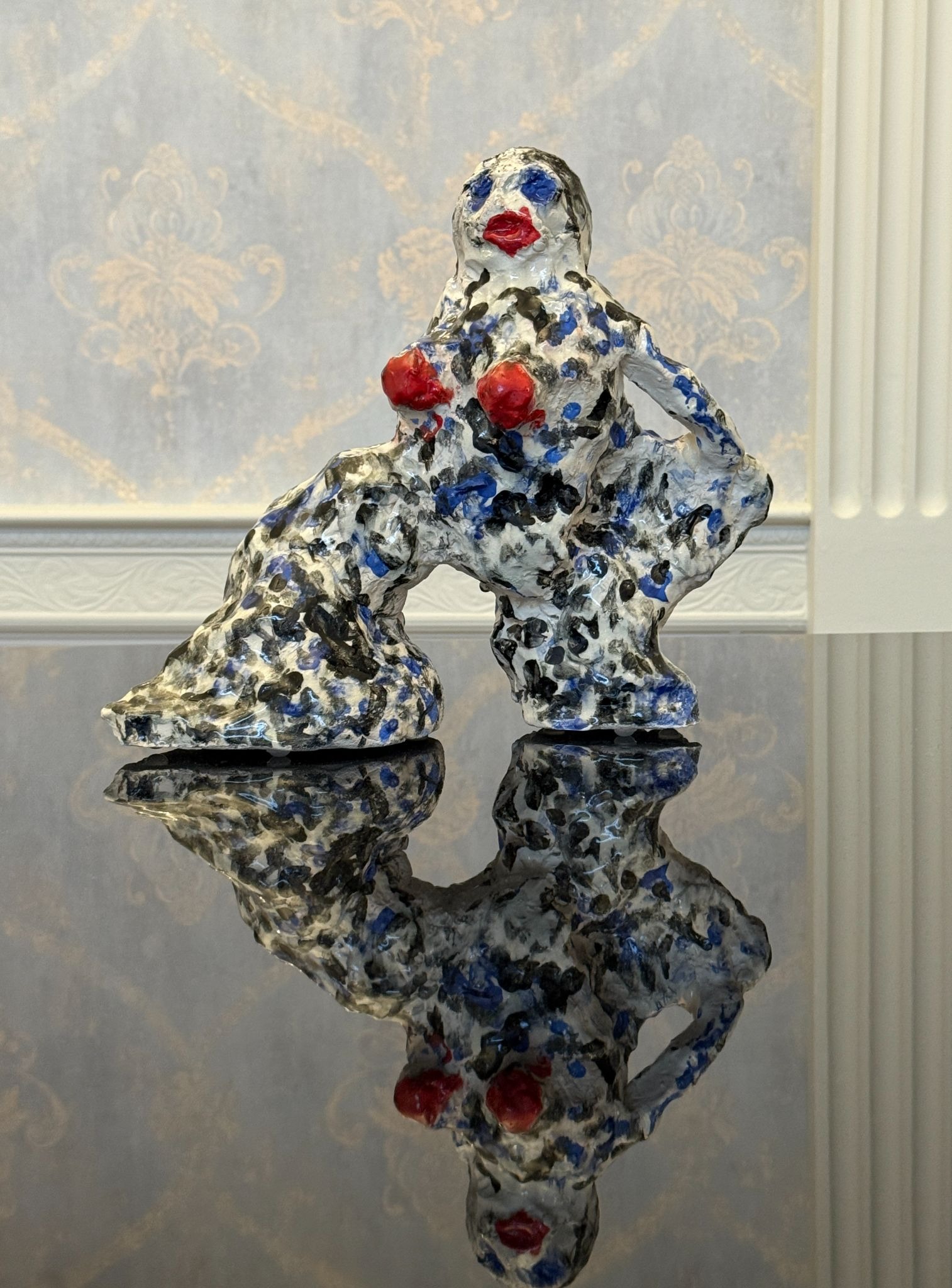
Budapest gallery Longtermhandstand presented Kata Tranker’s Parents (2026), a figurine molded from paper pulp and smashed stone balanced along the register of wall paneling on the second floor. In the same room, Thomas Erben Gallery was assigned a “wall,” which in reality is a freestanding frame structure hosting three of Mike Cloud’s early-career works. Viewers have an intimate opportunity to access the backs of Cloud’s canvases, where the artist’s cuts and punctures are visible. Set on the lid of a piano, Kerry Schuss Gallery shows a piece by the late Alice Mackler, Untitled (2023), one of her signature female figurines made at the very end of her life. The female form is a subject so over-canonized that it sometimes feels dull, but Mackler does not overwork the clay, and her brushstrokes seem to come freely, making the figure feel alive. These diverse presentations were all installed in the ballroom, yet the membrane between one gallery and the next was porous, allowing for an organic viewing experience.
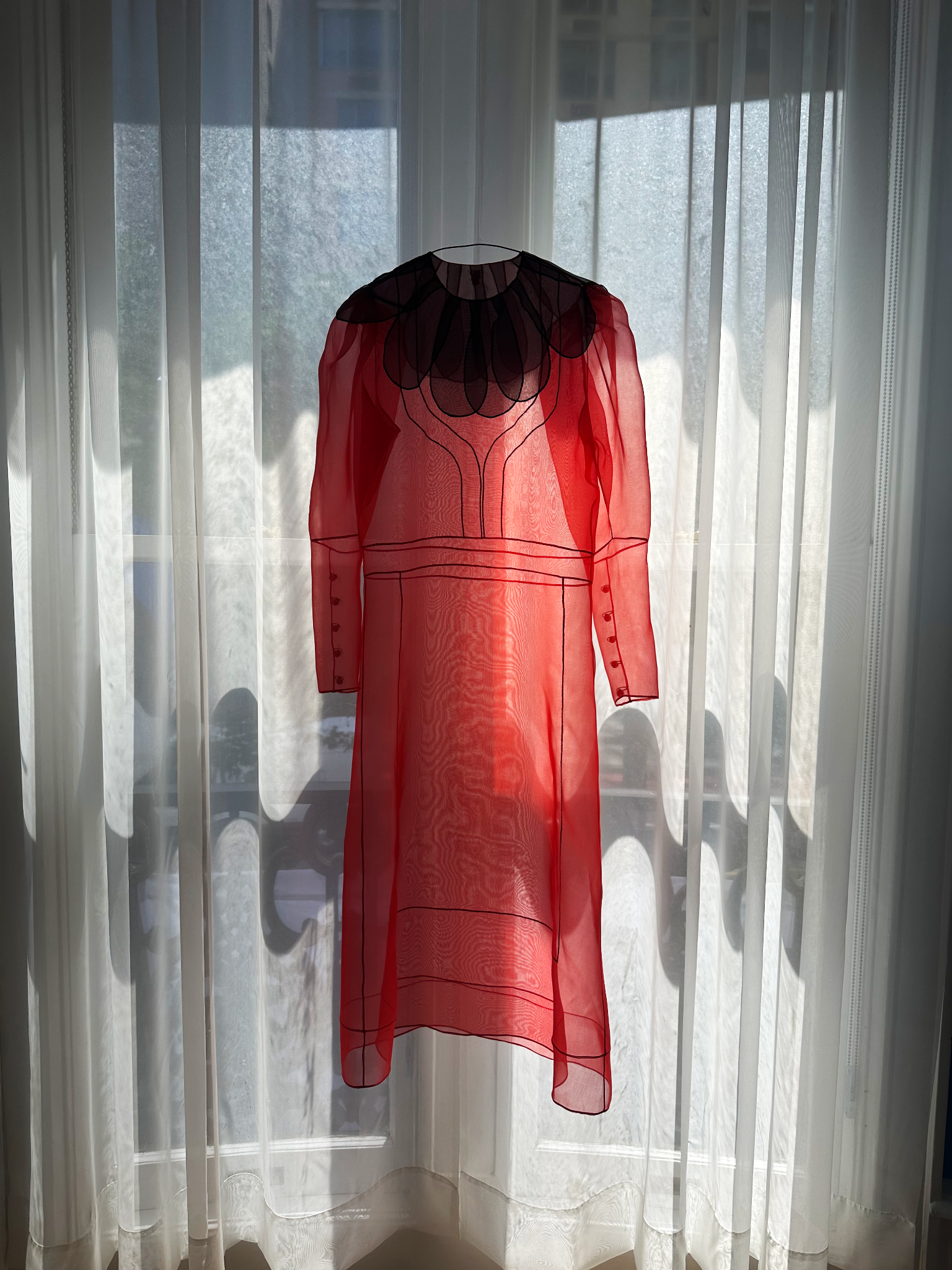
A signature feature of Esther is the artwork that fills the stairwell, as the fair makes full use of the building, imbuing a continuity absent from traditional fairs. Temnikova & Kasela mounted Thea Gvetzade’s Self Portrait (2025) in the stairwell on the way up to the Blue Room, where the artist’s silk organza dress, Silent Poppy (2026), floats like an apparition against translucent curtains. Estonian-based Kogo Gallery hung Kristina Õllek’s Surface Accumulation No. 2 (2022) on the knob of a bookcase, and King’s Leap hung Eli Bornowsky’s God Gives Herself Wholly and Completely in and as The River of Your Feelings (2026) from a picture railing centered right over double doors with green trim. These gestures give contrast to both the artwork and the architecture, unexpected pairings that reveal themselves to be oddly satisfying. The rarity of seeing artwork displayed in such ornate atmospheres is invigorating. To describe Esther as a salon-style exhibition wouldn’t be accurate, but there are traces of the salon throughout—evidently, all styles eventually come back around.
The first salon dates back to 1667, when the Royal Academy of Painting and Sculpture began exhibiting annually in the Louvre’s Salon Carré, which influenced other academies and museums, becoming the standard style of artwork display through the end of the 19th century.2 By the 1920s, the single-hang style became more popular. Through the influence of Alexander Dorner, who redesigned the Niedersächsische Landesmuseum galleries in this style, more museums followed suit, and the single-hang style remains the globally dominant display method.3 This is not an assertion that the art fair is, or should be, a salon, but Esther III successfully hybridizes the current gallery display standard with the salon’s polyphonic approach to exhibiting art. Esther recognizes that eyes get tired and that we crave the unexpected.
Art fair booths, art fair weeks, art fair parties, and so on are inevitable in the current commercial market, but when display contradicts art, it waters down the power of the object. It isn’t just arts workers feeling the burnout: the 2026 Art Basel and UBS Art Market Report wrote that “collectors had expressed boredom, felt less engaged, and were seeking more meaningful experiences than were on offer within the current framework.”4 Given that fair participation is almost essential for commercial success, art fairs must adapt to the changing desires of collectors and arts workers alike, as both groups influence market trends down the line.
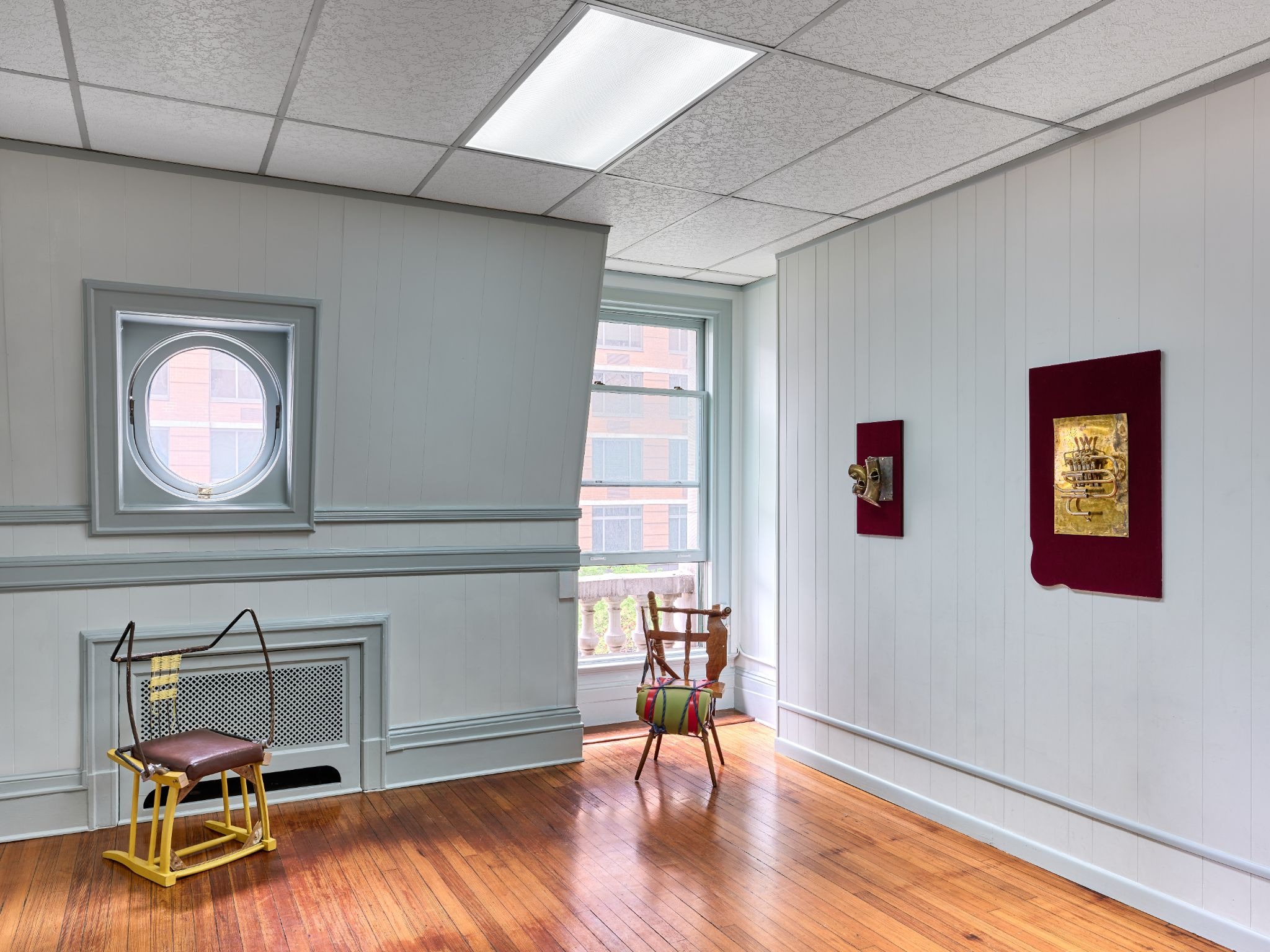
Esther isn’t reinventing the wheel, but it certainly recognizes our collective fatigue with the status quo. Visitors of Esther III (which is free to attend with a reservation) will find everything from airy paintings like Nick Jensen’s Trains on the Marshland (2025) at Tara Downs to chairchairchair, a special project by Houston Parke & Isaac Haseltine providing functional seating built from found objects throughout the city. The fair strikes a pleasant balance between measured interventions from the fair’s founders, Samel and Temnikova, but also allows for an organic and diverse exhibition of artists. Esther III sets the tone for a renovated art fair model, its curatorial approach relying on site specificity and a continuity between presentations, definitively bringing an exciting energy to New York Art Week.
Esther III runs at the Estonian House from May 12 through 16, 2026.
1 Clare McAndrew, The Art Basel and UBS Art Market Report 2026 (Arts Economics, 2026), 111.
2 Alexandra Morrison, “A Little History of the Salon Hang," MoMA Magazine, August 9, 2024.
3 Morrison, "A Little History."
4 McAndrew, Art Market Report 2026, 113.