

In Conversation with Brittany Adeline King
Interview
When I feel myself drifting into abstraction about how images circulate, I go back to the mechanics of how an image is made. Work out one trick, and the others get easier to see.
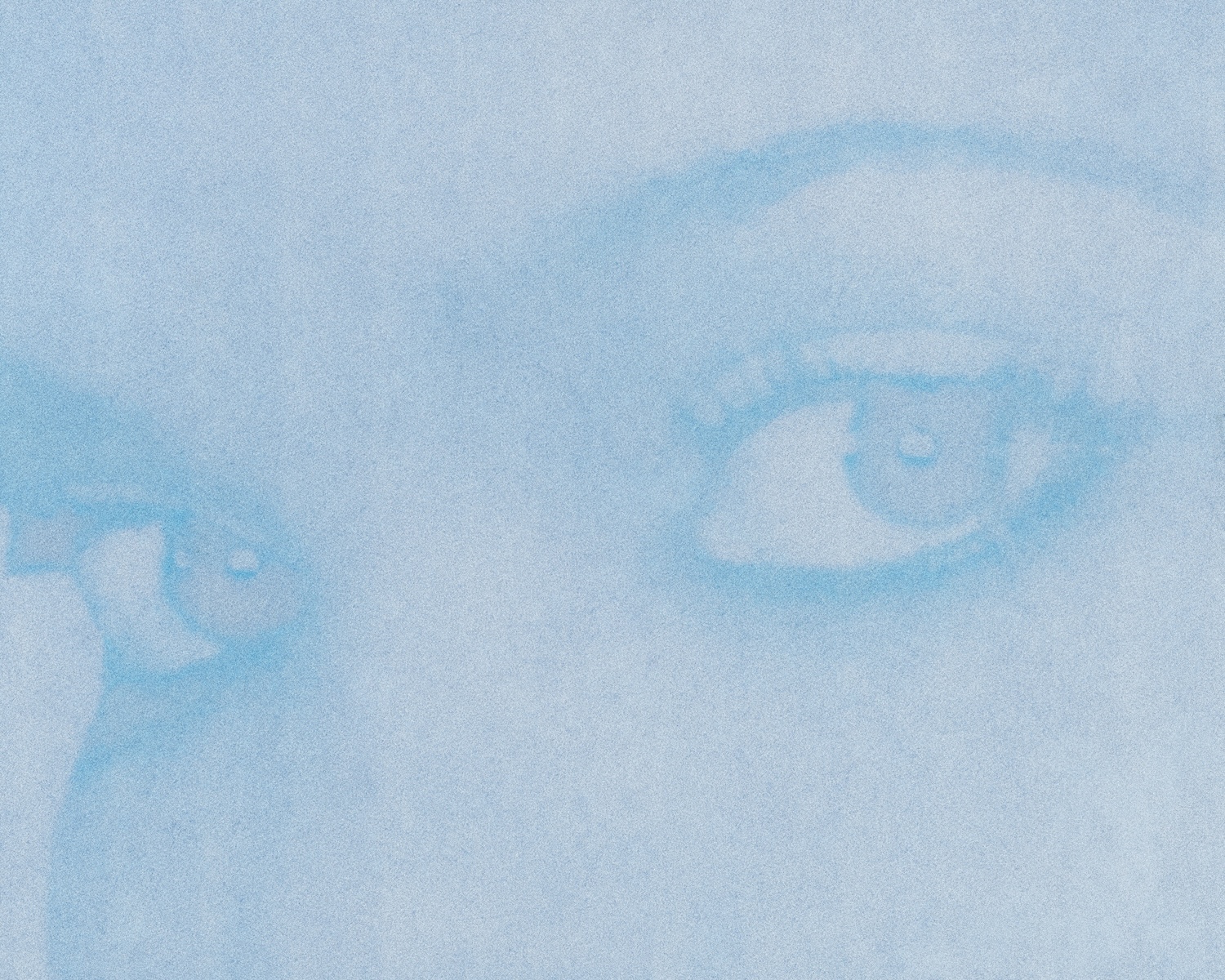
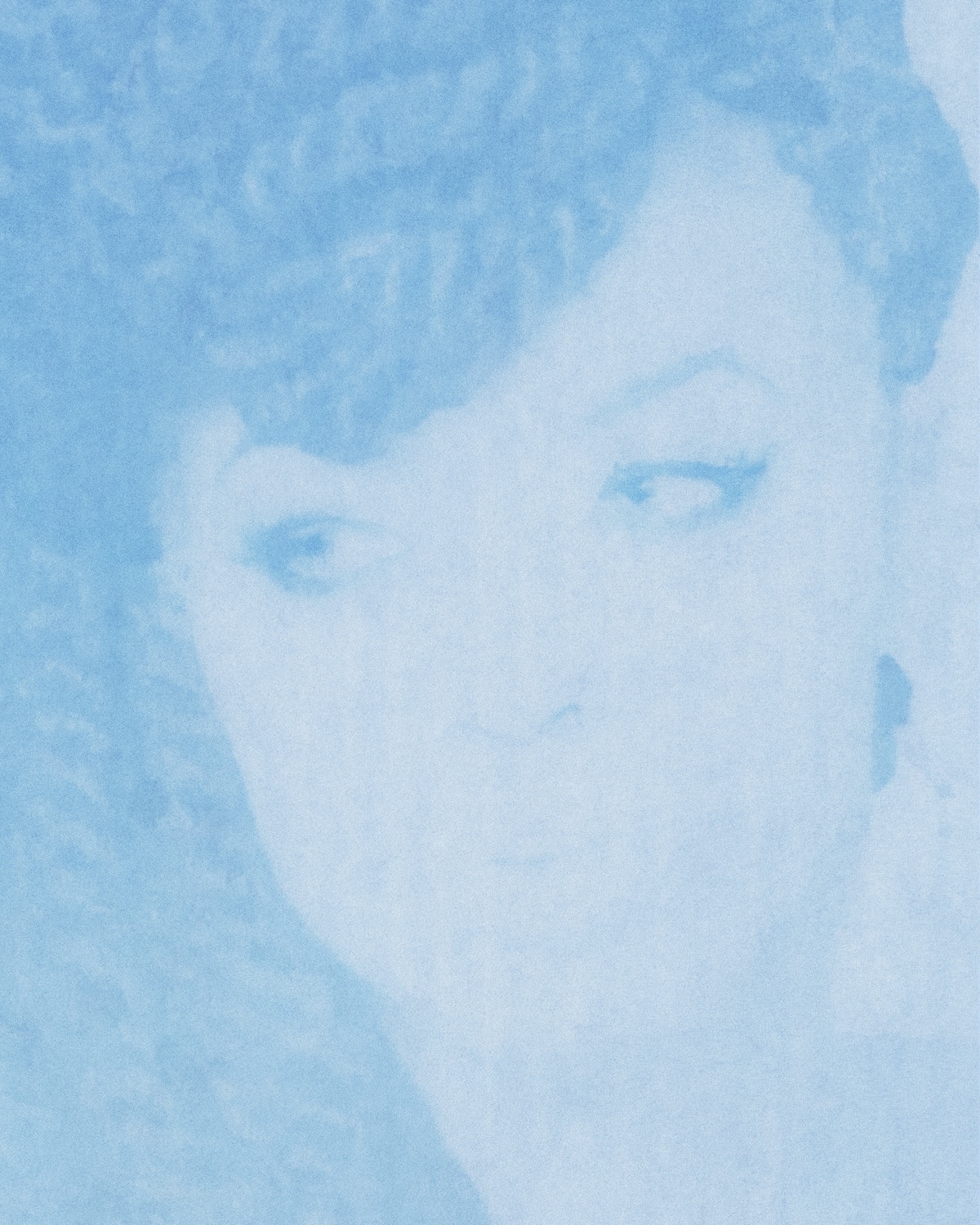
A color print is one such bewildering trick, built up dot by dot from cyan, magenta, yellow, and black, and the eye fuses them into something that looks complete. It does not last, because the sun undoes the trick in installments. The inks are not equally resilient. Magenta and yellow go first. Cyan and black are the durable ones, and since the black can sometimes exist in shadow and edge rather than mass, what sometimes survives is a blue image with its black line drawing still visible. The illusion of fullness turns out to be a stack of thin things, and blue is what sits at the bottom of it. Brea Souders has made a book out of that bottom.
The main verbs used on photography’s behalf tend to be arrest, stop, capture, and preserve. So are the beauty industry’s. Souders’s new body of work, Blue Women, is made from sun-drenched commercial beauty posters advertising products for hair, nails, brows, and lashes. The women in them are standard bearers, beckoning you into the store to revitalize your face, to keep your beauty, and to get more of it. They were meant to sell the arrest of time. In public, they are losing to it. What we see here is not decay in general but a specific promise coming apart, once by photography and once by the industry that put these photographs to work. The sixty-one plates are what the sun left of sixty-one commercial photographs.

By Souders’s account, the work began when her phone kept insisting she capitalize “blue,” and the autocorrections sensitized her to the color enough that she started looking more closely. Then, on a walk in Bushwick, she passed a salon that had just papered its windows with new posters advertising the store’s various beautifying services. Six months later the posters had all changed color. She has been photographing beauty-industry posters in situ ever since, in New York, Tokyo, Istanbul, and Paris, going back to the same ones to see how they change.
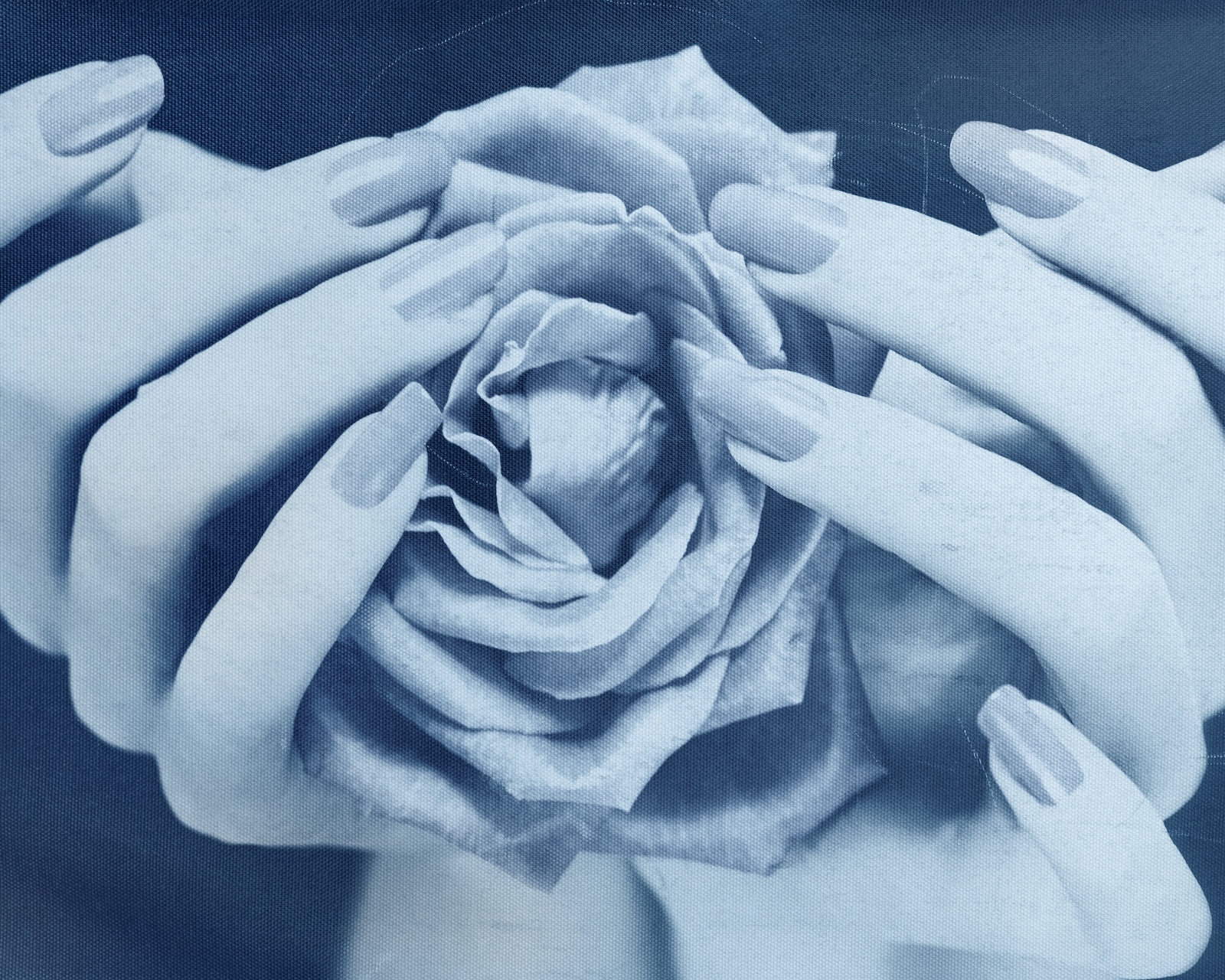
The posters came from low-resolution files that had passed through an unknown number of stock sites, then were printed far larger than those files could bear. In some cases Souders shows us pixels nearly the size of the fingernails or the flower petals they are meant to represent. She crops in close and enlarges further, so that the scaffolding of the image becomes the picture.
For the Pictures Generation, appropriation itself became a form of deconstruction: the image was taken as it stood, and a shift in context and authorship opened it up. Souders appropriates an image that has already lived many lives and has already been taken apart twice, digitally in its making and retouching, and physically by the sun. This deconstruction happened without her. Her authorship is largely a matter of what she noticed and how she assembled it. The critique was already underway in the window. In the nearly fifty years since the heyday of the Pictures Generation, and the more than a century since the first readymades, appropriation has become everybody’s daily practice, leaving the artist to find a different job. Souders’s version of it is more generous and more pluralistic than her predecessors’, perhaps because the work begins with the assumption that the world got there first.
This then raises the question of who made these images. An anonymous retoucher working from stock. An anonymous model, paid once, if at all. An anonymous printer. A shop owner who picked this poster over another, hung it at a particular height facing a particular street, and kept it up, deciding what we see and for how long. Then the sun. Souders adds herself to this lineage. For a time she is its newest point. In time, the sun will make a mark on her work too.
Walter Benjamin argued that mechanical reproduction strips a work of its singular here and now. The sun, and a shopkeeper’s decision about where to place a poster, have handed this here and now back. Impermanence is what individuates, especially in an era of gloss and AI smoothness. Each of these images became unique the moment they encountered their failure. They are renegade images, escaped from the commerce that made them and made singular by the thing that ruined them.
As contemporary as this work feels, it reaches back to the genesis of the medium, and Souders says so herself, naming Anna Atkins’s botanical cyanotypes among what she sees in the series. For Atkins, one of the mothers of photography, Prussian blue was what cyanotype’s chemistry produced, a byproduct of a contact process she used as a botanist with specimens to record, enlisting the sun to print what she found. Souders arrives at cyan from what could be seen as the other end, after the fact, by solar attrition. She finds Atkins's subjects too, flora, blossom, foliage, though hers arrive already printed. For Atkins, the blue was not the loss of anything. What was lost was her place in the story, which the field has been slow to correct. With Atkins and Souders, blue sits at either end of photography's history: where a picture begins and where it comes apart.
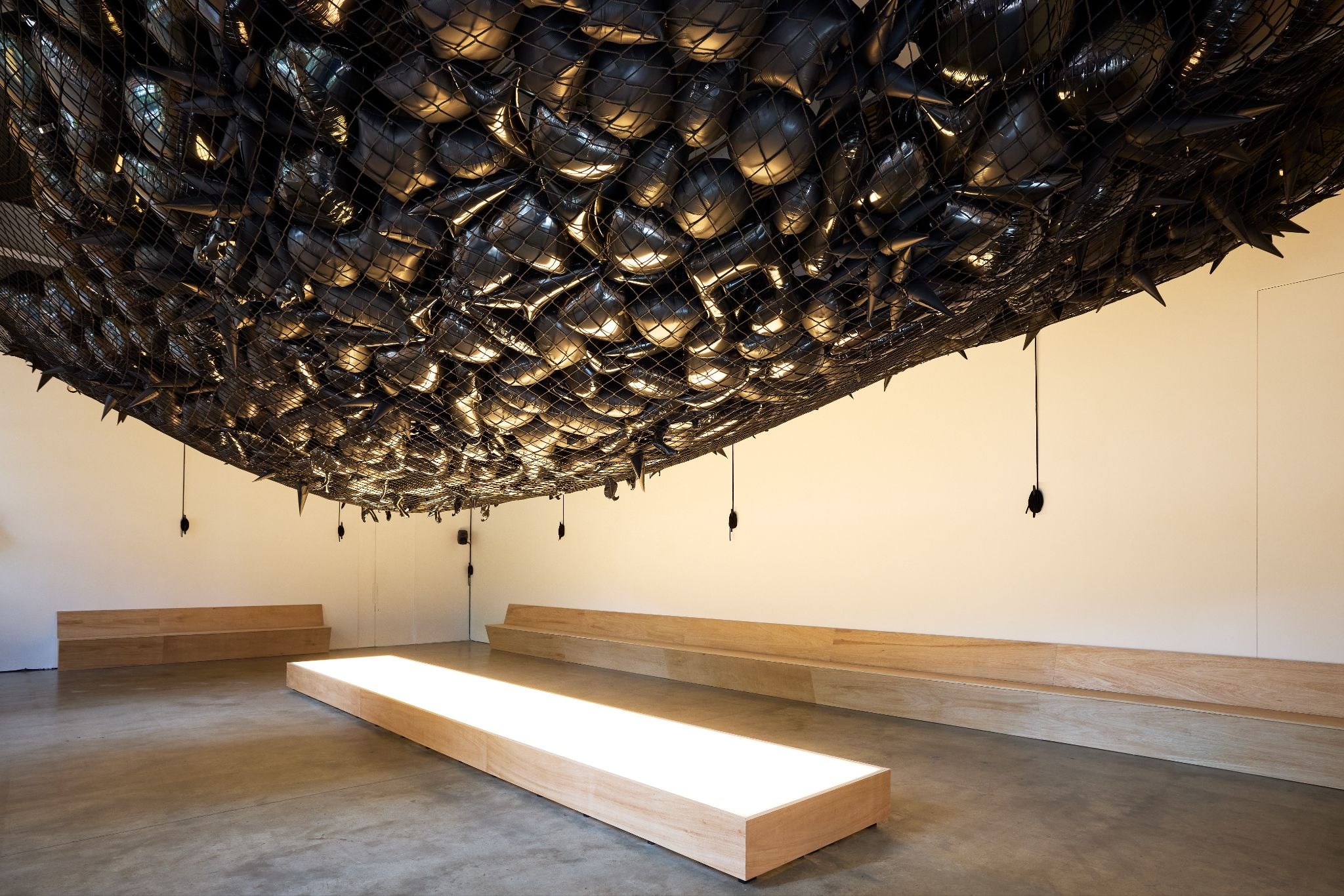
Nearly two centuries later, Souders’s work sits in conversation not only with Atkins but with Lotus L. Kang, who hung long sheets of unfixed photographic film from steel joists at the 2024 Whitney Biennial and left them in the sunlight that reached the gallery. The sheets of film, which I encountered when most of them were aglow with apricot and amber hues, stayed sensitive and kept changing for the length of the show. Kang calls the process tanning and calls the sheets skins. The salon posters were tanning too, though nobody planned it, hung in a window and left in the sun for years. Both are photographs that are still happening, except that Kang builds the impermanence in at the start and Souders finds it already accomplished before she arrives.
The book’s most persuasive moment is a pair of images, each from a different version of a poster of a woman’s hands, her fingers interlaced, nails done. Souders photographed both posters, made from the same digital file and possibly the same press run, now living as two objects that have arrived at different blues. In one, a faint magenta lingers in the nails, suggesting that the fingernails were once meant to advertise a lush red or purple polish. In the other, everything is washed in blue, and that small piece of evidence of the image’s former life and use is no longer retrievable. We see the same image, now freed of its earlier context and responsibilities.
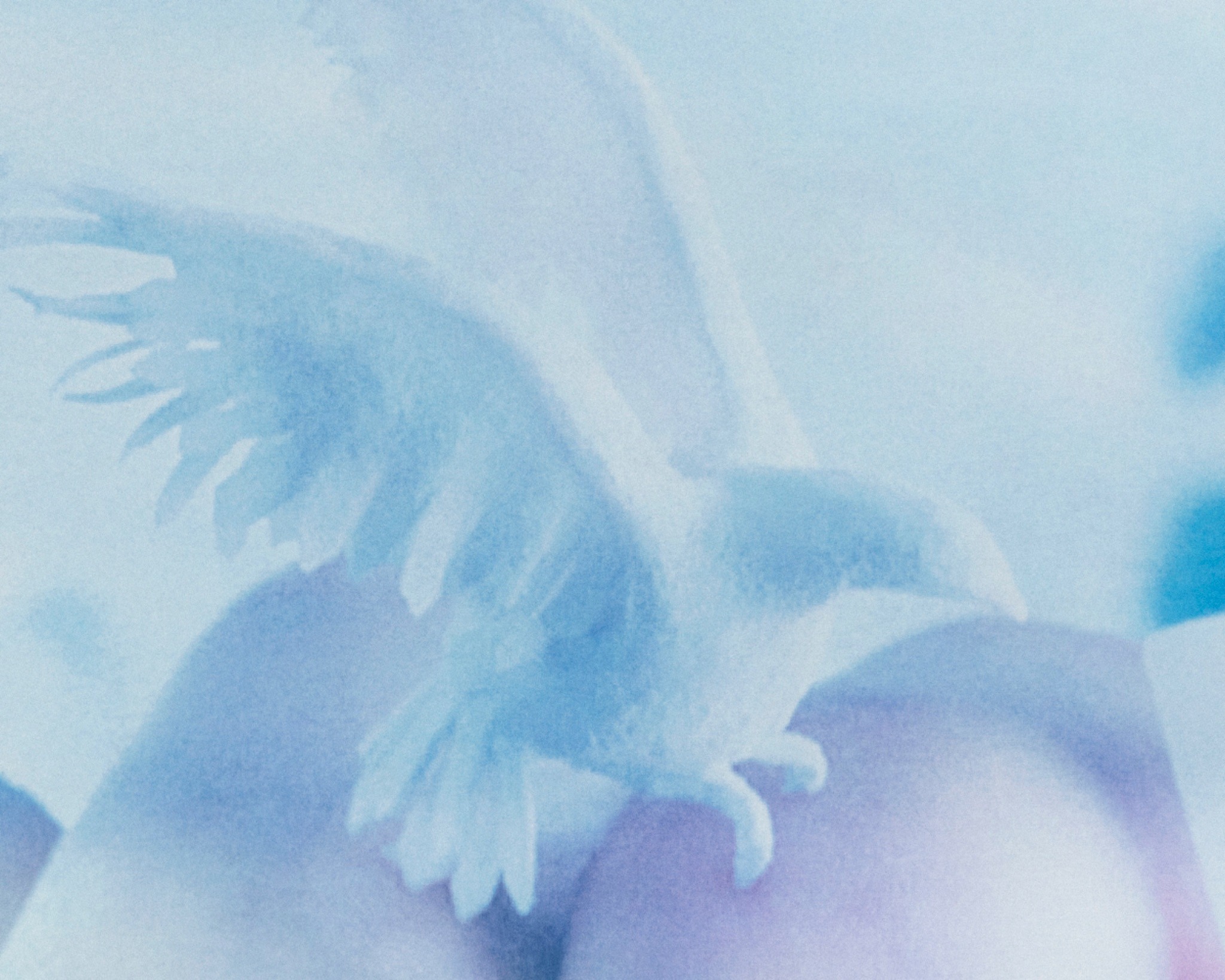
Souders found other doubles. A poster of a white bird perched on a woman’s hand turned up in Brooklyn and again in Istanbul, faded further in the second city. There are doubled flowers, and a doubled face she has not printed. Only the hands with the faded nail polish made it into the book as a pair; the second bird was cut in the final edit.
Souders tried to buy some of the posters and was turned down because the owners told her the customers liked them as they were. The salon window is a real economy, particularly for small businesses in neighborhoods where a window is the entire advertising budget. The shopkeepers are open to the way these posters have changed. Even if these blue posters no longer convey the services offered with any precision, they have become as much a part of the architecture as the front door.