

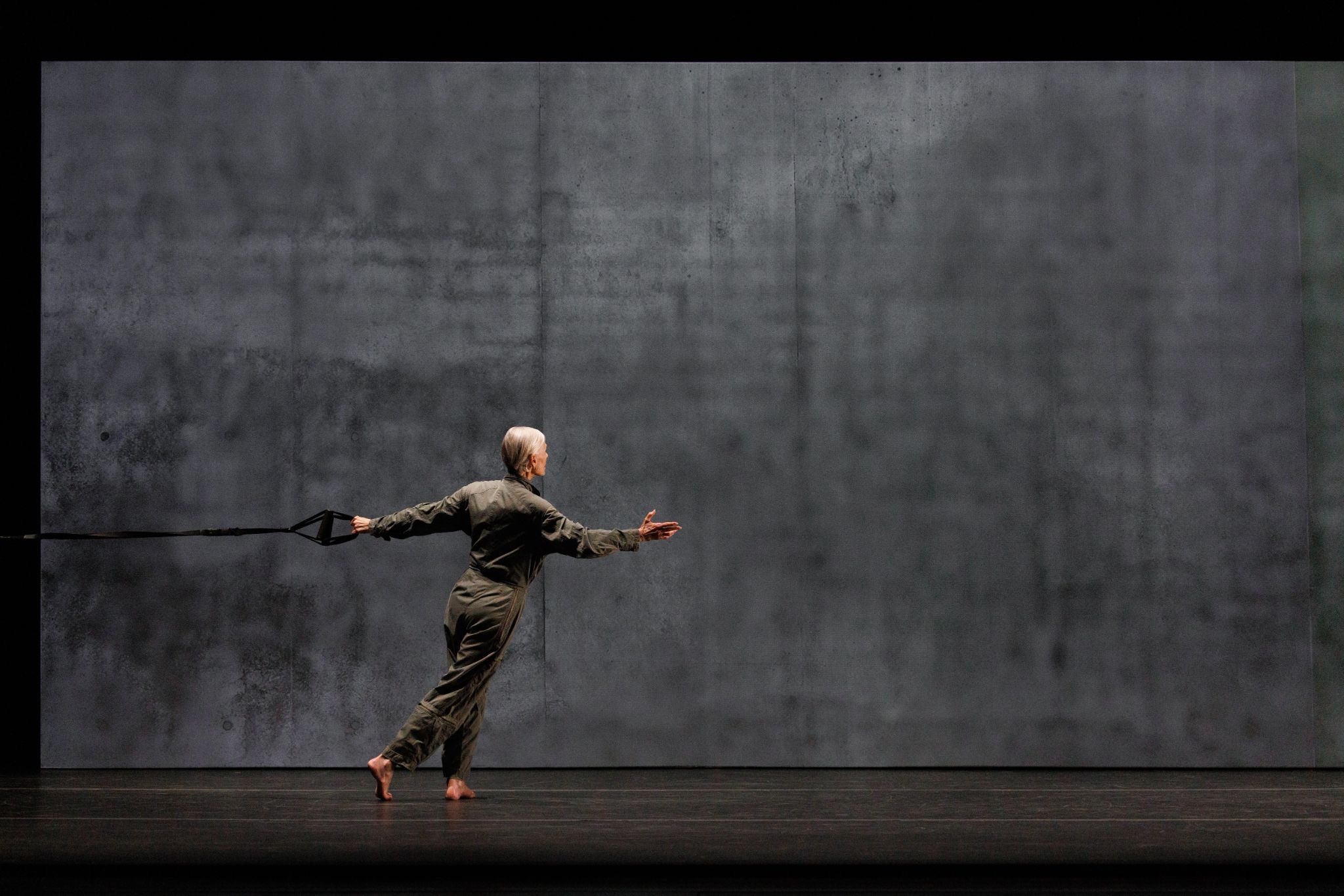
REACH OUT, TOUCH GRASS
Voice
Counterpublic’s Coyote Time illuminates systemic inequities through intimate narratives, demonstrating how an exhibition’s commitments can extend beyond artworks to the resources and relationships it leaves behind.
“What is all that?” I asked Telly, my Uber driver, as we approached the Saint Louis Art Museum, a Corinthian-columned structure on a hill surrounded by hundreds of American flags. After visiting the museum, I investigated the patriotic spectacle, where a man explained that each flag commemorated a life lost in the “war on terror.” When I asked about his affiliation, he told me that it provided training for active-duty and retired military personnel.
“Like crisis management?” I asked. “No, like combat, shooting.”
This dystopian political whiplash following my visit to Juanita McNeely’s work felt like an apt prelude to Coyote Time, Counterpublic’s exhibition, the third edition of the triennial in St. Louis. Curated by Jordan Carter, Raphael Fonseca, Stefanie Hessler, Nora N. Khan, and Wanda Nanibush, the exhibition takes its title from Alice Bucknell’s commission, which references a video-game feature in which a character is briefly suspended after running off a platform. This interval gives the player time to decide whether to fall, retreat, or leap toward a platform ahead. This stalling mechanism lends certain forgiveness, a brief lapse from the rules of gravity that allows the player to consider their next move.
Coyote Time emerged from multiple crises that reflect the conditions of life in the city and nation more broadly. In May 2025, an EF-3 tornado tore through St. Louis, damaging thousands of buildings, once again exposing the city’s infrastructural vulnerabilities. Counterpublic joined cleanup efforts to address the unevenly distributed destruction, with neighborhoods shaped by redlining and disinvestment suffering some of the greatest damage. Then, that November, Counterpublic’s planned exhibition site—a complex of historic warehouses south of the Gateway Arch—burned down in a massive fire.
Counterpublic describes itself as a triennial “reimagining the possibilities of art in public life,” addressing the St. Louis region’s pressing challenges through community engagement, dialogue, and research. In Coyote Time, I found this lofty mission remarkably convincing, not because art alone can radically transform anyone’s material circumstances, but because Counterpublic demonstrated its commitments in material terms. The organization’s 2024–2025 Community Engagement Report records conversations with 1,400 St. Louisans and 775 written responses gathered over eighteen months. The research identified the priorities for this triennial: supporting immigrant communities and investing in Native futures, climate action, transportation, queer joy, and community connection.
These commitments were demonstrated most clearly in the central hubs of the triennial. Counterpublic partnered with the International Institute of St. Louis, a nonprofit providing vital support and resettlement services for immigrants and refugees. In early 2025, the Institute lost sixty percent of its staff and the majority of its annual budget. Counterpublic responded by establishing a two-year fellowship and directing resources toward the organization’s depleted infrastructure.
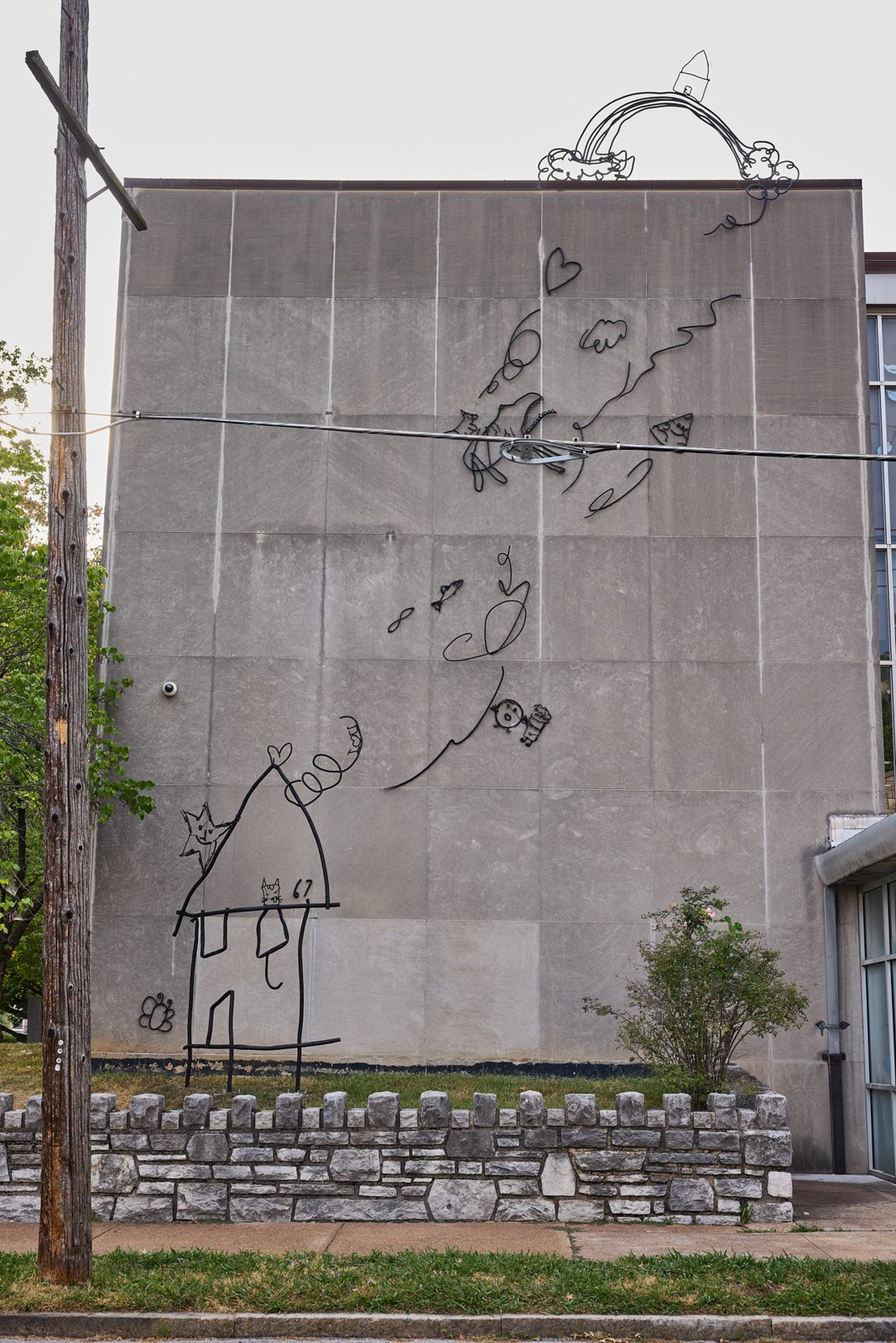
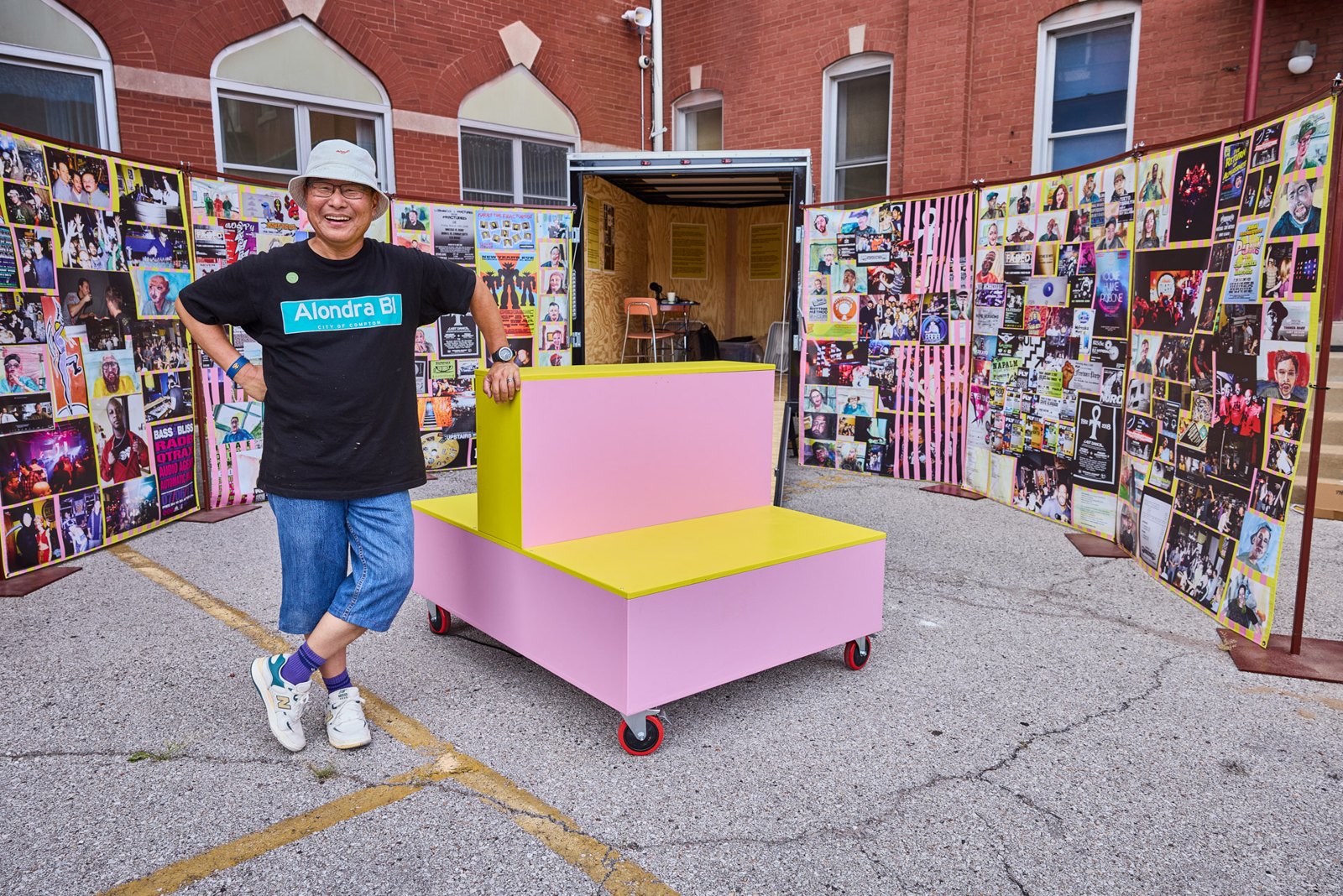
Coyote Time positioned the Institute as a citywide gathering site with installations by diasporic artists. Petrit Halilaj’s iron linework now permanently climbs the Institute’s façade, translating both his own childhood memories of the Kosovo War and the doodles of students who had recently immigrated to the United States into monumental sculptures. Inside, Counterpublic supported infrastructural upgrades to the Institute’s cafeteria with Rirkrit Tiravanija’s (open kitchen) (2026), which included local cooks in serving the community St. Louis-style Thai curry. Meanwhile, nestled in the corner of the Institute’s parking lot was FUTURE HOUSEHEADS, THIS WAS TU’S HOUSE (2026), Alan Nakagawa’s traveling oral-history studio commemorating the legendary life of Tu Tien Tran, a Vietnamese refugee and founder of Upstairs Lounge, a house-music club that operated from 1992 to 2018 above his family’s Mekong Restaurant. Collectively, the ongoing impacts of these projects beyond the duration of Coyote Time demonstrate a central priority of the triennial by productively complicating the distinction between the artwork, the triennial, and the partner organization.

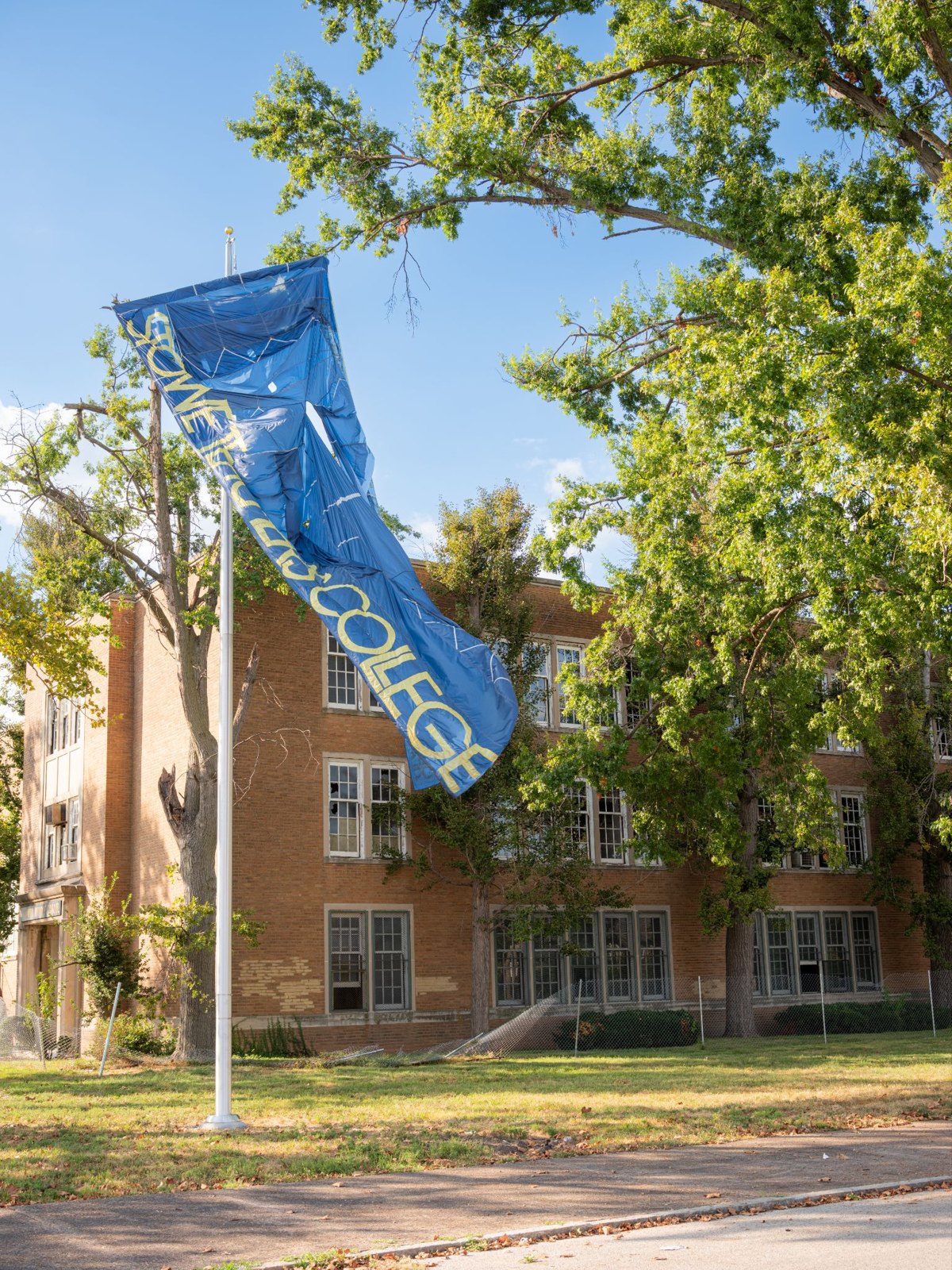
Coyote Time also prioritized civic engagement through reinvestment in historically disenfranchised St. Louis neighborhoods like The Ville, where Sumner High School—already contending with decades of institutional and municipal disinvestment—was further damaged by the 2025 tornado.
At the historic school and surrounding sites, Timmy Simonds extended his project Miss Othmar School for Teachers (2026), which references the history of Sumner Teachers College, the first Black teachers college west of the Mississippi, and the ongoing education of teachers themselves as neighborhood stewards. Giant pants made from decommissioned parachutes billowing on flagpoles read as both mournful and tender: pants emptied of their legs, memories of schooldays carried by the wind.
Just a few blocks away at Antioch Baptist Church, Tony Cokes’s new commission, TT The River Won’t Stop (or, A Stomping Horse) (2026), addressed the life and legacy of Tina Turner, a St. Louis resident and former student of Sumner High School. Found text, Turner’s words, and music are layered across the moving images, while contributions from members of the congregation situate the work in the social history of The Ville. Early one morning, artist Malcolm Peacock led the Northside Trap Run, a public 5K highlighting several of the neighborhood’s commissions, including those of St. Louis locals like Dail Chambers and Jamie Lee Harris, alongside a discussion of the Ville’s history.

As I returned to my hotel one night, I encountered a group of girls in town for a soccer tournament, sitting in a circle on the hallway carpet. Giggling, they asked me, “We’re doing tinsel in our hair, do you want some?” When I returned from the Coyote Time opening celebration later that night, I found a fairy circle of metallic glitter in the hallway.
The Mississippi River’s ecological and cultural significance emerged as a central priority. Under the curatorial guidance of Wanda Nanibush, installations by artists including Nicholas Galanin, Yatika Starr Fields, and Rebecca Belmore addressed local Indigenous histories and sovereignty, most often in dialogue with the river. Earlier this year, Counterpublic and the Osage Nation completed the transfer of Sugarloaf Mound—a sacred site, the last intact Mississippian mound within the city of St. Louis—to Osage ownership after years of negotiation. Here, “public engagement” extends beyond programming into questions of land, sovereignty, and material possession.
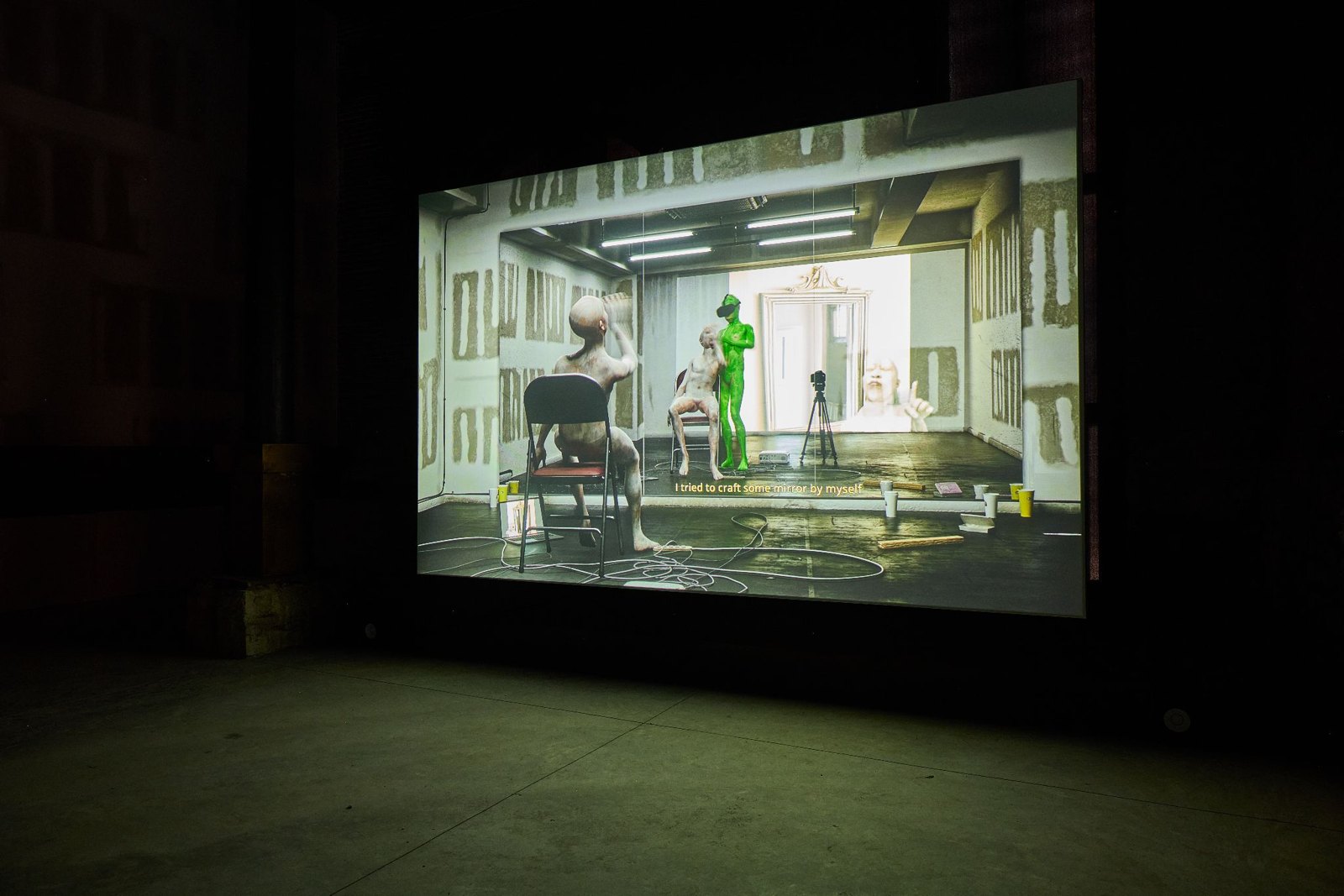
One morning, a barista explained that the St. Louis riverfront neighborhood activated by Coyote Time, which had been vacated during COVID, would soon be home to a newly approved data center near Gateway Arch National Park. This forced me to consider the several works commissioned by Coyote Time that utilized generative technologies like AI, another subject that the triennial sought to interrogate. Ultimately, I found myself most convinced by the more bespoke and personal technological mediations: LI Yi-Fan’s witty piloted-model animation Cheap Mirror (2026), for example, brings together the nearby river surface, our screens, and our self-perceptions, while Alice Bucknell’s aforementioned text-based video game Coyote Time (2026)—playable by visitors on a large projection screen—is thick with situated research into St. Louis lore, geography, and cultural memory. Here, technology feels less like a full stop than a starting point to examine the peculiarities of place and personhood.
After a busy opening weekend of varied localized programming, I am forced to zoom out beyond the immediate context of St. Louis. Coyote Time opened almost exactly twenty-five years after September 11, 2001 and 250 years after the founding of the country, two anniversaries commanding significant cultural attention. I thought back to my first St. Louis interaction with the military man who really wanted my submission to his agenda. Maybe as an antidote, I spent a lot of time thinking about Ali Eyal’s reflection on the two items his father kept in their household cabinet during his childhood in Baghdad: bullets and chocolate.
Eyal’s commission The forgotten little candy in my pocket, and. (2026) gave subtle form to his experience of political transformation and instability through painting, sculpture, and text. In the center of the gallery, on a red botanical rug evocative of Iraqi domestic spaces, sat a low wooden cabinet just tall enough to house stacked chocolate bars and fake bullets: markers of the capacity for holding both joy and violence simultaneously. The piece is further charged by the story of Eyal’s father, who was abducted by armed groups amid the international sanctions and embargoes imposed on Iraq in the 1990s.
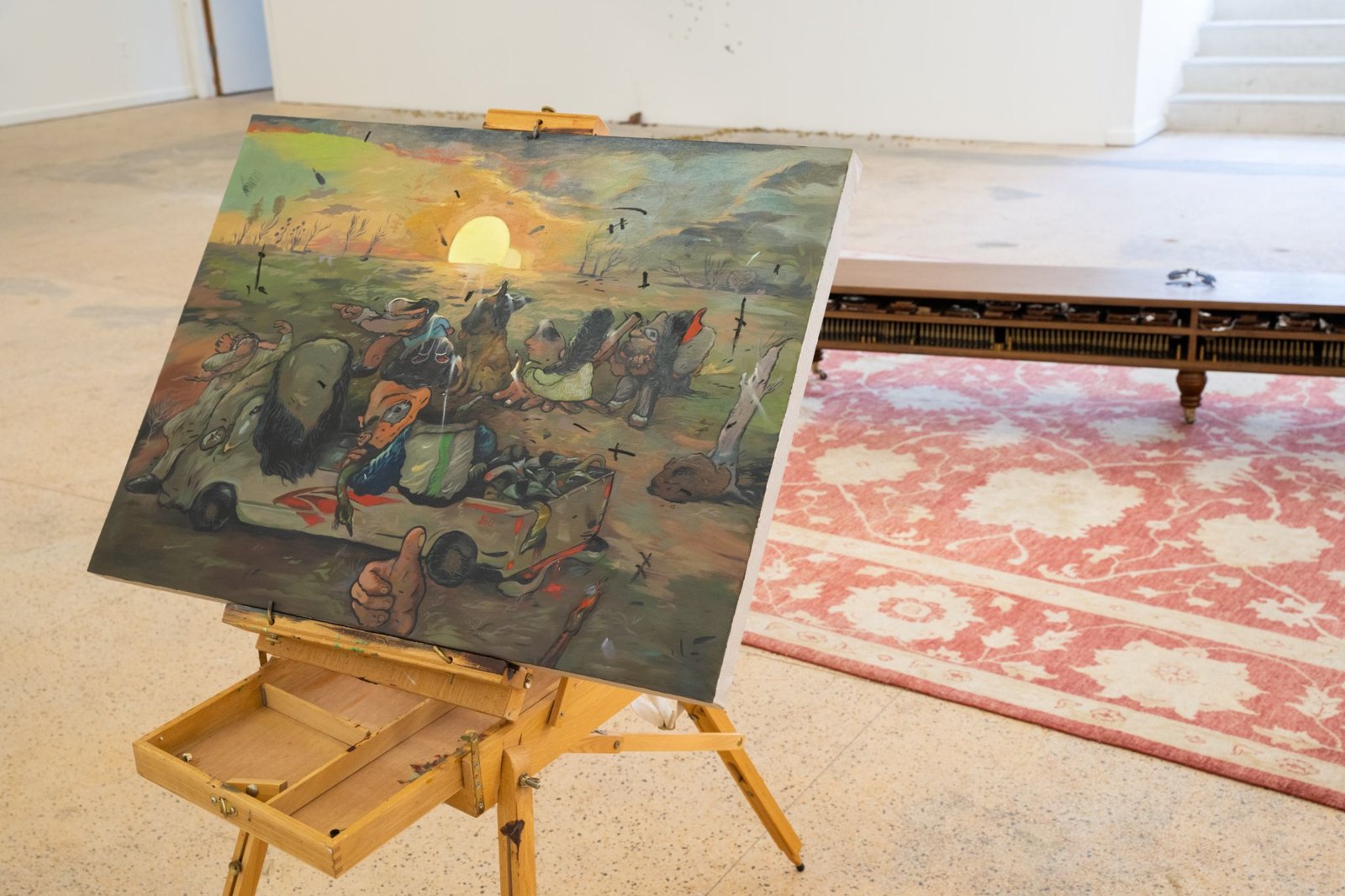
Eyal tells me how difficult it was to source bullets as an Iraqi man, needing to rely on others. Brass shell casings lined the gallery, positioning viewers within the feverish space of a human psyche shaped by violence—and yet the installation still acted as a vessel of wishful, magical thinking. Just in front of the gallery’s longest wall, Eyal painted a scene of his father taking him duck hunting in his pickup truck, the figures morphing and melting in front of a bright sunset. He described how his hallucinatory visual language was forged from the newspaper cartoons and comic illustrations of his youth, and in this way, his work “doesn’t go directly into cruelty.” The delivery of Eyal’s themes with a degree of humor and whimsy allows him to enter difficult subjects obliquely. Each component of the installation—a total work—nods to a highly specific and personal lore that makes larger conditions of systemic violence legible, all without collapsing distinct histories into one another.
This is perhaps one way of understanding the triennial’s interest in suspension. Coyote Time repeatedly approaches systemic conditions through intimate sites: the school, the kitchen, the river, the nightclub, the church, the cabinet. The artists cannot resolve the enormity of climate disaster, racial capitalism, Indigenous dispossession, or the ongoing violence characterizing America. Instead, they excavate personal histories as a route towards the larger psychic space of the collective.
On the last night of opening weekend, on the riverfront, Wanda Nanibush invoked Cornel West: “Justice is what love looks like in public.” One fact rings true through much of Coyote Time: the most crucial stuff of art happens within the space of everyday life. With and through its artists this year, Counterpublic doubles down on actionable dedications beyond an insular art world context: the kind of resource distribution that extends outside of the exhibition itself. Does the nonprofit, the museum, the organization put resources toward the future it imagines?
Where global art exhibitions often rely on novelty and spectacle, Counterpublic seems to depart from familiar frameworks. Its most compelling gestures are not necessarily the largest, most materially impressive or involved works, but the more generous, engaged, and in fact mundane ones. Here, to me, the exhibition itself is not the culmination of Coyote Time’s civic obligations and ambitions. The exhibition—as fun and celebratory as it may be—is but one node of a much longer journey of distributed attention, resources, and possibility.
The player has not escaped the rules—the game remains rigged and the cliff is still there, but there is a brief interval where the situation is assessed.
Things and people disperse across St. Louis, scattered like glitter: many glimmering departures.
Counterpublic: Coyote Time is on view through December 2026.