.webp)

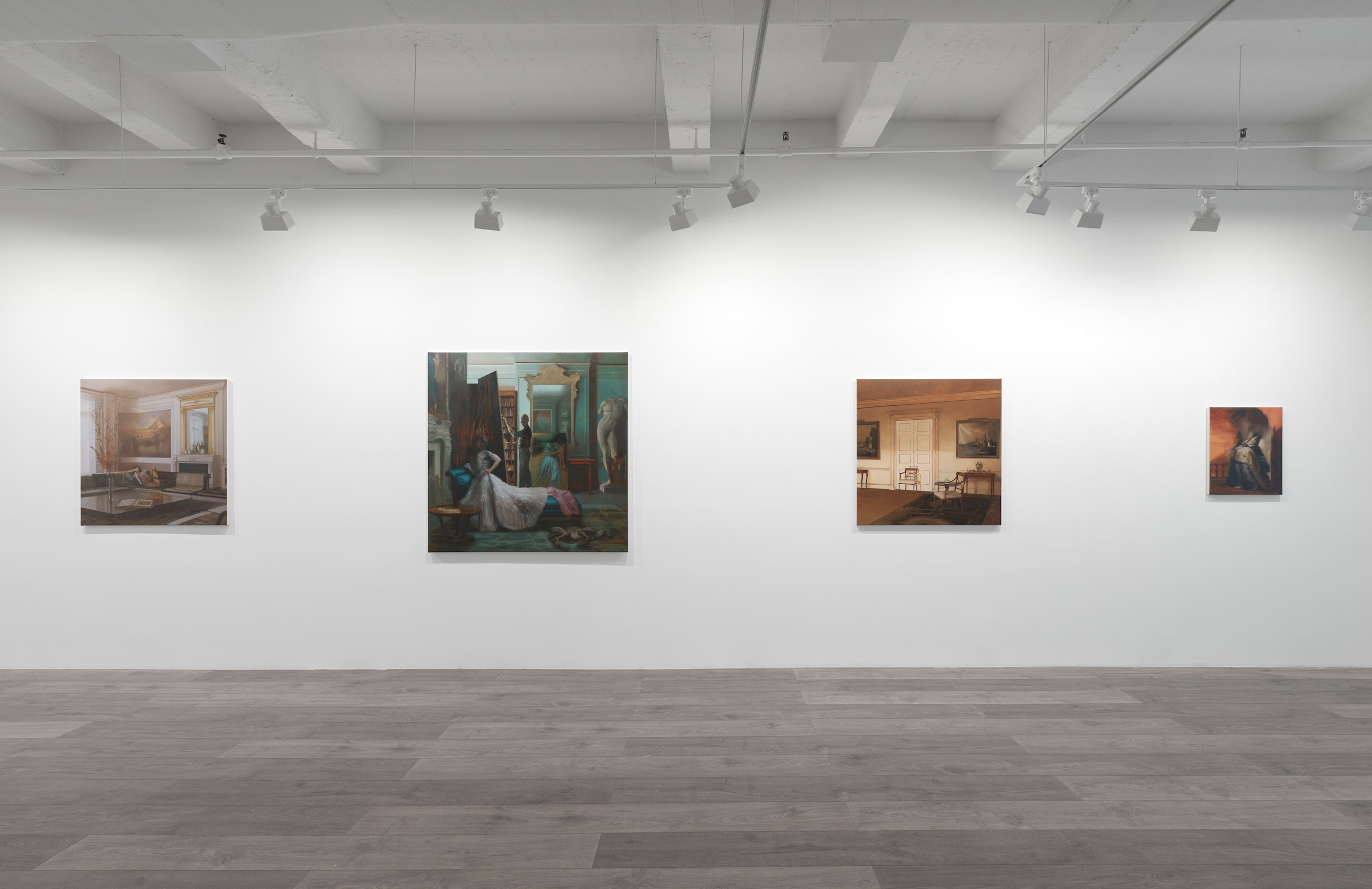
Tim Kent: “Sojourn” at Hollis Taggart
Review
In 2019, a study of 40,000 artworks across 18 museums in America found that 85% of the artists featured were white. This week, a new art fair in New York attempts to flip the color switch, spotlighting artists of Asian, African, Latin American, and Indigenous heritage, who represent 85% of the world’s population. What is often termed “ethnic minorities” in fact makes up the “global majority.”
The inaugural edition of CONDUCTOR, the self-labelled “Art Fair of the Global Majority,” is staged at Powerhouse Arts, the Brooklyn-based nonprofit art center that has become a formidable generator of counterprogramming with a globalist attitude. Last September, it launched Powerhouse: International, an arts festival offering world-class performances at affordable ticket prices. Three weeks ago, it hosted the Brooklyn Fine Art Print Fair, going head-to-head with the pre-eminent IFPDA Print Fair at the Park Avenue Armory.
With CONDUCTOR, Powerhouse Arts seeks to feature cultural exchange and platform underrepresented artists in the New York market, though many participants are already well resourced and well exposed: some have settled into some form of Eurocentric establishment, as artists of the Global South based in the Global North, others have impressive CVs stacked with high-profile exhibitions and acquisitions (six are presenting at this year’s Venice Biennale). Still, the breadth of voices and cultures brought to the fore is invigorating. CONDUCTOR may be a modest affair—roughly half the size of Frieze—but it is hopefully a foretaste of bigger things to come.

Blouin Division (Canada): Renée Condo, Nadia Myre
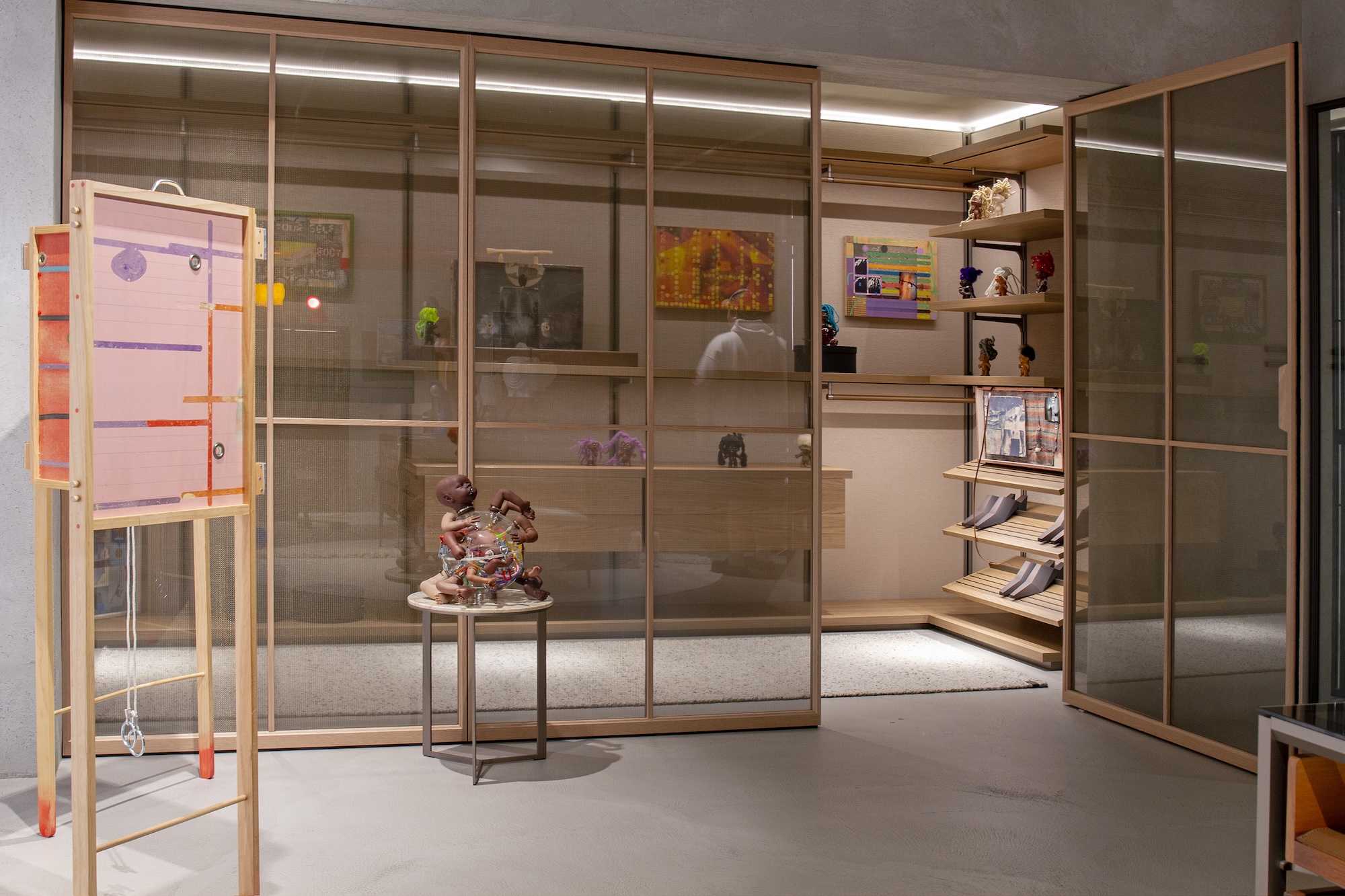
Renée Condo and Nadia Myre, both Indigenous artists based in Montréal, explore distinct approaches to beadwork. Condo, using traditional Mi’kmaq craft as a jumping-off point, scales up the beads along with the themes they carry. Each oversized wooden bead is sanded smooth and coated with a vibrant acrylic hue. The simple motif of a flower expresses her contemplations of kindness and empathy.
Because Condo embeds her beads in an epoxy resin, large pieces like Eimutieg ugjit puitaqan (We’re here to dream) (2026) require communal effort to complete. The final image resembles an energy field radiating endless love and light. As she has described, “The bead as fundamental entity, as infinite potentiality, can appear as divided, as unit, as part, but is at once whole and all-encompassing, holding secrets of the world and to the nature of reality.”
Nadia Myre, who is Algonquin, employs beads that are ceramic and elongated, reminiscent of the wampum shell beads of the Northeast but in fact inspired by fragments of clay tobacco pipes she found along the river Thames. The Indigenous had tobacco and smoking implements long before the arrival of European settlers, so the pipes to Myre speak of colonial appropriation. Her beaded sculptures take on diverse forms: a piece of netting, an abstract landscape, and most dramatically, a huge basket in a perpetual state of collapse.

David Krut Projects (South Africa, New York): Mary Sibande
The politics of labor is also the politics of rest. In a series of painted monotypes titled A View Through a Peephole, Mary Sibande imagines her alter ego Sophie, a domestic worker, in various scenarios of leisure and pleasure. Peeping at Sophie’s fantasies, we see her enjoying the right to relax: lounging in a beach chair, swinging on a pommel horse, toasting the Matterhorn with an Aperol spritz. These carefree, even comical, reveries belie harsh realities that Sibande has learned of—her mother and grandmother were household servants under apartheid. Self-care is very much a privilege.
We know these images are fantasies because Sophie never sheds her blue uniform. Only occasionally is she permitted a slight costume change, as in Shoe cam with Gucci (2026), in which she slips on a pair of pointed-toe designer shoes adorned with Gucci’s signature red-and-green bow.
Brihatta Art Foundation (Bangladesh): Bishwajit Goswami
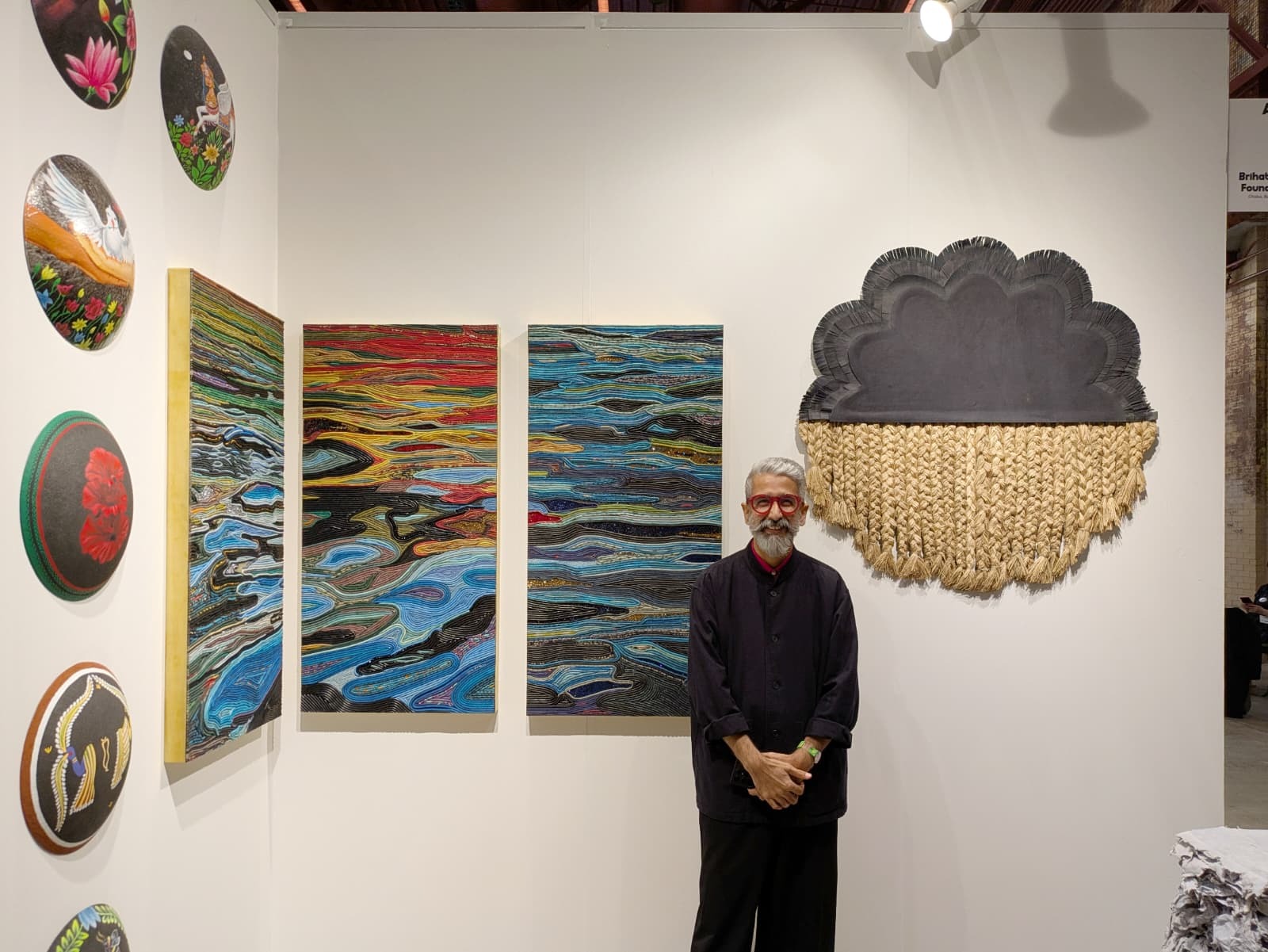
Along the southern border of Dhaka, the world’s second-most populous city, runs the Buriganga, a river blighted by decades of pollution, in part from the heavy metals discharged by the booming leather industry. It is here that Bishwajit Goswami locates his artistic practice. In 2016, he co-founded Brihatta Art Foundation, which supports art education, artist residencies, and the documentation of traditional crafts. For its first home, Goswami chose to revive the rooftop of an abandoned tannery, reintroducing nature and shifting its production from industrial to cultural.
Rather than banish the filth or the chaos, Goswami enfolds it to find harmony. Kalboishakhi (“Nor’wester”) (2025) is a yin-yang swirling of dark with light; the top half is pitch-black scrap leather, while the bottom half is braided hay. In the triptych Nodi (“River”) (2025), he wraps salvaged electrical cables in sari scraps, creating a resplendent body of water laden with troubles yet teeming with possibility. The river that receives death continues to give life.

Khaled Jarrar (Palestine)
Khaled Jarrar returns to CONDUCTOR as part of the Special Projects program, following his appearance at the curated preview in May 2025. Last year, he offered Palestinian olive oil in clay bottles stamped “Unknown,” referring to the birthplace stated on his green card. This year, the oil turns into tears. Jarrar’s bio mentions that he has been ruminating on the “tears of trees” (dumue al’ashjar), possibly an allusion to the words of the poet Mahmoud Darwish: “If the olive trees knew the hands that planted them / Their oil would become tears.”
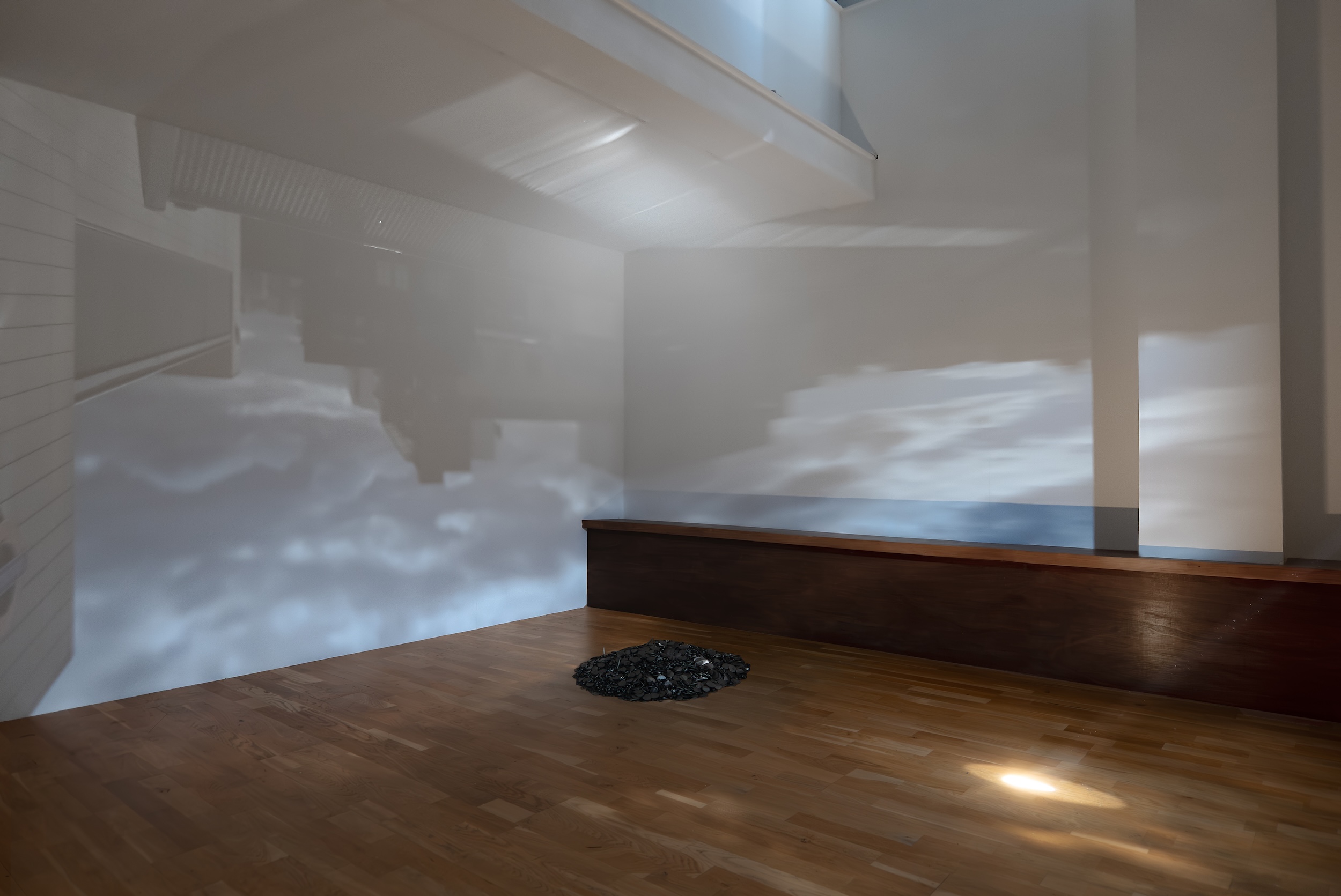
Jarrar’s works are riddled with violence. The centerpiece, An Orange Tree with Two Scars (2026), is a slipcast of bullets arranged in the shape of a tree, glazed a bloody orange. Disrupting the neat symmetry are two fissures that Jarrar likes to call “wounds,” and the bullet protrusions could very well be proxies for teardrops. Set beneath this piece is its mirror image, a fractured mold titled The Tree of Life: An Archaeology of the Future (2026). It comes from the nine iterations Jarrar produced, a cast-off that bears the scars of failure.
The olive tree is the pride of Palestine, a symbol of ṣumūd (“steadfastness,” “rootedness”), and an emblem of the land’s fruitfulness. It also signifies the tree of life, an ancient Mesopotamian symbol closely associated with the goddess Ishtar. Just as the olive tree can represent peace or resistance, Ishtar is a similarly contradictory figure—one tied to fertility as well as destruction, to love as well as war. Perhaps the line starts to fade when you fight for what you cherish.
CONDUCTOR runs at Powerhouse Arts from April 29 to May 3, 2026.