.webp)
“Call me gravity” at WIELS
Review
Though Philadelphia is home to a number of storied museums like the Philadelphia Museum of Art, the Barnes Foundation, and ICA Philadelphia, as well as long-standing galleries like Fleisher/Ollman and Locks, it has been overlooked for the art fair treatment—until now. On the preview night of Elsewhere Art Fair’s inaugural edition, Yowie Hotel was abuzz with a line of people winding around South Street to get in the door. The small but mighty fair brought together 27 international exhibitors, including galleries such as London’s Harlesden High Street, New York’s 81 Leonard, and Philadelphia’s Pentimenti.
Taking matters into her own hands, dealer Megan Galardi, who founded Blah Blah Gallery in 2023, established Elsewhere this year. It marks the latest effort by dealers betting on smaller regional art fairs outside large art-market hubs, like those in Houston and Chicago, to not only expand their clientele but also create a different kind of art experience altogether. (This, of course, is born out of necessity, as larger art fairs in established cities like New York, London, and Paris have made it increasingly expensive for galleries to participate.) Elsewhere was reminiscent of Los Angeles’ Felix art fair, which, despite being more than double the size, is also hosted at a hotel, giving it a similarly intimate, community-focused feel. In addition to the fair, Elsewhere also offers a selection of city-wide programs, such as studio visits, curator-led tours, talks, and parties.
Spread across three floors of Yowie, Elsewhere is quite compact and continuous, with no space getting wasted. While I can appreciate this kind of economy, it created varied viewing experiences, with artworks in hallways and elevator spaces significantly more difficult to see, especially when crammed with visitors on a busy opening night. This, however, became just another reason to circle back to see more art and people.
The most successful booths at Elsewhere leaned into these intimate, communal vibes by creating playful moments throughout hotel rooms, bathrooms, and hallway spaces that packed a punch. In such a serious socio-economic climate, where galleries are feeling increased pressure to sell, the fair was a reminder that art can still be fun. Below is a closer look at those galleries whose presentations stood out the most.
Fjord
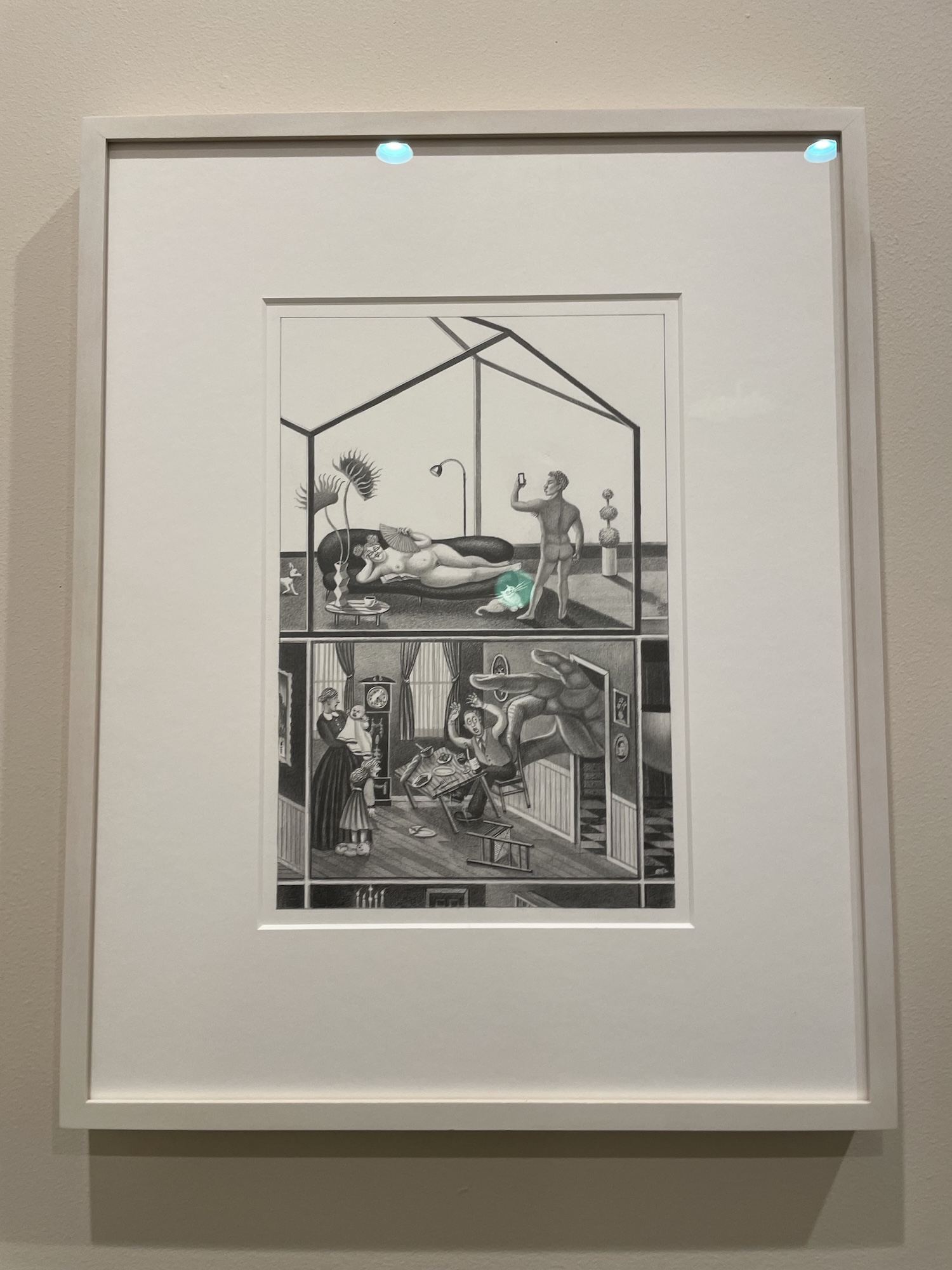
Whether one is entering or exiting the fair, it is impossible to miss the intricate graphite on paper works by Armando Veve in the hotel’s elevator bank, on view with Philadelphia’s own Fjord Gallery. Many of the works offer uncanny juxtapositions and witty commentary on contemporary and historical issues. One such drawing, for example, offers two opposing vignettes: the top depicts a voluptuous naked woman reclining on a sofa and fanning herself while a fit naked man appears to be posing for a selfie as a cat stares directly up at him from the floor; by contrast, the bottom shows a man in a suit being yanked from his dinner table by a giant hand, as a young girl and woman in a long dress holding a baby look on in horror. The piece offers a tantalizing perspective on modern romantic relationships and the erosion of traditional values, while more subtly flipping the male gaze theory on its head. Each of Veve’s drawings presents its own rich ideas and, despite being hung in a liminal space, often rewards sustained looking.
Feia
Feia, meaning ugly in Portuguese, brought together a selection of works by six artists that were anything but. Hailing from Los Angeles, the gallery took advantage of each space in its hotel room “booth,” with irreverent and playful installations throughout the kitchen, living room, bedroom, and bathroom.
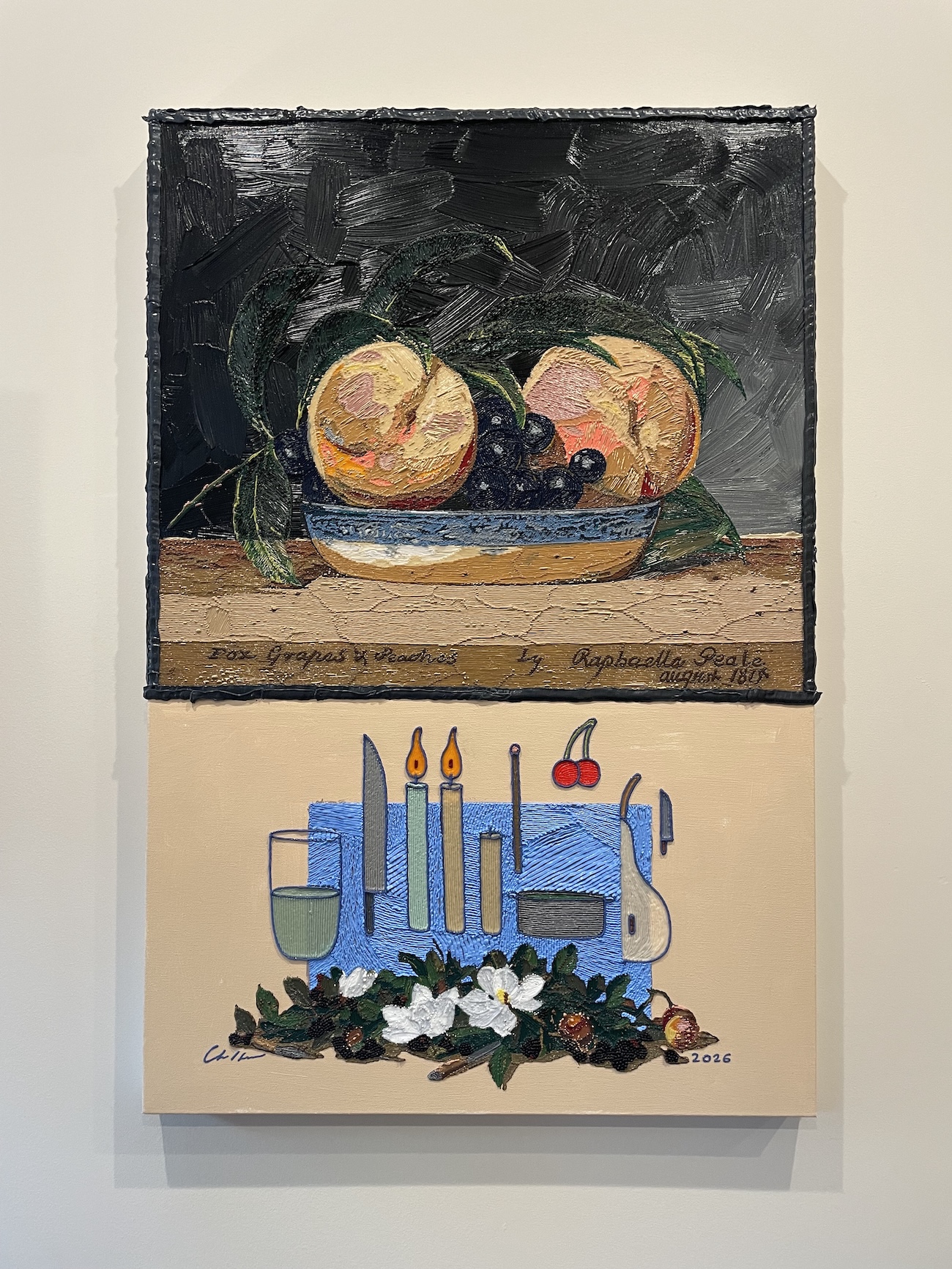
Tadashi Adamson’s animated Toast (Butter) (2026) recreated a piece of toast with eyes and a butter nose and was sitting out on the kitchen counter, as if left behind by a guest, while Lipstick and Soap (both 2026) adorned the bathroom vanity. Charles Hickey’s Warm and Cold and Bundle Brother Branch (both 2026) borrow from still life paintings and sculpture, where common motifs such as a bowl of fruit and reclining nudes are recontextualized; drawn with a 3D pen, the tool emphasizes the artist’s mark-making, which at times looks like piped cake frosting, with each stroke acutely rendered.
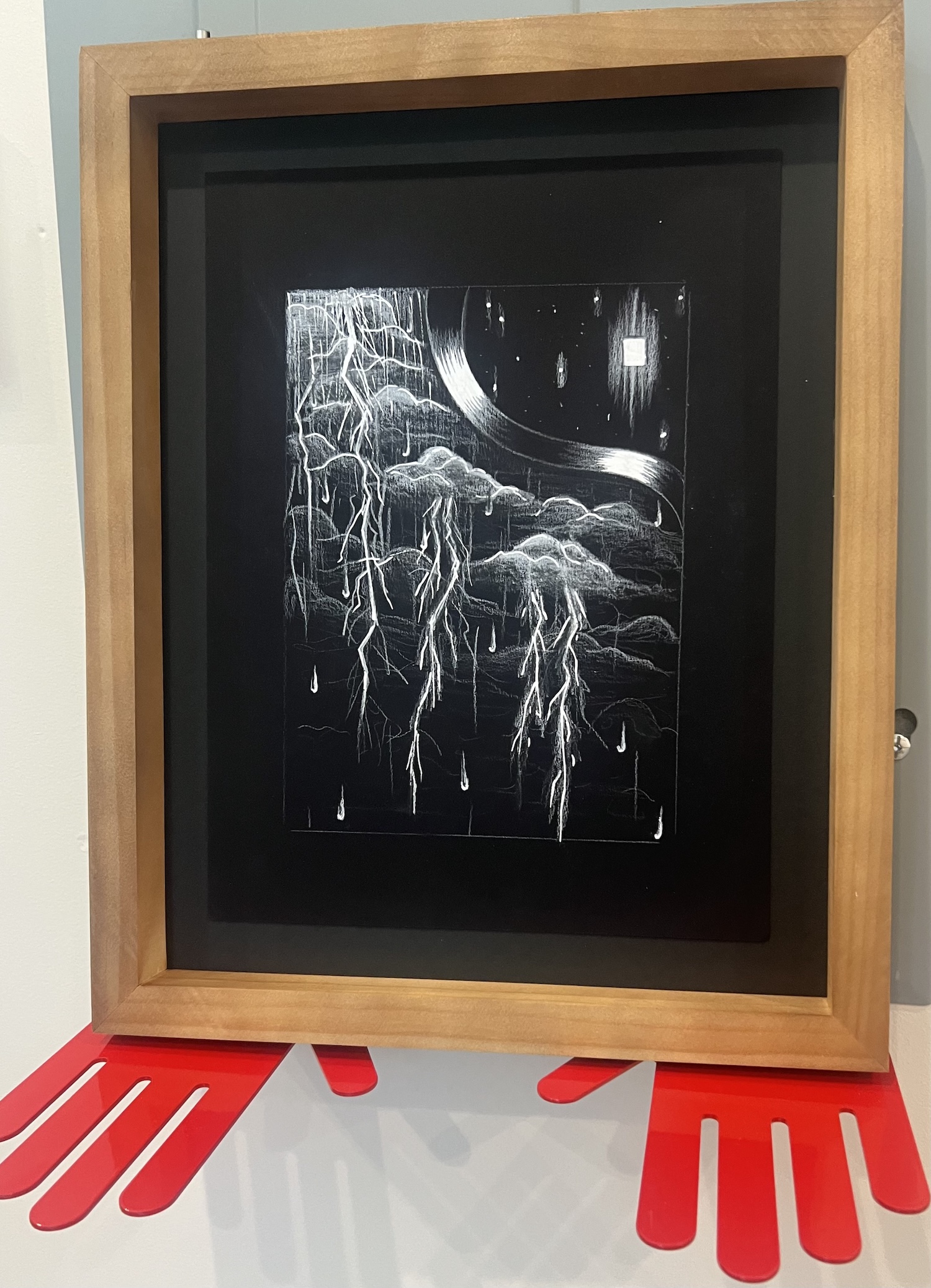
Dark and brooding mixed media works by Melanie Delach punctuated the room with a more serious, albeit surreal and spiritual, tone. A World Where Dreams Collide (2026), for example, shows sculpted leaves falling over an ocean or cloudscape, as a faint pair of hands raise up another work, framed and affixed to the surface of the canvas, with a bright light in the center of a similar ocean or cloudscape.
And, if the artworks were financially out of reach, the gallery had cheeky hats and sweaters available for purchase—perhaps the biggest reminder that art fairs are for selling, at any cost.
Point Blank
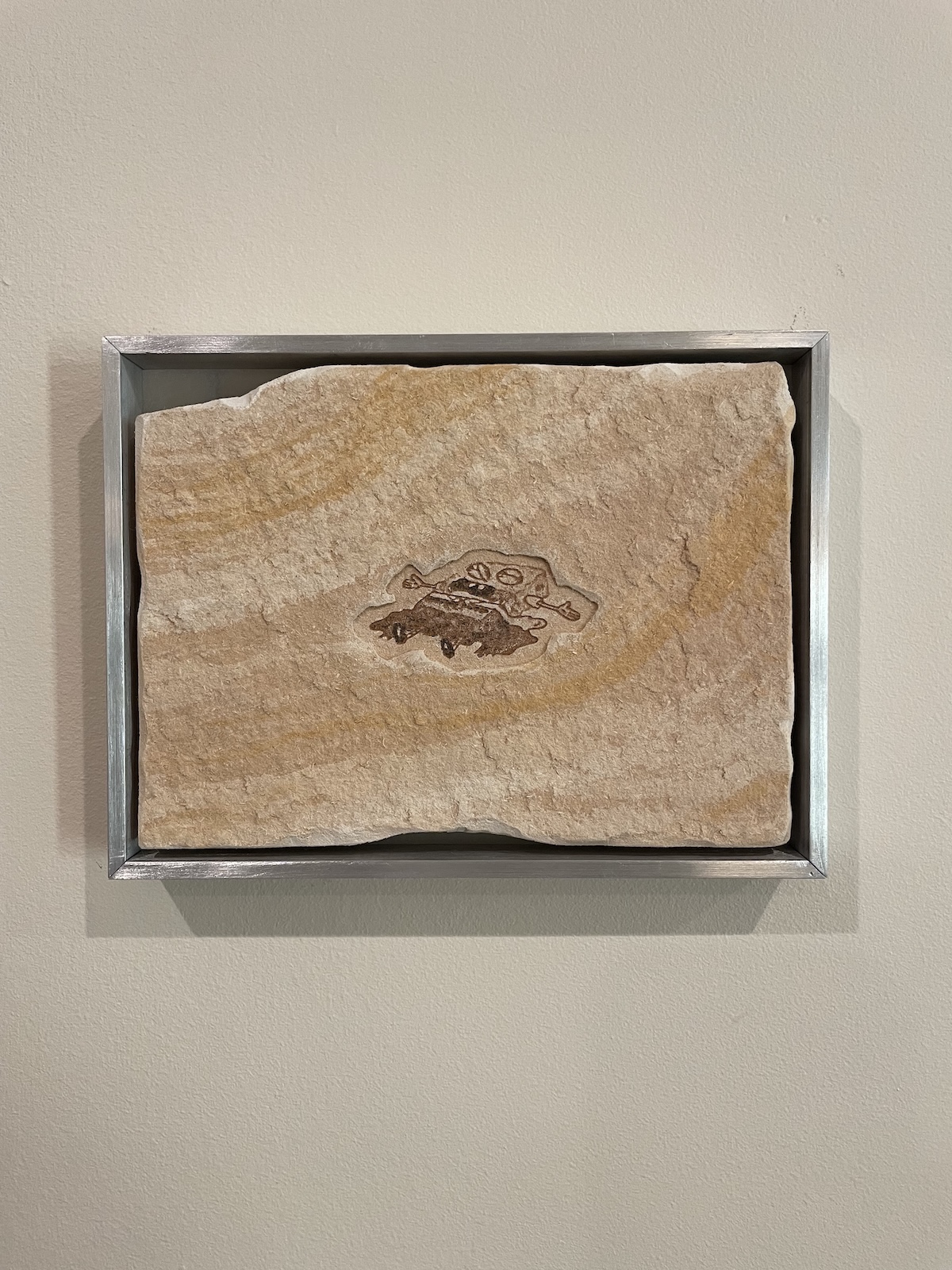
Artist Alessandra Norman’s new series of “fossils” immortalizes some indelible cultural objects of our time, including cigarette butts, Goldfish snacks, and SpongeBob SquarePants from the eponymous children’s television show. The latter, in particular, turns the digital cartoon character into a tangible object that reflects its cultural imprint on kids’ imaginations. The Chicago-based gallery, which was set up in a communal lounge, took advantage of the space well by hanging Untitled, a piece that features a nighttime view of a tree out a window, in front of an actual window, further exaggerating the gap between perception and reality in the built world that is negotiated in Norman’s work.
5-50 Gallery
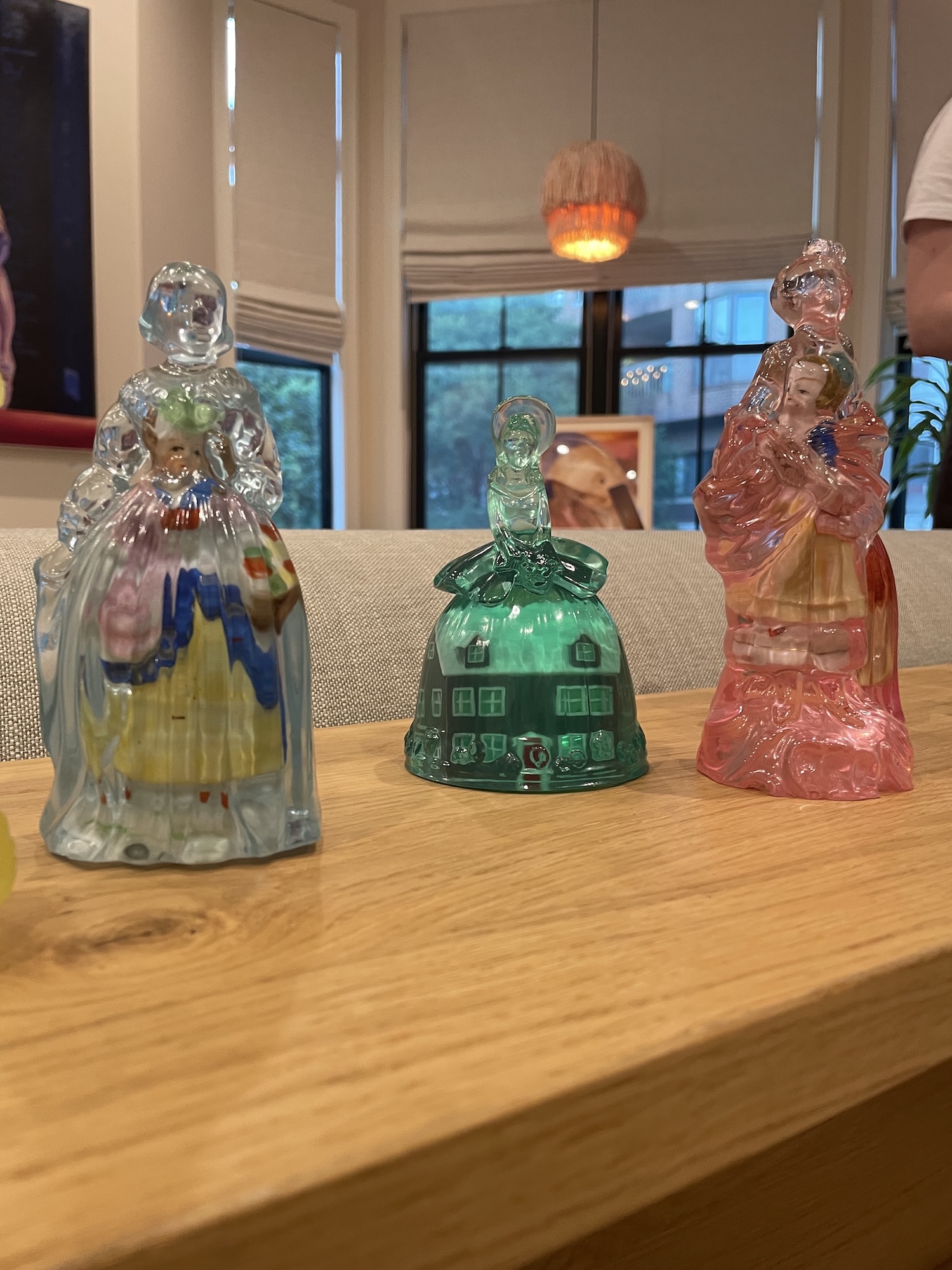
A selection of ceramics cast in larger resin figurines by artist Emily Blair Quinn, as part of the showing by New York’s 5-50 Gallery, reclaims her grandmother’s battle with dementia. While battling memory loss associated with the disease, the artist’s grandmother made dioramas around her house to remind her of life’s most important milestones. Quinn then recast the ceramics from these dioramas into vibrant resin figurines molded from her grandmother’s original collection. Inside a pink resin girl with a bonnet and a big dress, for instance, is a ceramic house. The work is not only a tribute to the artist’s grandmother, but also a reconception of loss and grief commonly associated with the disease.
Uffner & Liu
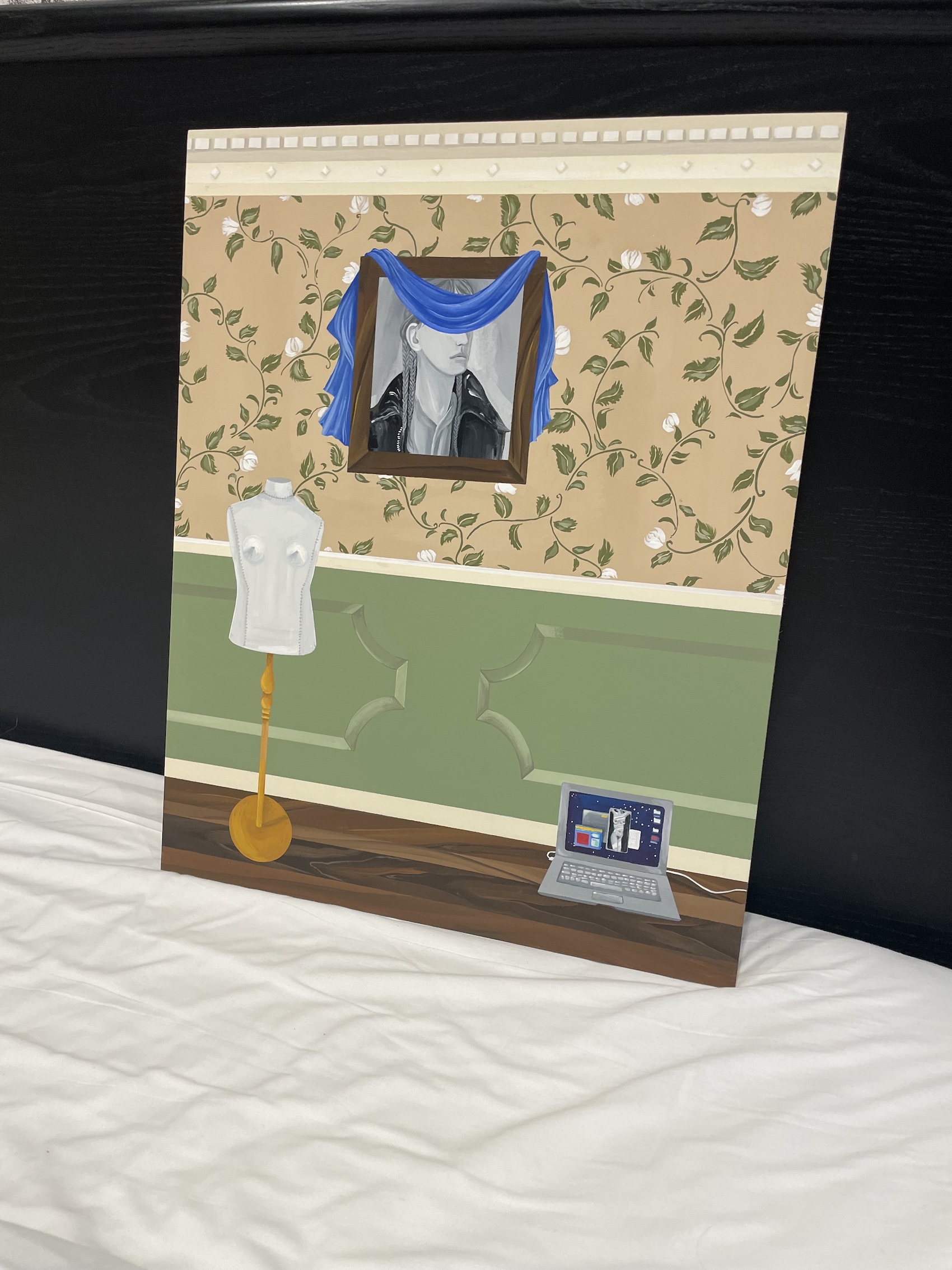
Uffner & Liu brought together a smart selection of artists for it shared room with Trotter & Sholer. Immediately impressionable were Pam Lins’ ongoing Crying Eyes series (2017–) of glazed stoneware eyes that started in response to the first Trump administration and have continued through the second. The works represent a shared grief amid the moral erosion of the US on the heels of the country’s 250th anniversary, especially when situated in Philadelphia, the birthplace of the nation. Nasir Young’s spate of small paintings further immortalizes the everyday through commonplace Philly street scenes. However, it was the subdued works by Anne Buckwalter that stole the show. Their incorporation of Pennsylvania Dutch design motifs abuts erotic displays of dildos and bedroom scenes, becoming especially tantalizing when displayed in a bedroom suite.
Elsewhere Art Fair was on view at Yowie Hotel, Philadelphia, from June 4th to 6th, 2026.