
.webp)

In Conversation with Mae Howard
Interview
At a moment when moving images have become one of contemporary art’s most porous languages, Fondazione In Between Art Film is shaping a distinct space for artists whose practices unfold between screen and site. On the occasion of the 61st La Biennale di Venezia, the foundation returns to the Complesso dell’Ospedaletto with Canicula, a group exhibition that treats the former hospital as more than a backdrop. Its rooms heighten the physical encounter with each work. We spoke with curator and writer Alessandro Rabottini, who currently serves as the foundation’s artistic director, about the making of the show and what it means to commission time-based media within such a charged architecture.
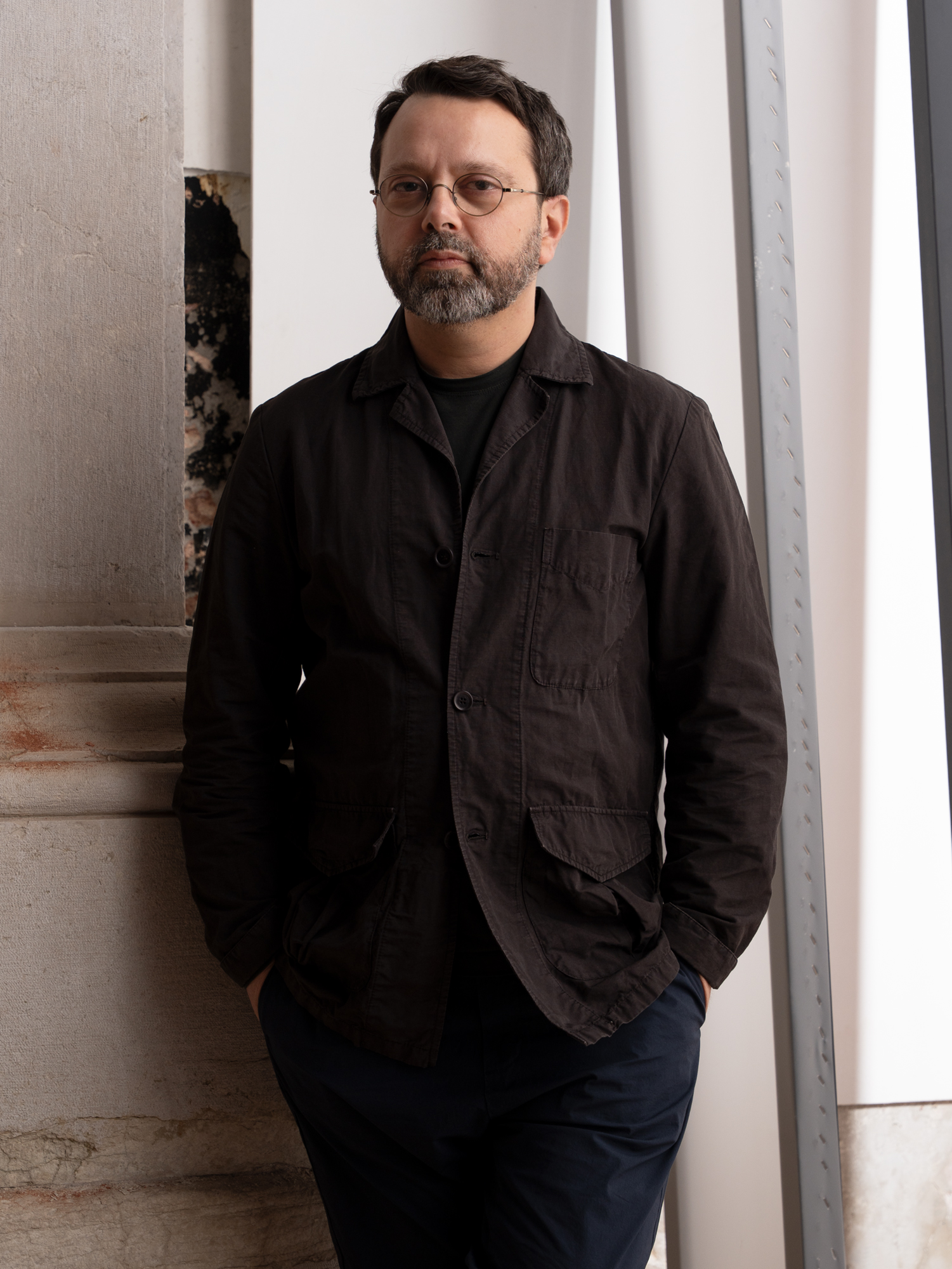
Nicolas Vamvouklis: To begin, could you introduce Fondazione In Between Art Film and the vision behind it?
Alessandro Rabottini: The foundation was established by Beatrice Bulgari in 2019 to support artists, institutions, and cultural producers working with moving images in the field of contemporary art. We work at the intersection of time-based media to explore the boundaries between disciplines. This means commissioning, producing, and co-producing moving image-based works, as well as developing the critical discourses around them, through exhibitions, books, and symposiums.
NV: What drew the foundation to time-based media?
AR: Beatrice Bulgari has always been passionate about both cinema and the visual arts. Cinema has also been a significant aspect of her professional activity. At one point, it felt natural to expand to moving image-based works because of her interest in the formal, poetic, and conceptual potentialities of what visual artists can do with the camera.
NV: During the Venice Biennale, you are presenting the group exhibition Canicula. What is on view?
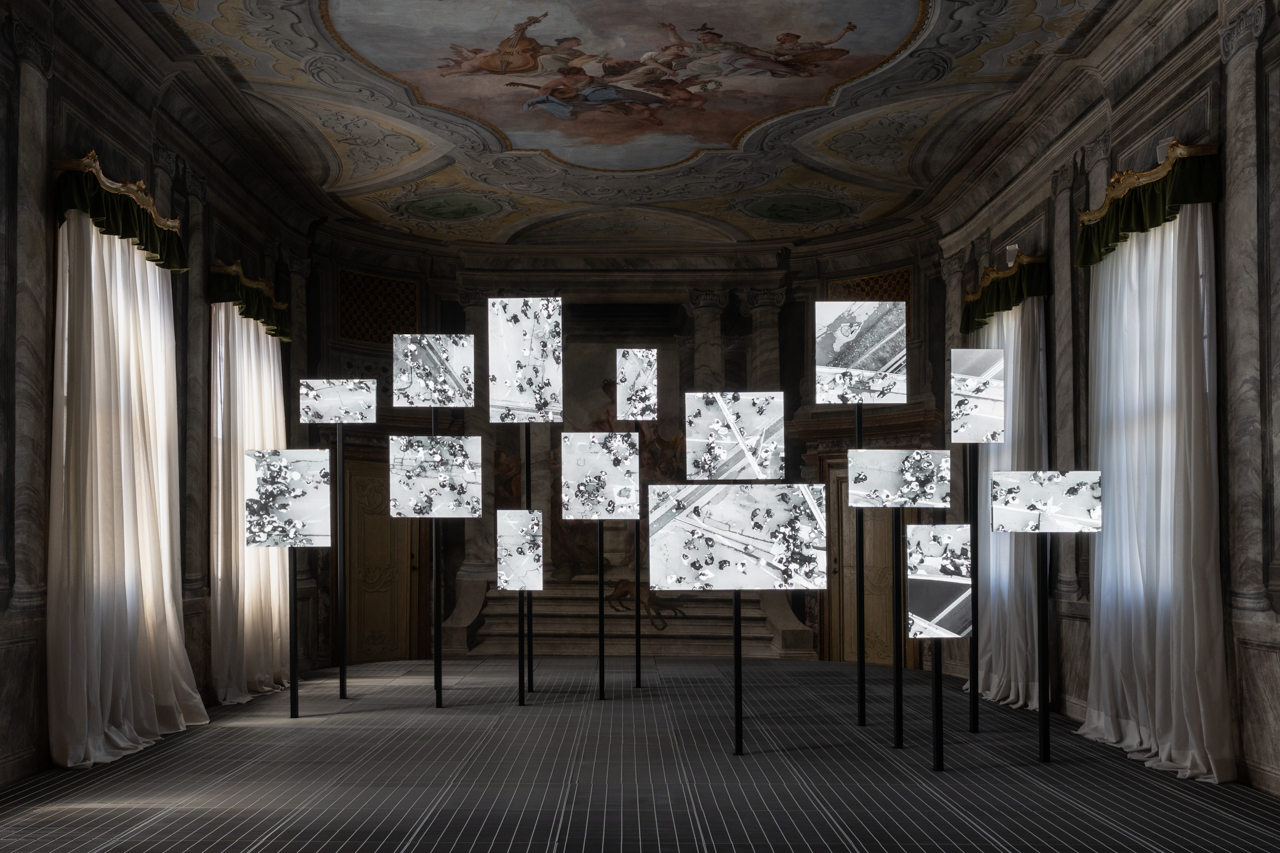
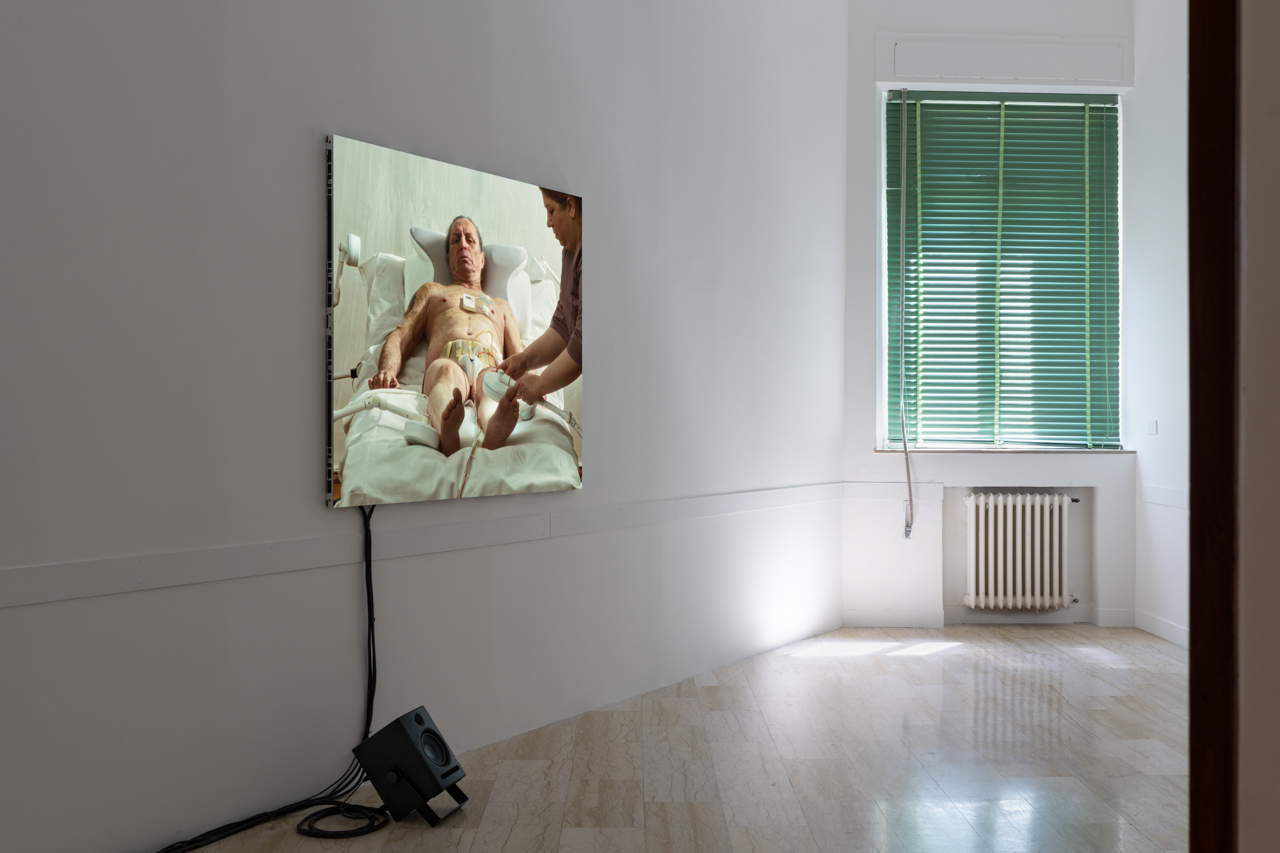
AR: Canicula will premiere eight newly commissioned and produced video installations by ten international artists: Lawrence Abu Hamdan, Massimo D’Anolfi and Martina Parenti, Roman Khimei and Yarema Malashchuk, Janis Rafa, P. Staff, Wang Tuo, Yuyan Wang, and Maya Watanabe. They are installed on two floors of the Complesso dell’Ospedaletto, a disused hospital that served as a place for the care of bodies and souls from the seventeenth century onward.
The exhibition is the third and final installment of The Trilogy of Uncertainties, a series of exhibitions that the Fondazione presented in Venice on the occasion of the Biennale Arte over recent years. It commenced in 2022 with Penumbra, continued in 2024 with Nebula, and ends this year with Canicula. Each show deployed a different atmospheric metaphor: the semidarkness for Penumbra, the fog for Nebula, and the excess of heat and light for Canicula. These metaphors were used to explore the uncertainties of our time and look into the relations between seeing, sensing, and understanding.
NV: Could you tell me about the title and how it relates to the works in the exhibition?
AR: “Canicula” is the Latin term for the hottest period of the summer, those weeks that in English we call “dog days” and during which the heat feels suffocating and the light is blinding. We invited the artists to take this concept as a metaphorical departure point to reflect on our present as a time of excess: excess of information, of violence, of power and control, and of ideologically distorted forms of truth. It is an exhibition that examines the “boiling point” in which bodies, matter, and values are now immersed. It also looks at the individual, internal, and psychological responses to the sense of “unbearable temperatures” around us.
NV: What are the main challenges in commissioning and producing new video works today?
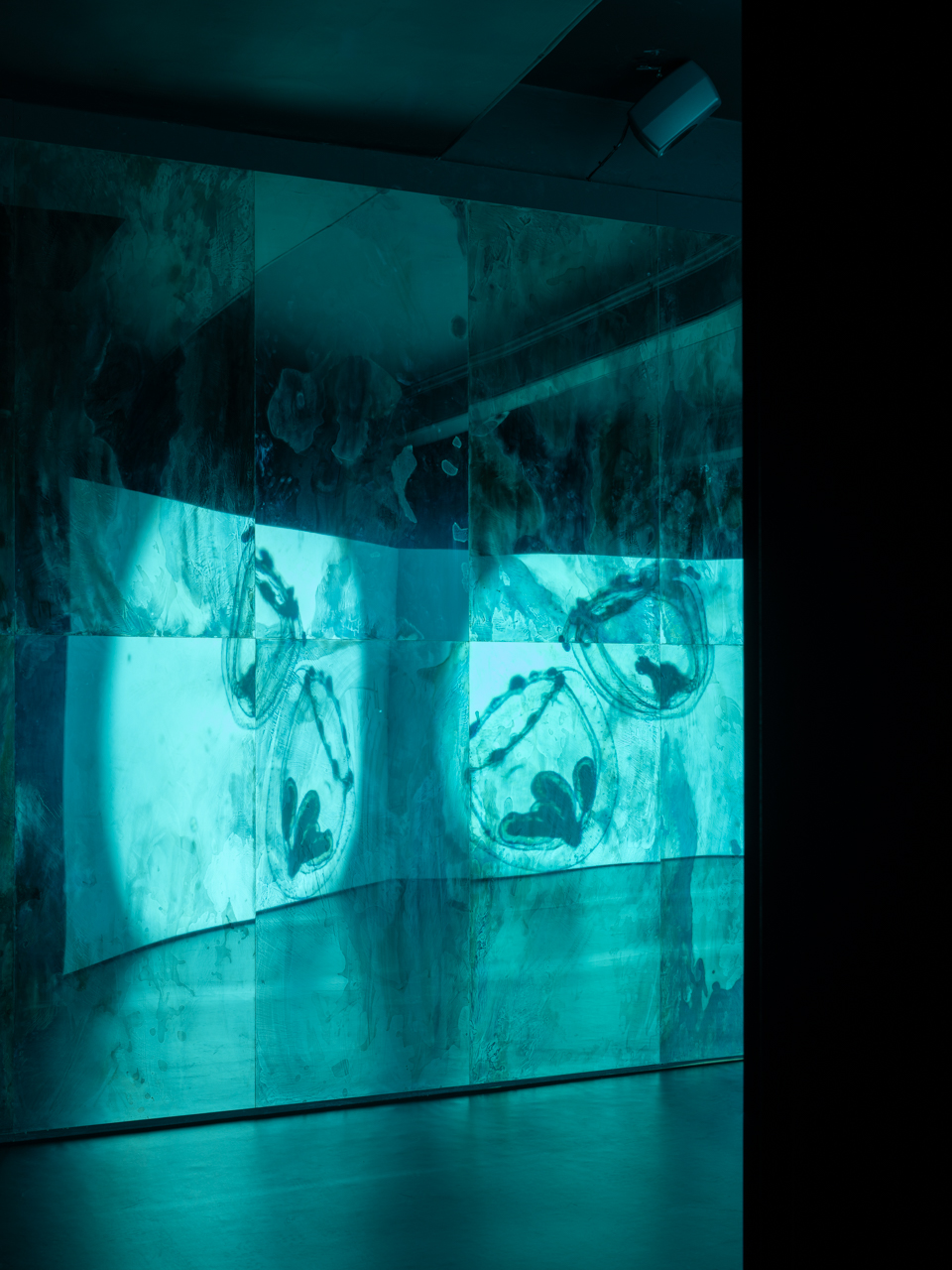
AR: Commissioning implies a high level of trust, since it means sustained collaboration. Each show of the trilogy took two years to make. It also involves working on something that is not there yet at the beginning of the process, and that will only be presented in a spatialized version once it is installed for the show. I am not sure I would call all this a “challenge,” but it certainly requires us, as an organization and as curators, with each show curated by Leonardo Bigazzi and myself, to establish a dialogue with the artists that runs throughout the entire process of production of the work, until the moment it is installed. This is a sensitive moment, since it reveals how responsive moving image-based works are to the site in which they are presented.
NV: This is not your first presentation at the Complesso dell’Ospedaletto. Each time, the space is reimagined as cinematic architecture. What does this mean in practical terms?
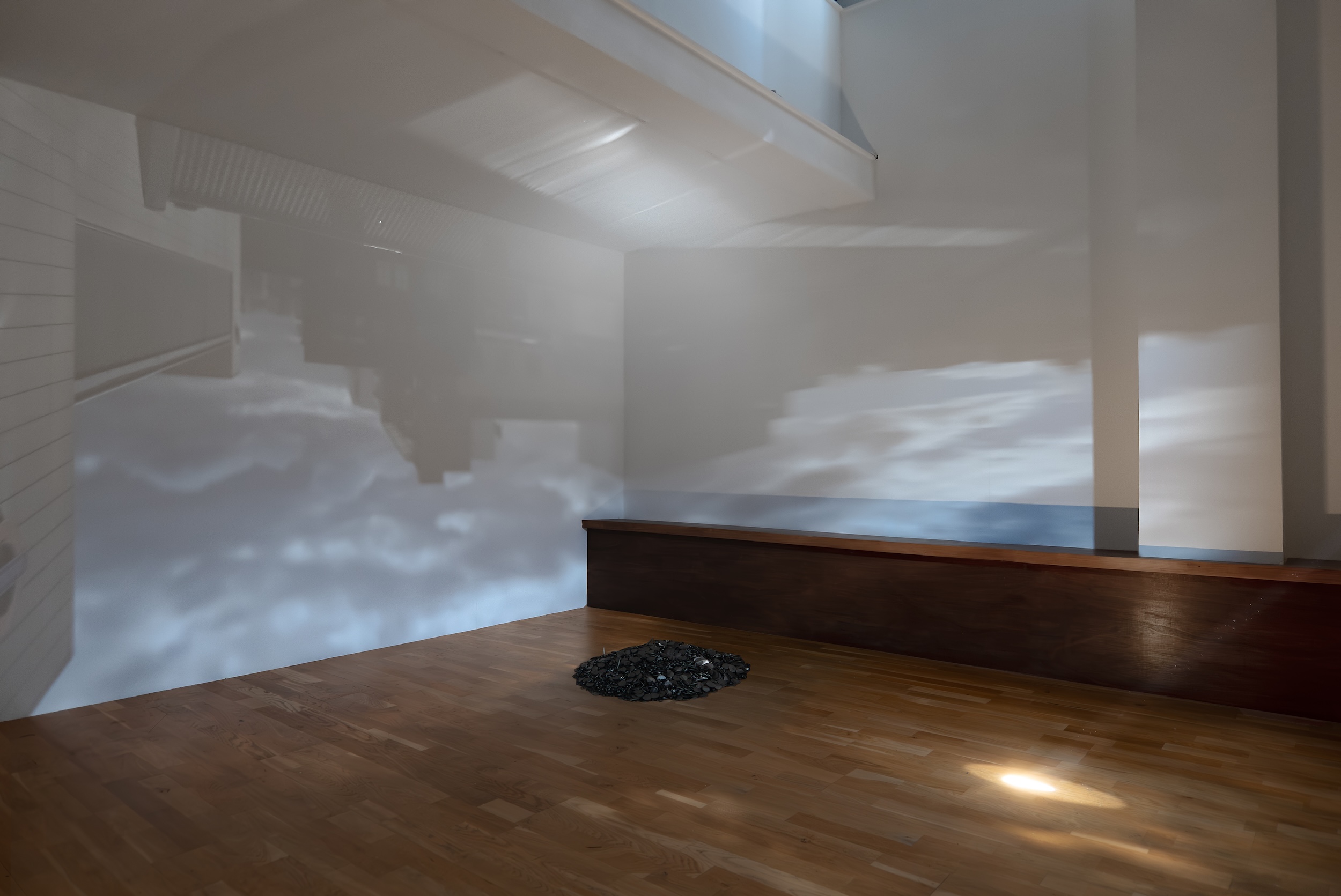
AR: Each exhibition of the trilogy has also been conceived as a proposition about exhibition design, as a comment on how we can experience moving images as embodied and spatialized artworks. Each time, the interdisciplinary studio 2050+ has been commissioned to conceive a scenography that materializes the curatorial concept and the narrative of each work through spatial intervention. The idea is to give the viewers an enhanced experience of both the works and the venue.
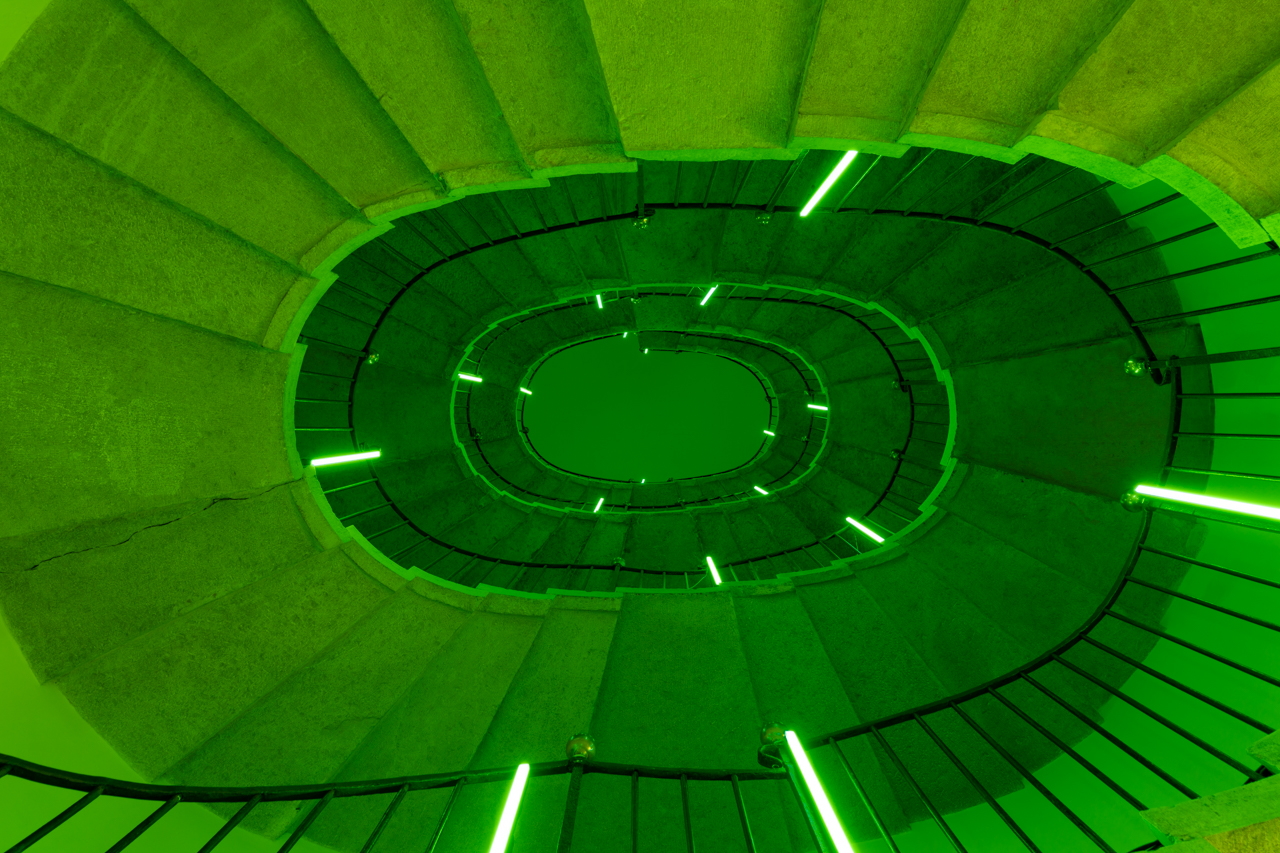
For Canicula, we worked with 2050+ on the corrosive properties of excessive heat and light. Therefore, in many spaces of the Ospedaletto, the building seems under stress, as if it has somehow been fatigued. Overall, there is the sensation that the building is observed in a state of transition, as if in the process of being repaired. Light is also very present, and there is no outside view: the interiors are sealed, as if to protect the works from an external sunset that looks a little “sick.”
NV: How does the project continue beyond the exhibition itself?
AR: As was the case for Penumbra and Nebula, Canicula will be accompanied by a cross-disciplinary symposium and an extensive publication. The symposium is curated by Bianca Stoppani, curator of the Fondazione’s editorial and discursive programs, and will take place at the Teatrino di Palazzo Grassi in Venice on October 26 and 27. It will involve the artists appearing in the exhibition and, via panels with international curators and thinkers, it will expand upon their work and approach to the language of moving images. The publication, in turn, will take readers behind the making of the exhibition and further discuss the artists’ practices.
Canicula is on view at Complesso dell’Ospedaletto (Barbaria de le Tole, 6691 Venice) until 22 November 2026.