.webp)
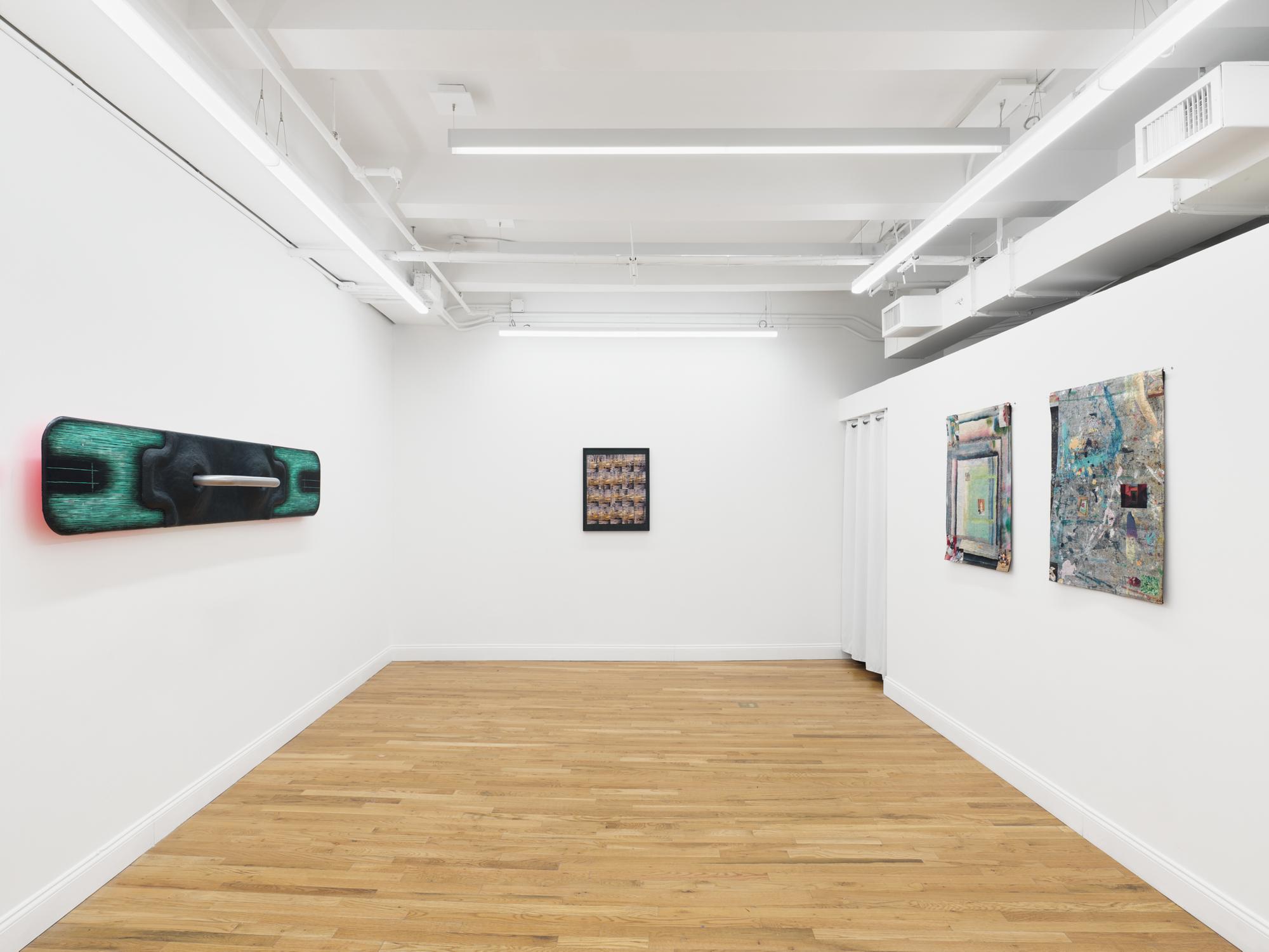
“Wetware” at RAINRAIN Gallery, Curated by Spine
Review
The last few decades have witnessed a new set of curatorial models, each offering its own interpretation of what the role of this figure could and should be. One such proposition emerges through Toward a Sentence at NARS Foundation, which features thirteen works from its most recent cohort of international residents.
Visitors are instructed via text by this season’s curatorial fellow, Vu Thien An (Thea) Nguyen, to search for invisible lines of connection through which the works gain further meaning. In lieu of overt interpretation, Nguyen’s framing might best be read as a metatext on the curatorial statement as form—a mediation on the challenge of narrativizing disparate things in an era of seemingly infinite content. (As the title suggests, this is likewise the function of writing more broadly.) Toward a Sentence thus asks if an exhibition can be more than the sum of its individual parts.
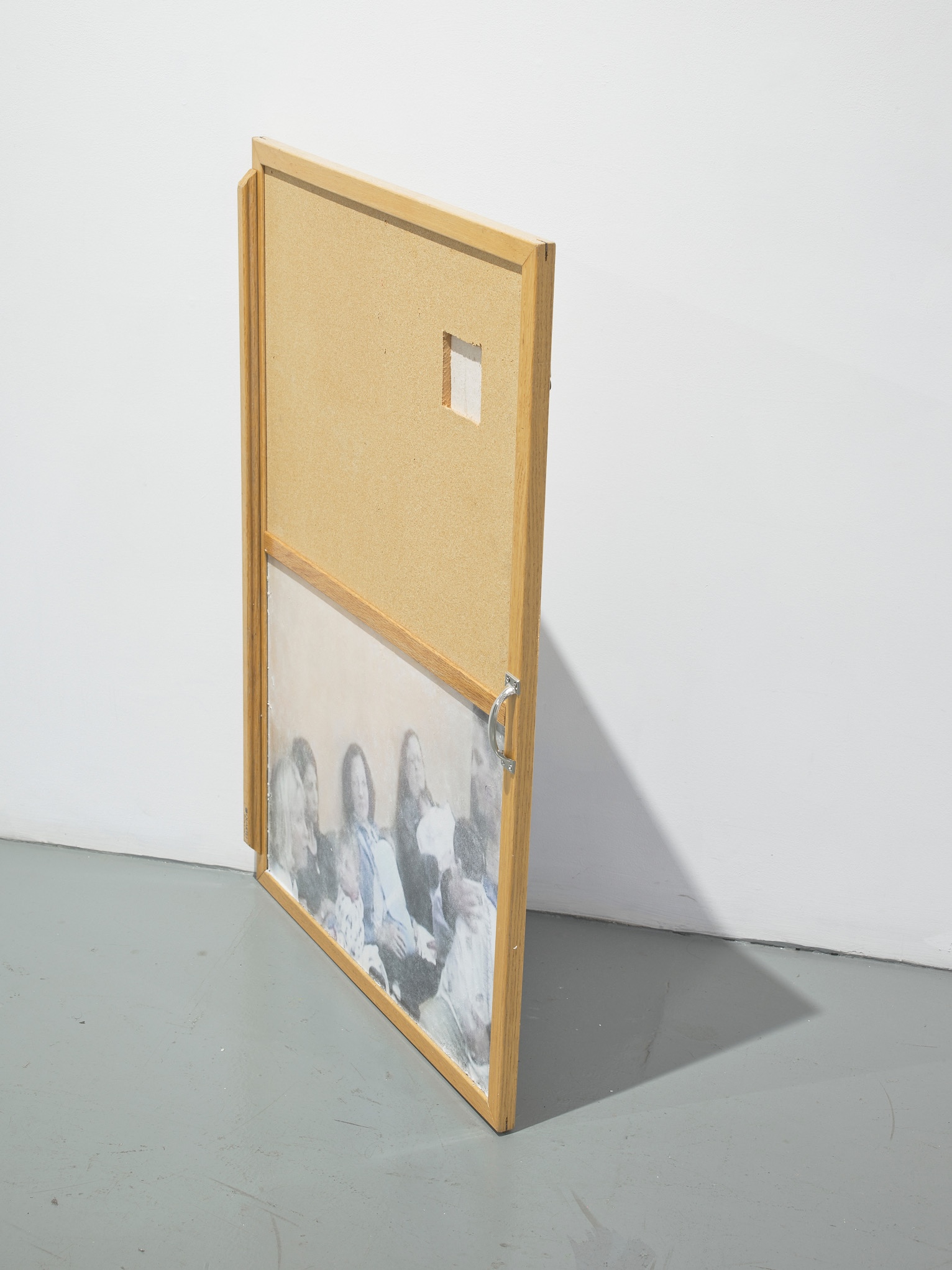
Colby Lamson-Gordon’s Madonna and Child in Perpetual Present (2026) and Erika Choe’s I spit myself out (2026) offer one of the clearest points of convergence. In the former, a hazy image of several mothers holding swaddled babies is affixed to the back of a board. Lamson-Gordon’s work draws heavily from their personal experience as an overseas adoptee and from the labor-intensive birth-parent search such children frequently undertake as adults. From afar, the board appears to rest haphazardly on the floor, leaning up against the wall. This positioning might suggest a condition of abandonment shared by its subjects, whose connections to their origins are often obscured by the bureaucratic and geopolitical structures that govern international adoption. But upon closer inspection, it is actually hinged to a wall like an ajar door, invoking an experience of uncovering—as well as the state of being neither here nor there.
If grief and trauma are elsewhere implied, their individual, corporeal manifestations are magnified in Choe’s sculpture located at the entrance of the exhibition. Positioned where the wall and floor meet, a steel rod seems to sag under its own weight. With its surface bruised and battered, the rod is slouched over a thin string hanging from above, providing a bulwark against the form’s total collapse, recalling the unconscious physical mechanisms that enable everyday motion—life itself—to persist. Such bodily abstraction continues across the room in Chanya Vitayakul’s Daughter, Held (2026), another exercise in tension.
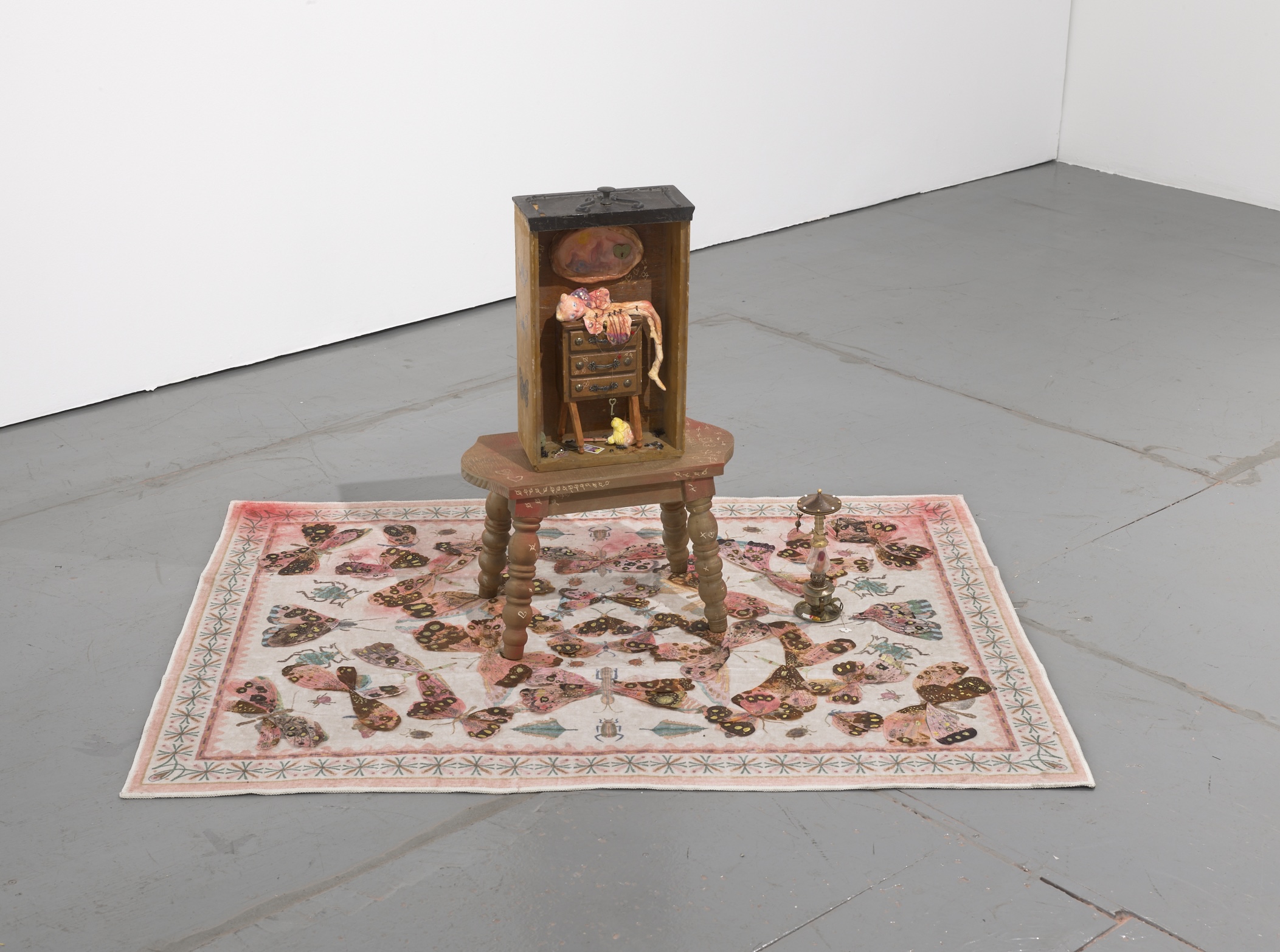
Memory can produce images that are simultaneously saccharine and unsettling. The complex nature of domestic nostalgia provides another throughline between three works, united by color palette, positioned in a single row—or column, depending on one’s orientation within the show’s “collective grid.” In Jill Smith’s Building a house of windows (2026), a series of black-and-white family photographs are partially obscured by their own glass framing devices. The photographs are installed in a staggered arch perpendicular to the wall, making it impossible to view one without seeing the others in the background. Nearby, multiple monochrome studies are arranged in a grid in Nicole Economides’s Dancing Mothers (in 6 parts) (2026), such that one scene simultaneously assumes varied levels of opacity, as if the viewer were looking back at that moment from different points in time. Ailyn Lee’s Counting the Wings (2026) pays a tender homage to an irrecoverable past with an assemblage of trinkets and handmade figurines, scattered amidst miniature antique wooden furniture.
The seeds of conceptual rigor are tangible here—à la the performance poetics of Yoko Ono’s Instruction for Paintings (1961–62), which sought to collapse the space between language, art, and life. But one leaves feeling like the questions around curatorial authorship embedded within Toward A Sentence might have been pushed further, rather than simply overlaid, in Nguyen’s own words, like a grid atop this selection of works. Still, there’s a conceit that feels befitting: The show ultimately plays on our compulsion to seek out some greater web of meaning, even when it may not exist.
Toward a Sentence was on view from June 5–16, 2026. The exhibition featured Obadah Aljefri, Erika Choe, Jisoo Chung, Priyanka Dey, Nicole Economides, Aviv Grinberg, Arom Ju, Noa Klagsbald, Colby Lamson-Gordon, Ailyn Lee, Jill Smith, Rowan Van As, and Chanya Vitayakul.