In Conversation with Yvonne Shortt
Interview
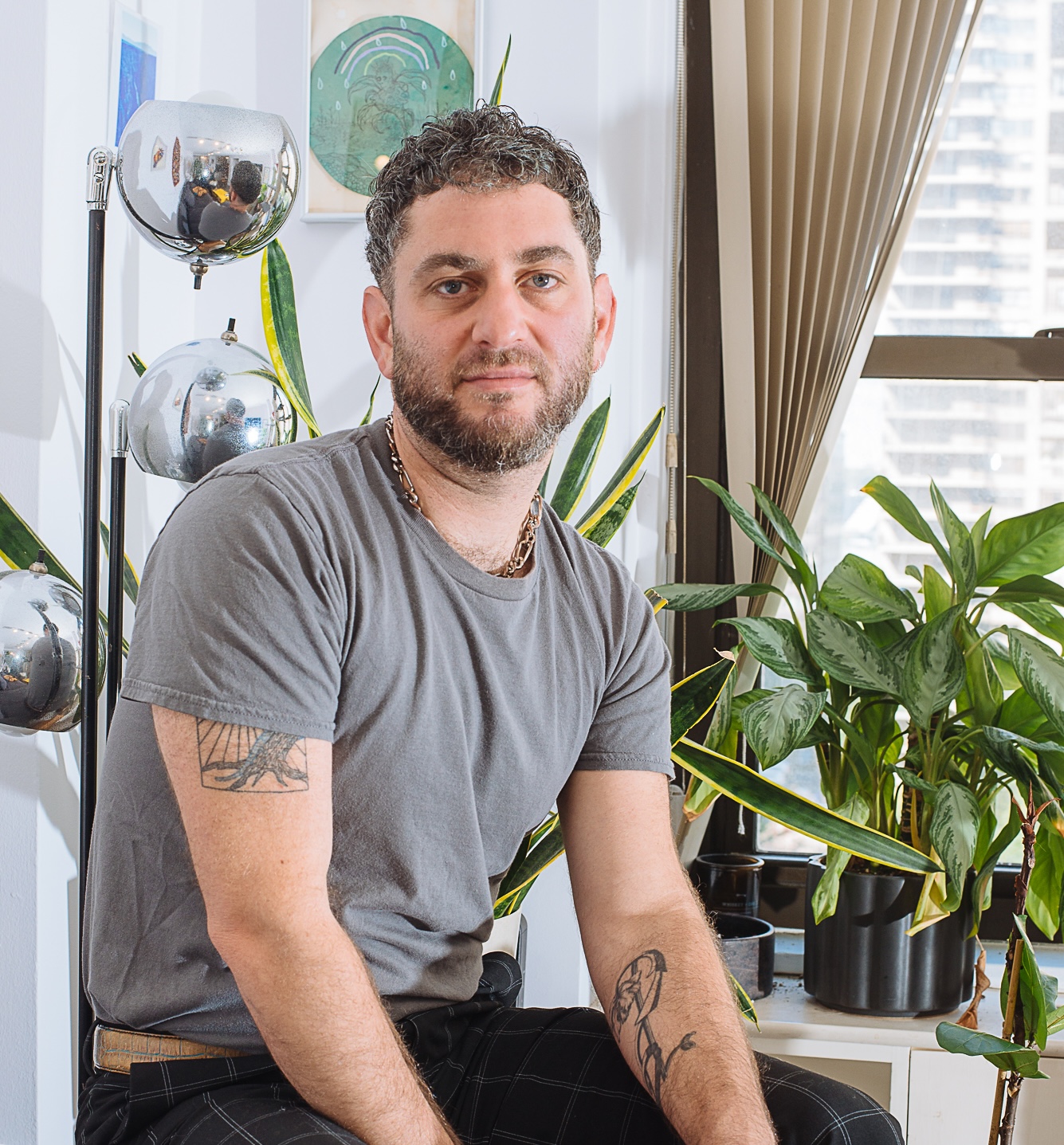
Calder Zwicky is a product of youth arts engagement. As a member of the country’s first Teen Arts Council, founded at the Walker Art Center in 1996, Zwicky experienced firsthand how access to art can redirect the course of a young person’s life. That early experience led him to the Bronx Museum and then to the MoMA, where he spent fourteen years working across teen programs, community partnerships, and museum access. Today, as Executive Director of Artistic Noise, he carries that history forward with remarkable clarity and conviction.
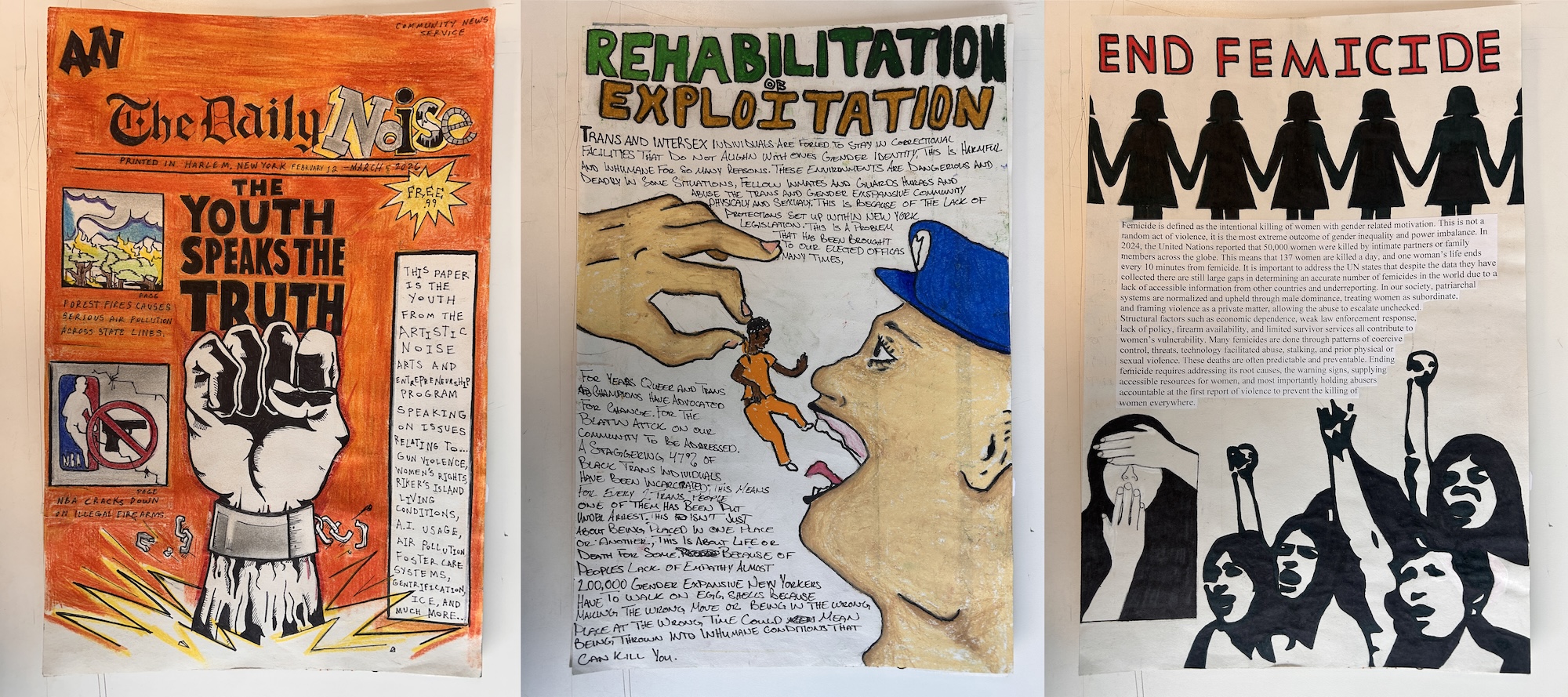
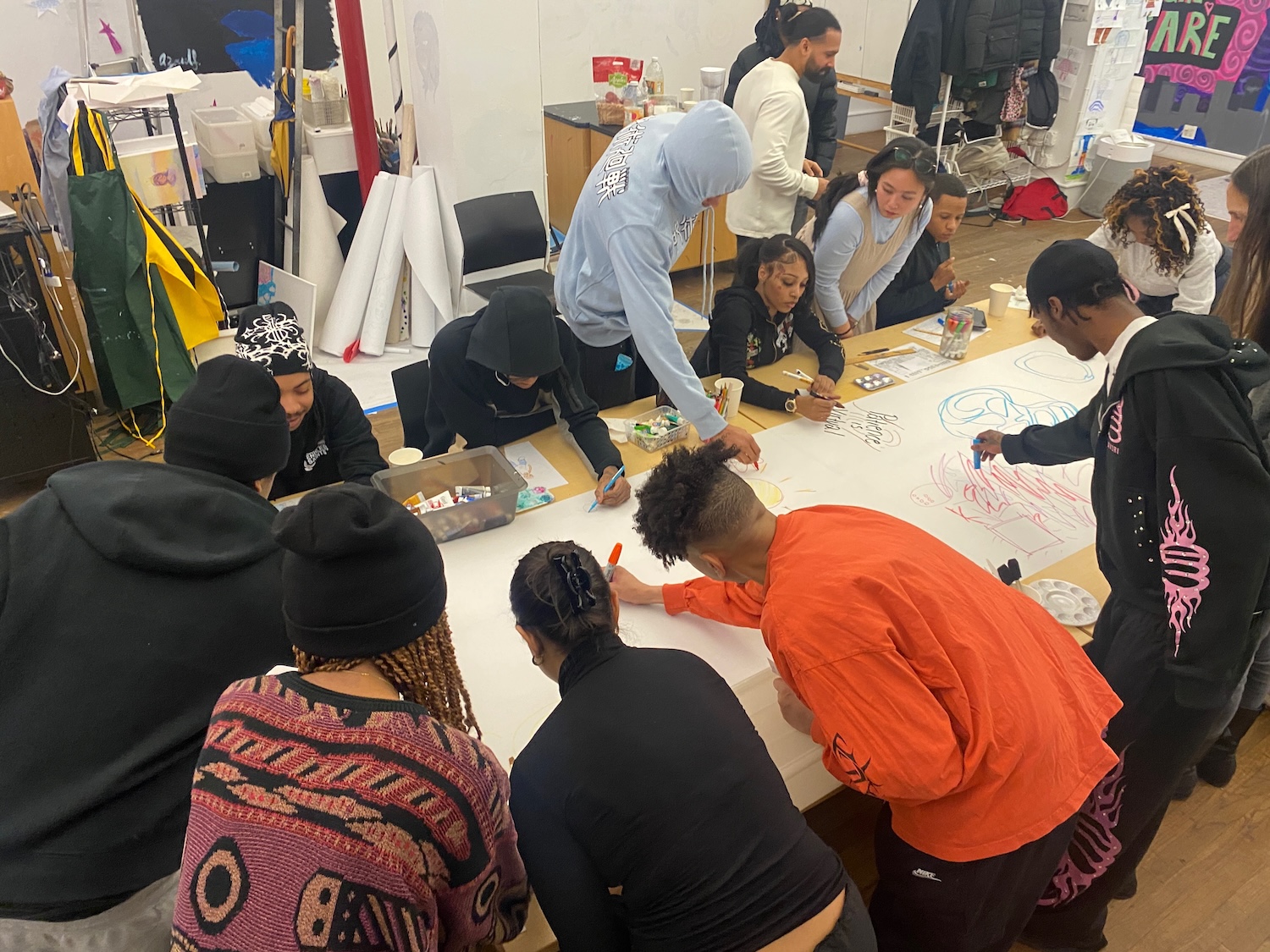
Artistic Noise is one of those rare organizations that not only gives hope but also matches that hope with tangible support. Now in its twenty-fifth year, the nonprofit serves young people whose lives have been impacted and largely failed by the juvenile court system, shelter system, foster care system, probation, and mental healthcare systems. From its storefront space in Harlem, Artistic Noise offers paid art-making programs, trauma-informed art therapy, alumni artist residencies, mutual aid, and alternatives-to-incarceration workshops embedded directly within New York City courthouses. The organization does all of this with a full-time staff of two and a modest staff operating budget.
Artistic Noise exists both outside and inside the contemporary art world. While remaining in direct service and community care, it has also built meaningful relationships with artists, mega galleries, and institutions that recognize the strength of the artwork being made. Its upcoming benefit auction, hosted by Olney Gleason, brings together artists including Justin Cloud, Arlina Cai, Genevieve Goffman, Andrew Kass, and others, with a host committee that includes ultra-chic gallerist Hannah Traore and the rowdy Evan Karas of Spielzeug.
At a moment when public funding is being stripped away, discourse often feels more divisive than generative. Artistic Noise offers a model that goes beyond symbolic gestures—it is interested in paychecks, food, studio time, therapy, mentorship, visibility, and second chances, presenting a living argument for what access, advocacy, and artistic seriousness can look like when they are treated as inseparable.
Jesse Firestone: How do you feel the work of Artistic Noise fits into the larger contemporary arts ecosystem?
Calder Zwicky: In some ways, we are completely outside of the contemporary arts ecosystem. It is a community-first organization. It is about meeting the needs of this audience: young people who are dealing with everything from over-policing to systemic racism, the carceral system, everything you could think of, on top of just the trials and tribulations of adolescence. That takes up a lot of Artistic Noise's time and energy because we really need to provide the support that they need—not the support we think they need.
That said, we are an arts organization, and we develop amazing artists. When young people showcase their work, it’s so transformative. We have a partnership with the Whitney Museum that provides us direct access to its collection and resources. We also partner with the Studio Museum. Olney Gleason has been supporting us with the benefit auction for years now. Pace has shown Artistic Noise's youth art and art by our artists-in-residence. Hauser & Wirth connected us this year with an exhibiting artist for a personalized tour with Artistic Noise’s community.
So in some ways, while we’re very much outside the system, at the same time, every time galleries or museums learn about what we do, I feel like they all want to work with us and help bring Artistic Noise's young people into their community.
JF: How did the relationship with Olney Gleason come about, and what made it feel like the right partnership?
CZ: I met Eric Gleason over fifteen years ago. He was working on ICI’s Young Curators, New Ideas series, and I got asked to be a curator. We immediately clicked. He was interested in the same sort of community outreach and youth engagement from a gallerist’s point of view, whereas I was coming in from a museum perspective.
We stayed connected, and during the pandemic, we had the idea of doing a Teen Arts Council-style program, but with galleries involved rather than museums. He and Nick Olney were all in when no one else wanted to do it. It was a failed project, but it was great because it really showed where their hearts were. This was not performative or about publicity.
When I took over Artistic Noise, we were not in the greatest financial shape, like many small nonprofits after the pandemic. It was a rough time. We had done so much work in prisons and detention facilities, and that immediately dried up during COVID. We had to figure out a way to continue to exist and serve Artistic Noise's community.
On my very first day as Executive Director, my first phone call was to Eric Gleason. I said, “I’m head of this new org. You’re going to love what we do. We need some help.” And the first thing he said was, “We’re going to do a benefit for you guys.”
Five months later, they had gotten twenty-five artists to donate pieces. They had a show in their gallery. They brought in 100k that first year, which just righted the ship for us. It allowed us to have some stability, gave us breathing room, and allowed me to really think—not just, “How am I going to keep this place going?” but “What can we do to improve Artistic Noise and reach more young people?”
JF: Was there a moment when you seriously questioned the future of the organization?
CZ: I’ve never doubted the future of Artistic Noise or considered quitting. One of the hardest moments came recently when the National Endowment for the Arts awarded us a grant for the first time. It felt like a major recognition of our work.
Then the administration changed. Before we received any funding, we got an email—along with hundreds of other organizations—rescinding the grant. The message essentially said that because of the population we serve, our work was no longer a priority. It was devastating and psychologically difficult. It made me wonder whether this was a sign of broader funding cuts to come.
JF: What did you do in response?
CZ: The community stepped up immediately. Olney Gleason connected us with philanthropists who covered the entire amount the NEA had promised within a month, simply because they believed in our work.
We also received a significant grant from the Hearthland Foundation, which is supporting organizations that engage critically with American history and civil rights. They’re helping groups like ours amplify stories about people who have been harmed by systemic inequities and create work that pushes back against simplified national narratives.
JF: What does New York City—or New York City's art world—get wrong about system-impacted youth?
CZ: People underestimate the long-term impact of incarceration on young people. When a teenager is incarcerated, the consequences don’t end when they leave. Education, employment, relationships—everything becomes harder. When society has already placed obstacles in front of you, involvement with the carceral system compounds them. Part of Artistic Noise’s role is helping young people recover emotionally, creatively, and personally while creating opportunities to move forward with their lives.
I also think people often assume young people enter these systems because they’re bad people. In reality, most are making the same kinds of mistakes many young people make. The difference is that more privileged kids often get second and third chances. Their mistakes are dismissed as part of growing up. The young people we work with are far less likely to receive that grace. One mistake can pull them into a system that shapes the rest of their lives.
JF: If you could give one piece of advice to the director of a major museum, what would it be?
CZ: Create more partnerships with smaller organizations—and listen.
Don’t tell communities what they need, what art they should see, or what work they should make. Listen first and build programs around what communities actually want. The most successful partnerships are individualized, equitable, and responsive.
There’s a huge power imbalance between major museums and grassroots organizations. If you don’t actively work to flatten that dynamic, partnerships can quickly become charitable rather than collaborative.
JF: How do you navigate not being seen as a charity case, but as an active partner with your own expertise?
CZ: We’re fortunate to have funders who understand that supporting us means trusting us. Organizations like Olney Gleason raise money, generate visibility, and help amplify our work without trying to dictate it.
The best funders recognize that we know this community and the programming. Problems arise when funding comes with instructions about what priorities we should have. That’s when the relationship starts to feel less like a partnership and more like someone imposing their vision on a community they don’t fully understand.
Funders who genuinely care about equity trust the expertise of the people doing the work. They don’t use funding as leverage. They support organizations in serving their communities the way those communities actually need.
JF: If you had the ear of a major arts funder or philanthropist, what would you want them to hear?
CZ: Come visit Artistic Noise's space and art shows. Come to one of Artistic Noise's workshops. No words necessary. You will get it within five minutes: how vital this work is, how dynamic this community is, how beautiful this art-making is, and the changes being made every day in these young people’s lives through arts programming like this.
JF: What are you dreaming about right now—for yourself, for Artistic Noise, or for the young people you work with?
CZ: Right now, I’m dreaming about this auction being a big success. Olney Gleason and their team have raised over $250,000 for Artistic Noise over the years. It’s life-changing money. Olivia Toups curated such an incredible group of artists this year. I’m really excited for this year’s benefit auction. We’re honoring Derek Fordjour, who has already purchased art from the young people we work with and from Artistic Noise's artists-in-residence.
In the long run, I am working toward opening a second Artistic Noise space, one that would have a full-time system-impacted youth art gallery in the front, showcasing and selling work by the young people we work with. In the back, we’d have an art therapy space, a workshop space, and an art-making space. We’d be able to expand the number of young people we serve and expand the amount of youth art we sell.
The sad thing is, the number of young people impacted by these systems is not decreasing. In Artistic Noise's twenty-fifth year, the issues we were created to address twenty-five years ago are the same issues we’re dealing with today. It has not gone away. So we have to keep fighting the good fight and trying to be light in the darkness.
JF: What is a question you wish people asked more often?
CZ: “How much is that kid’s painting?” “Can I pay for that painting in partial segments?”
No, I think honestly, the question I wish people asked more is just: how can I help? And not tell us—ask us. How can I help? What do you need?
Everyone can help us in some way. It’s just a matter of working with us to figure out how.
This interview has been edited for length and clarity.