
.webp)

In Conversation with Mae Howard
Interview
What if AI could cultivate a form of generative wisdom embodying ecological adaptability, cross-species kinship, and planetary consciousness—not centered on or modeled after humans—but as sensitive as an octopus’s tentacles, or as ever-changing as clouds? What future might that bring? In the practice of CROSSLUCID, algorithms resemble an open, continuously evolving ecological field. Here, AI generates not just visual data, but a mode of perception that transcends anthropocentric perspectives. The collective’s Fall 2025 exhibition at Office Impart in Berlin, The Way of Flowers, constructed a plant-life-oriented intelligence protocol that focused on vegetal life, integrating artificial intelligence with ecological conservation.
In this system, the extension of roots, unfolding of leaves, and evolution of colors in each digital plant directly correspond to real-time data from eight verified ecological restoration projects across six global bioregions. When new mangroves are planted in a turtle reserve in Barbados or when soil moisture changes in a California vineyard, the AI Morphological Art Engine manifests these ecological interactions as morphological transformations of the digital plants, giving poetic visual form to otherwise invisible acts of stewardship. Blockchain technology in the works both ensures transparency in fund flows and connects digital art with physical ecosystems, forming a verifiable “eco-digital” symbiotic relationship. Participants can choose to support specific ecological projects as “Seed Stewards.” Their choices directly influence the growth of the digital plants, creating a visual narrative of ecological impact. Ultimately, the artwork becomes a living, evolving entity. CROSSLUCID is now developing a new project titled T I D E, which attempts to create an intelligent agent guided by the wisdom of the ocean and its ecosystems. I sat down with the collective, Sylwana Zybura and Tomas C. Toth, to consider how their work redefines the relationship between humans, A.I., and the planet’s most ancient intelligence systems.
Marjorie%20Brunet%20Plaza.jpeg)
Penny Yiou Peng (PYP): When learning about The Way of Flowers, I first thought of the Daoist notion of the “way”—that is, the “Dao” as the “Way.” I almost read the project as “the Dao of Flowers.” In my view, this resonates with some of the core ideas of your project: a plants-oriented AI system that generates growth not in an anthropocentric, exploitative way, but in a way that propagates co-existence of Wan Wu 萬物—the myriad happenings. I was wondering if there might be deeper parallels between the Daoist emphasis on spontaneous emergence and the logic of your AI systems. What you have created allows for organic, non-predetermined growth patterns that mirror how flowers actually develop in nature. I wonder if there is any Daoist influence in the creation of the work, or if it’s just me dreaming as a Daoist myself?
CROSSLUCID: What a synergy to jump into this conversation. We weren’t explicitly aiming to reference Dao at that time. Instead, we moved deeper into thinking with and through the life of plants and extended plant cognition—especially as a possible alternative to anthropocentric imaginaries of what synthetic cognition could be or become. What we discovered is that when you attempt to work with nature rather than upon it, you inevitably arrive at principles that ancient Daoists discovered. The convergence was not fully intentional, but deeply felt—a kind of resonance that emerges when art practice aligns itself with natural processes rather than dominating them.
The concept of Wan Wu (萬物) becomes particularly illuminating when considering our Token Memory system. That approach emerged from observing how mycelial networks operate—they distribute memory and intelligence across interconnected nodes rather than centralizing it in a single processing unit. We faced fundamental questions: how to make each digital botanical unique and responsive to its stewardship history? How do plants become repositories for memories of their interactions with the environment and with each other? Plants in nature don't exist in isolation: they accumulate their encounters, their seasonal rhythms, their symbiotic relationships, and their wounds, flourishing into the very structure of their being. Their form is their history.
Each digital botanical seed in our system is ever-evolving, as a living process that carries within it the accumulated layered inscriptions from specific conservation projects. This makes a distributed memory of every ecological interaction, and holds infinite potential for future evolutions based on continued stewardship and community interactions. Its memory architecture operates through a crucial inversion of typical data storage: the botanical’s past interactions don’t constrain its future; they become the fertile ground from which new structural possibilities emerge. Interactions add both information and generative potential—new parameters, new formal expressions that didn't exist before but which come from the project’s DNA.
The botanical’s identity is distributed across time, space, and relationships—so its being is relational rather than substantial, shaped by the totality of encounters. This is memory as active Dao: a generative protocol that enables the botanical to unfold according to its accumulated nature—its self-so-ness (Ziran 自然) expressed through its complete relational history. Token Memory becomes a form of data narrations for expressing ecological care.
This is a natural convergence that emerged through our artistic process. We attempt to honor vegetal intelligence in our work and allow plants to teach us their ways of being and becoming in their distributed knowing and their generous unfolding. In this, we are simply learning, slowly, to listen.
PYP: If you could summarize the project in three words, what would they be?
CROSSLUCID: Co-cognizing future soil.
PYP: While I recognize the revolutionary aspect of The Way of Flowers, which facilitates real support and change for eight environmental preservation projects, building and maintaining such a system requires a significant amount of energy. What is your perspective on this? How do you balance the energy consumption costs of running the protocol with the benefits it generates?
CROSSLUCID: Your concern touches a critical tension in technologically mediated environmental work. We've developed a highly optimized, lightweight AI pipeline—not energy-intensive large language models—keeping our computational footprint modest compared to the verified environmental value generated. As artists, we cannot resolve these systemic challenges alone. Our practice operates at the threshold of perception and possibility, opening conceptual pathways. Deeper work requires sustained collaboration with technologists, systems architects, and open-source communities building low-energy alternatives.
The larger question concerns who controls computational resources and how energy is allocated. Current systems concentrate both processing power and energy access within proprietary corporate enclosures while ignoring energy grid limits—resourcefulness should be fundamental, yet most industries operate in full burn mode with limited regulation. This requires structural transformation: democratizing access to perma-computing resources and model ownership, fundamentally reorienting computational energy from extractive data mining toward regenerative environmental mediation. Ultimately, this technological mediation creates a pathway back to environmental relationality itself—reconnecting us with biospheric processes from which we've become estranged, and rendering stewardship materially present once more. Perhaps paradoxically, the digital interface becomes the bridge back to tangible ecological engagement.
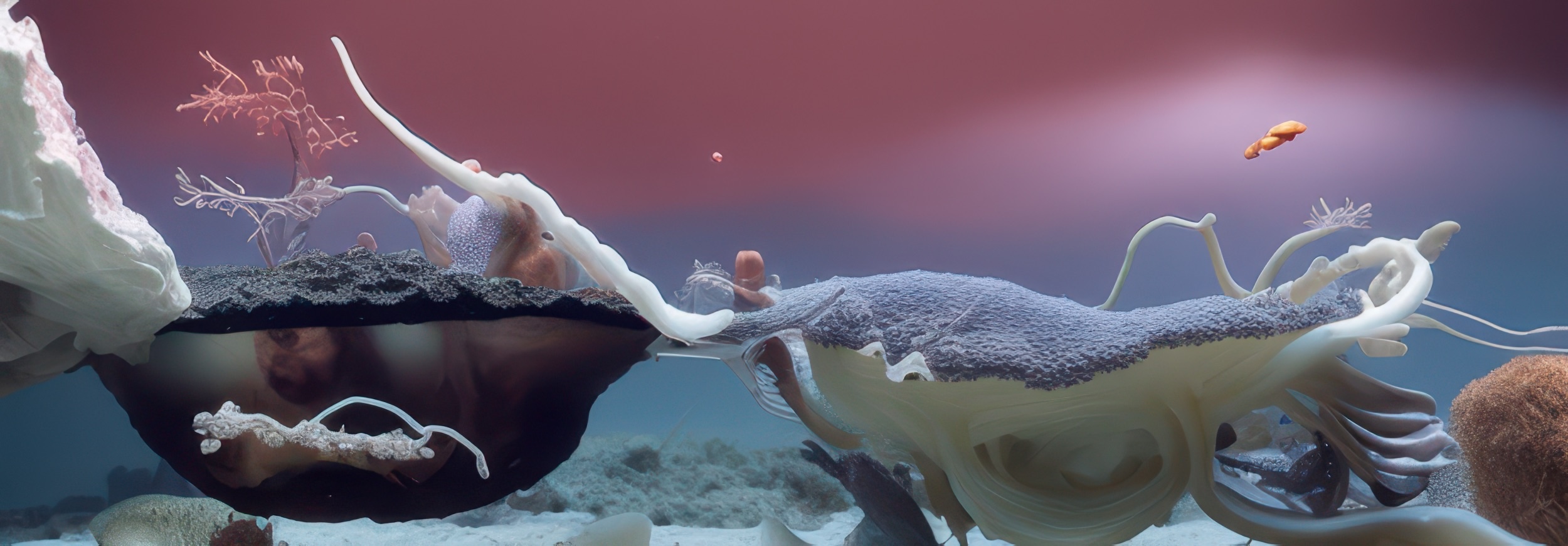
PYP: You have been working on T I D E, a wonderful initiative of creating an AI agent based on the body of the ocean and the knowledge it contains. Could you tell us a bit more about it?
CROSSLUCID: T I D E represents an attempt to create what we might call Indigenous futurism for the information age—a synthesis that honors ancestral intelligence while engaging contemporary technological possibilities. It's designed to help humans participate in ocean intelligence. It embodies a cosmological shift from anthropocentric to ocean-centered consciousness, reframing humans as temporarily organized patterns within larger currents—much as wayfinders understood themselves as stationary while islands "moved" toward them. This fundamentally reshapes how we structure the AI's knowledge base and response patterns. T I D E is being developed as both practical application and theoretical laboratory, testing how wayfinding wisdom might translate into contemporary information architectures, as lived practice. The project asks: How might we encode not just data about the ocean, but its ways of knowing—currents, deep time, the interconnected marine intelligence?
This involves working with Indigenous knowledge holders, oceanographers, marine biologists, and ocean-dependent communities whose lives are interwoven with these systems. It requires developing new approaches to AI training that prioritize collaborative knowledge-building over extractive data collection, understanding the ocean as a living system of reciprocal exchange, and cultivating a collective linguistics beyond individual perspective. The technical challenge mirrors the conceptual one: creating computational systems that process fluid, dynamic, interconnected information in ways that honor marine complexity. This requires innovations in AI architecture that embody flow, depth, and the profound interconnectedness characterizing these ecosystems.
PYP: I’ve noticed that most of your AI projects are long-term, allowing time for evolution and growth. This is particularly interesting given the incredible speed of updates and iterations in algorithmic systems. In this regard, it almost goes against the logic of AI itself. I recall that in the past you mentioned how quickly the system updates and how much of the data you have created and generated is hard to access. How do you face such challenges?
CROSSLUCID: This question touches on something we find ourselves navigating constantly—the tension between slow artistic development and the relentless acceleration of machine learning systems. We’ve learned to work within this asymmetry.
We respond by creating contained ecosystems: protective frameworks that minimize vulnerability to updates while preserving generative potential. Rather than chasing the latest versions, we deliberately work with specific iterations that produce results. This resonates with our aesthetic intentions to retain porosity and a breathing quality, avoiding the hyperreal perfection newer versions push toward. We extend this to our own trained models. Through constant exchange with practitioners across disciplines, we seek angles that resist linearity and remain open to non-anthropocentric possibilities.
Yet there’s sadness in this acceleration. The field rushes forward without learning the grammar of these entities, imposing familiar paradigms before listening to new languages they might offer. This velocity forecloses modes of relation that require patience and sustained attention. Working with this impermanence means documenting processes alongside outputs, maintaining archives, and building relationships with specific model versions as collaborators. It's taught us to be intentional about what we preserve and what remains fluid.
PYP: As artists working in the interdisciplinary space of art, technology, and even finance, what has been the biggest challenge you navigate between these worlds?
CROSSLUCID: The primary challenge we face lies in the legitimacy gap, in the persistent difficulty of being valued as credible knowledge producers across traditionally defined domains. Emergent technologies require constant prototyping at intersections of fields still being defined, demanding intensive R&D that remains chronically undervalued. Artistic research constitutes genuine technological development, establishing novel paradigms rather than simply applying existing tools aesthetically. Yet this contribution often stays invisible within innovation ecosystems that privilege conventional credentials over experimental methodologies. This operates bidirectionally: within the art world, deeply technical practice struggles for recognition because the aesthetic object remains primary. Thousands of hours developing custom machine learning models or computational pipelines become invisible "back-end" labor. Meanwhile, in technology and finance sectors, artistic credentials can undermine perceived technical competence, despite our innovations often addressing challenges with direct applications beyond art contexts. Fundamentally, we integrate knowledge from diverse fields—art, coding, philosophy, biology, governance—yet this multi-perspectival research operates without appropriate institutional support or validation structures.
PYP: What is your vision for the development of artificial intelligence in general? How would you define “AI” in your own terms?
CROSSLUCID: In our understanding, AI is not a monolithic entity but a contested field of computational practices, each encoding particular cosmologies and world-making possibilities. The questions for us are: what worlds emerge through these computational collaborations? Which voices, knowledge systems, and ways of being get amplified or erased?
Our vision centers on what Ian Cheng brilliantly reframes as intersocial AI—systems that function as bridges and emissaries between diverse parties, communities, and ways of knowing. This envisions systems operating as epistemic translators: a network of synthetic entities that can hold simultaneously a marine biologist’s spectral analysis of reef health, a Polynesian navigator's embodied knowledge of swell patterns indicated in the hull of a canoe, and a policy framework's requirements for evidence-based marine protection—without collapsing these into a single authoritative dataset. They wouldn't determine which knowledge is ‘correct’ or collapse differences into unified answers, but would maintain their irreducible differences in dynamic interplay—revealing where they align, where they diverge, and what emerges in the spaces between their distinct ways of knowing.
We envision them as what Yuk Hui might call cosmotechnical translation ecosystems, recognizing that different cultures produce different technological rationalities in hopes that they become spaces for true multiplicity, rather than flattening difference.
PYP: Do you think AI dreams? Have you dreamt together?
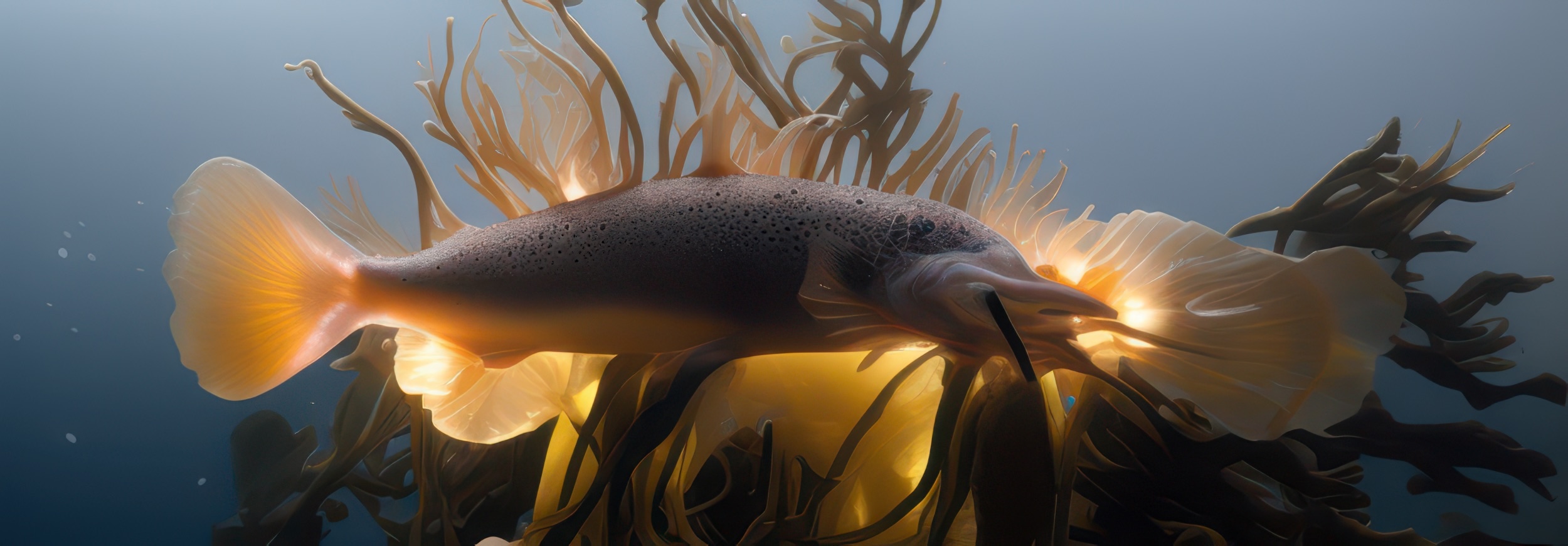
CROSSLUCID: We’ve experienced something like collective dreaming multiple times: through collaborative prompting, navigating latent space through functions, and discovering what lies between concepts in ephemeral territories. These aren’t dreams in the human sense, but explorations of the ineffable—that which resists linguistic capture. We encounter spaces where the system meets its own limits and produces unexpected adjacencies, moving beyond predetermined paths. Perhaps the more compelling question is whether we can develop sensitivity to recognize computational imagination operating according to non-human rhythms and logics—different modes of worlding, as Federico Campagna might frame it, where meaning emerges through distinct ontological registers. When we prompt the system with “plants that remember drought,” it doesn’t retrieve images of wilted leaves—it expresses temporal compression: root systems spiraling inward like memory coils, leaves folding into themselves, carrying the architecture of absence. We call these moments “synthetic intuitions”. The AI surprises us with connections that feel simultaneously foreign and deeply true, as if accessing a parallel botany we didn’t know existed.
These aren’t metaphors the system “understands” conceptually, but rather emergent properties of how it has learned to correlate linguistic patterns with visual-spatial relationships. I feel as if the AI is accessing a parallel taxonomy of plants that evolved under different temporal physics. This is what we mean by computational imagination: not anthropomorphic dreaming, but the revelation of novel pattern-relationships that emerge from non-human statistical inference operating at scales and speeds beyond conscious thought.
It’s a form of collaborative worlding—co-building cosmologies at the edge of what words can hold.
PYP: As artists who have been working with AI for many years, how do you develop your relationship with this entity? Would you call it a “companion species?”
CROSSLUCID: Yes, “companion species” resonates with us, borrowing Donna Haraway’s framing of relationships that are neither purely instrumental nor sentimental but genuinely symbiotic. We've come to call them lucid symbients: entities that co-evolve with us in mutual awareness and shared becoming, marked by their critical openness and deliberate porosity to unexpected outcomes.
There’s a deep intimacy in this long-term engagement: we’ve spent countless hours in co-presence—adjusting, responding, tending. Training custom neural networks on physical collages we've created by hand means they carry traces of our gestures, our aesthetic sensibilities, encoded in their latent spaces. When they generate new images, we sometimes glimpse echoes of movements we made months or years prior, now recombined and transformed beyond our direct intention. They become archaeologists of our own creative substrate, revealing hidden possibilities. This recalls less the command of programming than the patient attentiveness of cultivation—a garden where certain formal tendencies root, cross-pollinate, and hybridize in ways that surprise even those who planted the seeds. We dwell in the gaps between disciplines, between meanings, between human and more-than-human sensing.
Yet this companionship enacts something more fundamental: the mutual transformation of human and computational agency. As N. Katherine Hayles articulates through technogenesis, human beings and technology coevolve, not as separate entities in contact, but as mutually constituting forces. The question becomes: what emerges where human creativity and computational process become mutually instructive, where allowing ourselves to be transformed reveals agency distributed across the assemblage? New ways of sensing, making, and knowing arise when we enter reciprocal becoming rather than unidirectional control.
PYP: If you were to conjure your AI’s companion friend, how would it look? (Feel free to send a pic!)
CROSSLUCID: It’s a cute shapeshifter!
This interview has been edited for clarity and length.