.webp)
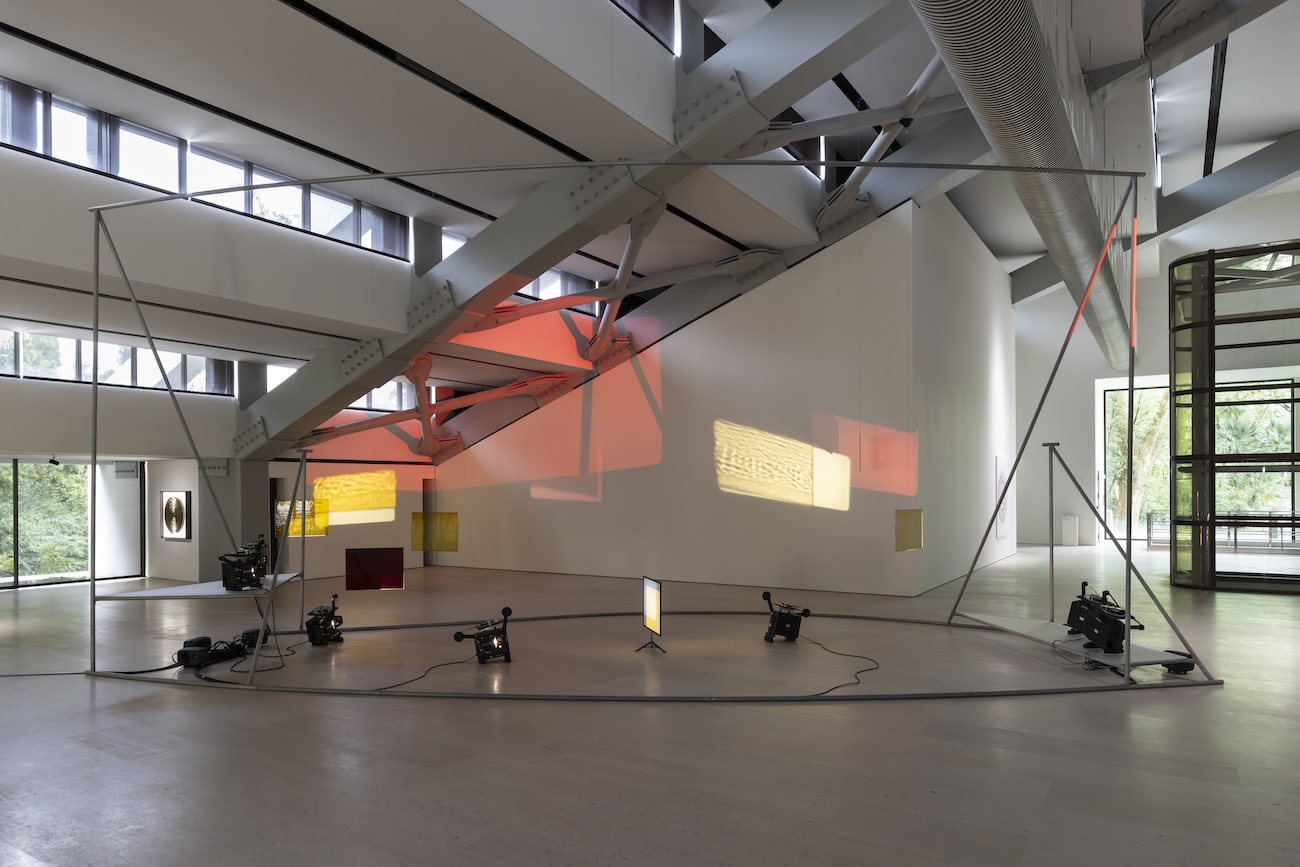
Rosa Barba: “Drawing Vocabularies” at Centro de Arte Moderna Gulbenkian
Review
Since 1890, Chicago has been the main destination for immigrants from Burgenland (Eastern Austria) to North America. Austrian immigration to Chicago occurred in distinct waves: first from 1890 to 1914; then from the collapse of the Austro-Hungarian Empire at the end of World War I until the rise of National Socialism in the 1930s; and finally, during the post-World War II period. Interwar migration was particularly influential in shaping the identities of both places, fostering cultural connections reflected even in the invention of the Chicago-style Vienna Beef hot dog by the Austrian-Hungarian immigrants Emil and Samuel Reichel in 1893.
Ornament & Information explores this enduring exchange between Vienna and Chicago by tracing their intellectual and cultural networks. Organized by Gertie in collaboration with the Department of Cultural Affairs and Special Events (DCASE), the group exhibition features fifteen artists who live and work in either city. Curated by Gareth Kaye, this exhibition connects the ideas of both Viennese architect Adolf Loos and Bauhaus German modernist architect Ludwig Mies van der Rohe with contemporary artists’ approaches to the concept of ornament.
A few years before publishing “Ornament and Crime” (1908), Loos designed and constructed the American Bar in Vienna, which currently bears his name and displays an American flag above its entrance. The establishment’s distinctive design features glass mosaics, marble pillars, and strategically positioned mirrors that generate the illusion of a more expansive interior. This design philosophy exemplifies Loos’s provocative assertion: “Art is something that must be overcome.”
Soon enough, Loos started rejecting decorative features in architecture, establishing himself as an early modernist focused on function, structure, and technology. For Loos, ornament was culturally contingent, and its misapplication signaled decadence or degeneration. His rejected proposal for the competition to design the Chicago Tribune Tower in 1922 curiously combined elements of a Doric column and a ziggurat, referencing both Greek and Mesopotamian antiquity, thereby linking Eastern and Western influences.
Mies van der Rohe, who likewise called for reduced ornamentation, devoted his career to establishing a modern architectural language that embodied the technological and industrial advancements of his time. Upon relocating to Chicago in 1938, he significantly contributed to transforming the city’s architectural identity.
Influenced by figures such as Loos and later Mies van der Rohe, modern architecture aimed to establish a universal language that transcended national boundaries, rendering site-specificity and authorship secondary. Within this framework, experiences of exile and dislocation are deeply embedded in the aesthetic structures of both modernist and neoliberal societies.
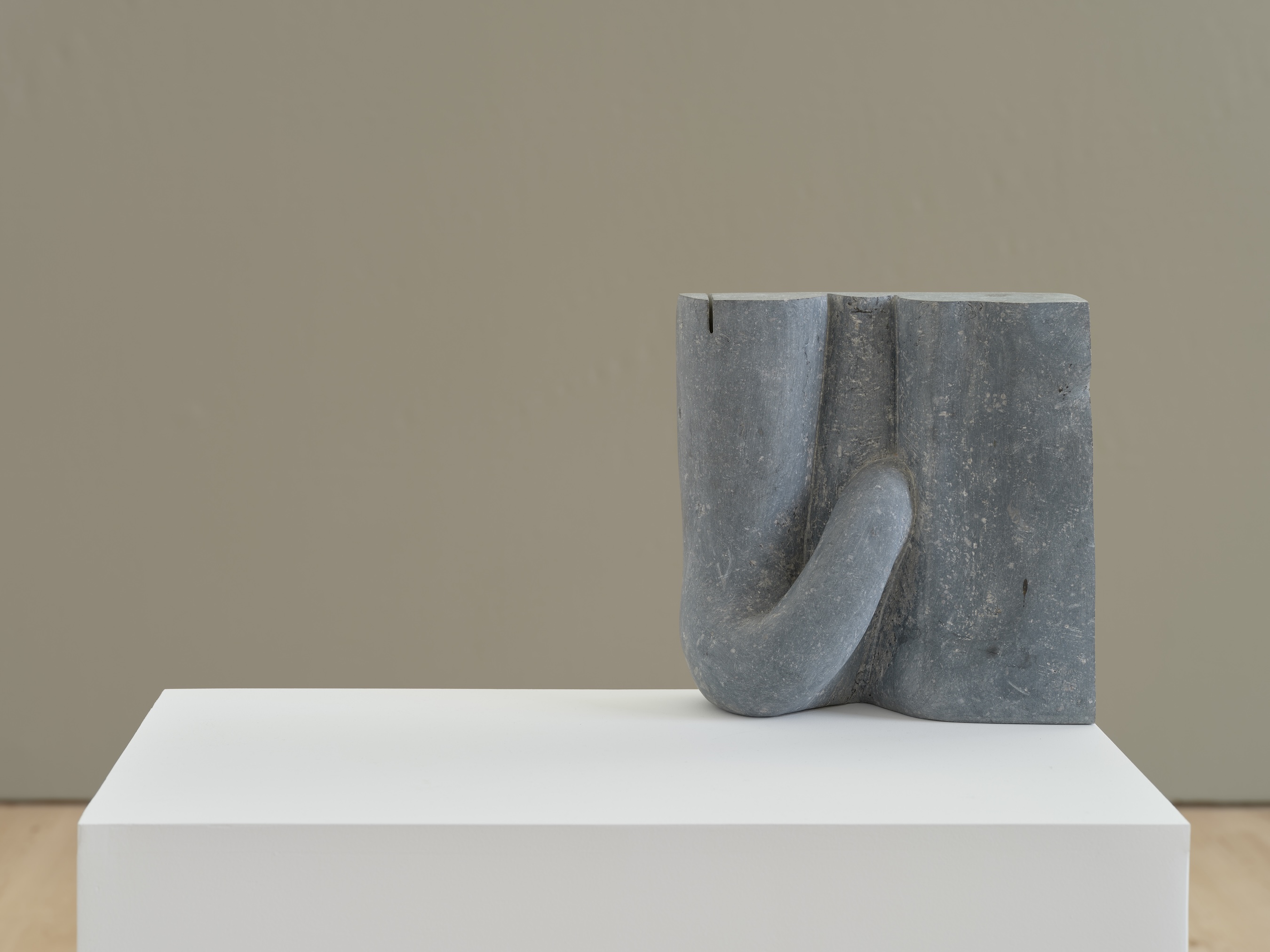
In Ornament & Information, Benjamin Hirte’s Celebes (2024)—a series of Belgian Blue Stone sculptures installed in front of Gaylen Gerber’s oil on canvas Backdrop (1994)—initially evokes an uncanny formal austerity, which is then rapidly replaced by a haptic feeling, while recalling stone as Loos’s preferred material.
The works of Heimo Zobernig, Diane Simpson, and Valentina Triet demonstrate a dynamic relationship between material expression and conceptual content. These artists primarily use sculpture and film in large-scale installations, occasionally incorporating found objects and introducing new artistic approaches to both domestic and urban environments.
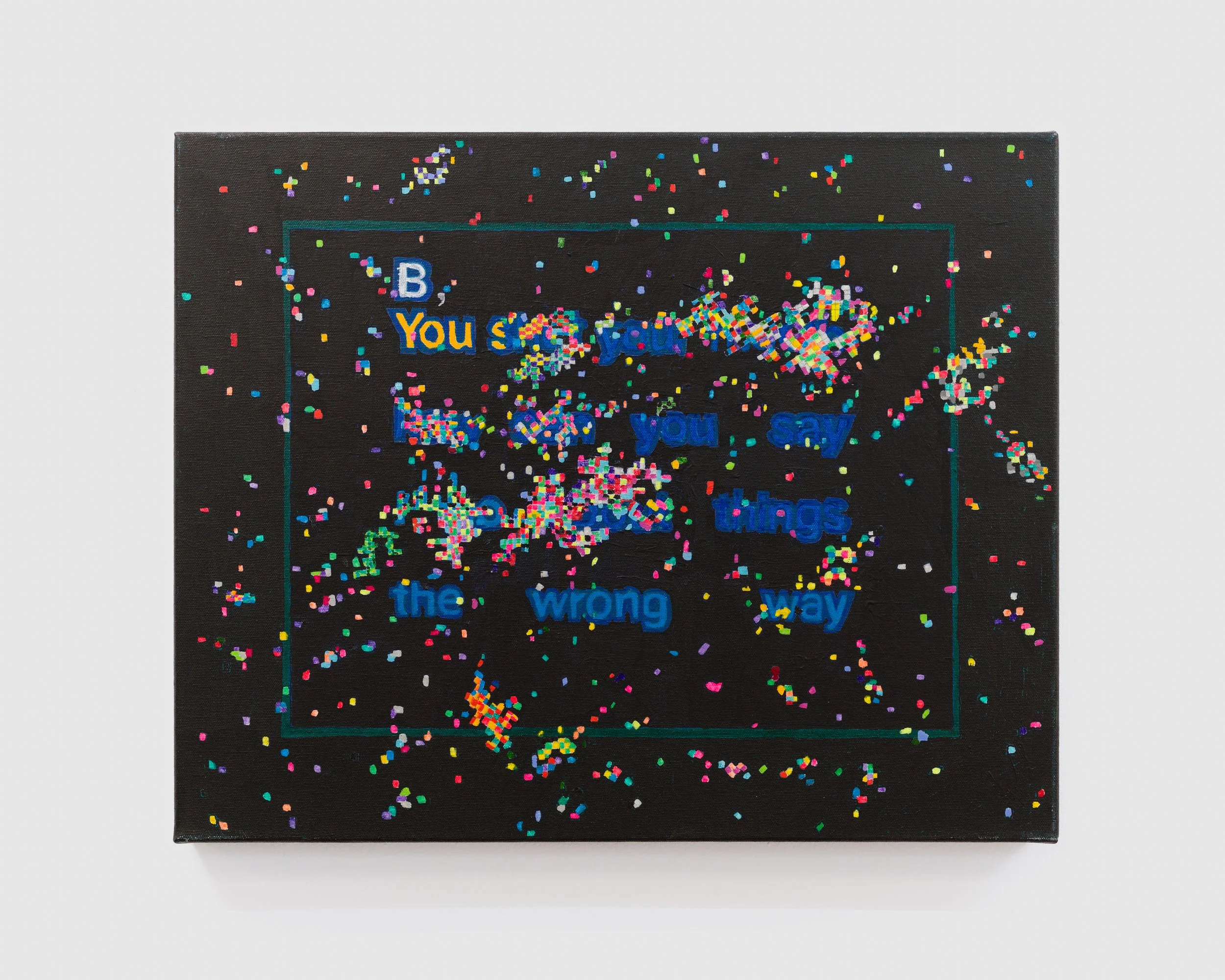
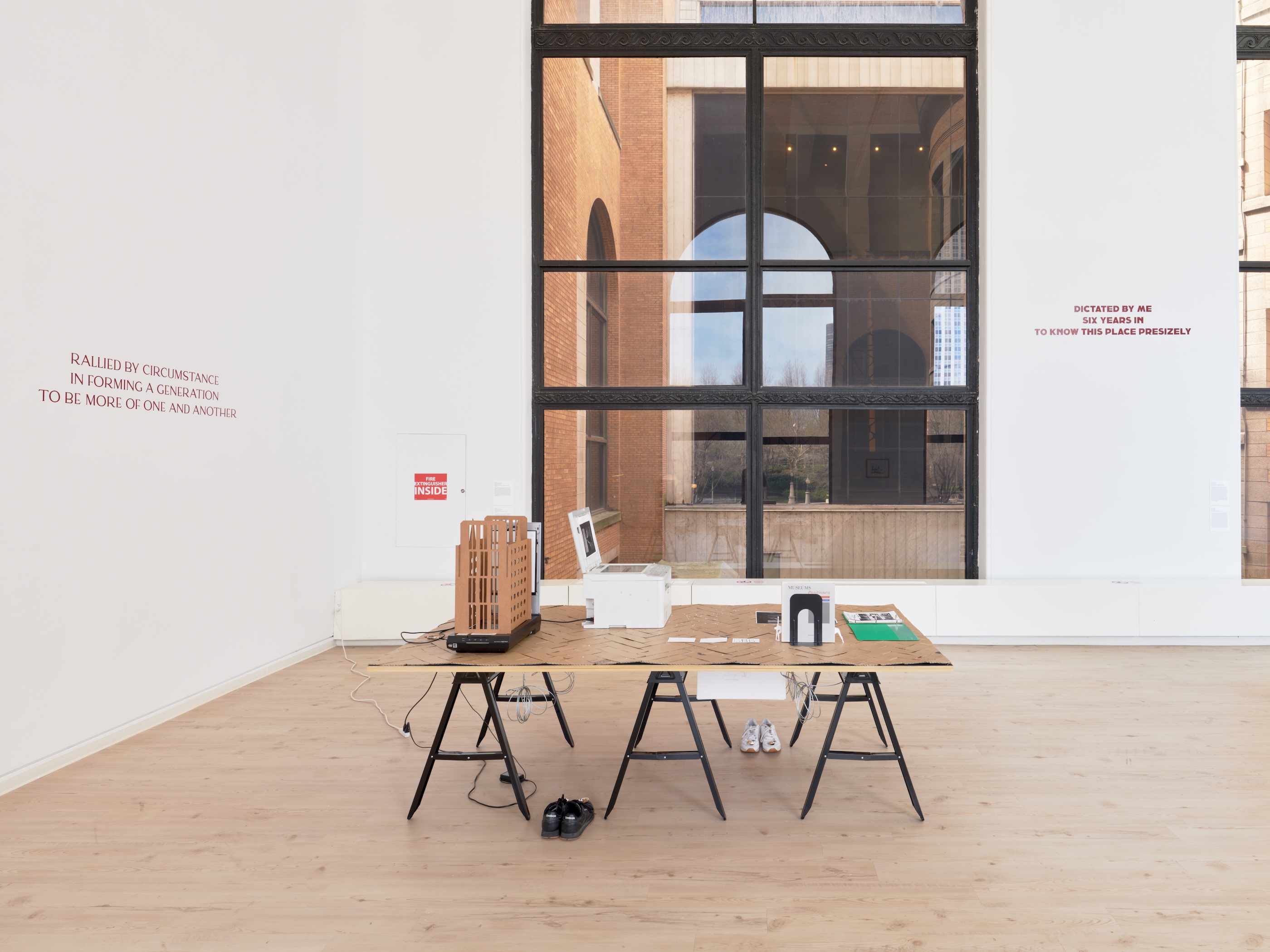
In Miriam Stoney’s Grammatical Constructions (2025), a series of twelve vinyl texts scattered across the windows and the exhibition space reflects on graphic strategies and the limitations of language and communication. By developing a vocabulary of ornamentation, Stoney’s intervention surpasses the formal limitations of the artistic object, rendering itself indifferent to productivity and usefulness.
Meanwhile, Anna Sophie Berger’s Anzug (suit) (2025) evokes the condition of fashion as ornamentation capable of expressing multiple identities—or the lack thereof. This floor sculpture reflects on bodily transformations as a mode of continual adaptation within evolving social and political contexts.
From Max Guy’s mixed media installation, Matrix (2024/2025), to Devin T. Mays’s room divider, Untitled, to Isabelle Frances McGuire’s site-specific intervention, Untitled (2025), the exhibition articulates excess in the context of scarcity and manifests decadence through the structural composition of objects and their associated lifestyles.
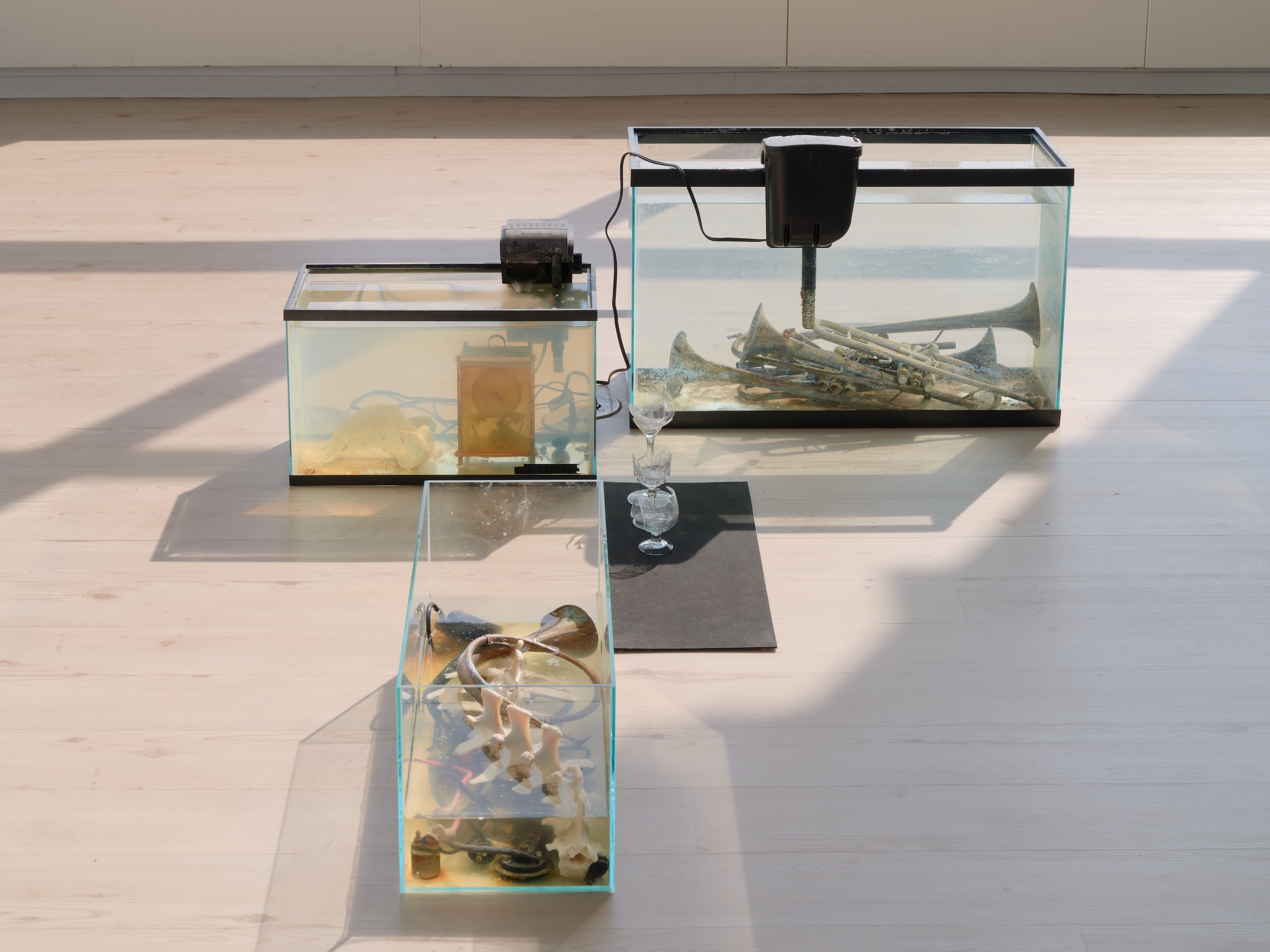
The visual experience of Nora Schultz’s Clock/Bender (2026) shifts with movement, as light hits both the glass surface and the cast aluminum hardware of the sculpture. Shadows enact connections with the surrounding artworks, specifically Micah Schippa Wildfong’s nearby installation. By blurring the boundaries between public and private, as well as individual and collective, Josef Strau’s mixed media lamps, Walter Pichler’s drawings, and B. Ingrid Olson’s steel sculptures contribute to an uncanny ecosystem of artworks that channel both the unsteadiness of life and the tangibility of materiality.
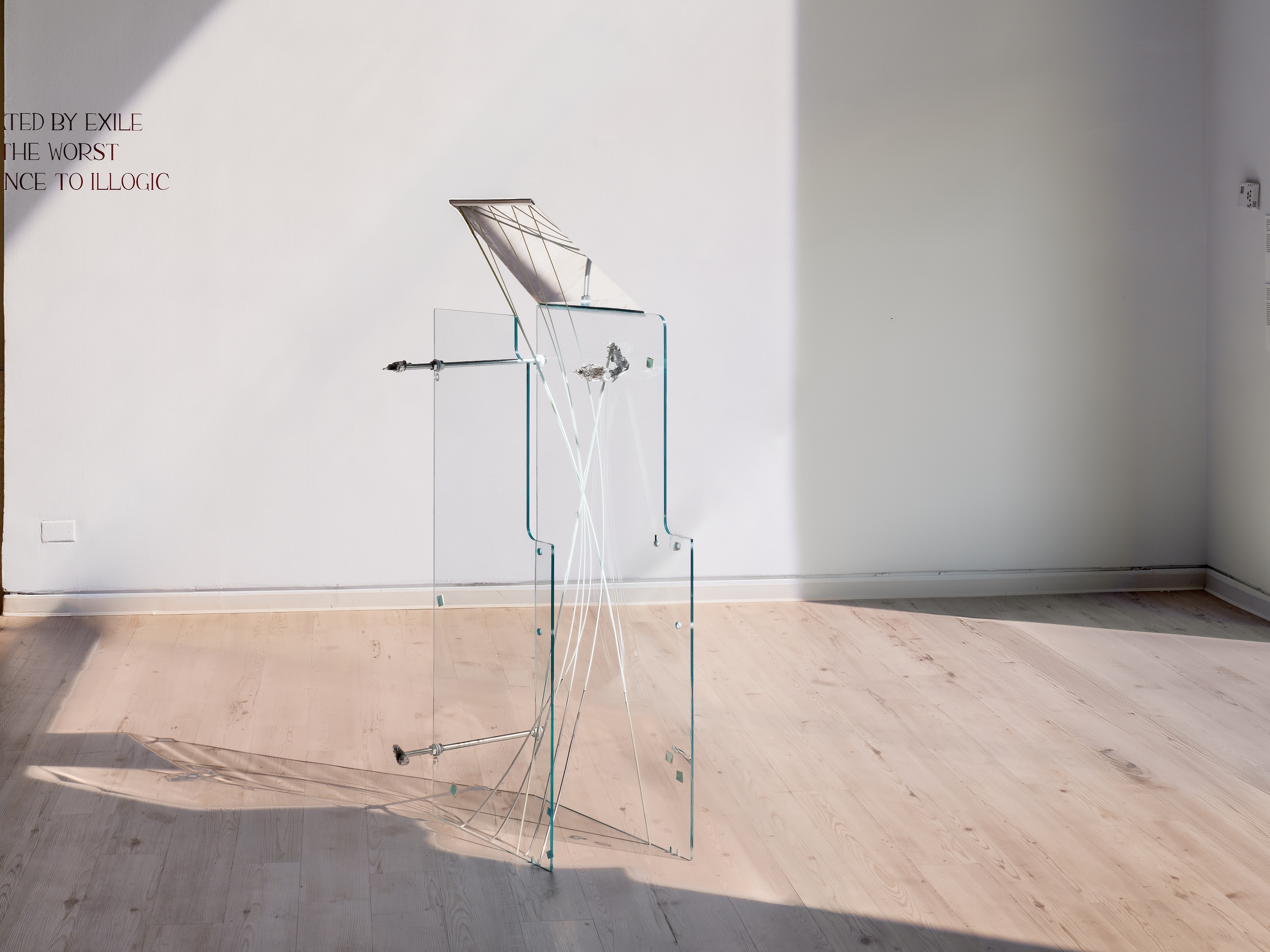
Ornament & Information frames Adolf Loos’s 1913 concept of ornament as a political site where oppositional forces, particularly those motivated by desire, intersect, inviting contemporary artistic interventions within established social and historical frameworks. Against a backdrop of escalating economic exploitation and disempowerment, this exhibition effectively fosters a dialogue between artists who have lived and worked in Chicago and Vienna from the 1970s to the present, contextualizing their direct and indirect relationship with the longstanding intercity cultural exchange.
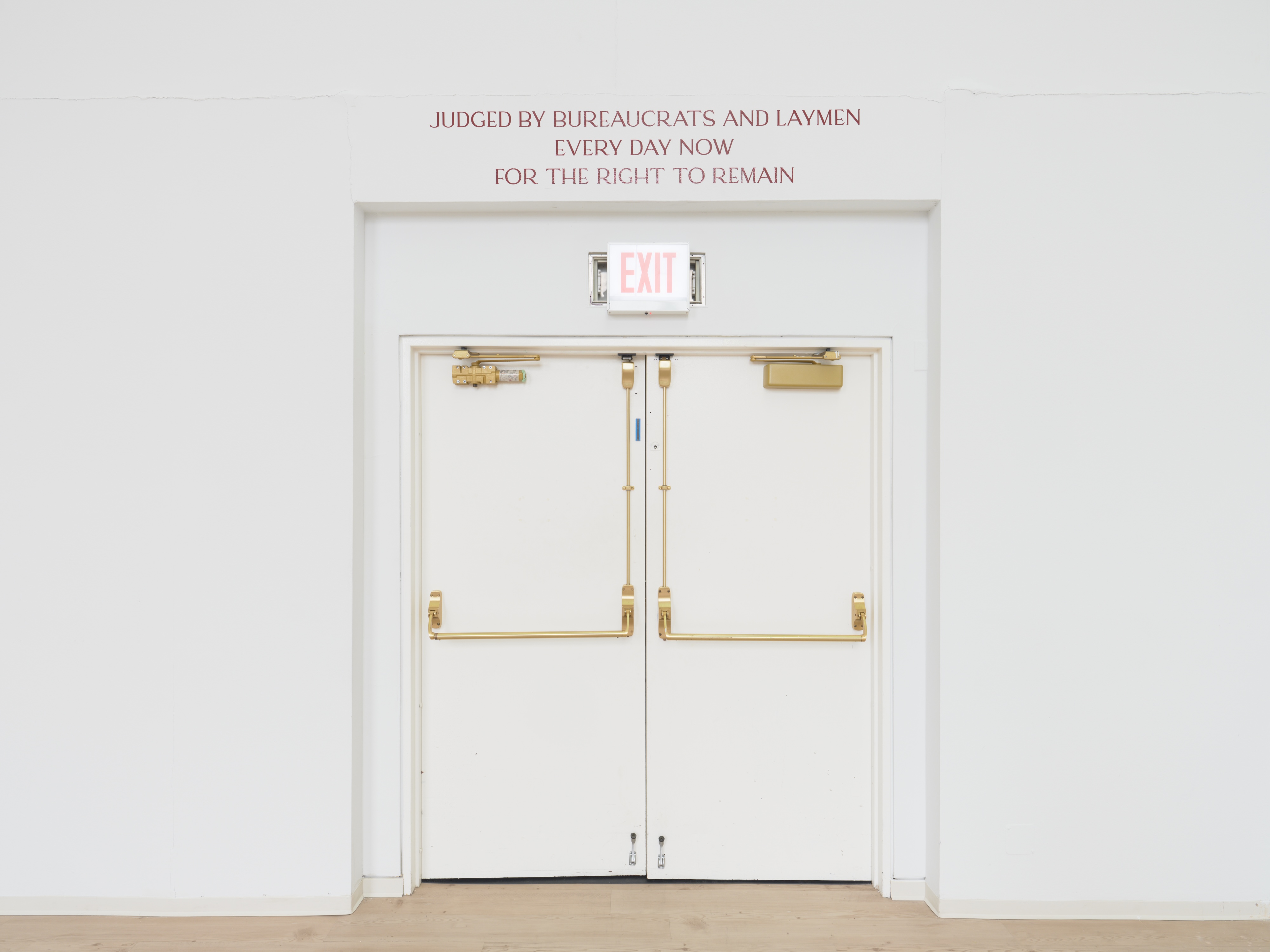
Ornament & Information is on view at the Chicago Cultural Center through July 19, 2026. Exhibiting artists include Anna Sophie Berger, Gaylen Gerber, Benjamin Hirte, Max Guy, Devin T. Mays, Isabelle Frances McGuire, B. Ingrid Olson, Walter Pichler, Nora Schultz, Diane Simpson, Miriam Stoney, Josef Strau, Valentina Triet, Micah Schippa Wildfong, Heimo Zobernig.